LACMA

ShopMembershipMyLACMATickets
LACMA
Los Angeles County Museum of Art
5905 Wilshire Blvd.
Los Angeles, CA 90036
info@lacma.org
(323) 857-6000
Sign up to receive emails
Subscribe
© Museum Associates 2025

Museum Hours

Monday

11 am–6 pm

Tuesday

11 am–6 pm

Wednesday

Closed

Thursday

11 am–6 pm

Friday

11 am–8 pm

Saturday

10 am–7 pm

Sunday

10 am–7 pm


  • About LACMA
  • Jobs
  • Building LACMA
  • Host An Event
  • Unframed
  • Press
  • FAQs
  • Log in to MyLACMA
  • Privacy Policy
© Museum Associates 2025
Collections

Manuel Cipriano Gomes Mafra
Urncirca 1865-1887

Not on view
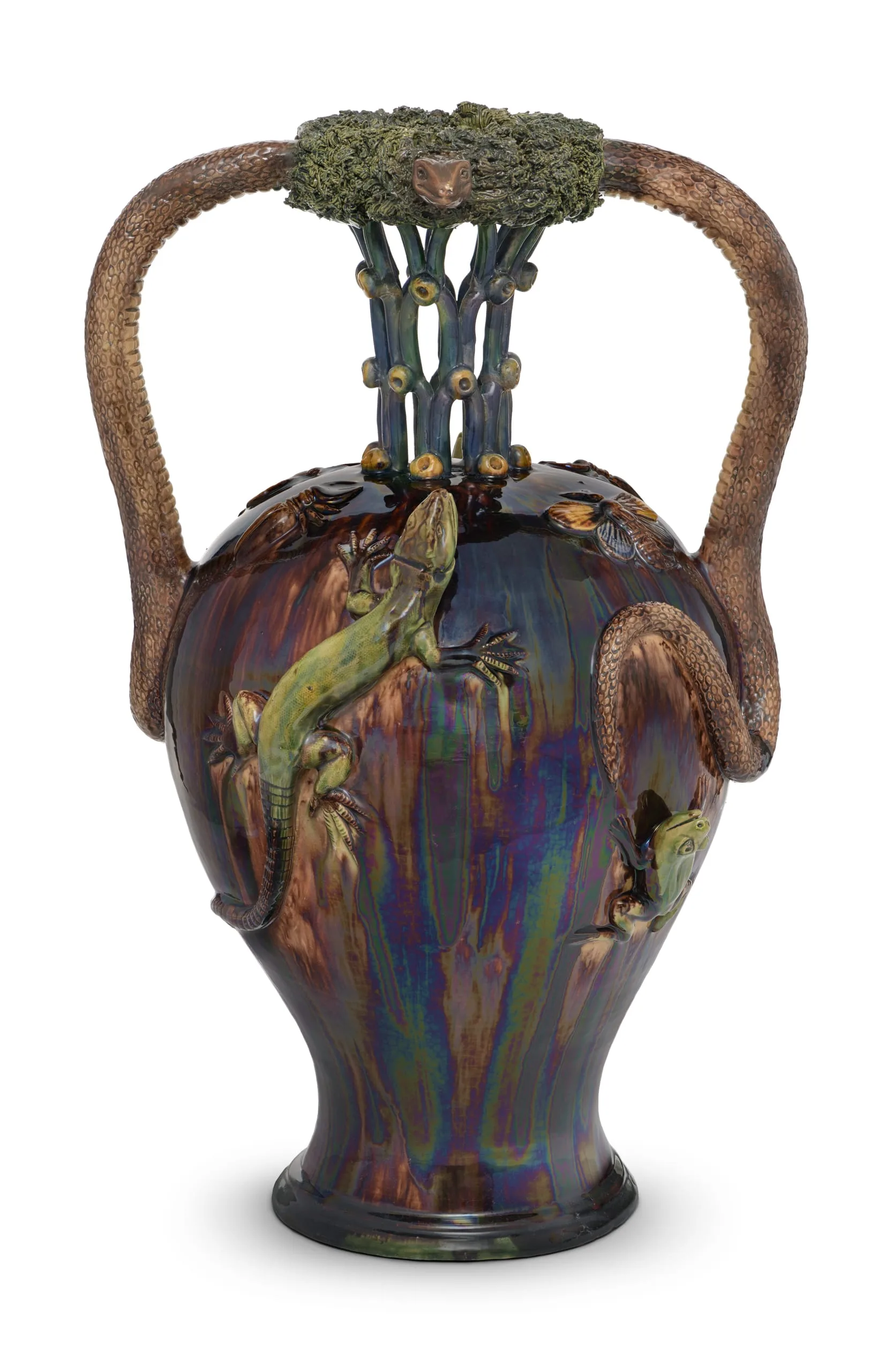
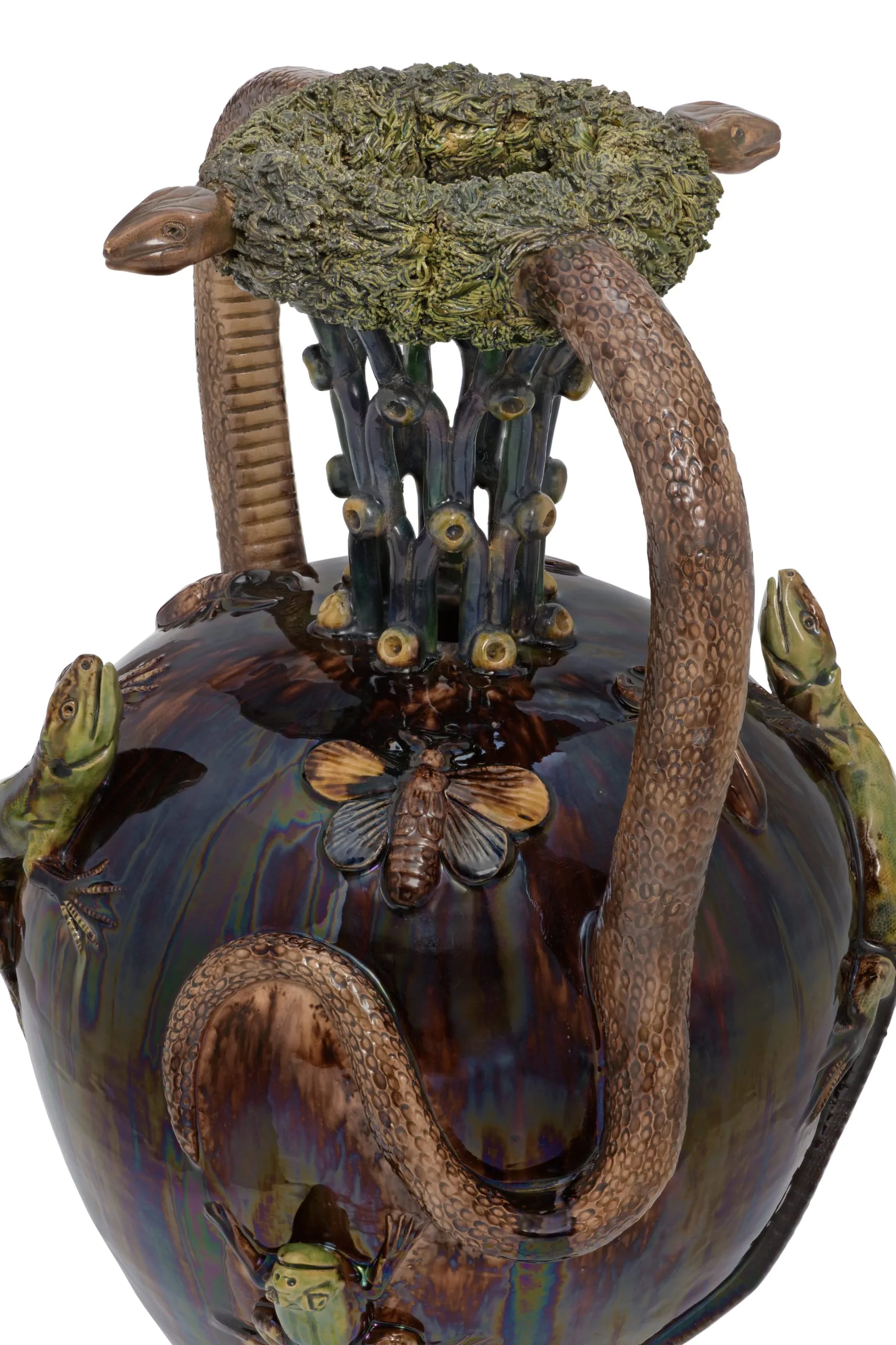
Ceramic vase with iridescent burgundy and purple glaze, sculptural snake handles, applied lizard and frog figures in relief, and a bundled-tube neck with mossy rim
Ceramic vase with dark iridescent brown glaze, its surface densely applied with modeled reptiles including lizards and a coiling snake used as a handle, surmounted by textured green moss-like rockwork with snake heads at the rim, and a naturalistic insect in relief on the body.
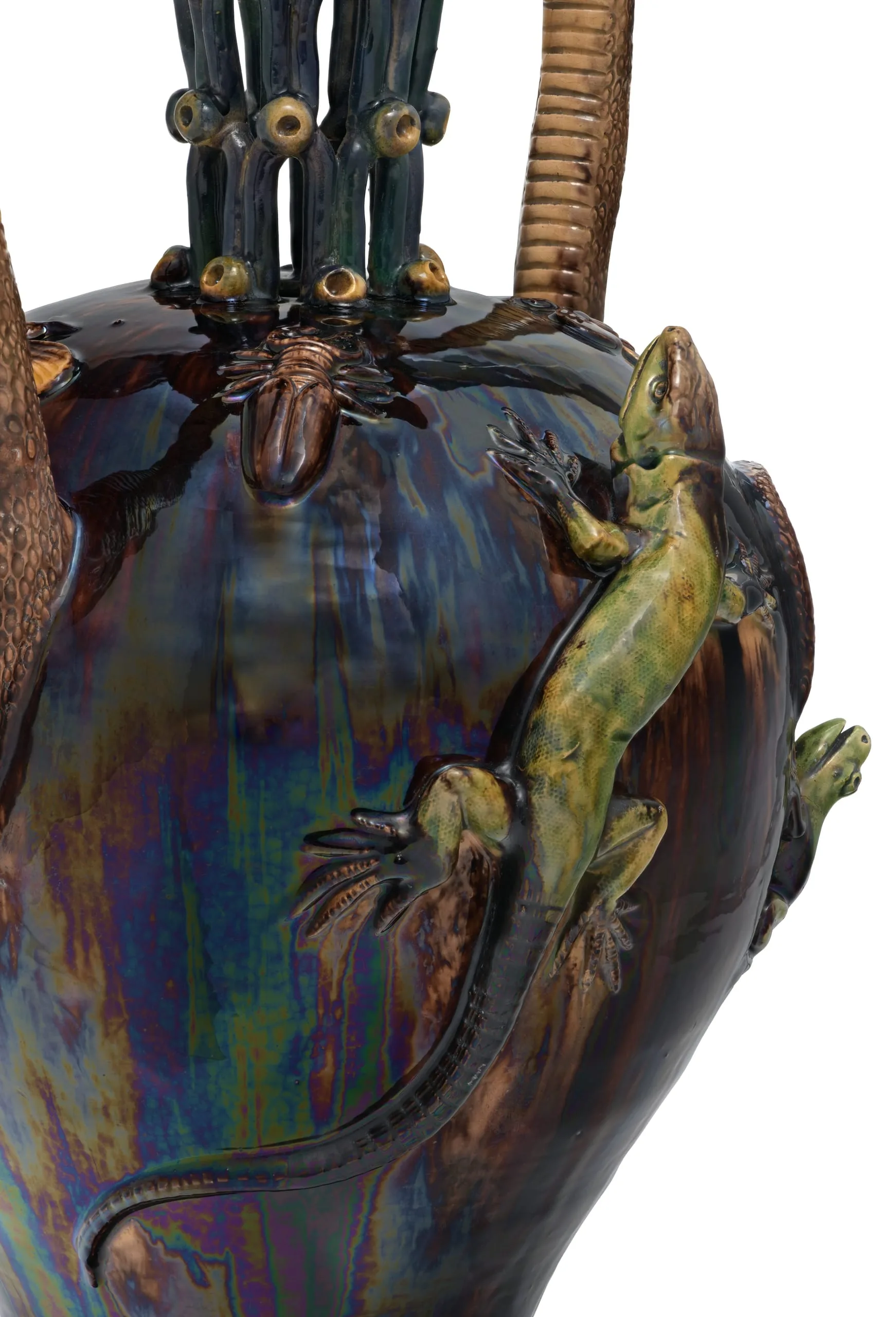
Ceramic vase with iridescent glaze in deep blue, purple, and copper tones; three-dimensional applied lizards in green and brown crawl across the surface, with modeled bamboo stalks and a ribbed handle at the neck.
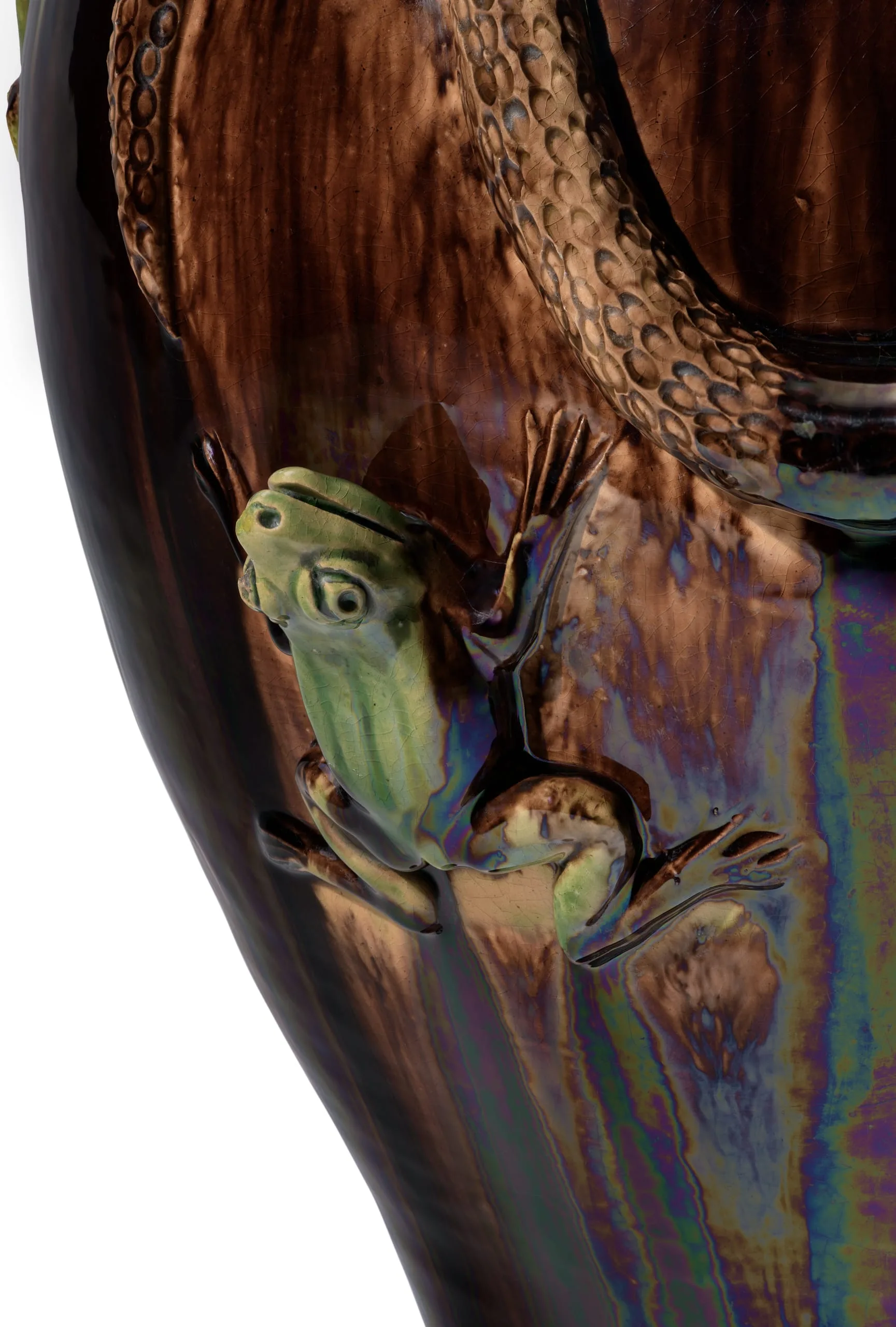
Detail of a ceramic vessel with iridescent brown, blue, and purple glaze, featuring applied relief figures of a green frog and a scaled reptile with textured, scale-patterned surfaces.
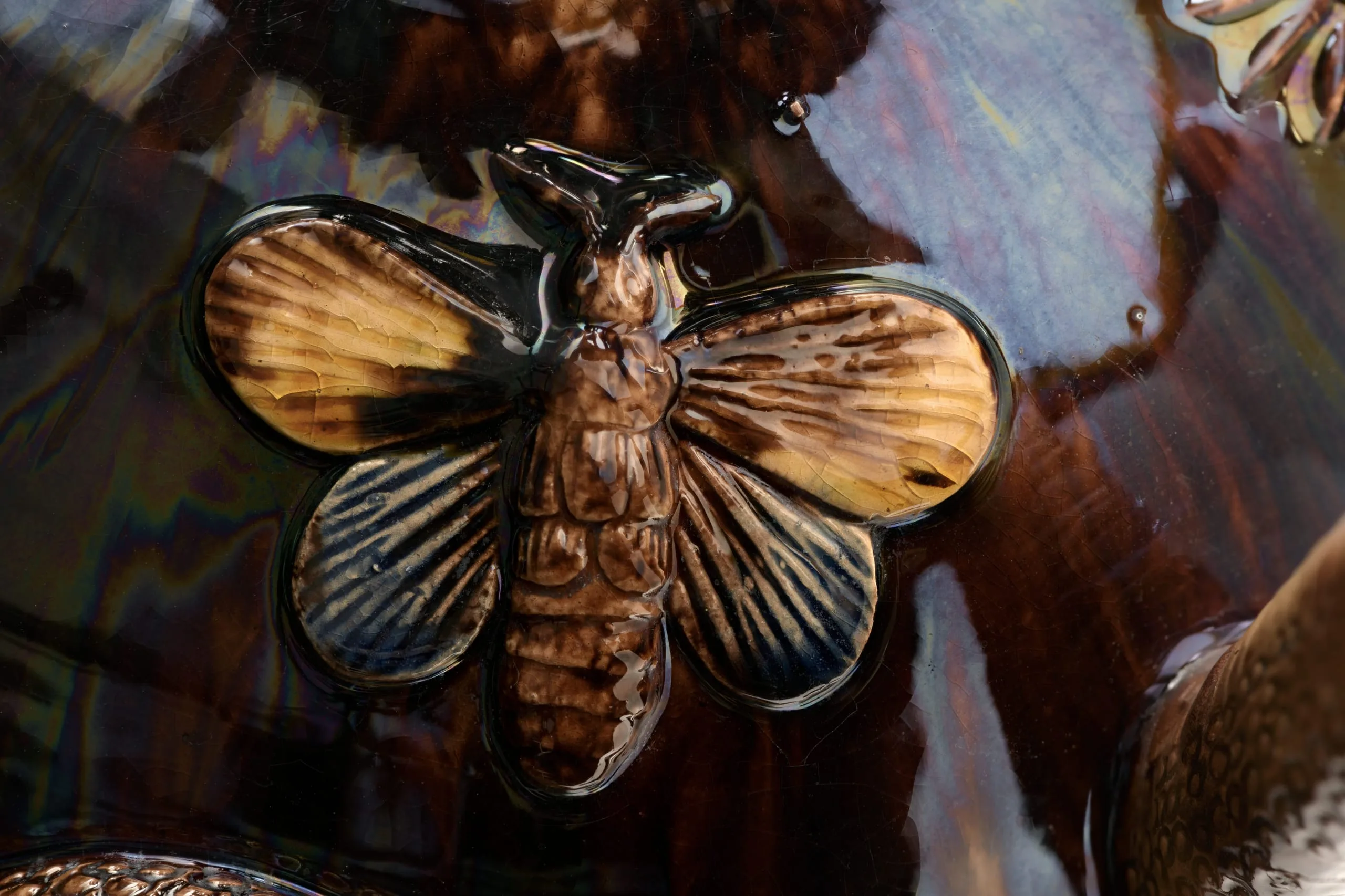
Close-up of a ceramic vessel surface featuring a raised relief moth or butterfly with spread wings, glazed in amber, brown, and dark blue tones with an iridescent luster glaze background.
Artist or Maker
Manuel Cipriano Gomes Mafra
Portugal, 1830-1905
Title
Urn
Place Made
Portugal
Date Made
circa 1865-1887
Medium
Glazed earthenware
Dimensions
17 1/2 × 11 × 10 in. (44.45 × 27.94 × 25.4 cm)
Credit Line
Gift of Barbara Barbara and Marty Frenkel
Accession Number
M.2013.193.5
Classification
Furnishings
Collecting Area
Decorative Arts and Design
Curatorial Notes

During the 19th century, there was a craze for work by the Renaissance potter Bernard Palissy (1510-1590) in both France and Portugal, inspiring interest in the originals, and the development of revival pieces in the same style.

In Portugal, manufacturing was concentrated in the town of Caldas da Rainha, where, in the 1850s, Manuel Cipriano Gomes Mafra (1830-1905) began to adapt Palissy’s style in a strikingly different direction, quite unlike that of his French counterparts. He incorporated the technique of pressing wet clay through a sieve to create the effect of moss as his principal background and expanded the subject matter, introducing narrative elements and extending the nature morte metaphor. This urn with snake handles is one of Mafra’s best-known designs.
Selected Bibliography
  • Esguerra, Clarissa, and Michaela Hansen. Lee Alexander McQueen: Mind, Mythos, Muse. Los Angeles: Los Angeles County Museum of Art, 2022.
  • Esguerra, Clarissa M., Michaela Hansen, Katie Somerville, and Danielle Whitfield, editors. Alexander McQueen: Mind, Mythos, Muse. Melbourne: National Gallery of Victoria; Los Angeles: Los Angeles County Museum of Art, 2022.