LACMA

ShopMembershipMyLACMATickets
LACMA
Los Angeles County Museum of Art
5905 Wilshire Blvd.
Los Angeles, CA 90036
info@lacma.org
(323) 857-6000
Sign up to receive emails
Subscribe
© Museum Associates 2025

Museum Hours

Monday

11 am–6 pm

Tuesday

11 am–6 pm

Wednesday

Closed

Thursday

11 am–6 pm

Friday

11 am–8 pm

Saturday

10 am–7 pm

Sunday

10 am–7 pm


  • About LACMA
  • Jobs
  • Building LACMA
  • Host An Event
  • Unframed
  • Press
  • FAQs
  • Log in to MyLACMA
  • Privacy Policy
© Museum Associates 2025
Collections

Unknown
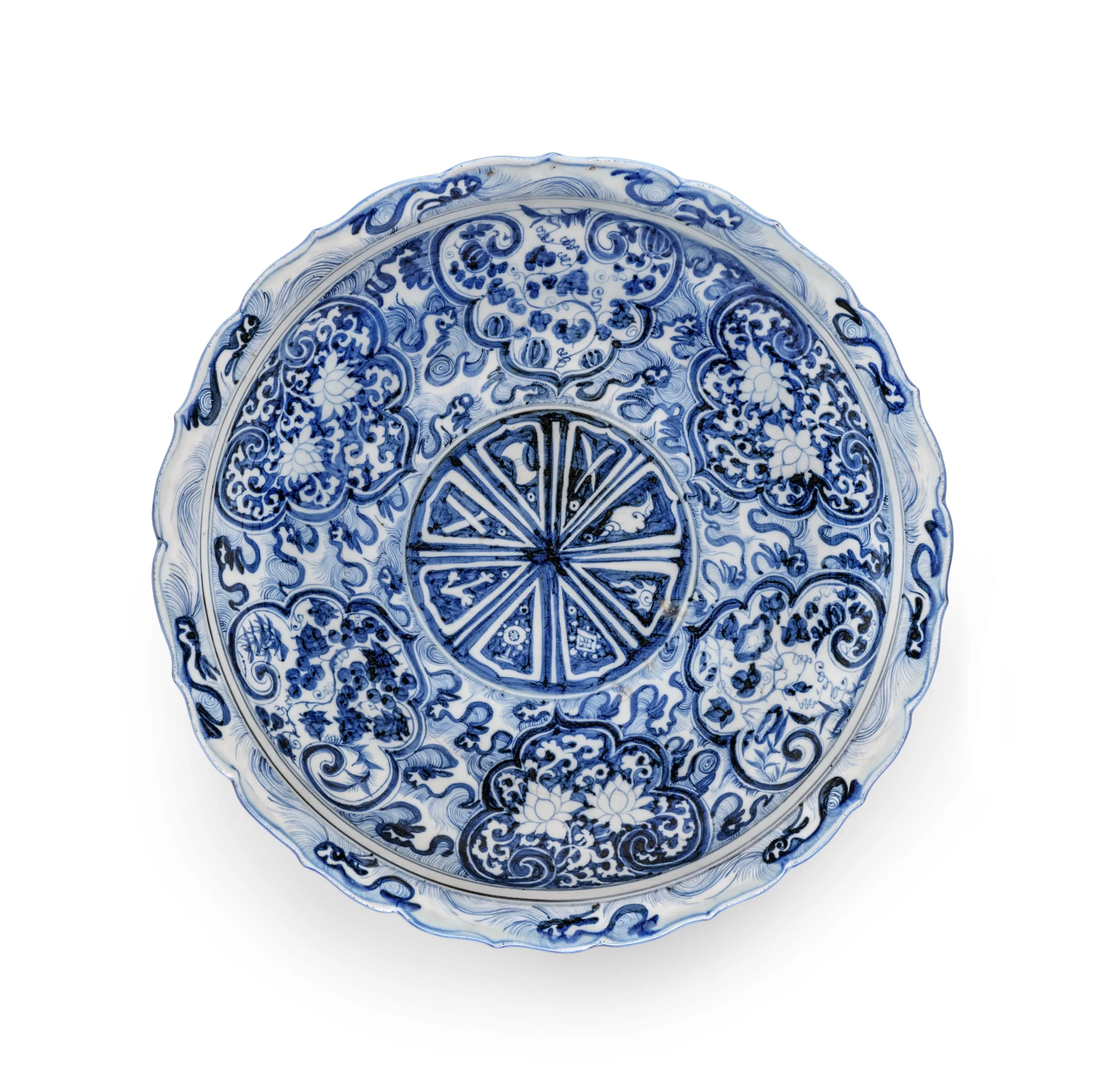
Foliated Platter (Pan) with the Eight Buddhist Symbols (Bajixiang), Flowers, and WavesYuan dynasty, circa 1340-1368

Not on view
Large blue and white ceramic dish seen from above, with scalloped rim, central spoke medallion, and lobed cartouches filled with lotus and peony motifs amid scrolling dragons
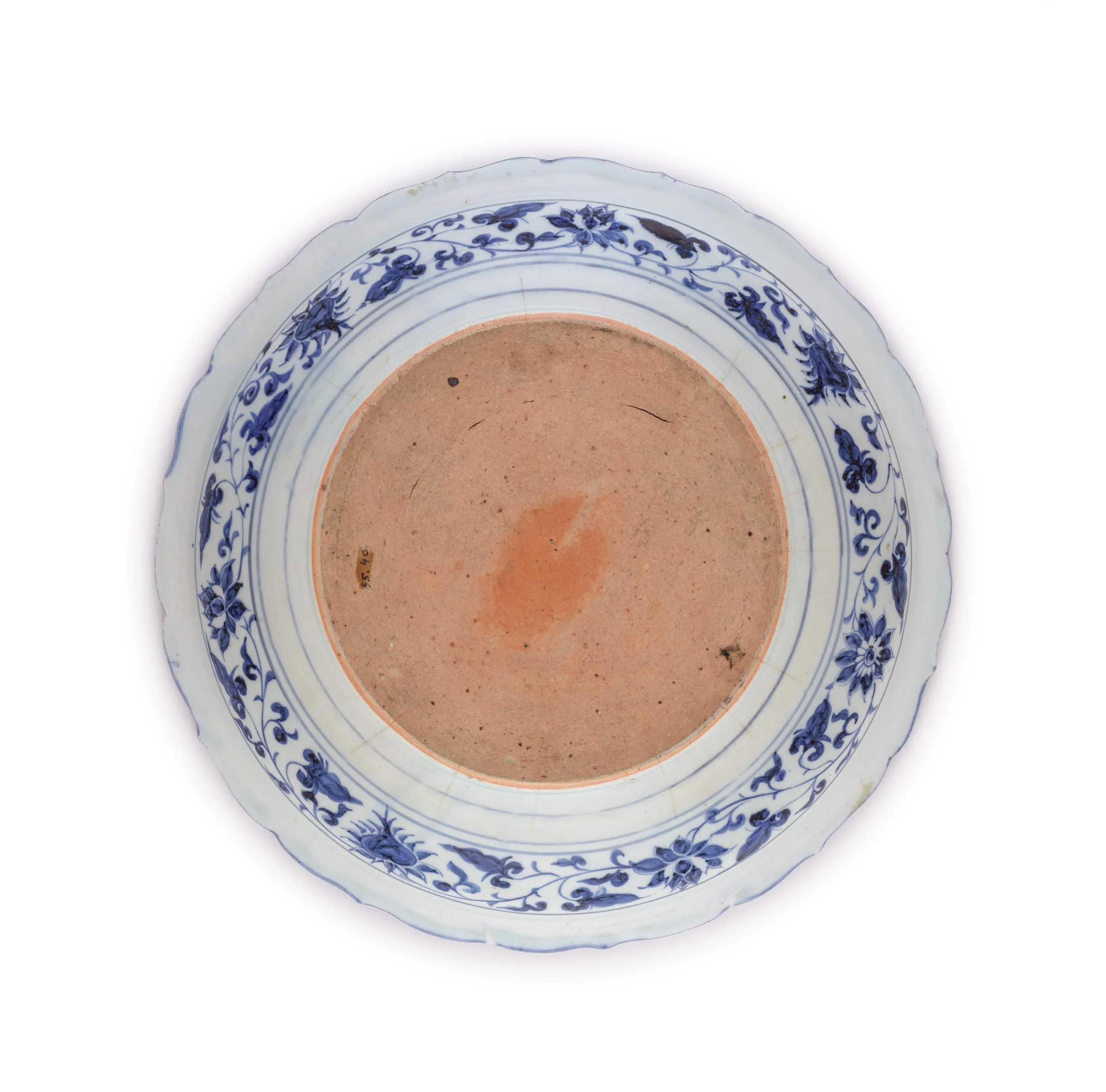
Porcelain dish viewed from the base, with an unglazed terracotta-colored foot rim and white glaze bordered by blue underglaze scrolling lotus decoration along the foliated rim.
Artist or Maker
Unknown
Title
Foliated Platter (Pan) with the Eight Buddhist Symbols (Bajixiang), Flowers, and Waves
Place Made
China, Jiangxi Province, Jingdezhen
Date Made
Yuan dynasty, circa 1340-1368
Medium
Molded porcelain with blue painted decoration under clear glaze
Dimensions
Height: 2 1/4 in. (5.9 cm); Diameter: 17 3/4 in. (45.1 cm)
Credit Line
Gift of the Francis E. Fowler, Jr., Foundation and the Los Angeles County Fund
Accession Number
55.40
Classification
Furnishings
Collecting Area
Chinese and Korean Art
Curatorial Notes
Flourishing in the Yuan dynasty, blue-and-white ceramic ware soon dominated the export market; demand for it spread rapidly. A plate of this design and size was probably made for the Near Eastern market and would have been used on formal or ritual occasions, given as a gift, or awarded for services.
This example is typical of early blue-and-white Yuan ceramics, with its foliated rim, unglazed base, and freely drawn wave motif. The technique of blue underglaze with white reserved areas, all with a clear feldspathic overglaze, emerged from innovative Yuan ceramic experiments.
The feathery wave motif circles the plate's rim. Three additional concentric tiers of waves give the plate's surface a lively and unpredictable pattern. The two middle wave tiers are interrupted by six lobed cloud-collar patterns, which echo the rim shape. Designs in the cloud collars include lotuses, abstract foliage, melons, grapes, bamboo, and morning glories. Some scholars believe the cloud-collar shape derives from designs in Persian metalwork or Mongol and Tatar embroideries; others suggest that it derives from Buddhist designs representing the four cardinal directions.
While the overall program of the plate's design is Islamic in taste, its primary motifs are Chinese. For example, the center medallion's eight partitions contain auspicious Buddhist symbols and the medallion itself represents the Buddhist Wheel of Law. Underneath the rim is a Near Eastern scrolling floral design of lotus or aster blossoms alternating with pomegranates.
Selected Bibliography
  • Little, Stephen, and Tushara Bindu Gude. Realms of the Dharma: Buddhist Art across Asia. Los Angeles: Los Angeles County Museum of Art, 2025.