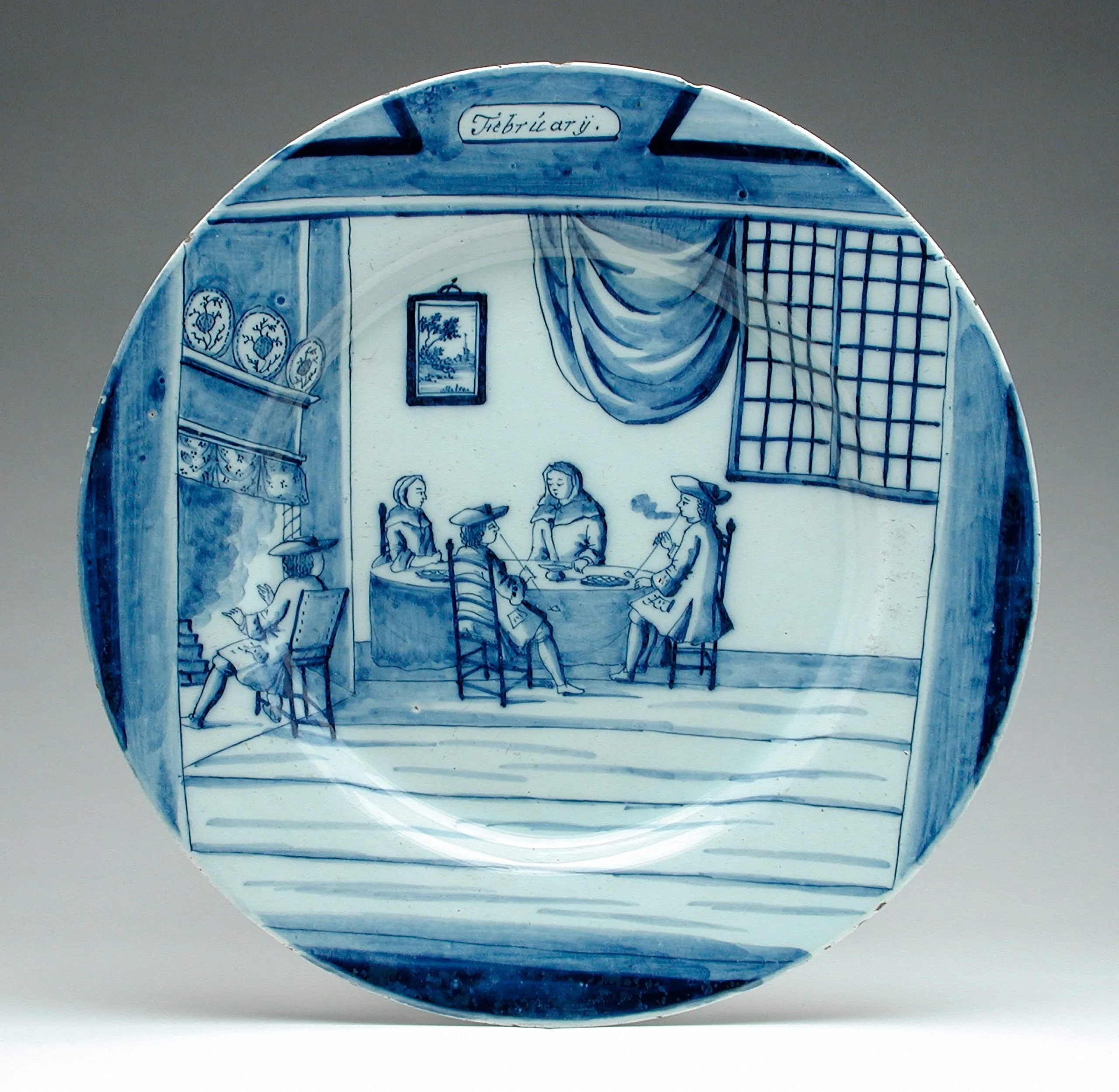
This plate belongs to a set of twelve calendar plates, each depicting a different activity associated with a particular month. February shows a man sitting by the fire while two others smoke and chat with women around a table. A landscape painting hangs on the wall, and several ceramic plates decorate the mantelpiece. This scene reflects a leisurely evening within an average Dutch household, as well as the chilly winters people in the Netherlands experienced during the Little Ice Age.
Delft was the center of blue-and-white ceramic production in the Dutch Republic. In response to the growing demand for porcelain imported from Asia, ceramists in the Netherlands began producing glazed earthenware, known as Delftware, which often imitated Chinese motifs and sometimes intermingled them with European decorations. By the eighteenth century, manufacturers also produced designs more reflective of local customs. Other decorative motifs, like the scenes on this series of plates, were taken from circulating European print sources.
Multiple manufacturers based in Delft produced tin-glazed earthenware. Established in 1657, De Porceleyne Bijl (The Porcelain Axe) was one of these factories, named for the sign depicting a hatchet that hung at their door and marked their ceramics. Justus Brouwer purchased the factory in 1739, later co-managing it with his son Hugo Brouwer. In 1761, Justus bought another factory, De Drie Porceleyne Flessies (The Three Porcelain Bottles), for Hugo to oversee. De Drie Porceleyne Flessies closed in 1777, and Hugo sold De Porceleyne Bijl in 1788.
Cynthia Kok
2025