LACMA

ShopMembershipMyLACMATickets
LACMA
Los Angeles County Museum of Art
5905 Wilshire Blvd.
Los Angeles, CA 90036
info@lacma.org
(323) 857-6000
Sign up to receive emails
Subscribe
© Museum Associates 2025

Museum Hours

Monday

11 am–6 pm

Tuesday

11 am–6 pm

Wednesday

Closed

Thursday

11 am–6 pm

Friday

11 am–8 pm

Saturday

10 am–7 pm

Sunday

10 am–7 pm


  • About LACMA
  • Jobs
  • Building LACMA
  • Host An Event
  • Unframed
  • Press
  • FAQs
  • Log in to MyLACMA
  • Privacy Policy
© Museum Associates 2025
Collections

Unknown
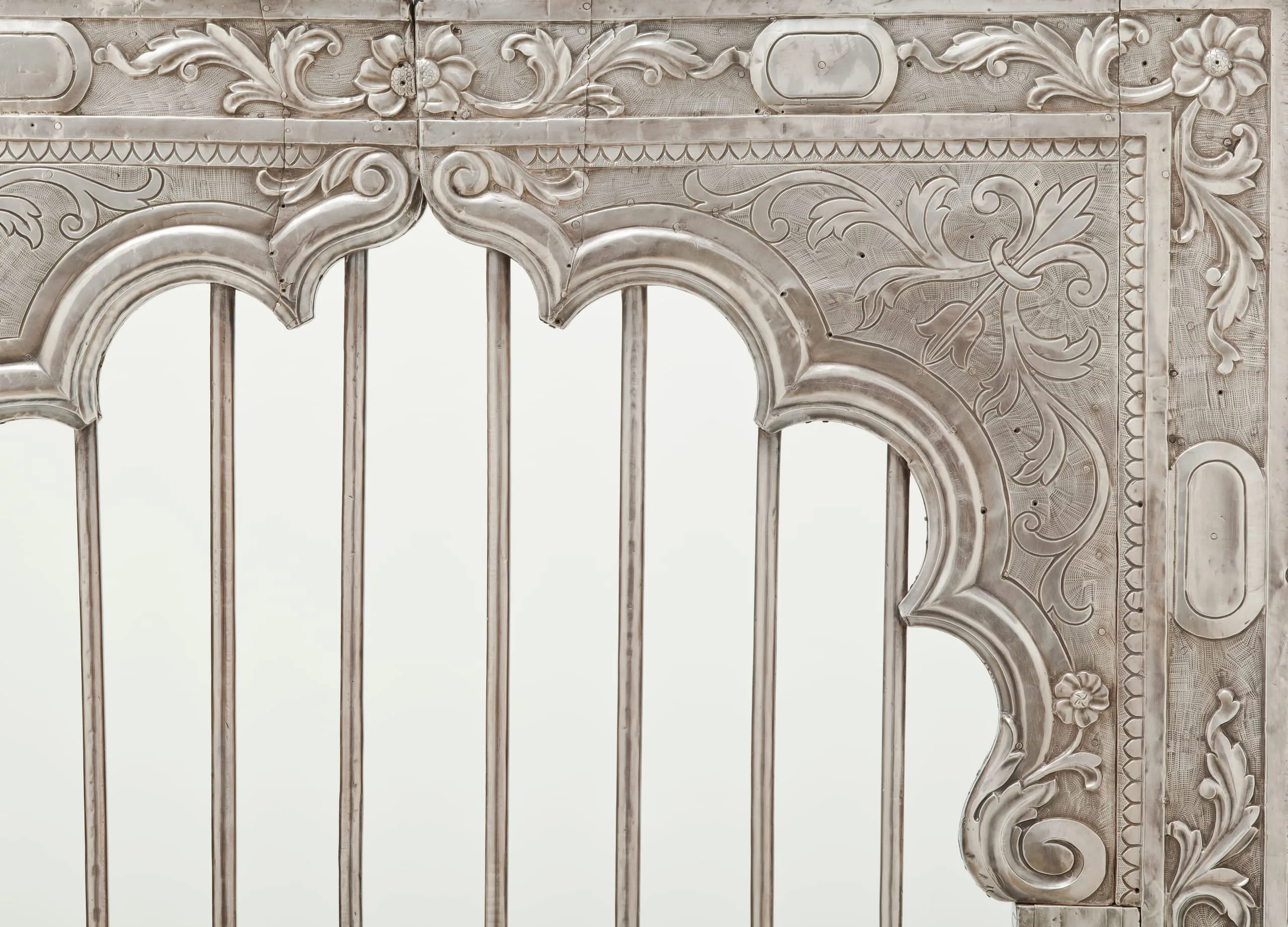
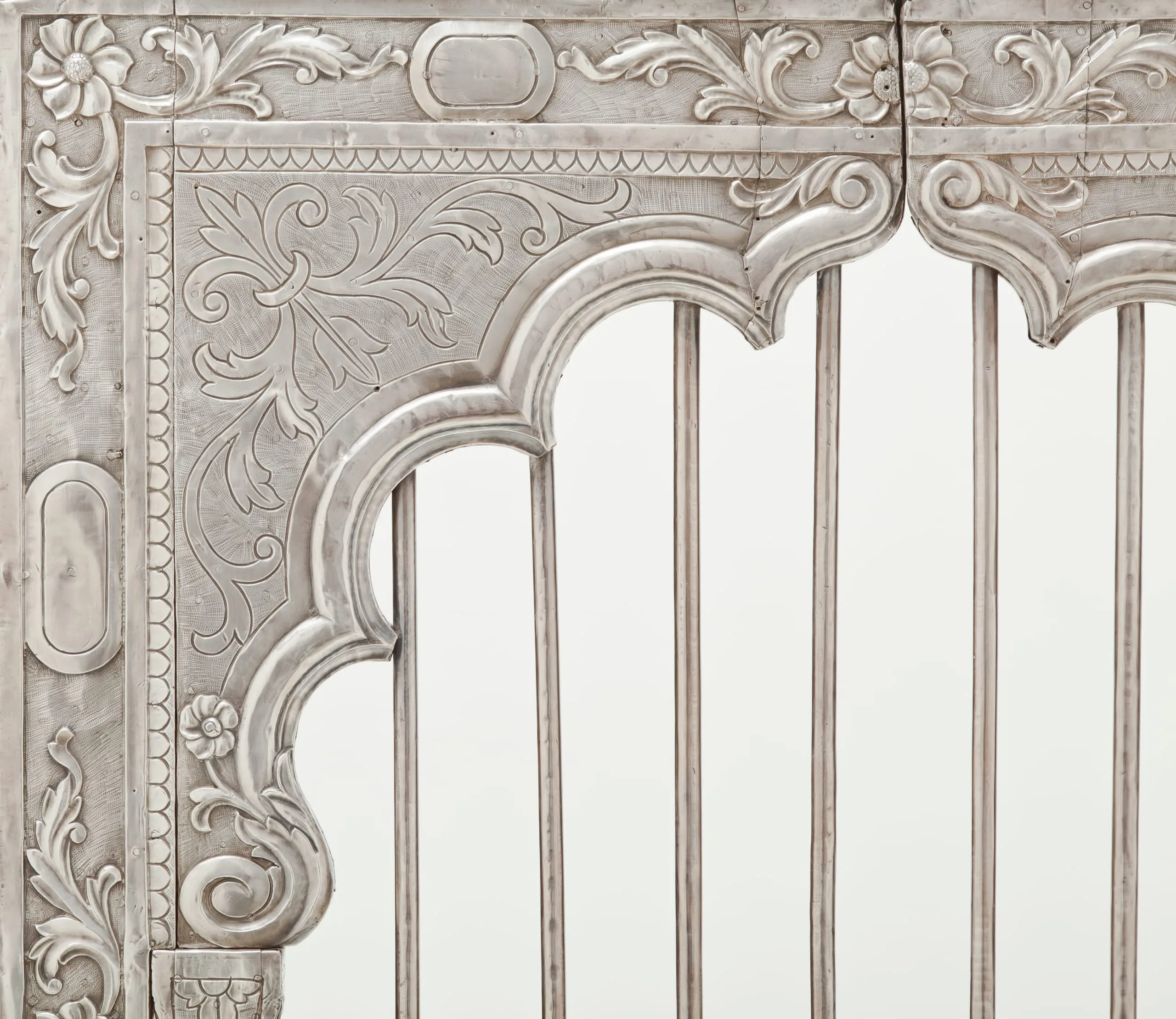
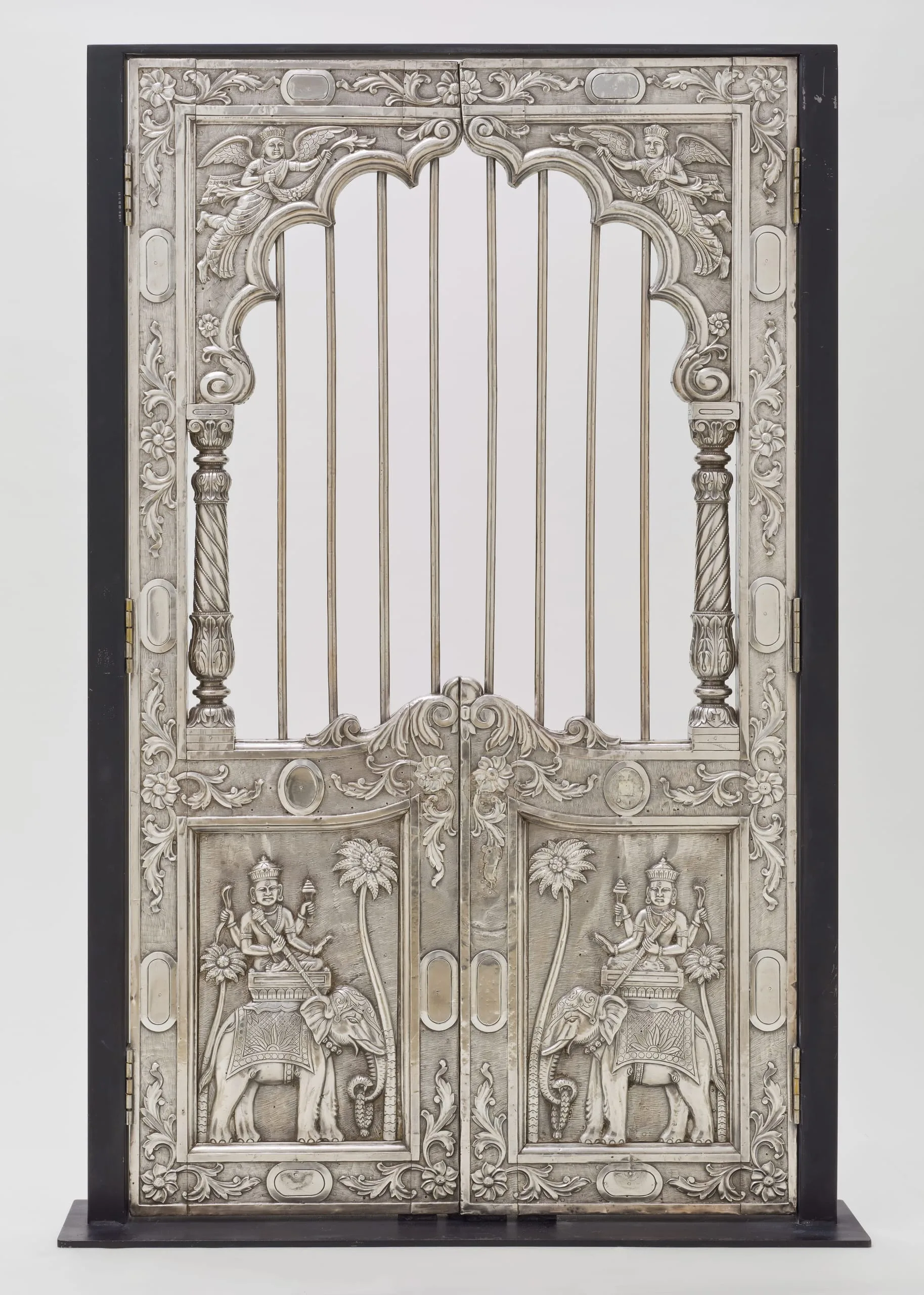
Shrine Doors with Indra, Divine Regent of the Eastcirca 1850-1900

Not on view
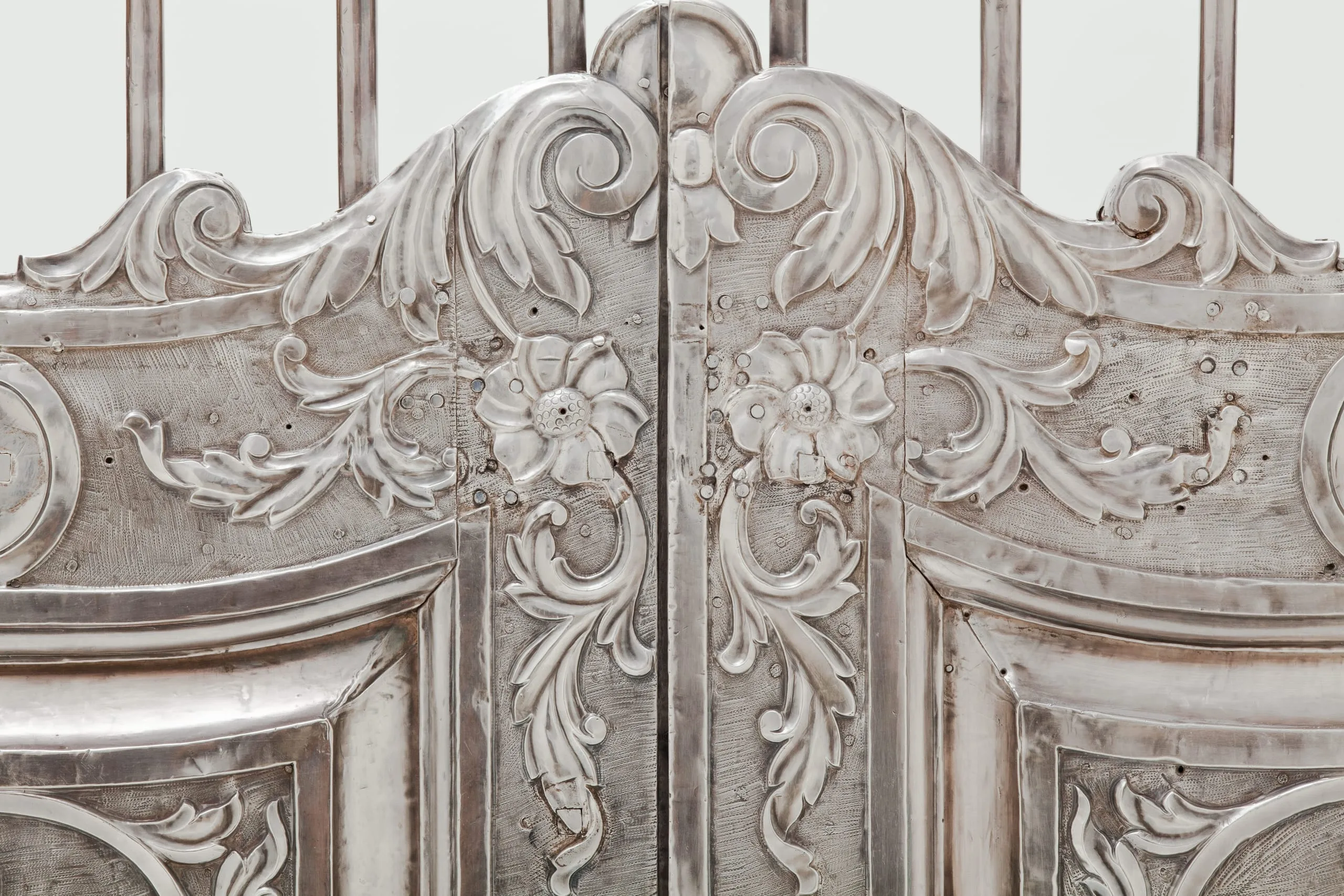
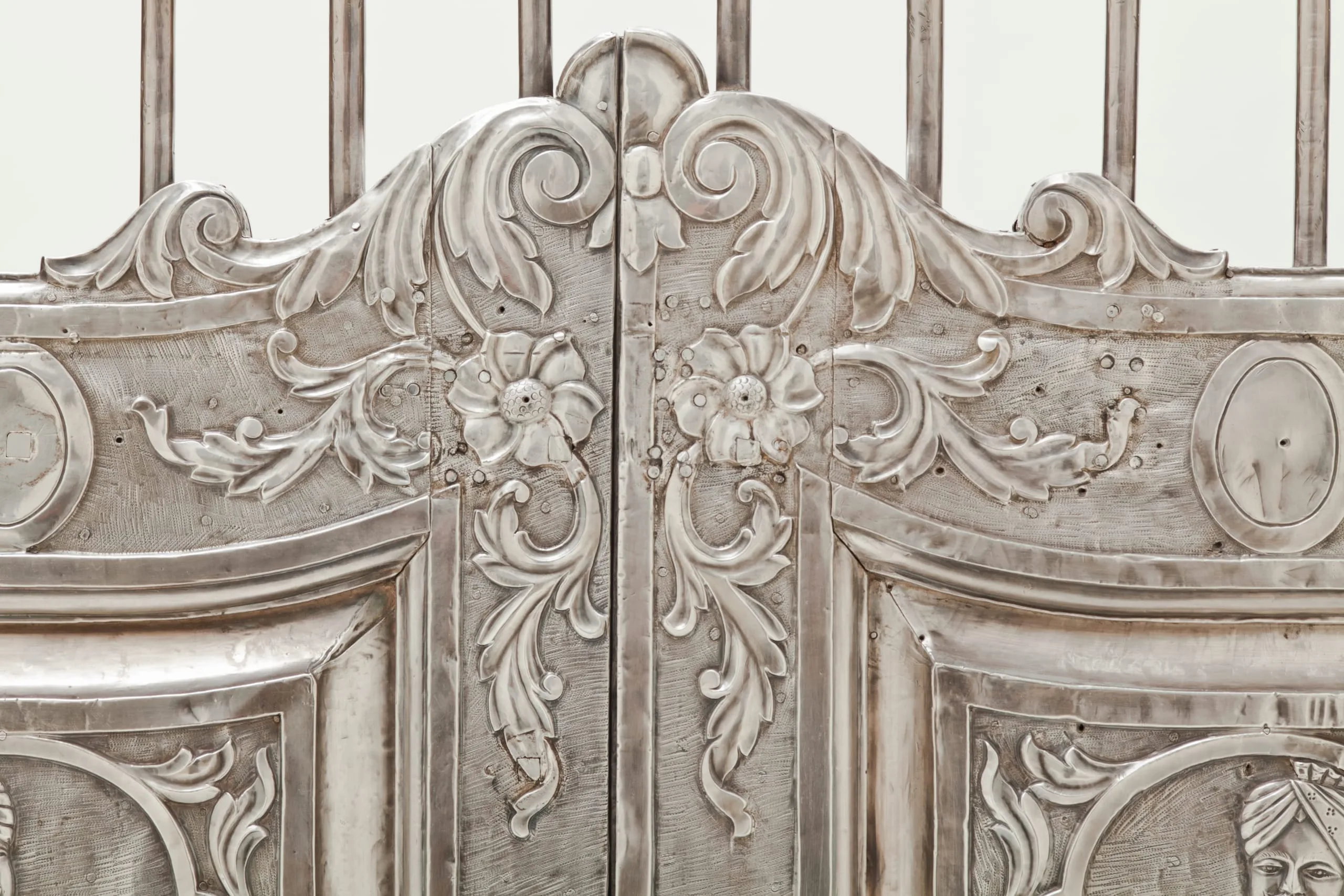
Pair of silver repoussé double doors in a dark wooden frame, with a cusped grille arch in the upper half and figural relief panels below showing deities seated on decorated elephants
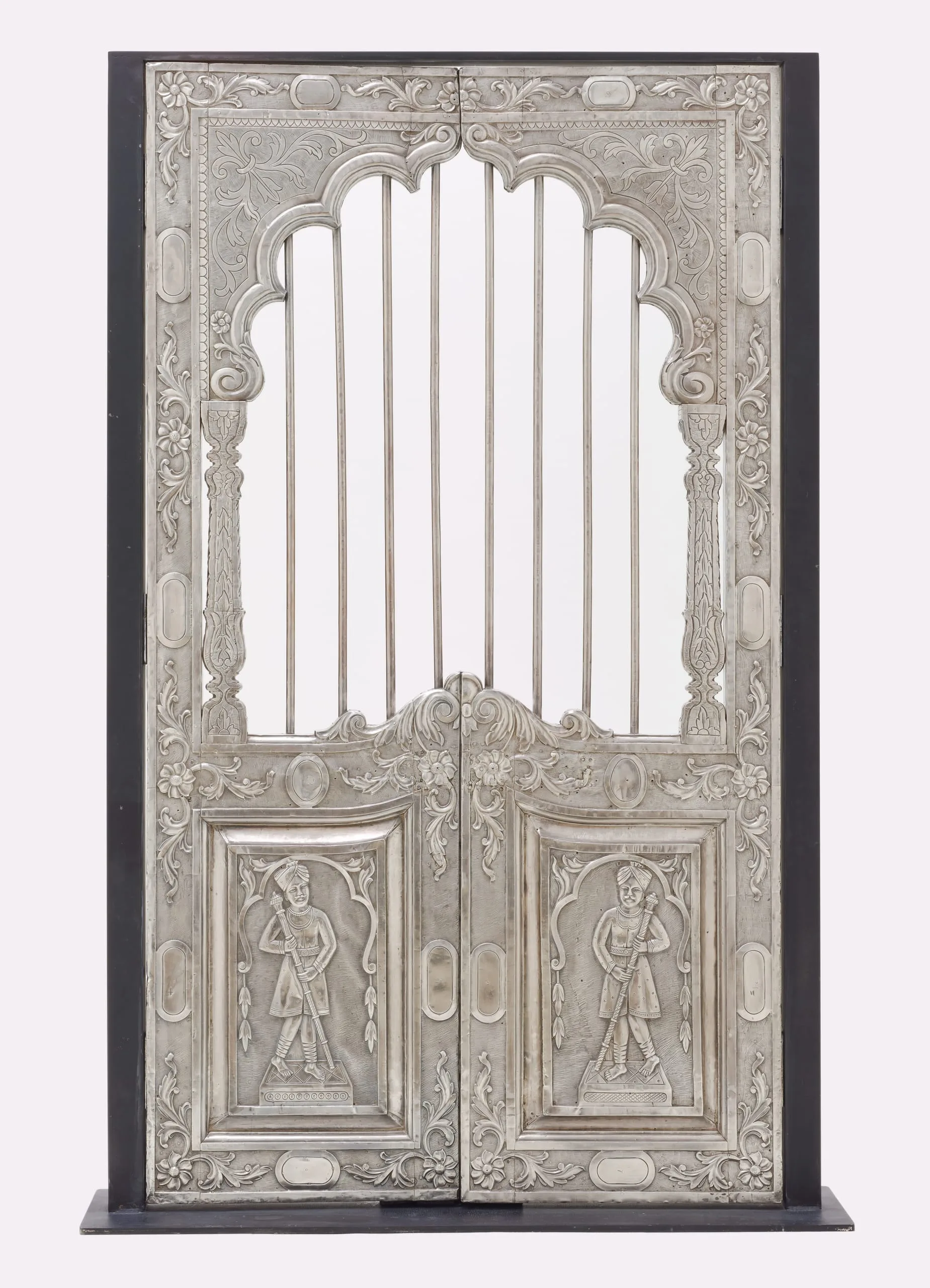
Silver-repoussé double door mounted on a dark frame, upper panels featuring vertical bars within a cusped arch surrounded by dense floral and scrolling relief work, lower panels each bearing a standing male figure in courtly dress carrying a staff, framed by continuous ornamental borders.
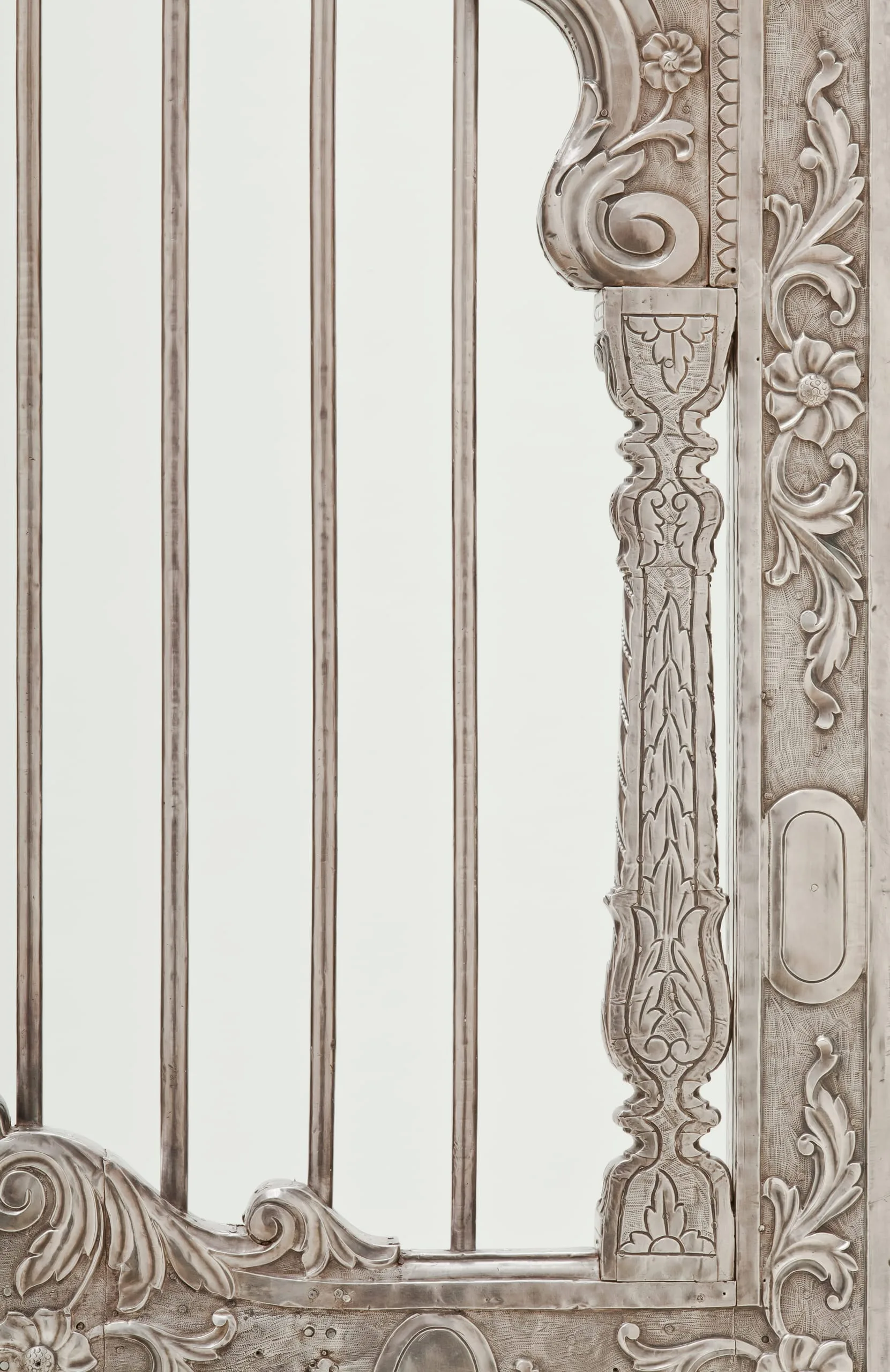
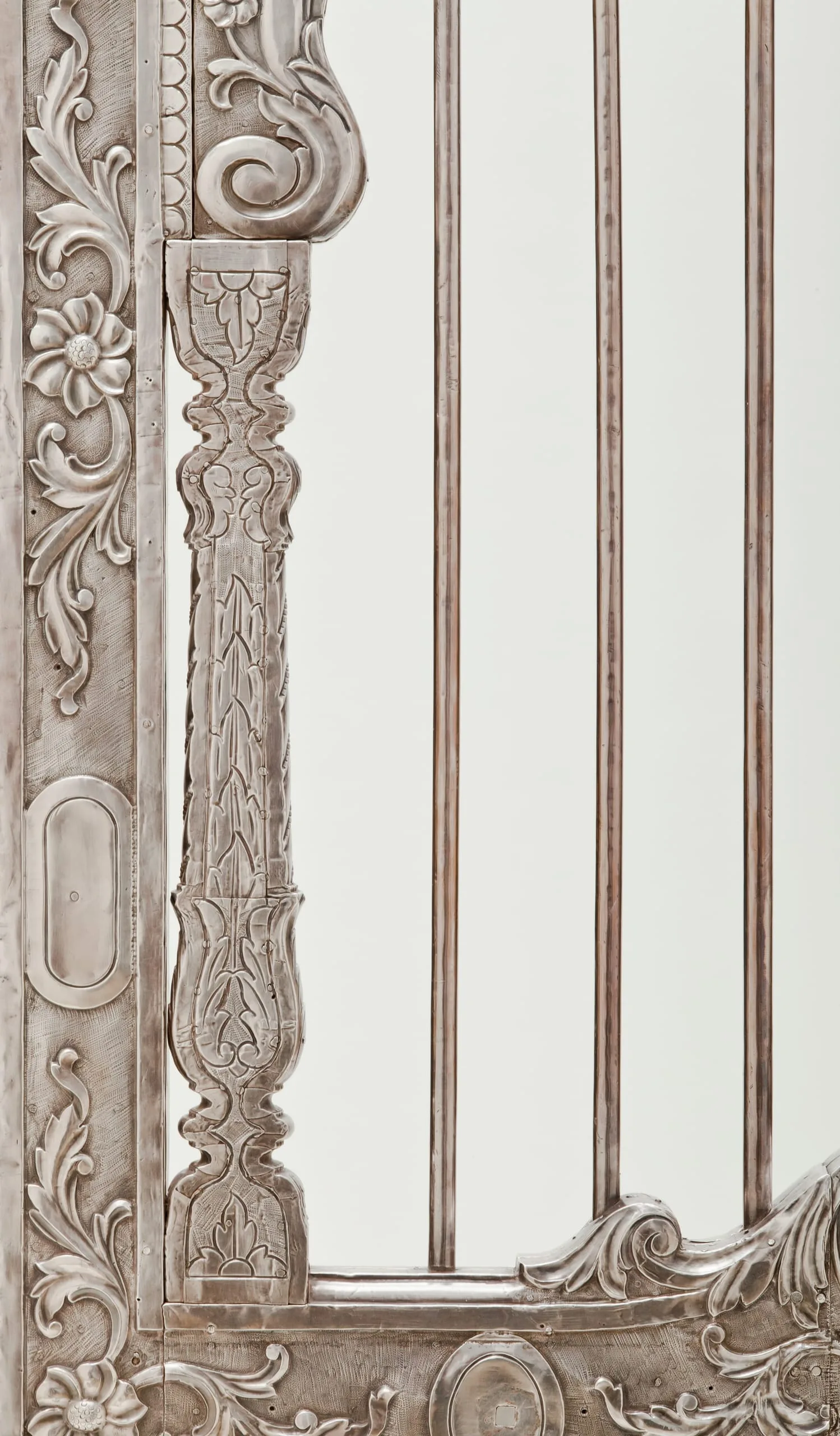
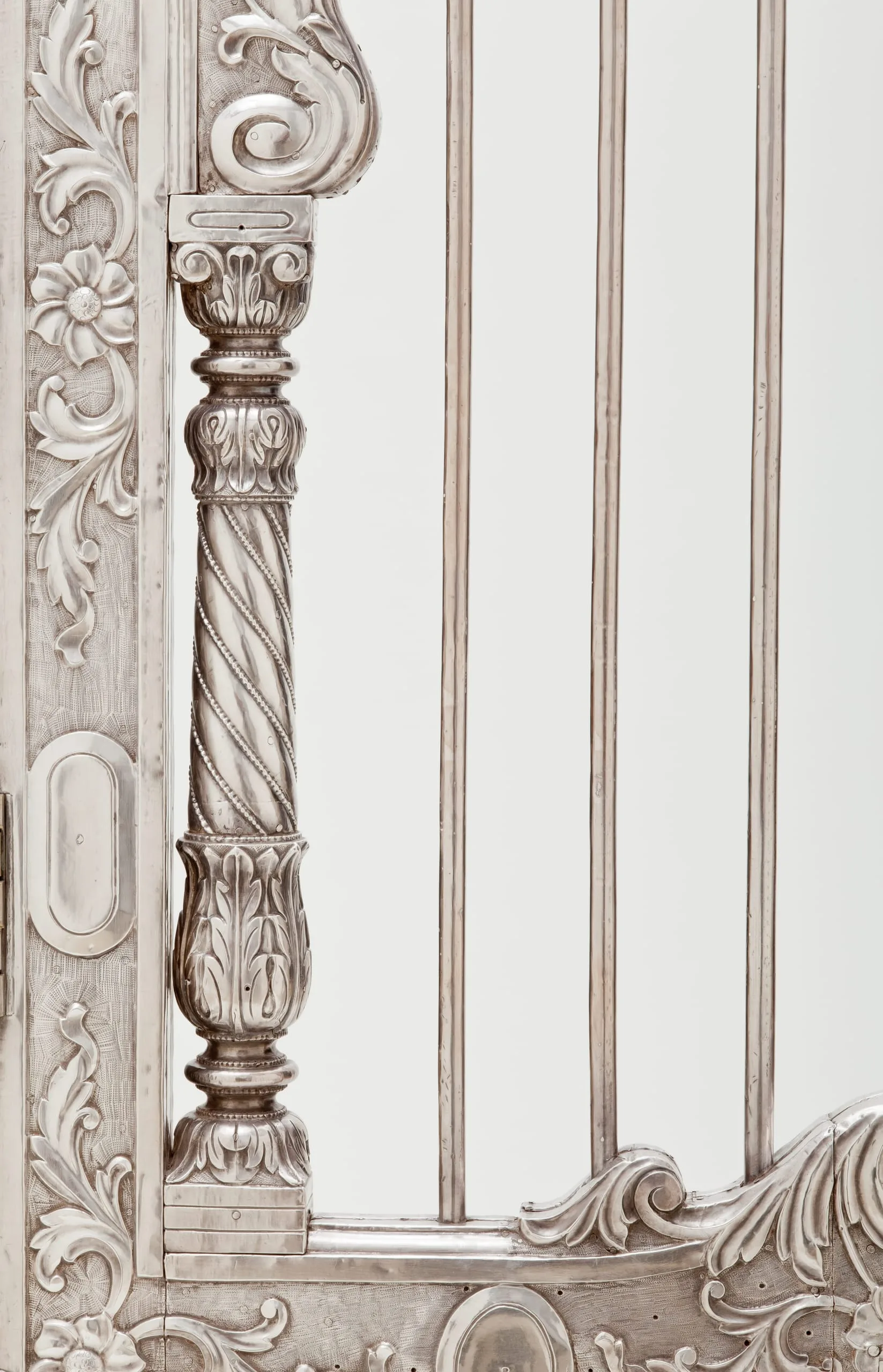
Detail of a silver metalwork grille featuring a twisted barley-sugar column with acanthus leaf capitals, flanked by a border with deeply chased floral and scrolling foliate relief decoration.
Silver metalwork detail showing a twisted barley-sugar column with acanthus leaf capitals, flanked by vertical bars and an ornate foliate border with scrollwork and a floral rosette.
Detail of a repoussé silver panel, corner section featuring a winged angelic figure in draped garments amid scrolling acanthus leaves and floral motifs, with vertical architectural bars below arched openings.
Detail of a silver repoussé panel with an arched gate structure; a crowned, winged figure in armor holds a torch at the upper corner, surrounded by scrolling acanthus leaves and floral motifs worked in high relief with finely engraved hatched background.
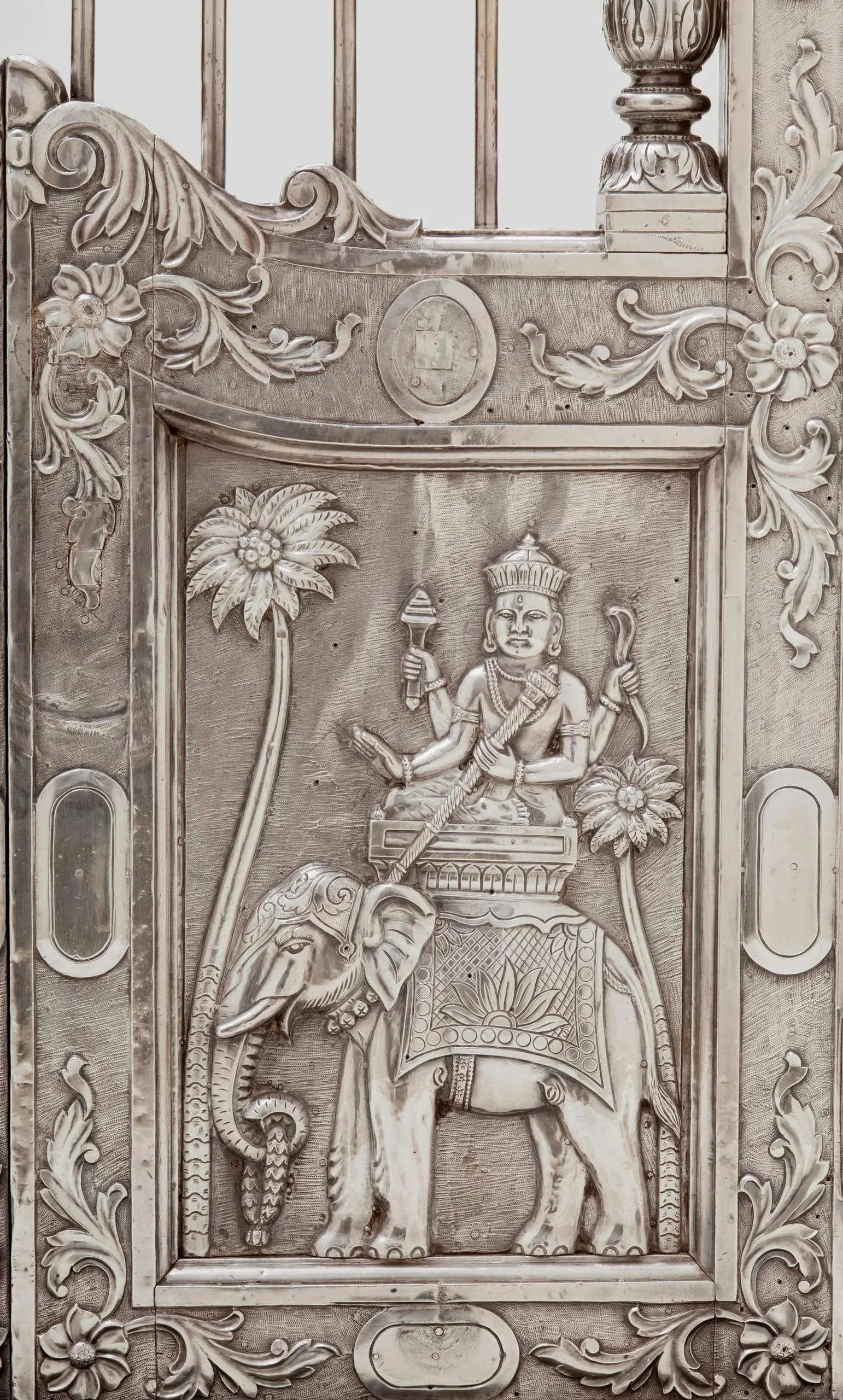
Repoussé silver panel depicting a multi-armed deity seated atop a caparisoned elephant, flanked by a lotus flower and palm tree, framed by scrolling foliate and floral borders in high relief.
Silver repoussé panel depicting a multi-armed deity seated atop a caparisoned elephant, holding ritual objects, flanked by a palm tree; framed by ornate scrolling foliate borders with floral motifs.
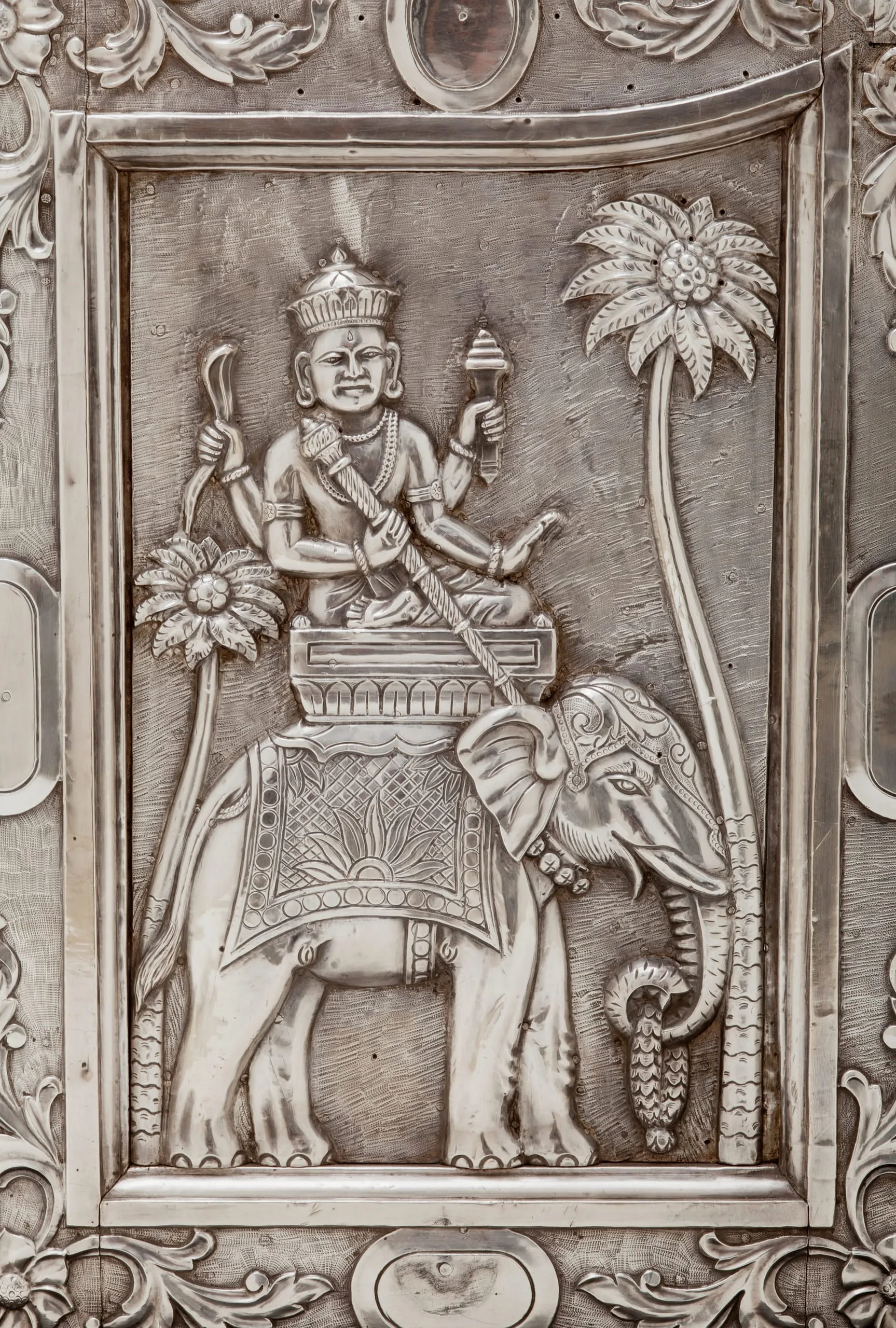
Repoussé silver panel depicting a four-armed deity seated atop a caparisoned elephant, holding attributes including a lotus flower and vessel; a palm tree rises at right, framed by scrolling foliate border.
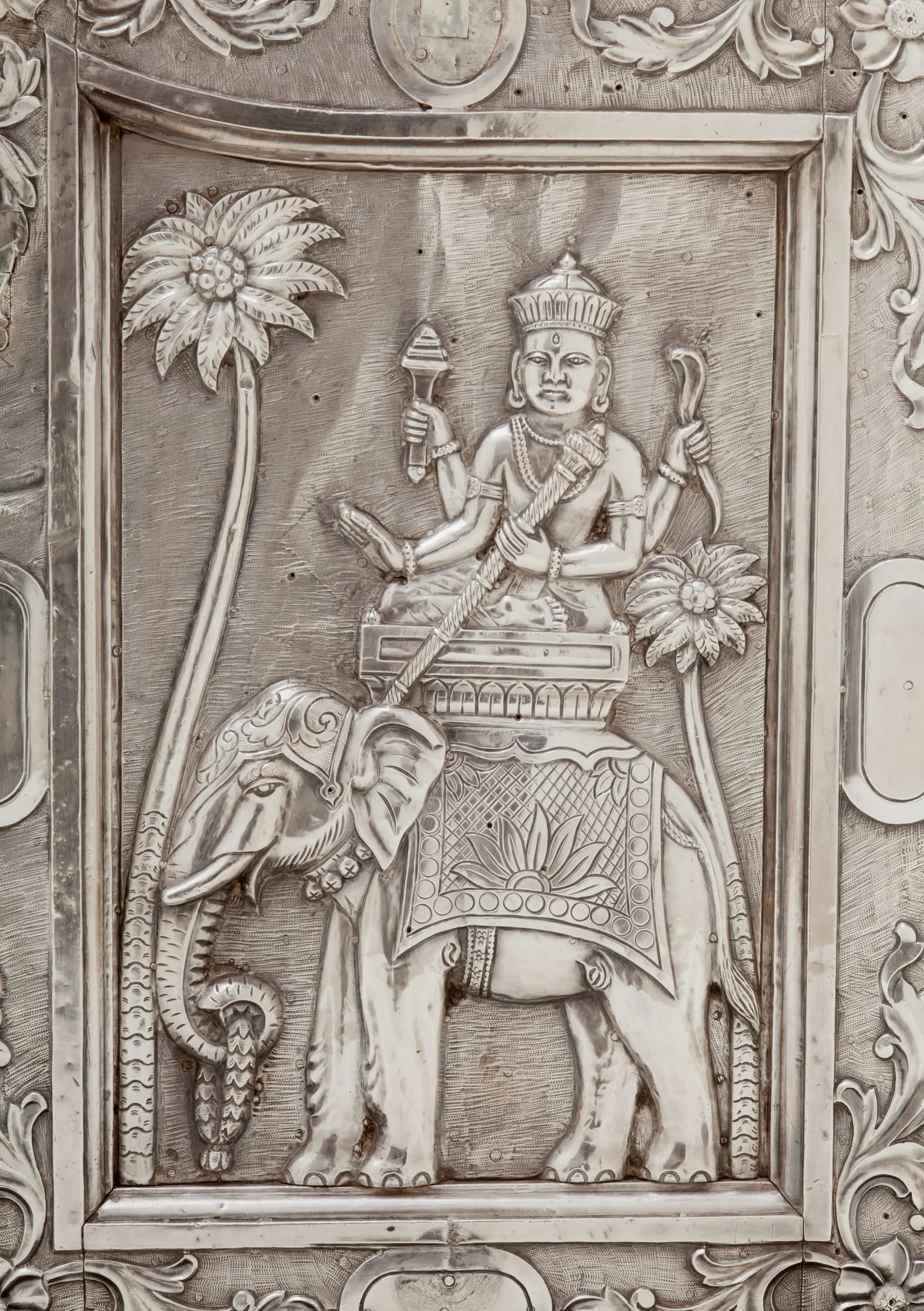
Repoussé silver panel depicting a four-armed deity seated atop a caparisoned elephant, flanked by two palm trees, with finely worked decorative borders and floral scrollwork around the frame.
Repoussé silver or silver-clad panel, symmetrical pair of large open flowers with dotted central seed pods, surrounded by scrolling acanthus-like foliage in high relief against a finely textured ground.
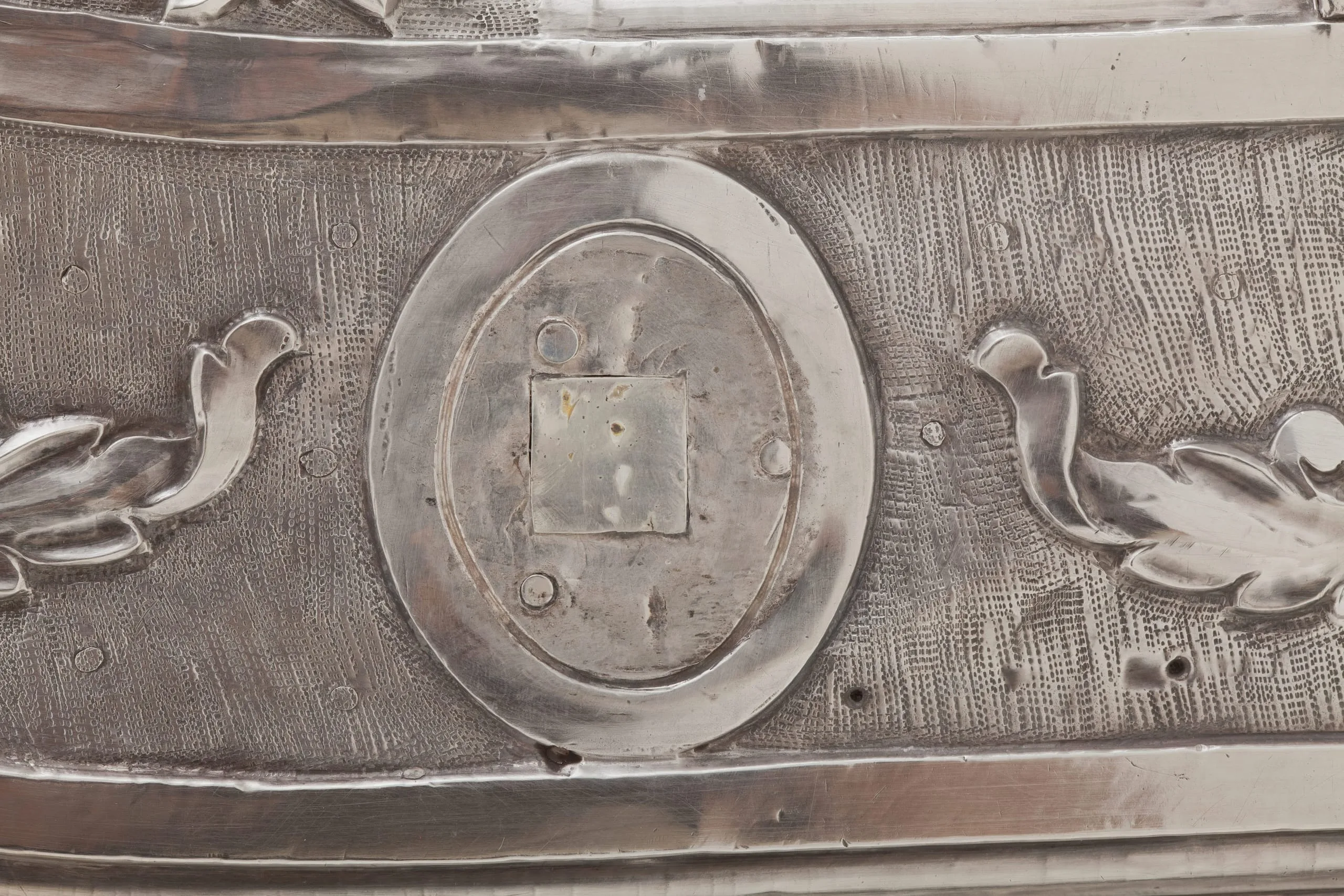
Close-up of a silver object's surface, showing a central raised oval cartouche with an erased armorial, flanked by repoussé foliage and birds against a finely textured hatched ground.
Repoussé silver panel with bilateral symmetry, featuring bold acanthus scrolls and open-faced flowers with stippled backgrounds, meeting at a central vertical seam.
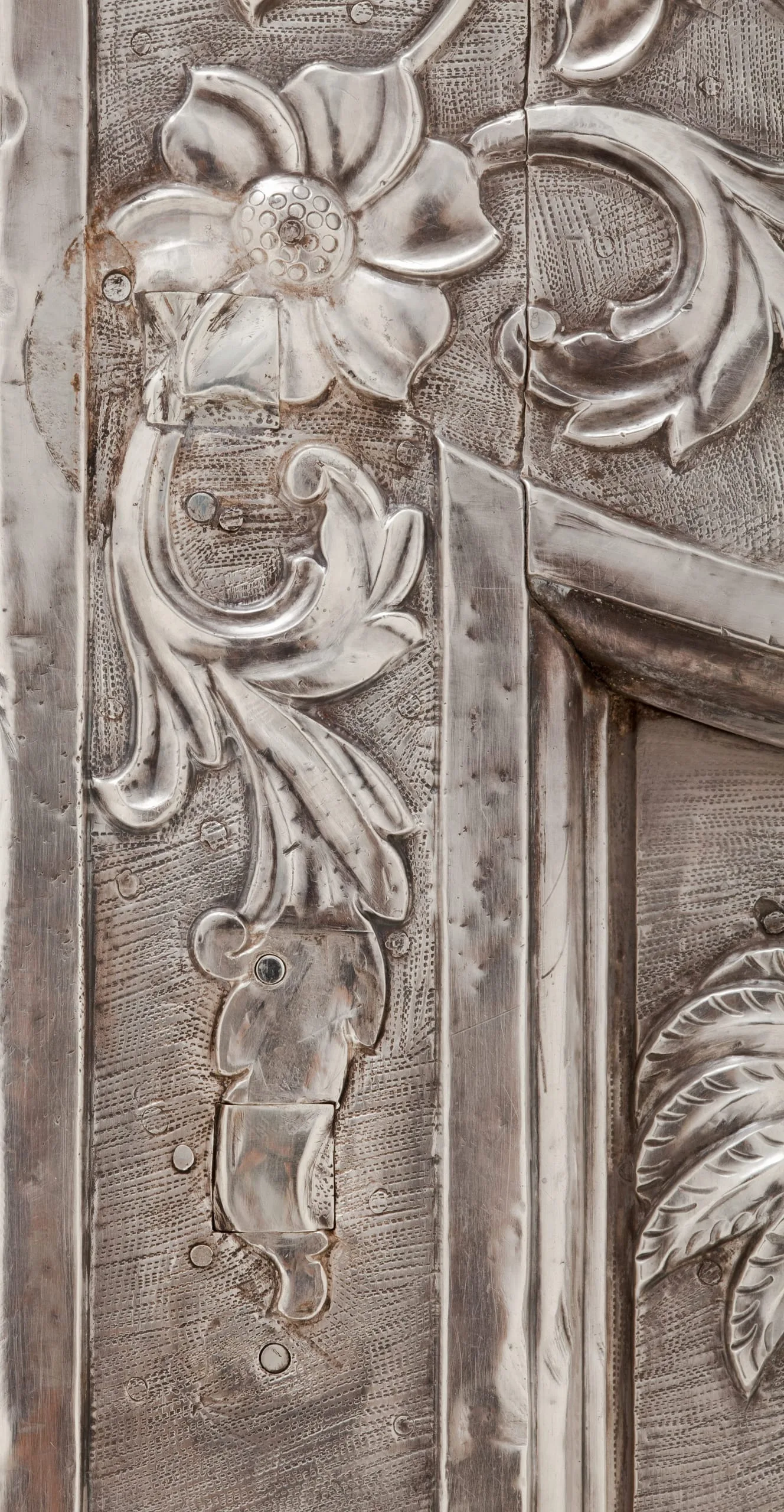
Close-up of a silver repoussé panel, featuring a large raised flower bloom and scrolling acanthus leaves against a cross-hatched textured ground, with a hinged clasp mechanism at center.
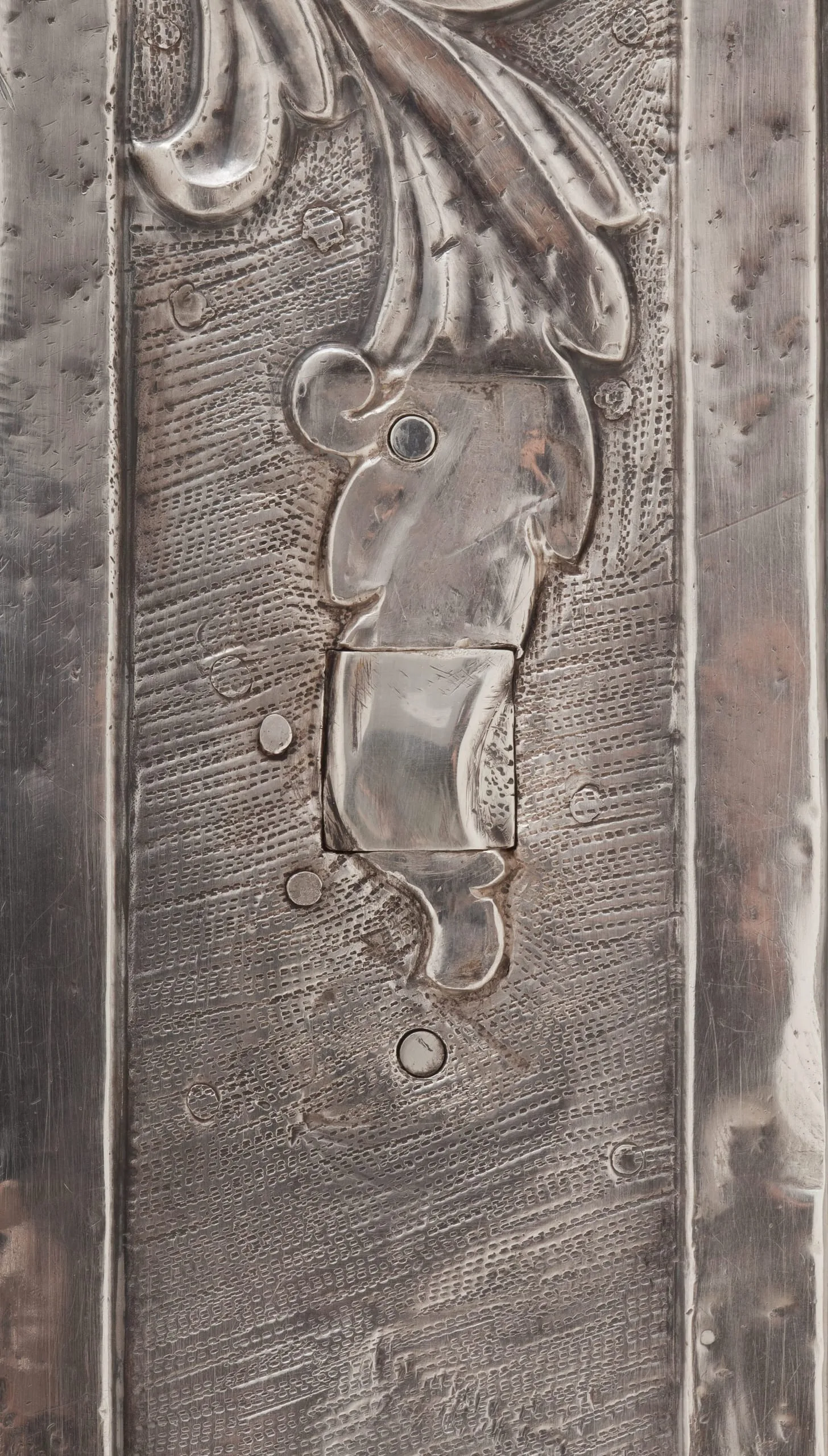
Close-up of a silver repoussé panel with a raised acanthus leaf motif at top and a hinged rectangular clasp at center, set against a finely stippled and hatched background with small circular rivets.
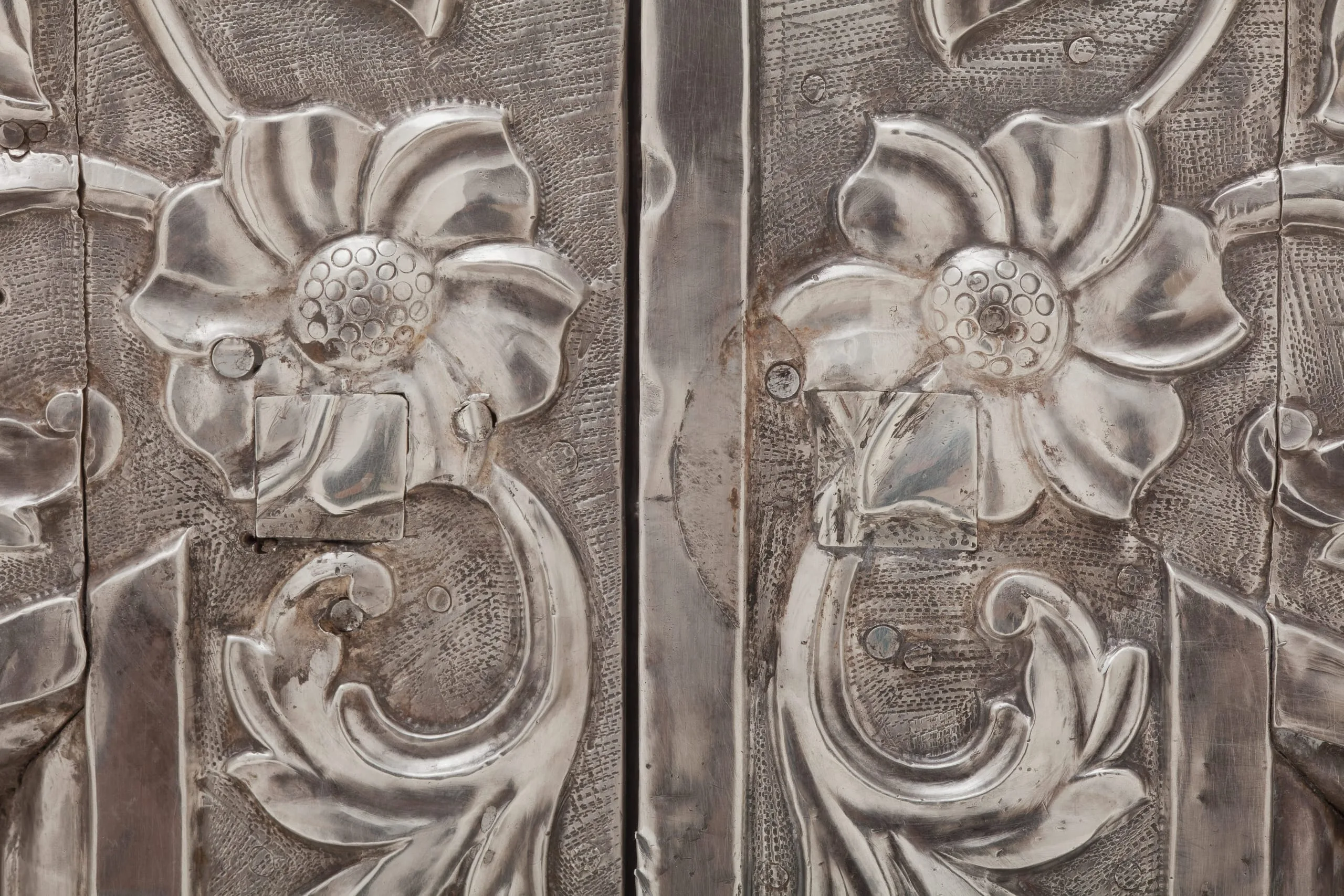
Close-up of a silver repoussé surface featuring a large raised flower with a dotted circular center, broad petals, and a curling stem, with a small hinged clasp mechanism at center, set against a finely textured punched background.
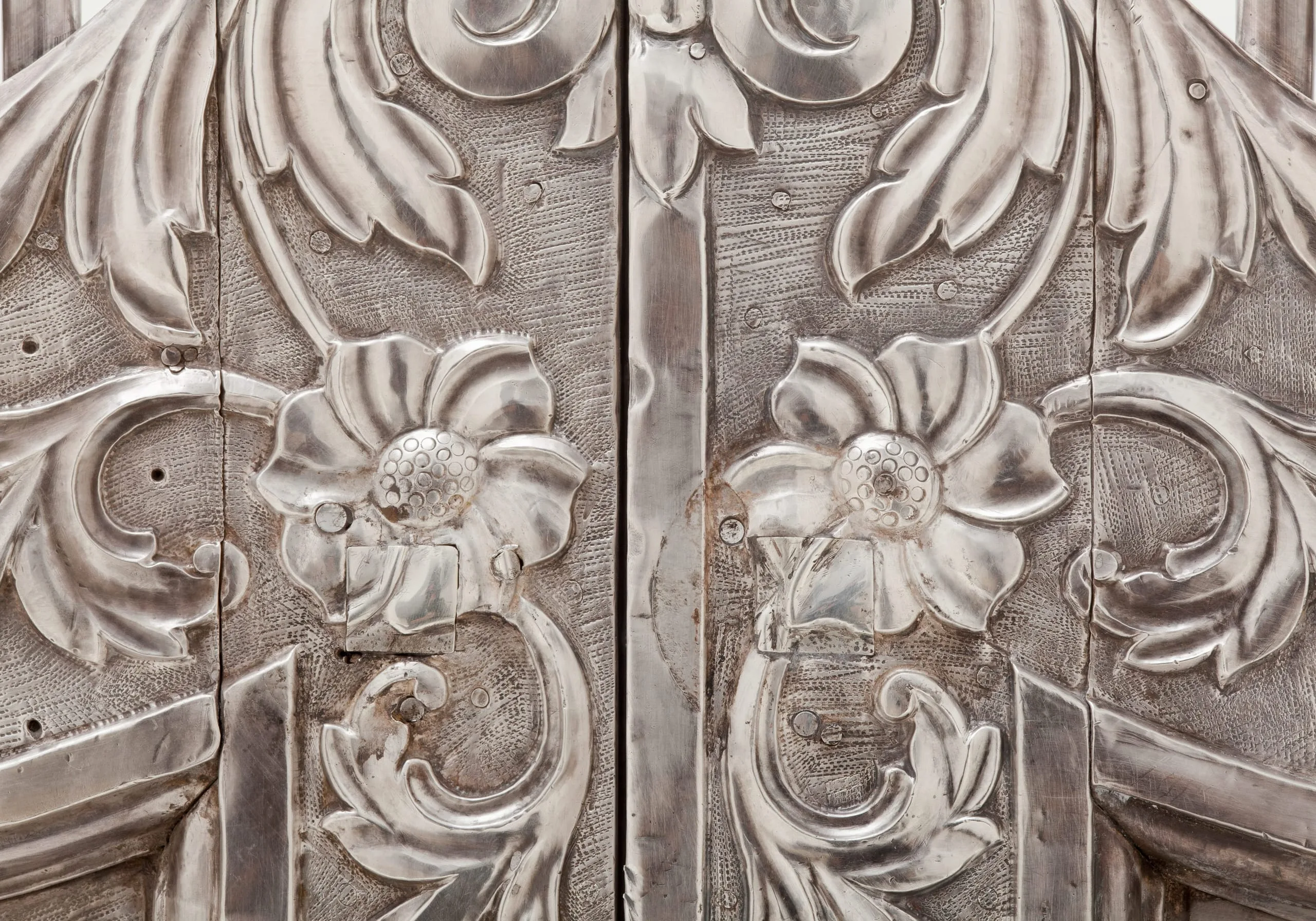
Silver repoussé panel with symmetrical Baroque-style decoration, featuring paired scrolling acanthus leaves, raised floral rosettes, and foliate motifs on a finely textured ground, with a central vertical seam suggesting two joined doors or shutters.
Pair of silver repoussé panels with symmetrical Baroque ornamentation, featuring raised acanthus scrolls, floral rosettes, and foliate curves meeting at a central vertical seam.
Silver metalwork detail showing a central raised oval cartouche with a small square recess, flanked by applied foliate scrollwork, set against a finely engine-turned hatched ground.
Close-up of a repoussé silver panel with high-relief floral and acanthus scroll decoration; a five-petaled flower with a dotted domed center dominates the composition, surrounded by curling leaves on a stippled ground, with small rivets visible along a vertical seam.
Close-up of a repoussé silver panel with a large raised flower at center, surrounded by scrolling acanthus leaves and stippled background texture; small circular nail heads visible along the edges.
Close-up of a silver object with a repoussé scrolling acanthus cartouche against a finely cross-hatched textured ground; a small heraldic shield hallmark is visible at center.
Close-up detail of a silver repoussé surface with raised acanthus scrollwork at left, finely stippled background texture, scattered rivet holes, and a partial oval cartouche at right edge.
Detail of a silver repoussé double door, with symmetrical acanthus scrollwork, raised floral rosettes at center, and stippled background texture.
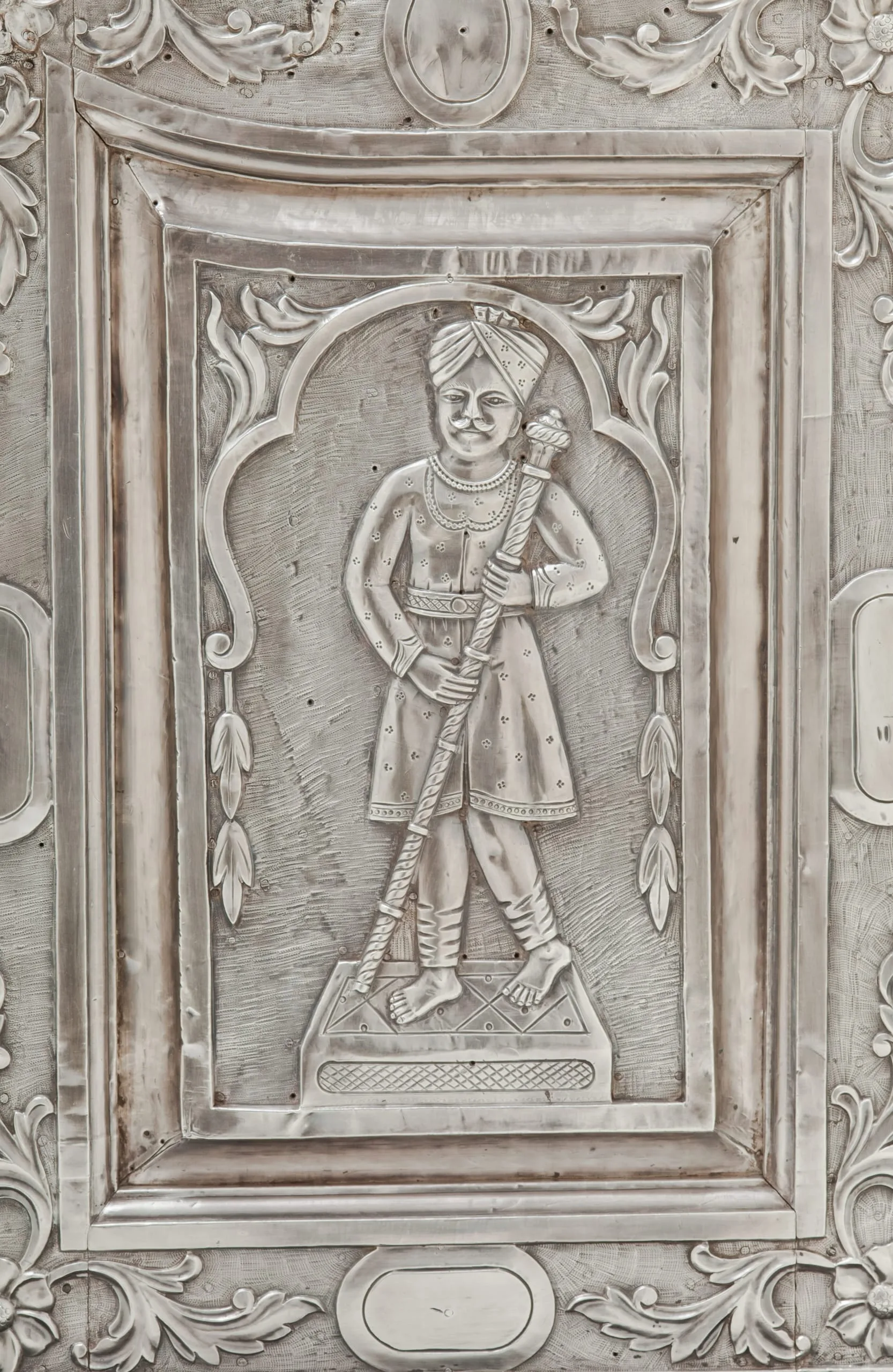
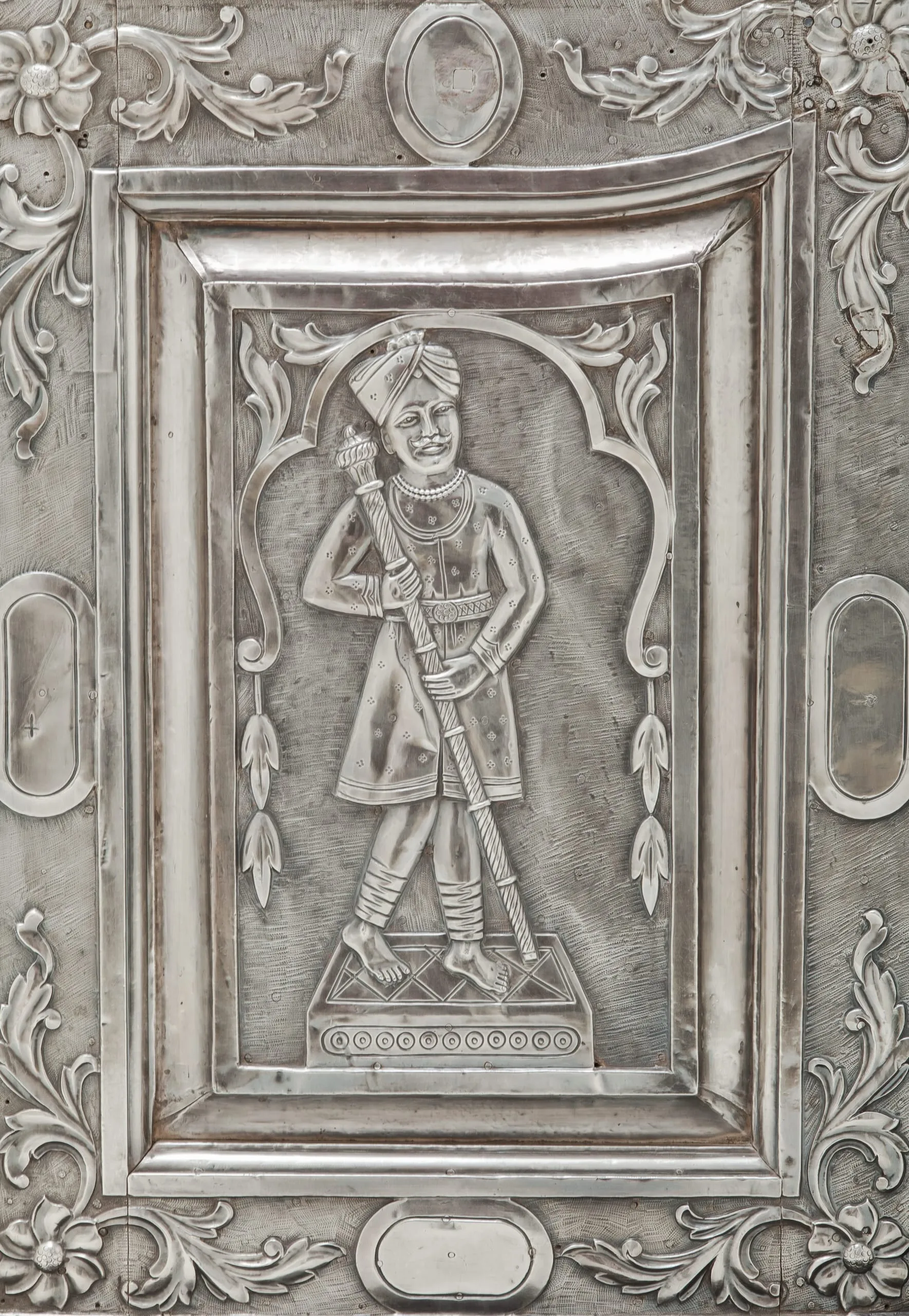
Repoussé silver panel with a standing male figure in turban, jewelry, and short tunic, holding a tall mace or staff, set within an arched niche on a decorative base; ornate floral scrollwork borders the rectangular frame.
Repoussé silver panel depicting a standing male figure in turban and court dress holding a staff, set within an arched frame on a decorated plinth, surrounded by a molded border with floral and foliate relief work.
Silver repoussé double doors with symmetrical Baroque-style decoration, featuring scrolling acanthus leaves, floral rosettes, and oval portrait medallions in low relief.
Detail of a silver repoussé panel with engraved floral and acanthus scrollwork along the border, multifoil arched openings above vertical bars, and oval cartouches along the edge.
Silver metalwork architectural panel, detail showing repoussé and engraved floral and acanthus scroll decoration at upper left corner, with arched openwork grille of vertical bars below.
Detail of a carved wooden gate or screen in pale grey-brown tones, featuring an ornate central baluster with foliate scrollwork, acanthus leaf borders, and floral rosettes along the vertical frame.
Detail of a silver or silvered metal gate or screen, showing a heavily ornamented vertical pilaster with acanthus scrollwork, floral reliefs, and a turned baluster column; vertical bars extend to the right.
Artist or Maker
Unknown
Title
Shrine Doors with Indra, Divine Regent of the East
Place Made
India, Gujarat
Date Made
circa 1850-1900
Medium
Repoussé silver sheet over wood
Dimensions
62 × 35 3/4 × 2 in. (157.48 × 90.81 × 5.08 cm) Mount: 64 1/2 × 39 3/4 × 8 in. (163.83 × 100.97 × 20.32 cm)
Credit Line
Gift of Julian Sands in honor of his mother, Brenda
Accession Number
M.2013.57a-b
Classification
Architecture
Collecting Area
South and Southeast Asian Art
Curatorial Notes

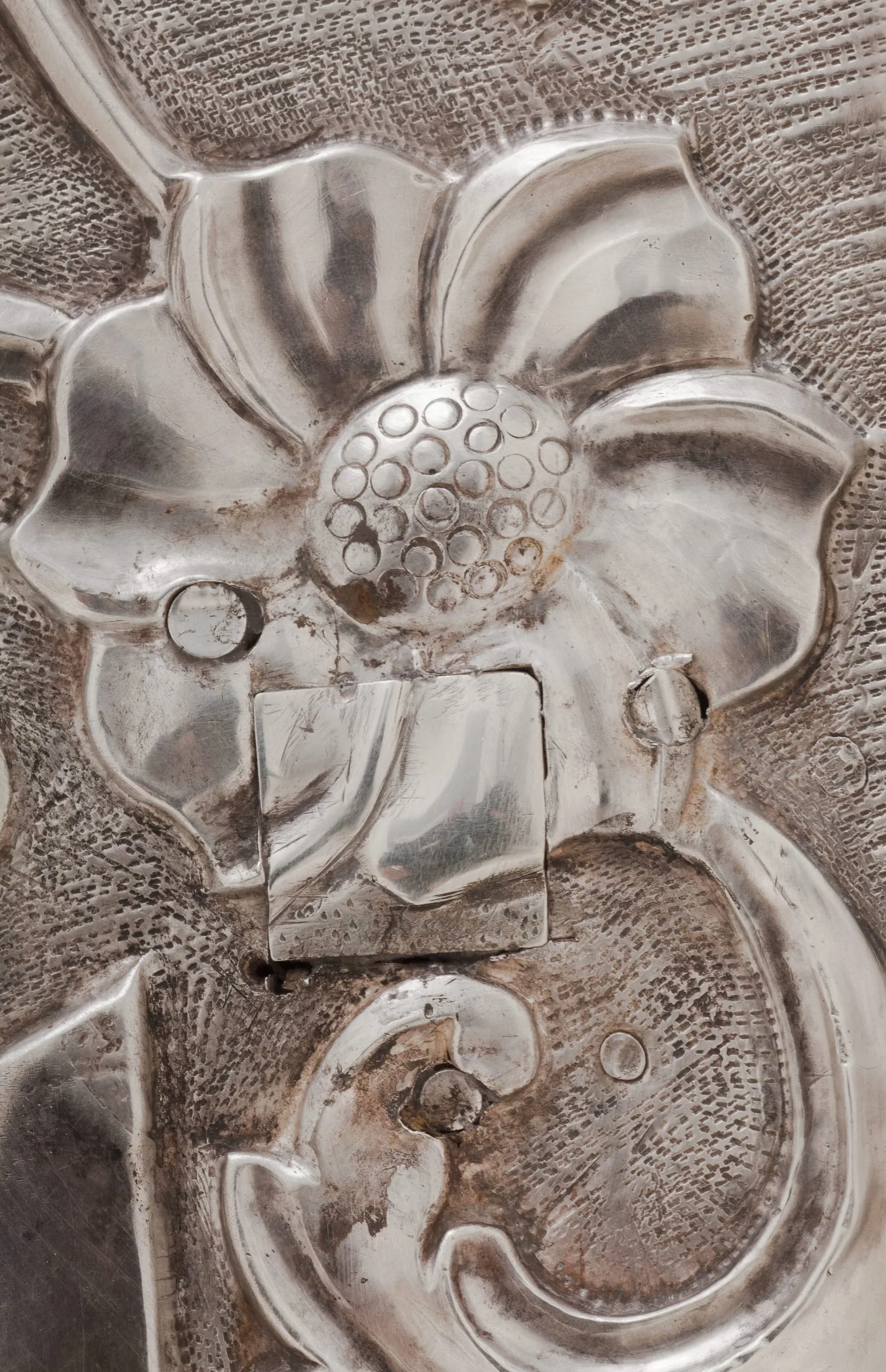
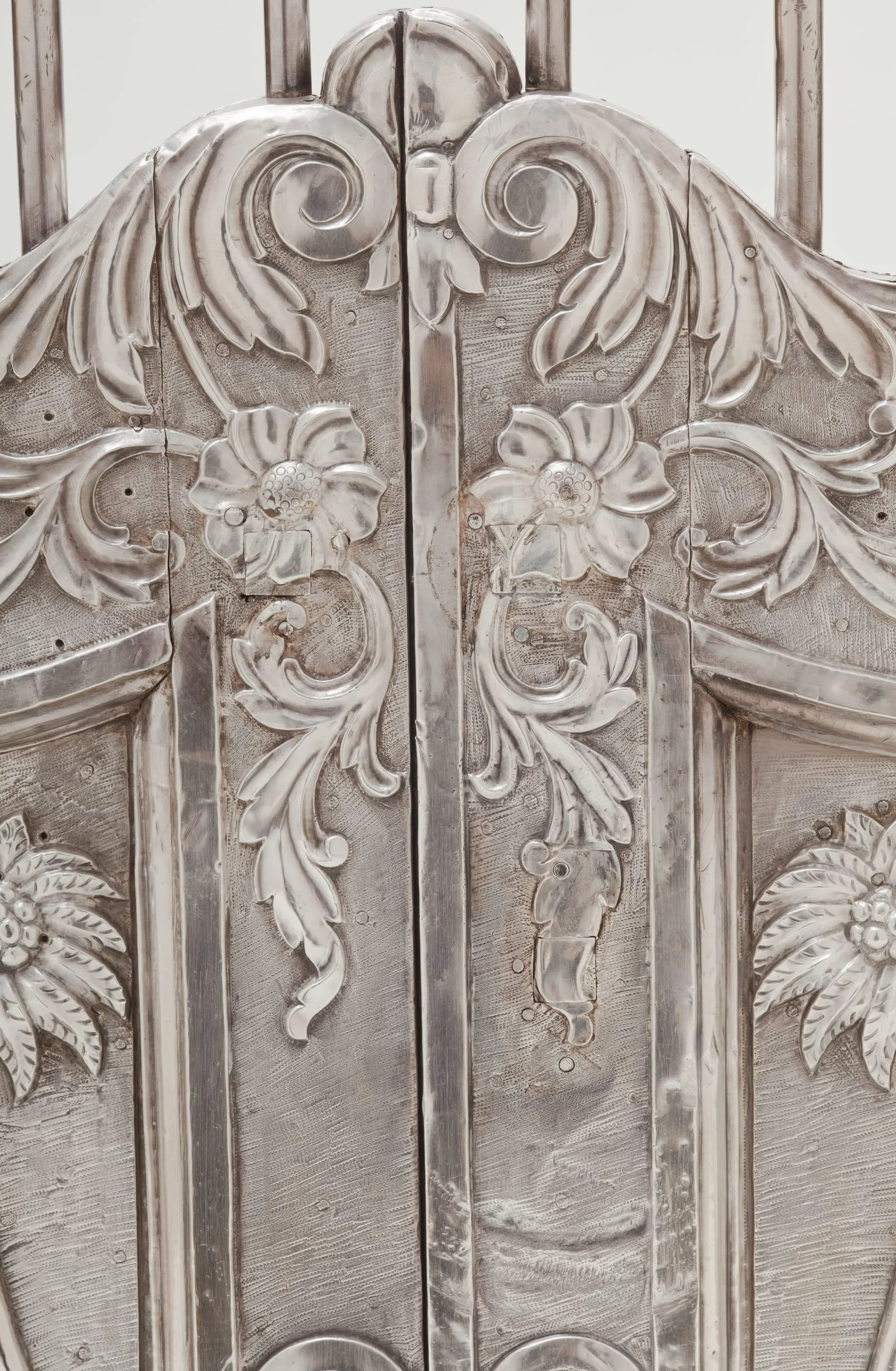
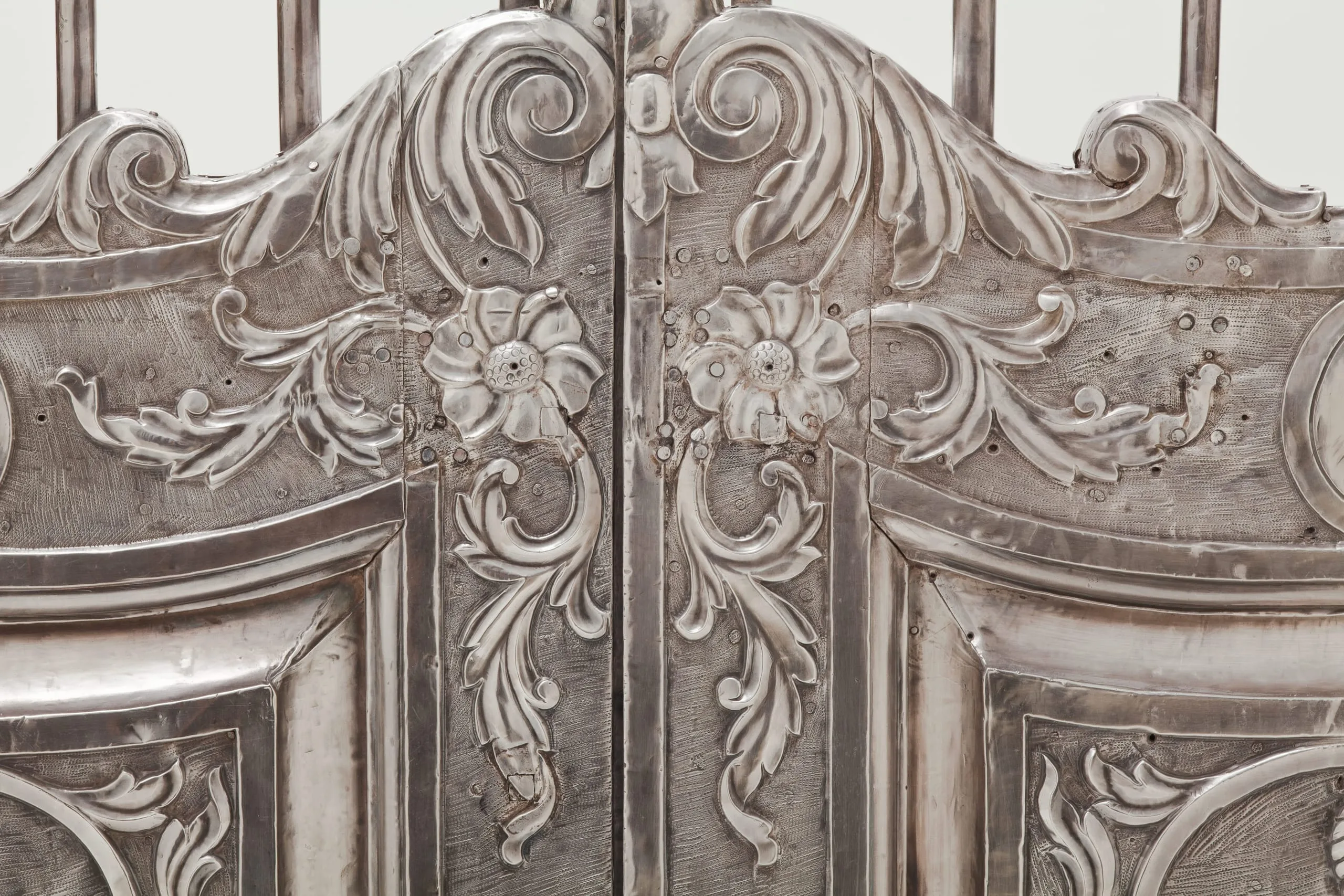
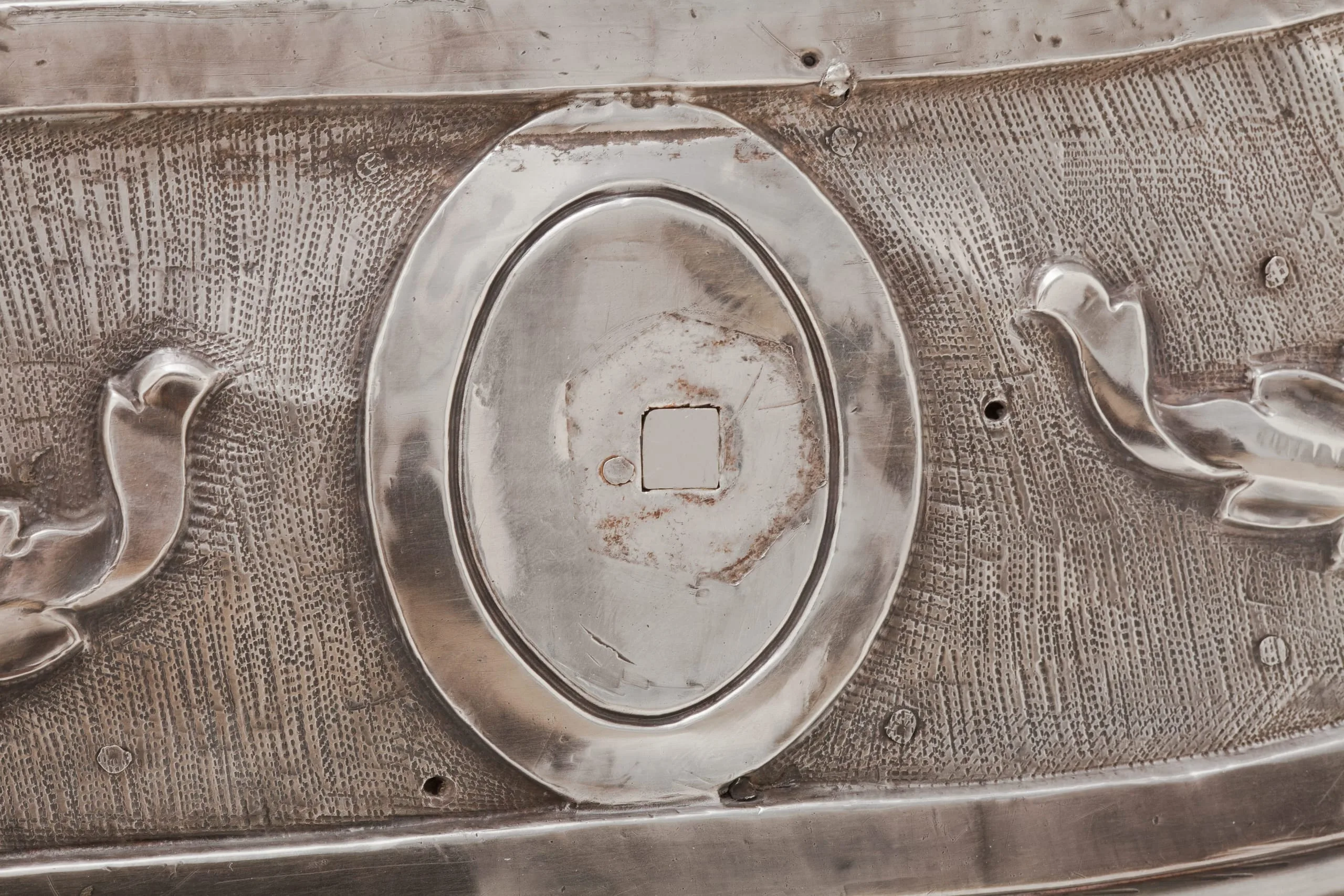
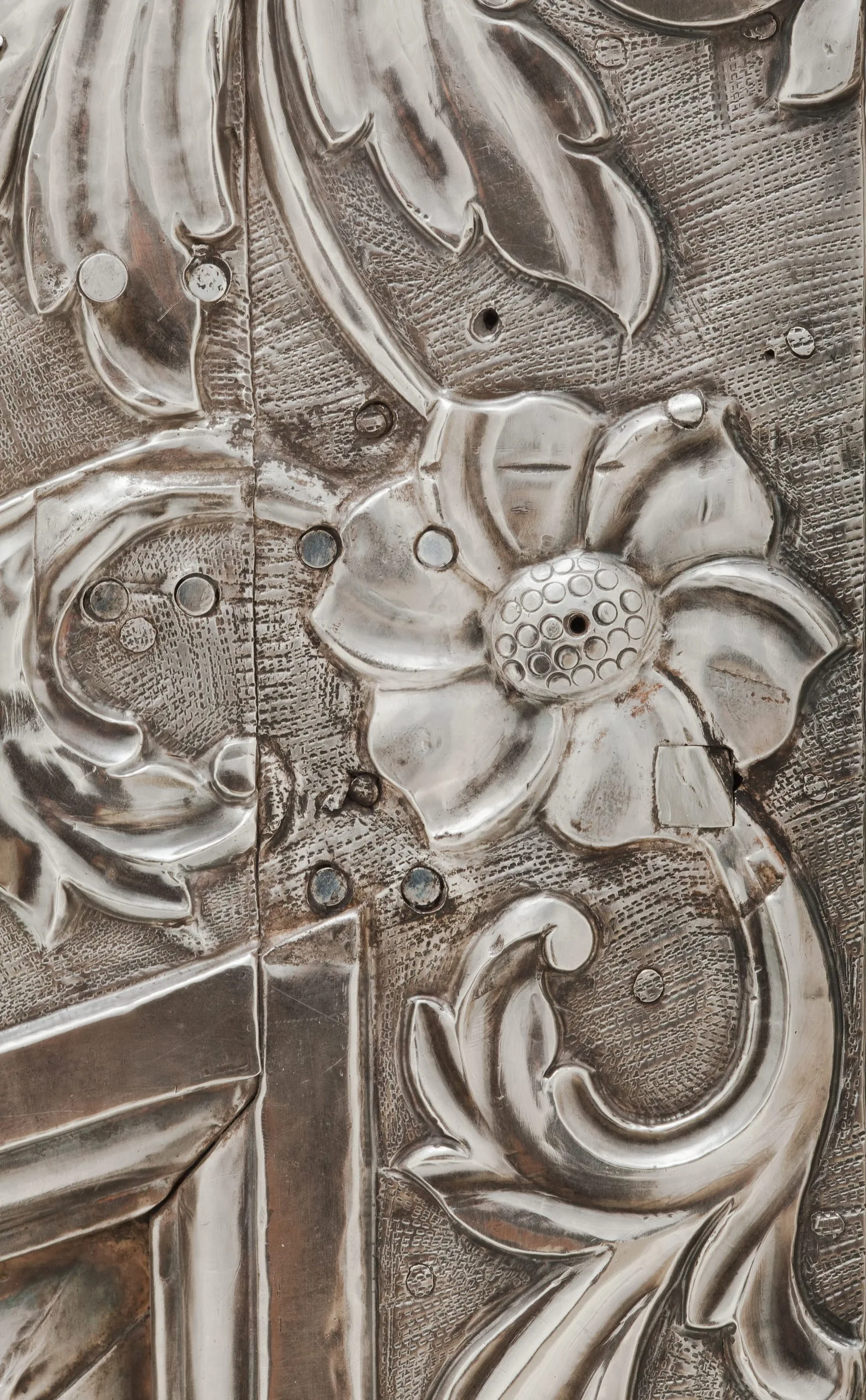
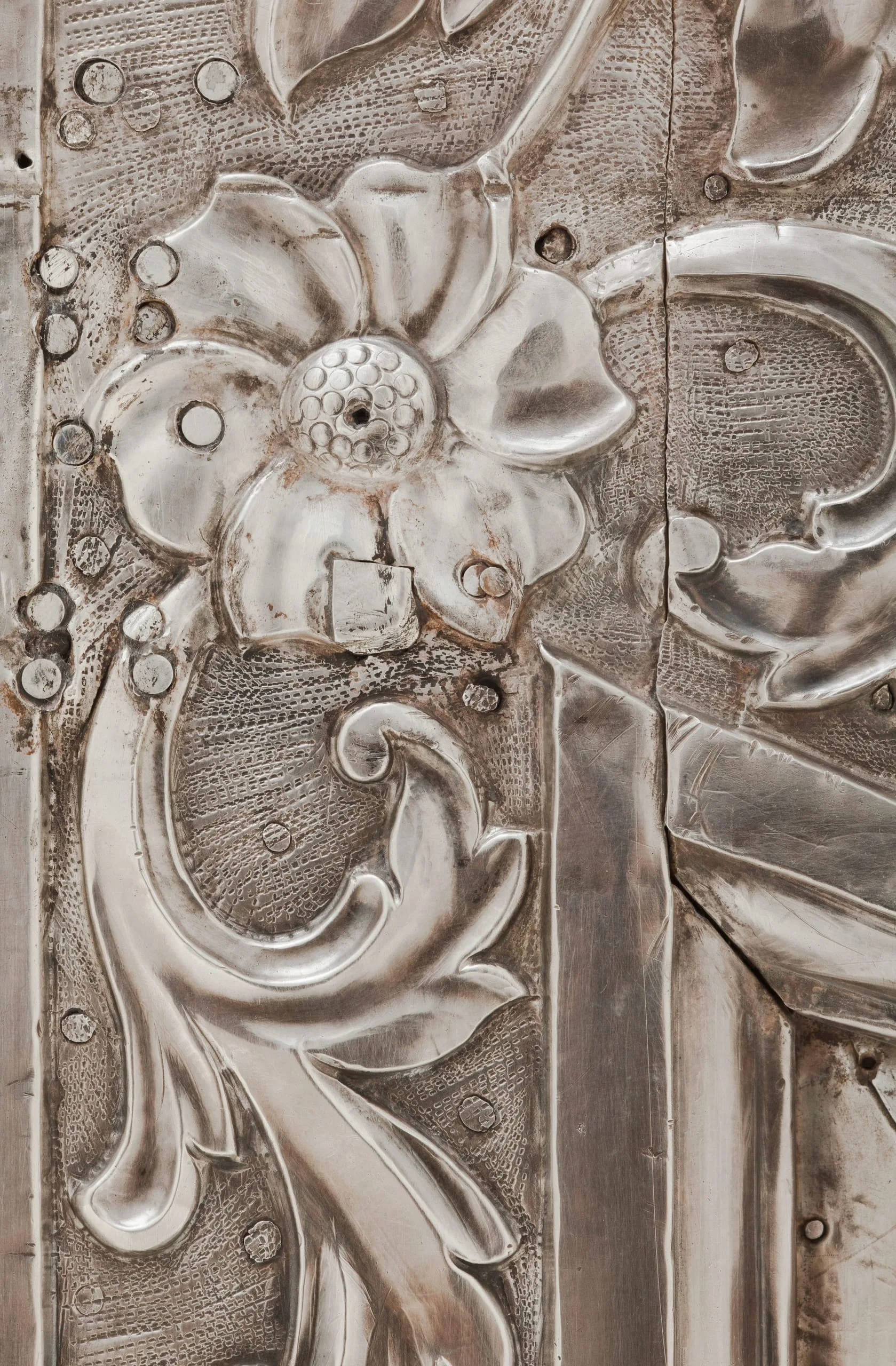
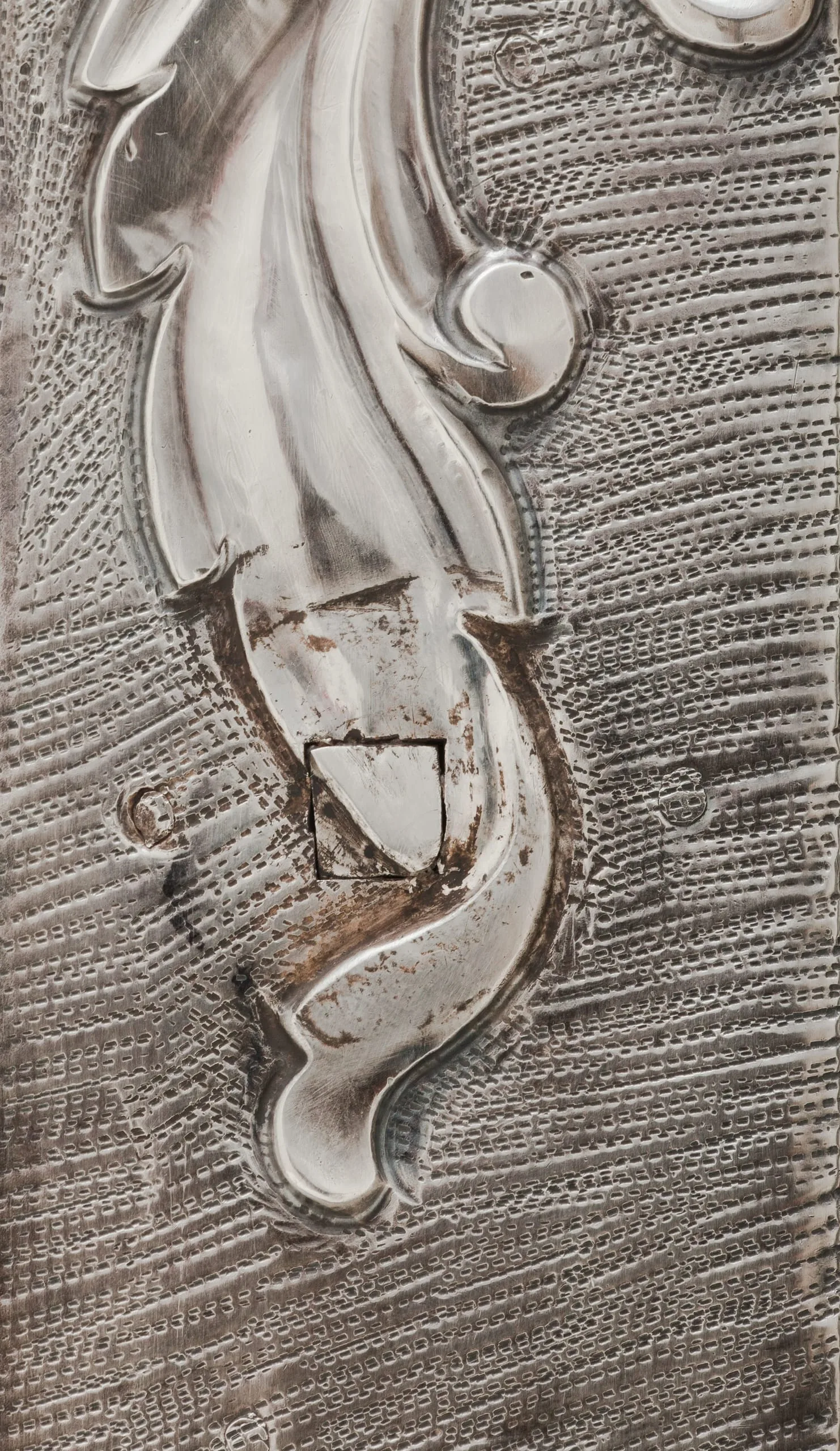
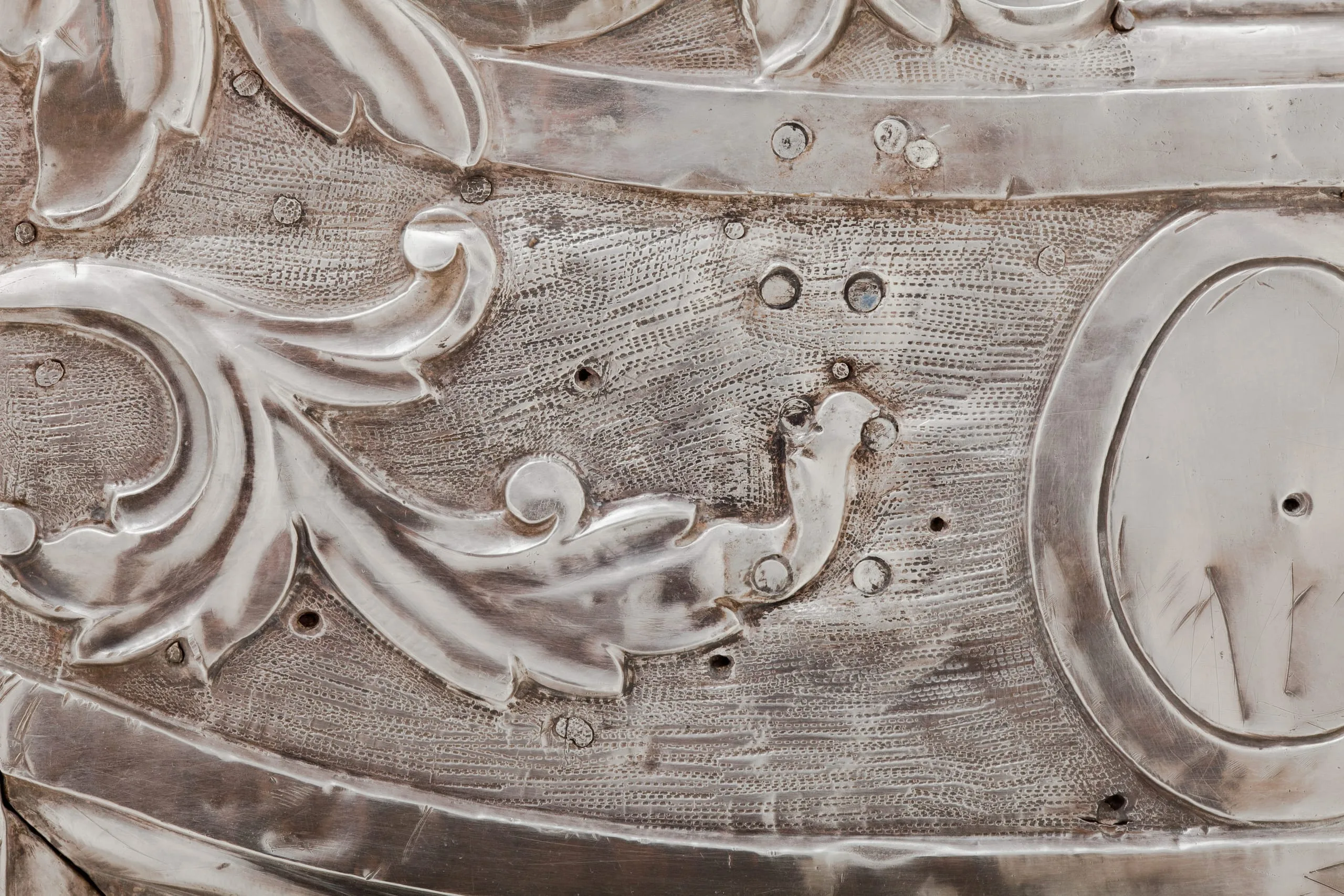
Silver shrine portals can be found throughout South Asia. Made of repoussé silver sheet over wood, they are a well-known, albeit little studied, feature of later South Asian religious and palatial architecture. They were created out of a shared artistic tradition, rather than a particular religious affiliation, as silver shrine portals are found at sites sacred to various sects of Hinduism, Jainism, Sikhism, and Islam. Although the medium and technique are constant, the individual portals and sets of doors are thematically differentiated according to the patron’s desires by appropriate variations in iconography and decorative motif.

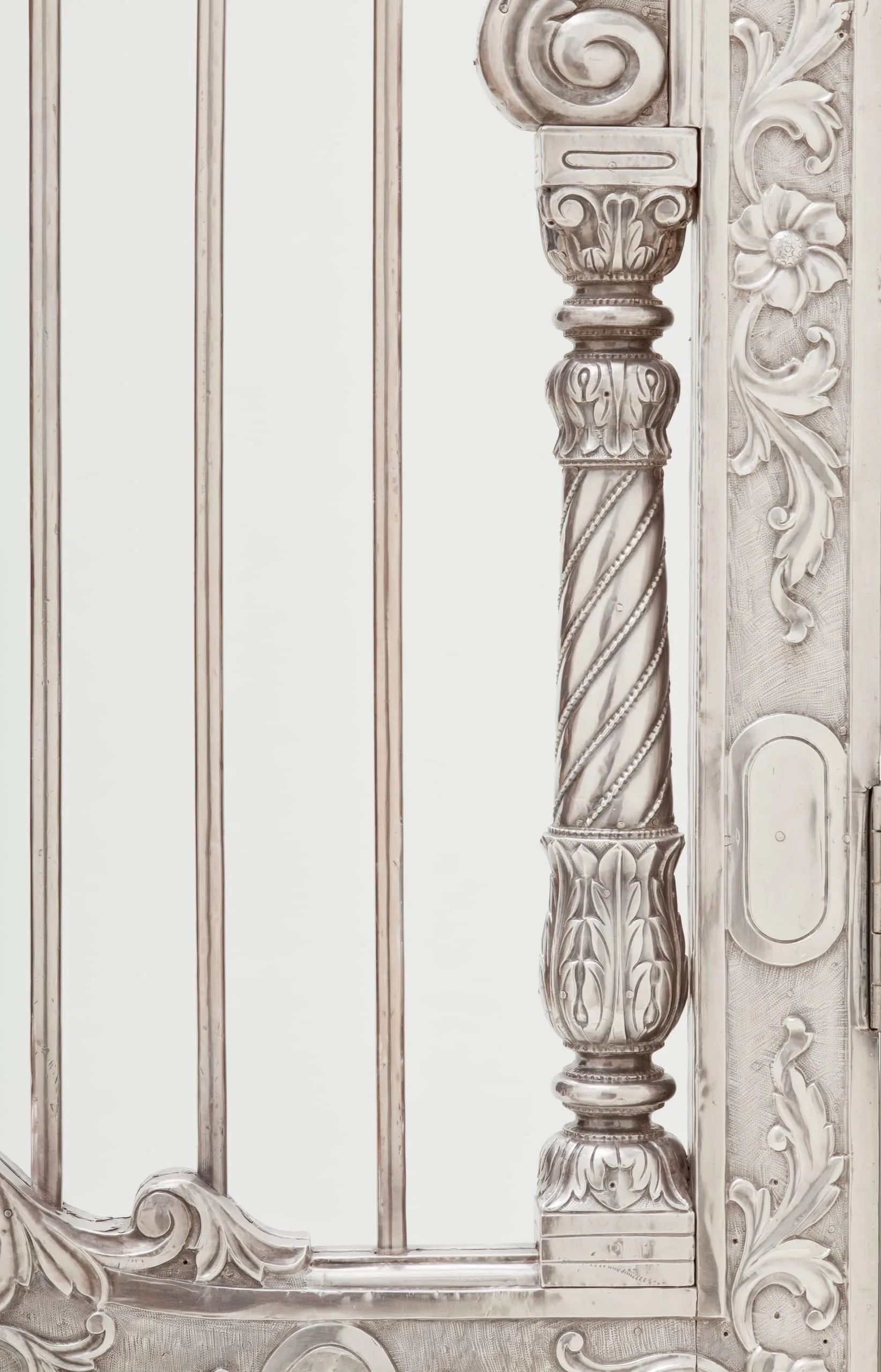
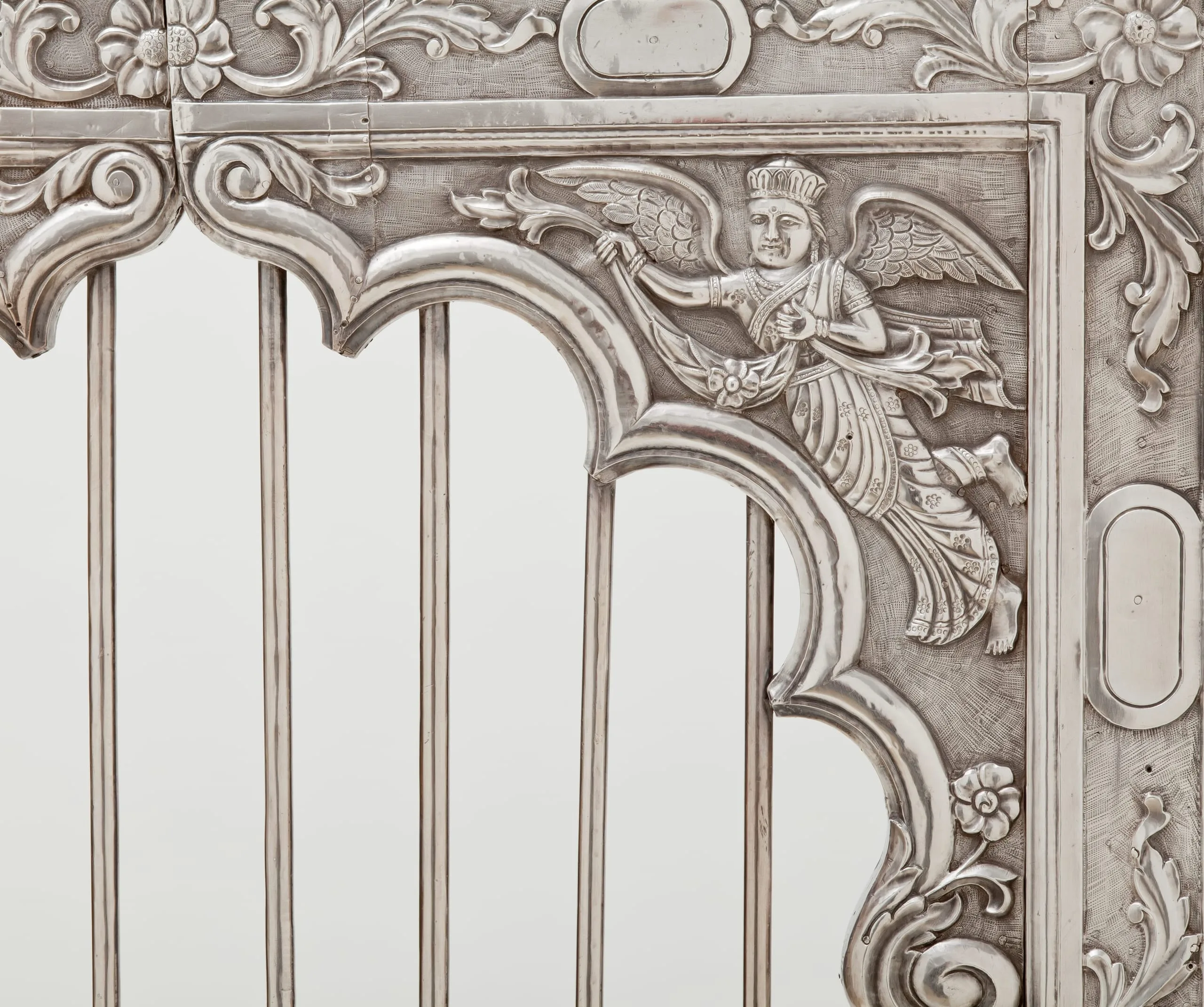
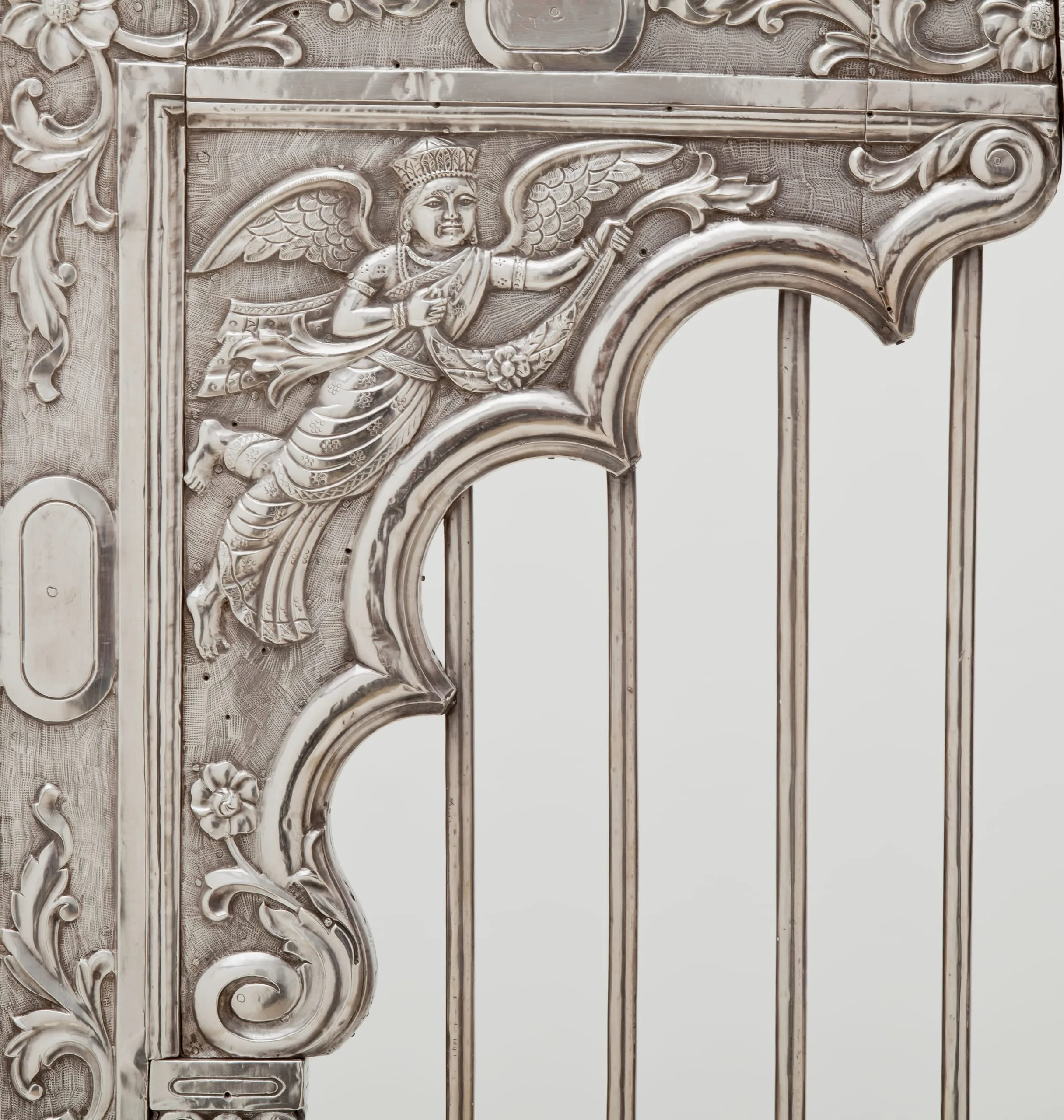
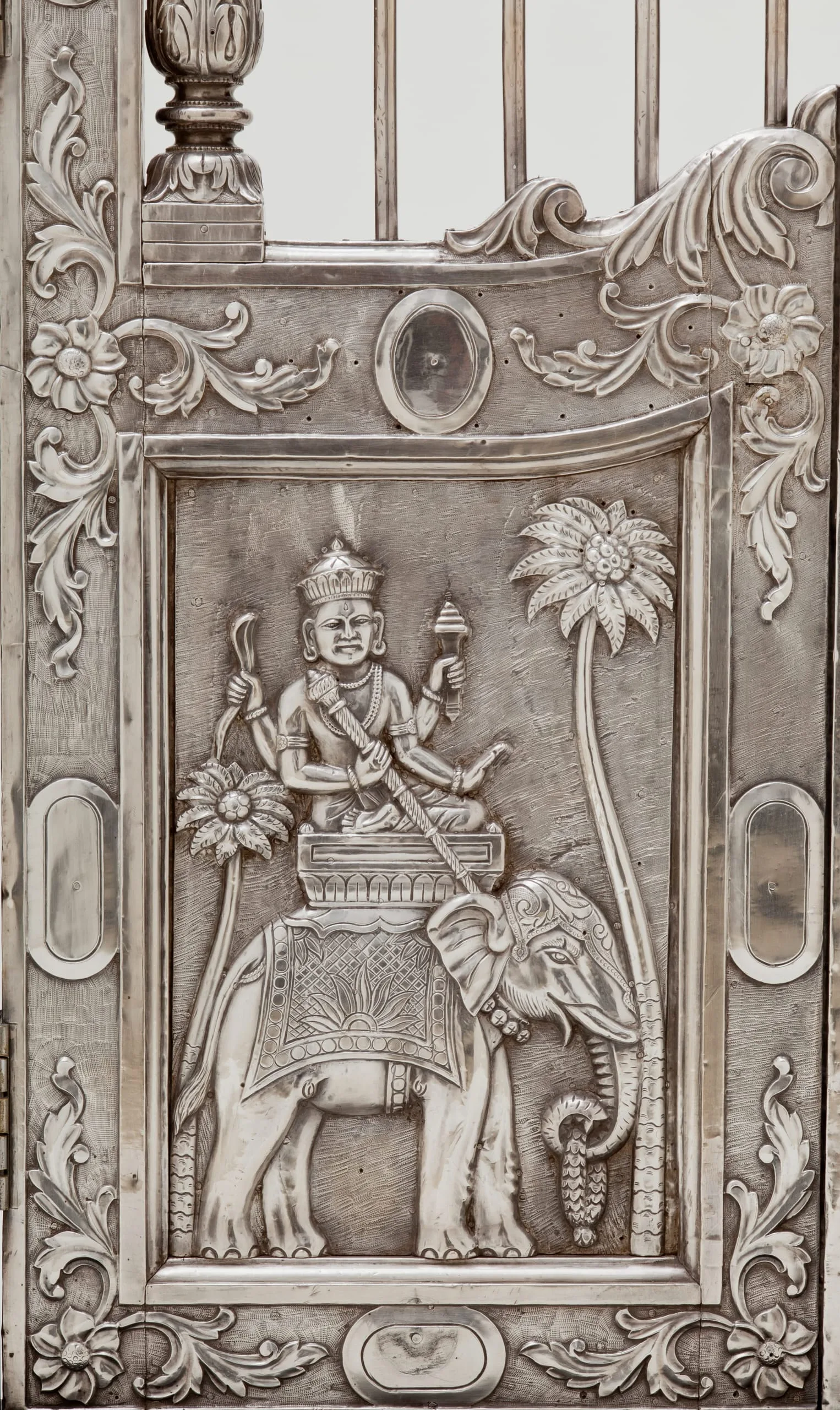
These silver shrine doors can be stylistically attributed to western India, most likely Gujarat, and date from circa 1850-1900. The doors are in the form of a cusped niche supported by baluster columns, the latter element a distinctive characteristic of northern Indian Mughal architecture and paintings from the early reign of Emperor Shah Jahan (r. 1628-58) through the end of the Mughal dynasty in 1858. On the obverse, the lower panels depict the four-armed Hindu deity Indra in his auxiliary role as the Divine Regent of the East. The spandrels are graced with angel-like flying figures carrying garlands, which represent a class of semidivine divinities called vidyadharas (bearers of wisdom). On the reverse, the lower panels portray male guardians in contemporary western Indian garb, who serve to protect the sacred threshold and inner sanctum.
Selected Bibliography
  • Markel, Stephen. "Hindu Cosmology and Mythology." Orientations 55, no.6 (2024): 39-47.