LACMA

ShopMembershipMyLACMATickets
LACMA
Los Angeles County Museum of Art
5905 Wilshire Blvd.
Los Angeles, CA 90036
info@lacma.org
(323) 857-6000
Sign up to receive emails
Subscribe
© Museum Associates 2026
  • About LACMA
  • Jobs
  • Building LACMA
  • Host An Event
  • Unframed
  • Press
  • FAQs
  • Log in to MyLACMA
  • Privacy Policy
© Museum Associates 2026
Collections

Anton Auer
Coffee Service with Antique Scenes1804

Not on view
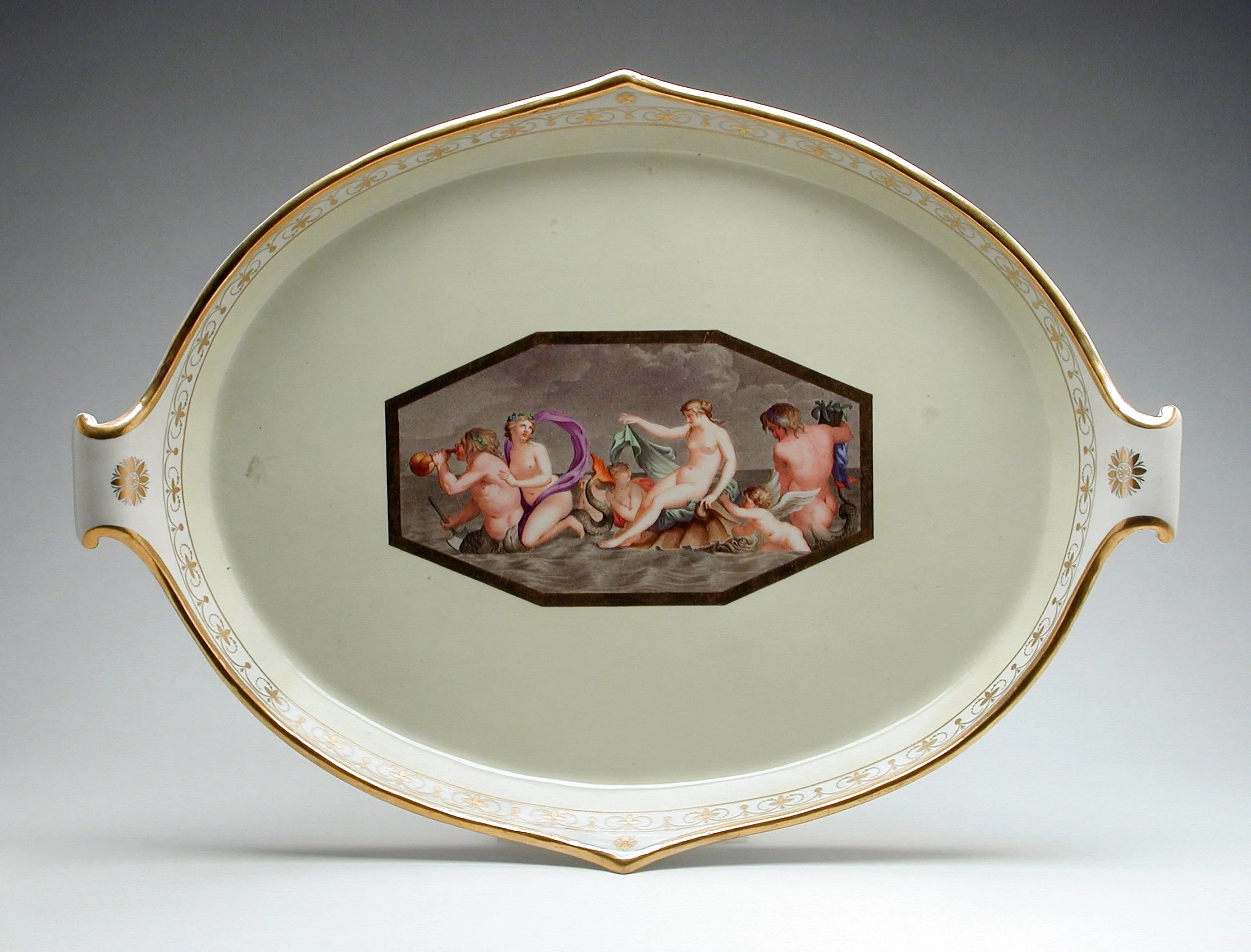
Oval porcelain serving tray with celadon-white glaze, gold rim, and a central octagonal painted panel depicting five classical figures in a mythological scene
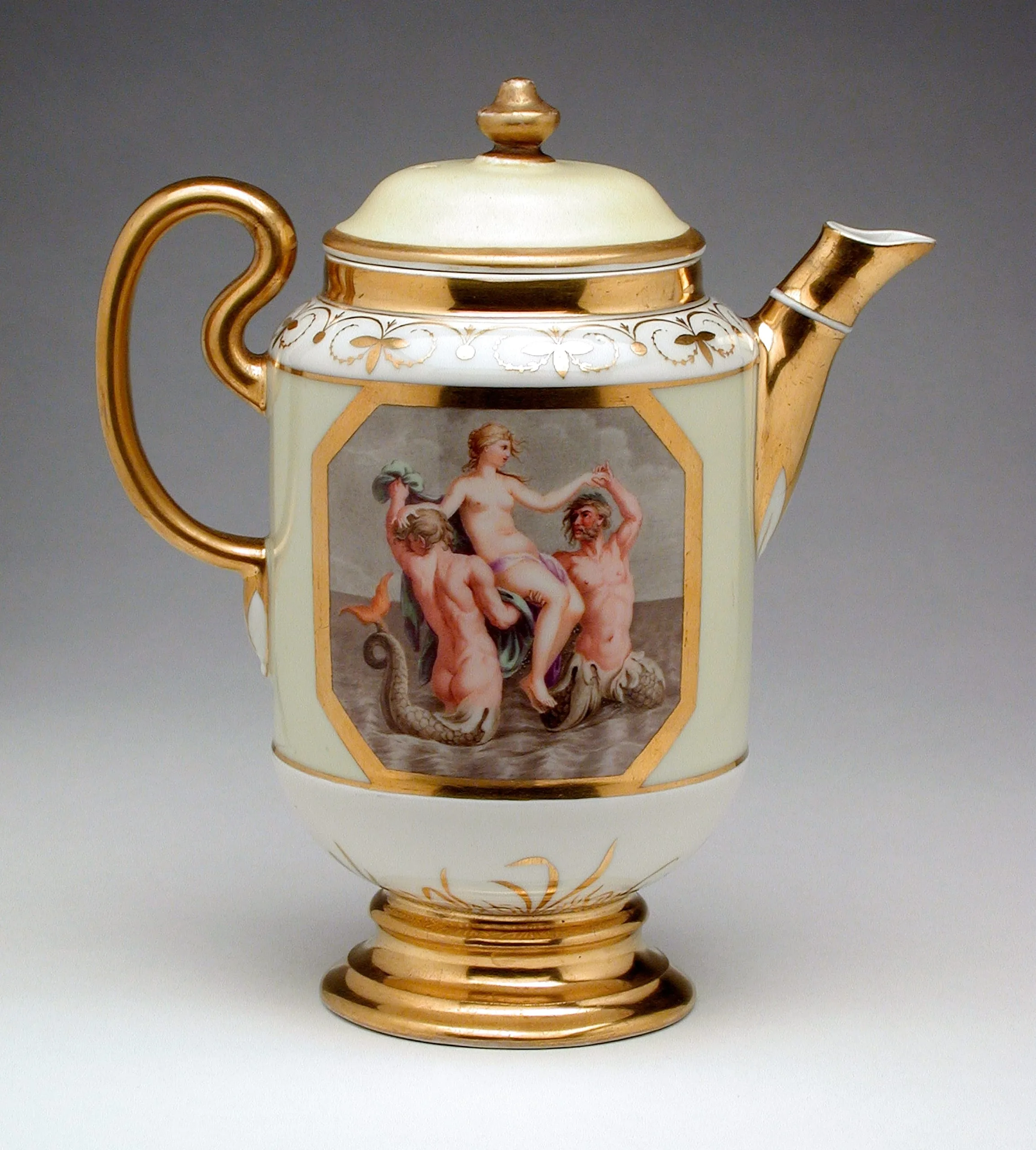
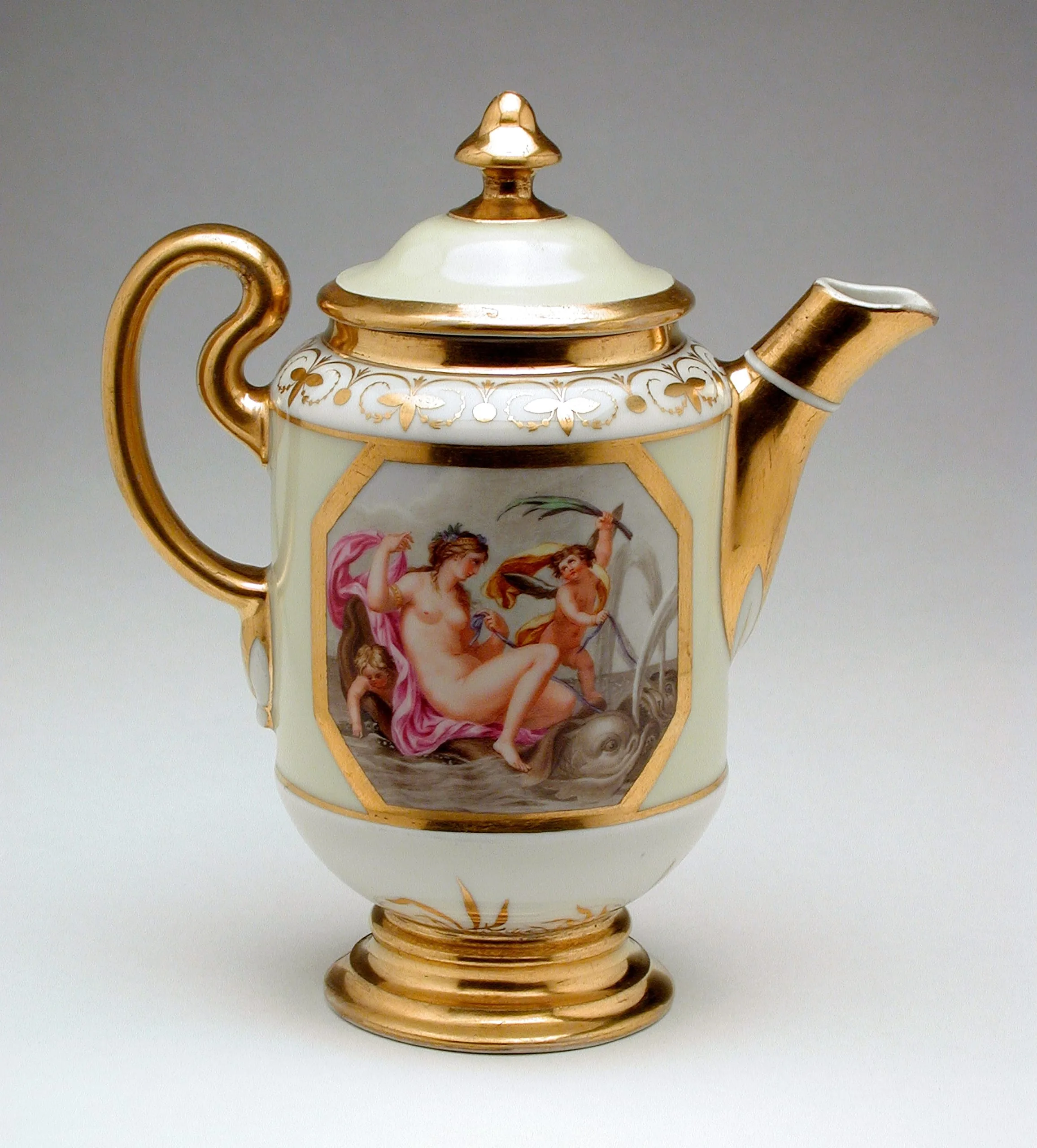
Porcelain coffeepot with domed lid, heavy gilded handle, spout, and pedestal base; central painted panel depicts three nude figures with sea-creature tails in a marine scene; gold foliate scrollwork borders on white ground.
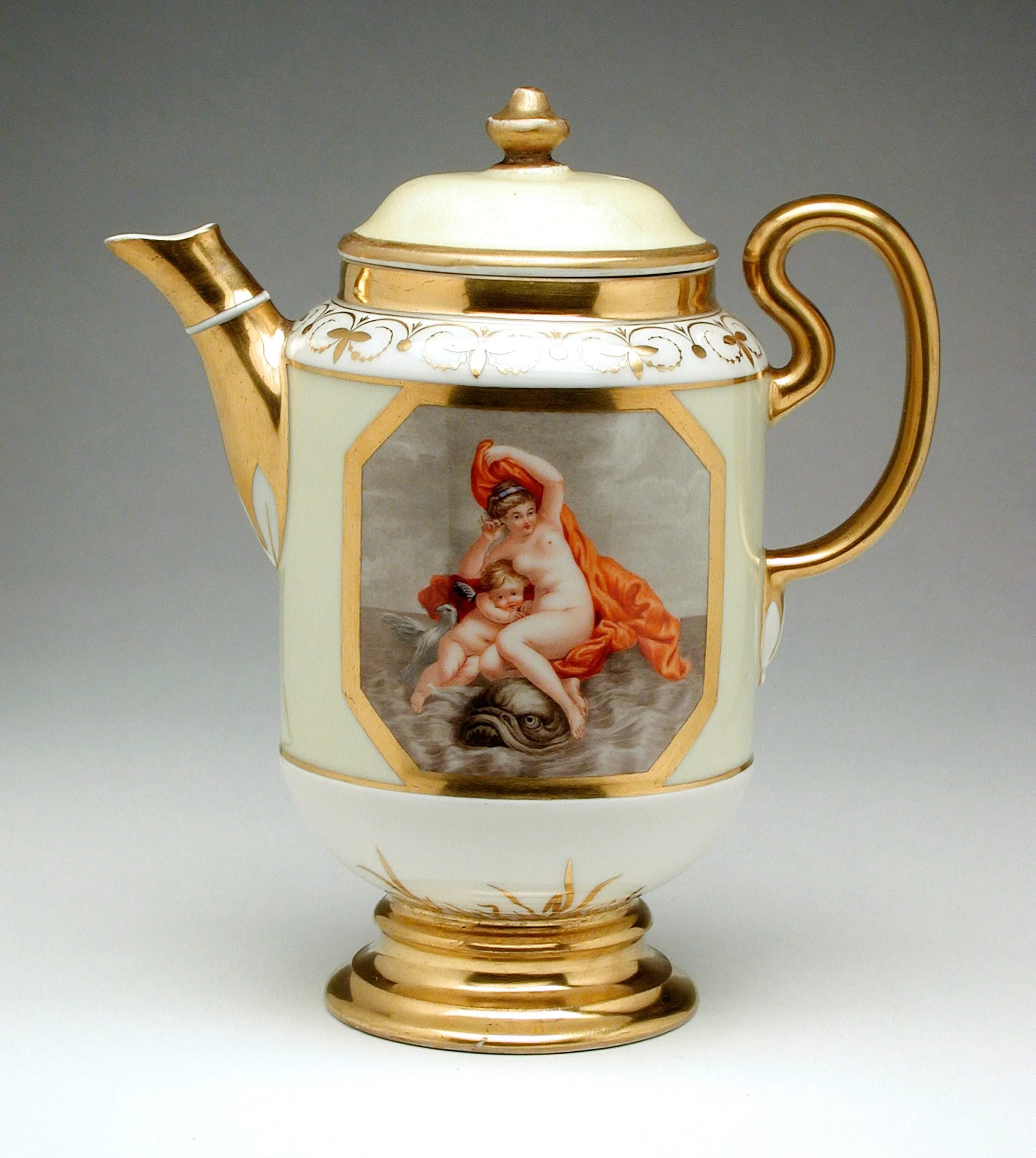
Porcelain coffeepot with domed lid and gilded handle, spout, and banding; central painted panel depicts a reclining nude female figure with a putto atop a sea creature amid waves, with a red drapery; gilt foliate scrollwork borders the shoulder above a circular foot.
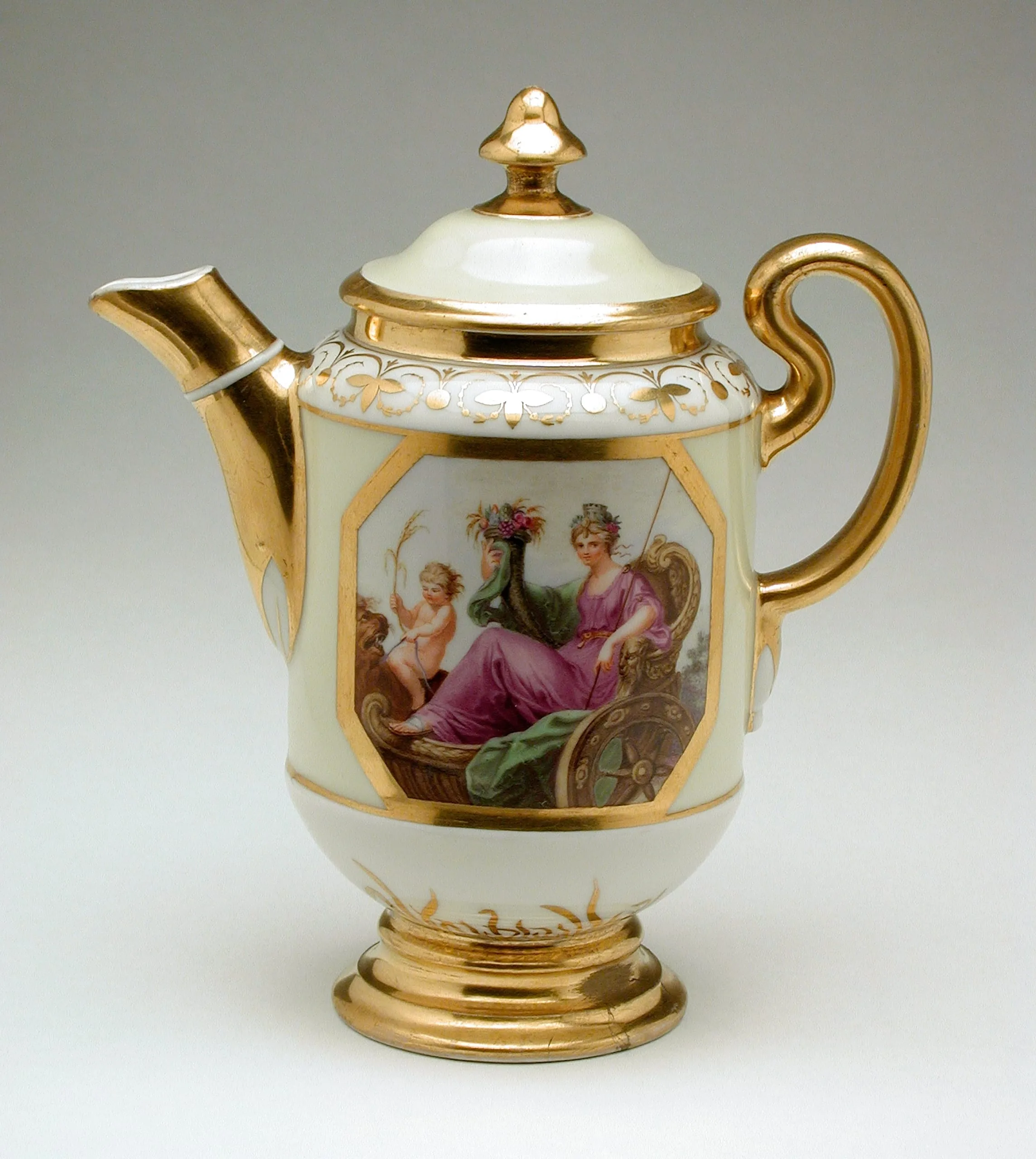
Porcelain coffeepot with cream ground and heavy gilding on spout, handle, foot, and lid; octagonal painted panel depicts a seated woman in pink robes holding a floral garland, accompanied by a winged cherub, set within gold borders with scrolling foliate ornament.
Porcelain teapot with pale celadon ground and heavy gilding on handle, spout, foot, and lid; central octagonal painted panel depicts a reclining nude female figure flanked by two putti near a swan, set against a gray-toned background; gold foliate scrollwork borders the shoulder.
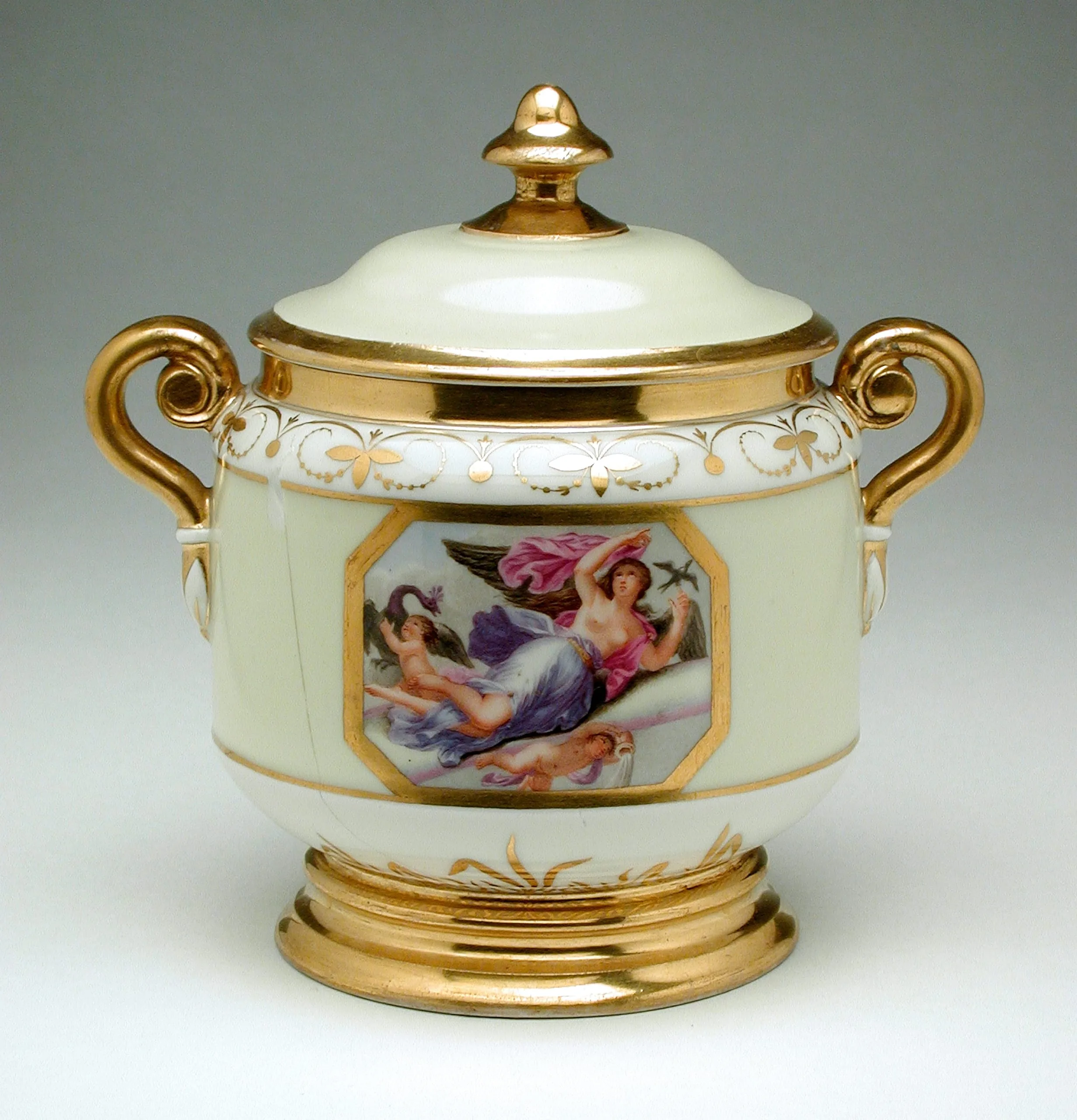
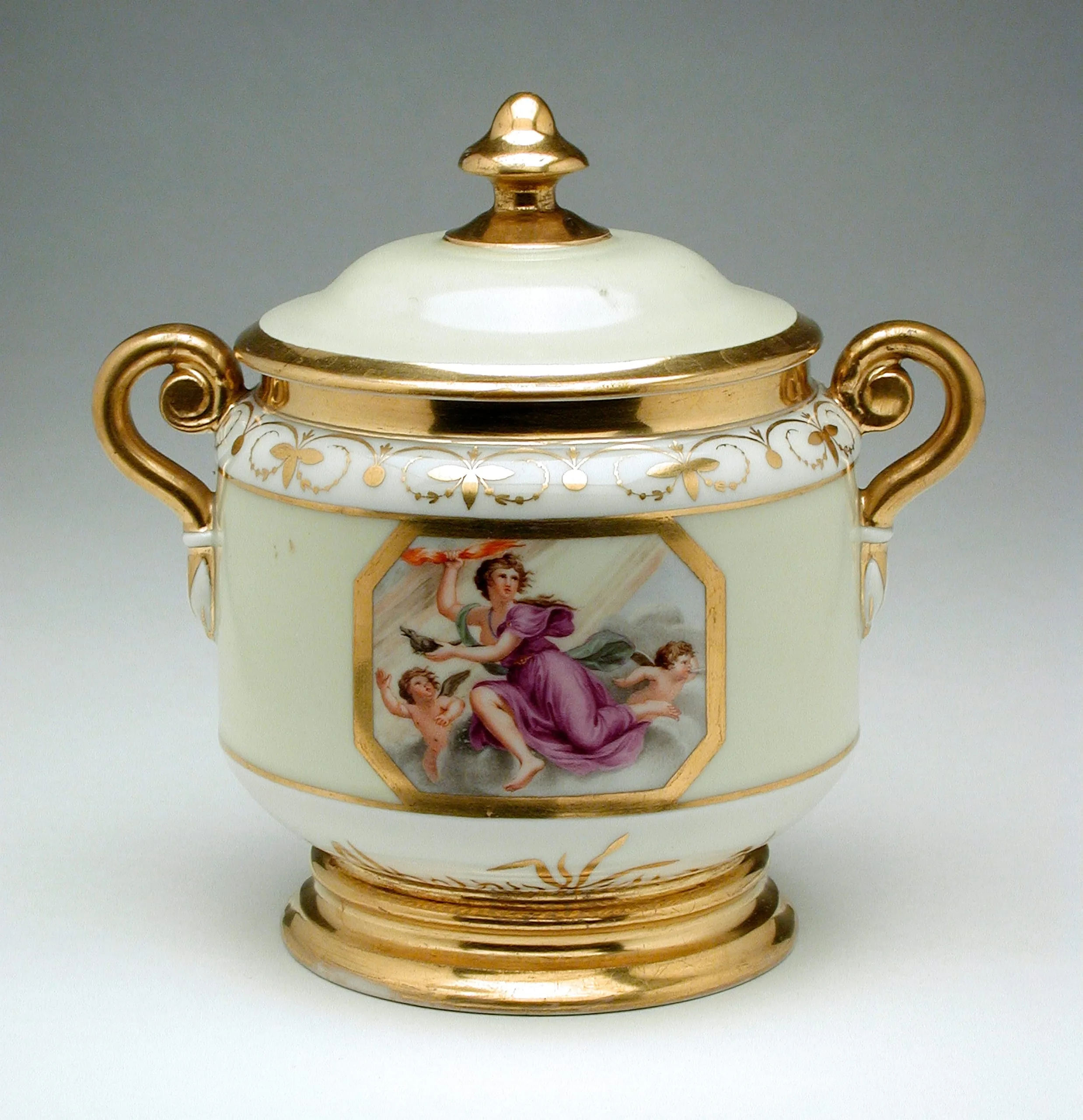
Porcelain covered sugar bowl with cream ground and gilt decoration; scrolled gold handles, stepped gold foot, and domed lid with gold finial; central painted panel depicting a winged figure and putti in pink, purple, and blue; gilt foliate borders at neck and base.
Porcelain covered sugar bowl with heavy gilt handles, rim, and foot ring; cream-white body featuring an octagonal painted panel depicting a draped female figure in purple with two putti amid clouds; gilt scrollwork frieze above panel.
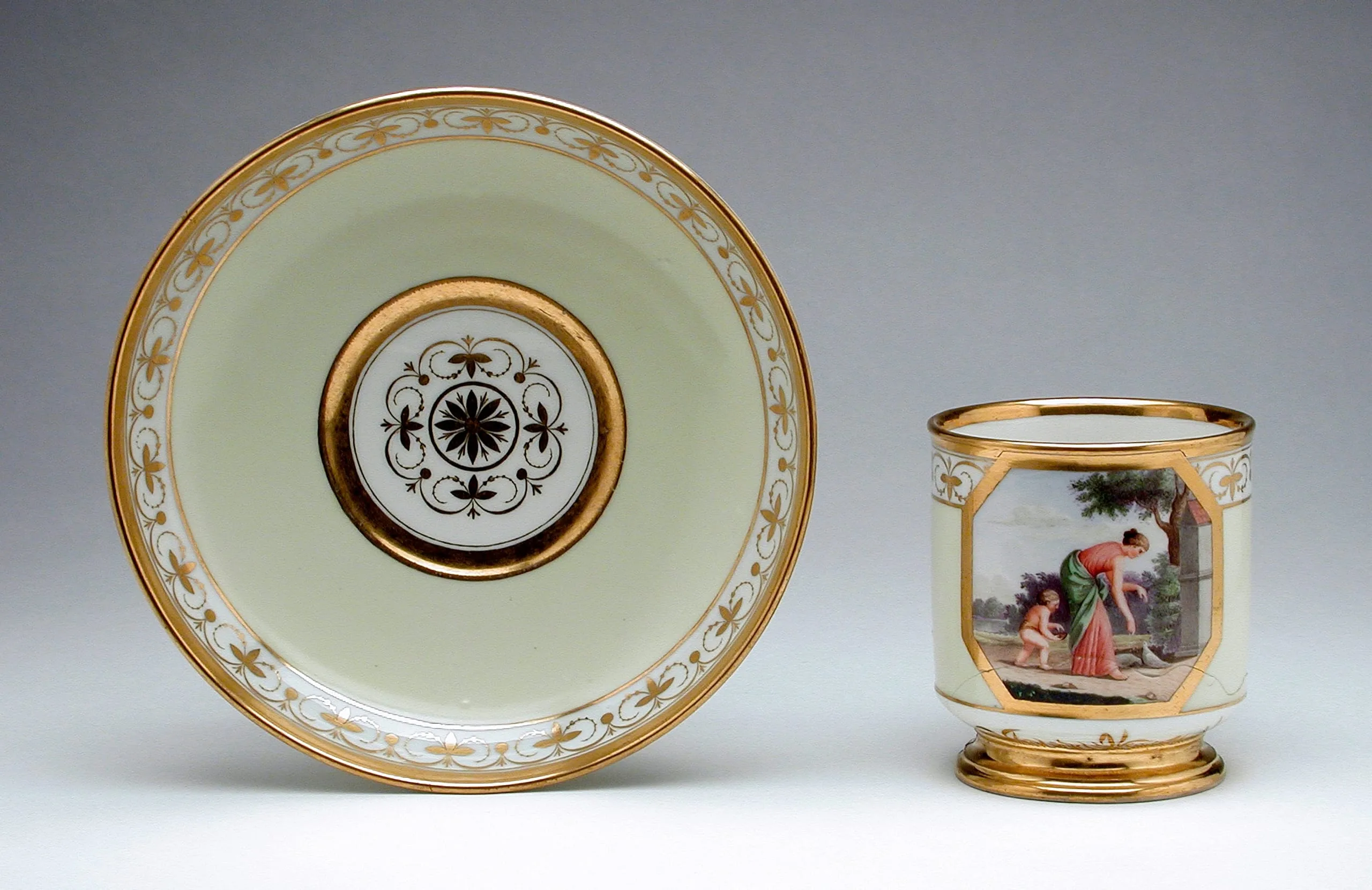
Porcelain cup and saucer with gilded borders and neoclassical decoration. The cylindrical cup features a painted octagonal cartouche depicting two figures in classical dress near a tree; the saucer is decorated with gilt leaf scrollwork and a central rosette medallion.
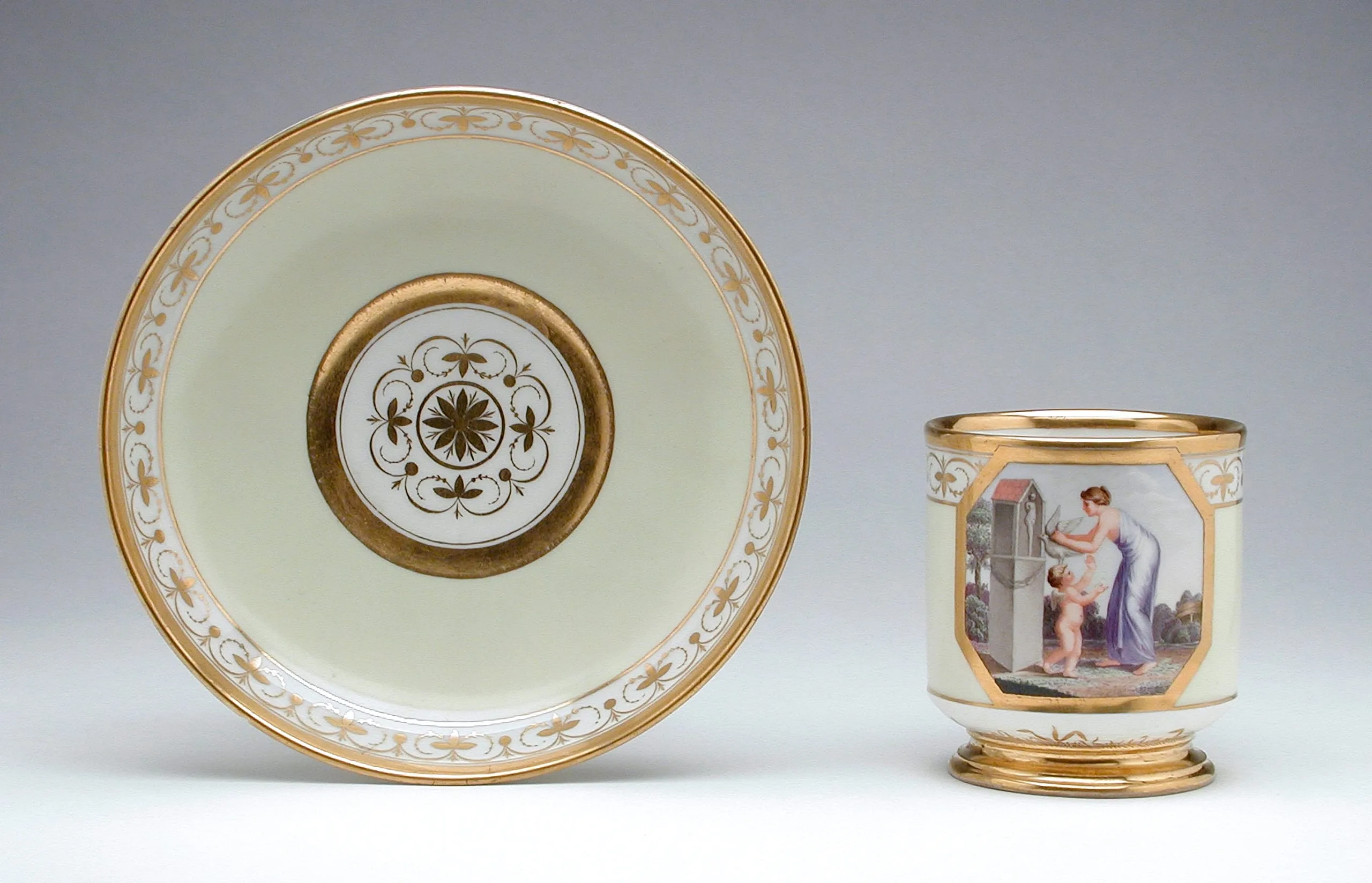
Porcelain cup and saucer with gilt decoration; saucer features a central medallion of scrolling gold foliage, the cylindrical cup painted with a neoclassical scene of a standing woman and small child within an octagonal gilt-bordered cartouche on a white ground.

Anton Auer, Nymphenberg Factory, Coffee Service with Antique Scenes, 1804, Los Angeles County Museum of Art, Gift of Mrs. Alfred Stiassni, photo © Museum Associates/LACMA

Artist or Maker
Anton Auer
Artist or Maker
Nymphenberg Factory
Title
Coffee Service with Antique Scenes
Place Made
Germany
Date Made
1804
Medium
Porcelain
Dimensions
Oval tray: 11 1/4 x 15 3/8 in. (28.57 x 39.05 cm); Cream Pot: Height: 4 5/8 in. (11.74) x Diameter: 2 1/4 in. (5.71 cm); Sugar Bowl: Diameter: 3 in. (7.62 cm); Coffee pot: Height: 5 3/4 (14.60 cm) x Diameter: 3 in. (7.62 cm)
Credit Line
Gift of Mrs. Alfred Stiassni
Accession Number
55.32.2.1-.6
Classification
Furnishings
Collecting Area
Decorative Arts and Design
Curatorial Notes

This small coffee service, alternately called a cabaret service or déjeuner service, includes a tray, coffee pot, cream pot, sugar bowl, and two cups with saucers. Drinks like tea, coffee, and chocolate transformed consumption habits in Europe. Virtually unknown before the seventeenth century, these stimulating beverages came into high demand once European trading companies gained access to them through trade with Asia and the Americas. Coffeehouses and tea parlors became public sociable spaces. In the domestic realm, wealthy homes would have ceramic and silver implements for use in the ritual of preparing and serving these beverages.

Such small services, sometimes referred to as a tête-à-tête, were popular as wedding gifts. Intended to serve two, the coffee pot typically held about a pint of liquid (less than a standard service). Each component of the service would feature coordinated ornamentation. Produced at the height of the fashion for classical aesthetics, as artists looked toward ancient Greece and Rome for inspiration, the objects in this set depict figures from antiquity against a pale yellow background with gilded edges. The different narrative scenes might serve as conversation topics for the educated elite who could afford such beverages. Consumers valued porcelain for beverage services due to its durable and hygienic qualities, as well as the wide range of decoration in which manufacturers produced household objects.

Cynthia Kok

2025