- Title
- Plate
- Date Made
- circa 1550-1625
- Medium
- Mother-of-pearl; copper substrate
- Dimensions
- Diameter: 7 7/8 in. (20.07 cm)
Height: 1 3/8 in. (3.49 cm)
- Accession Number
- M.2012.134
- Curatorial Notes
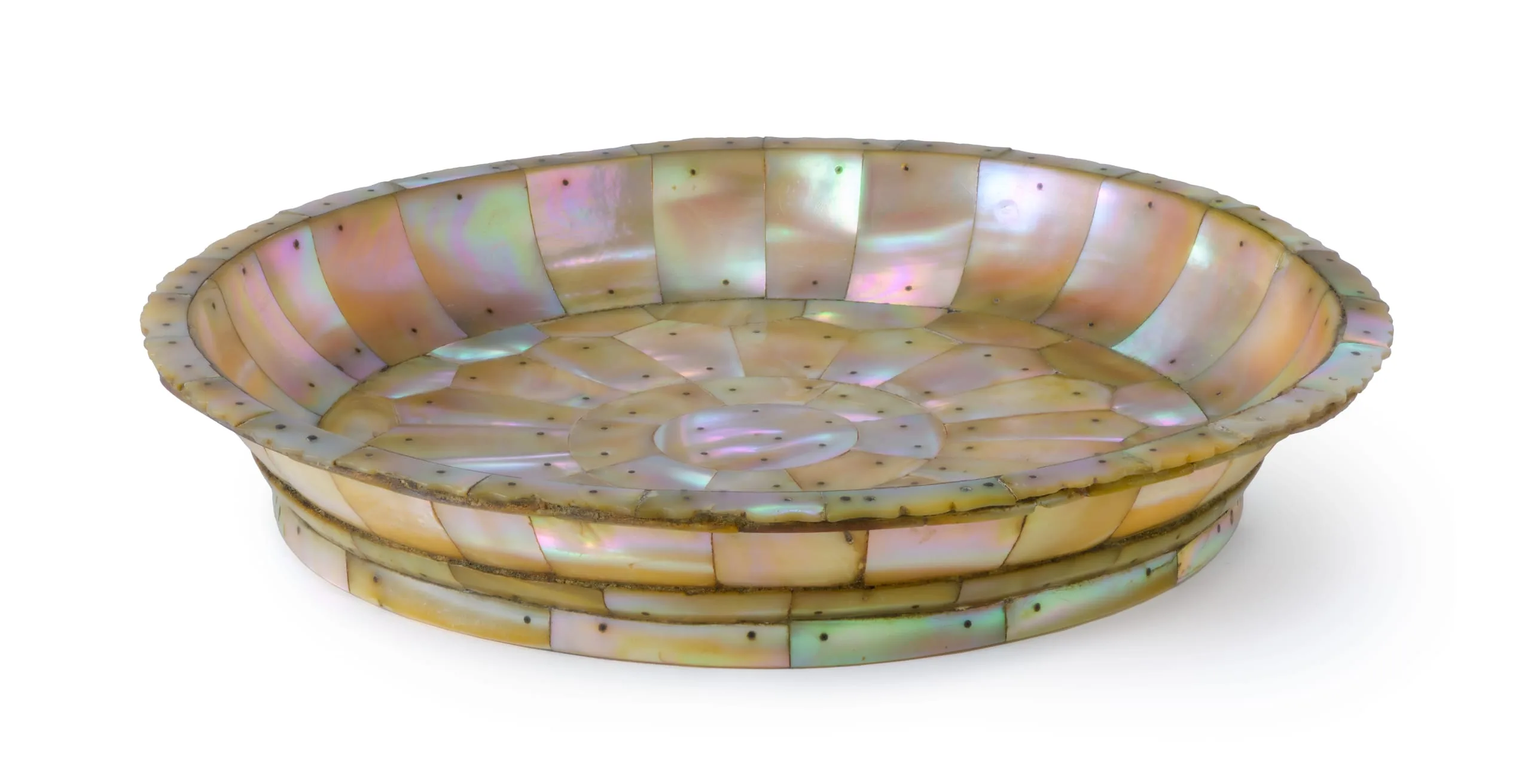
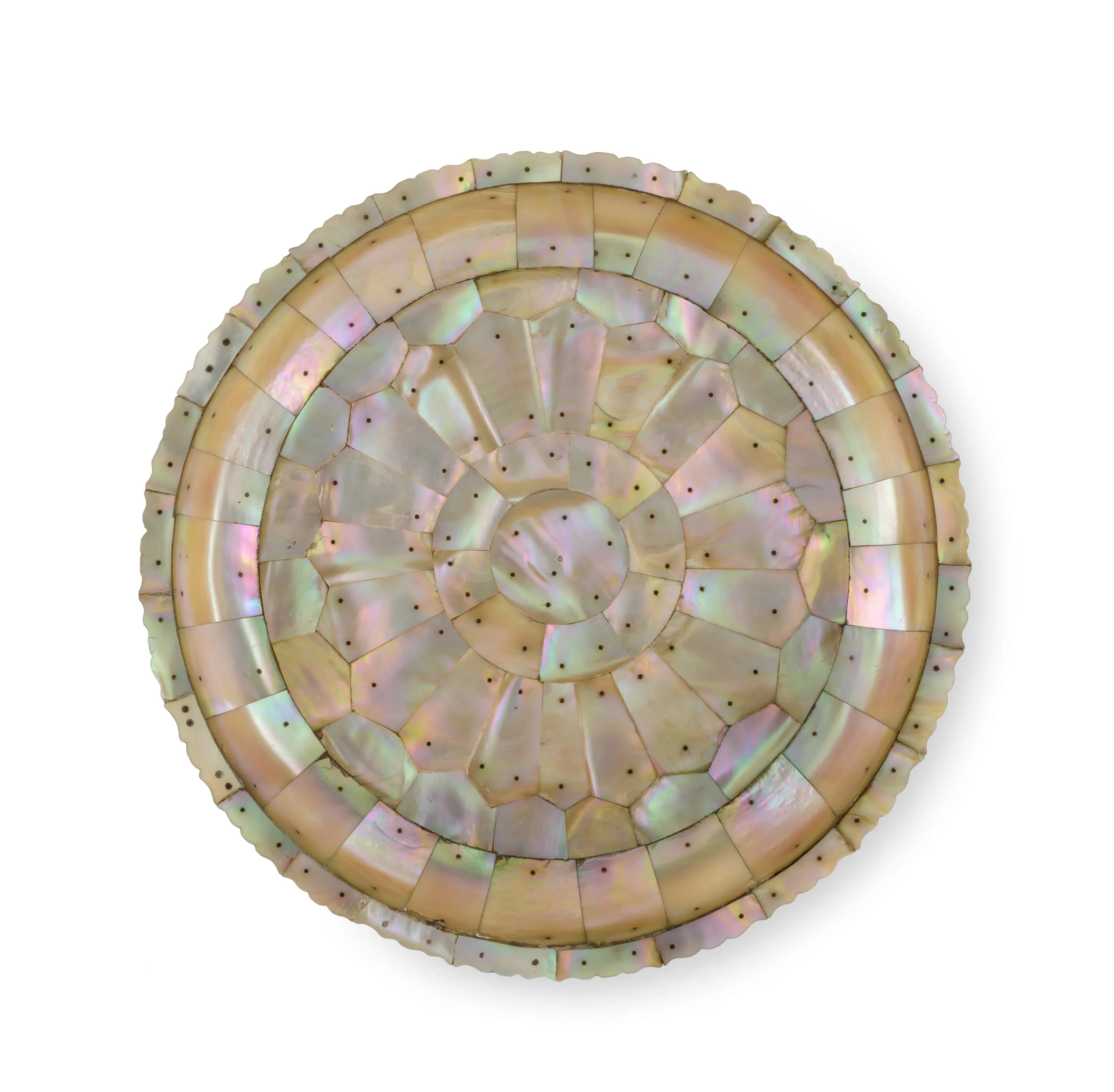
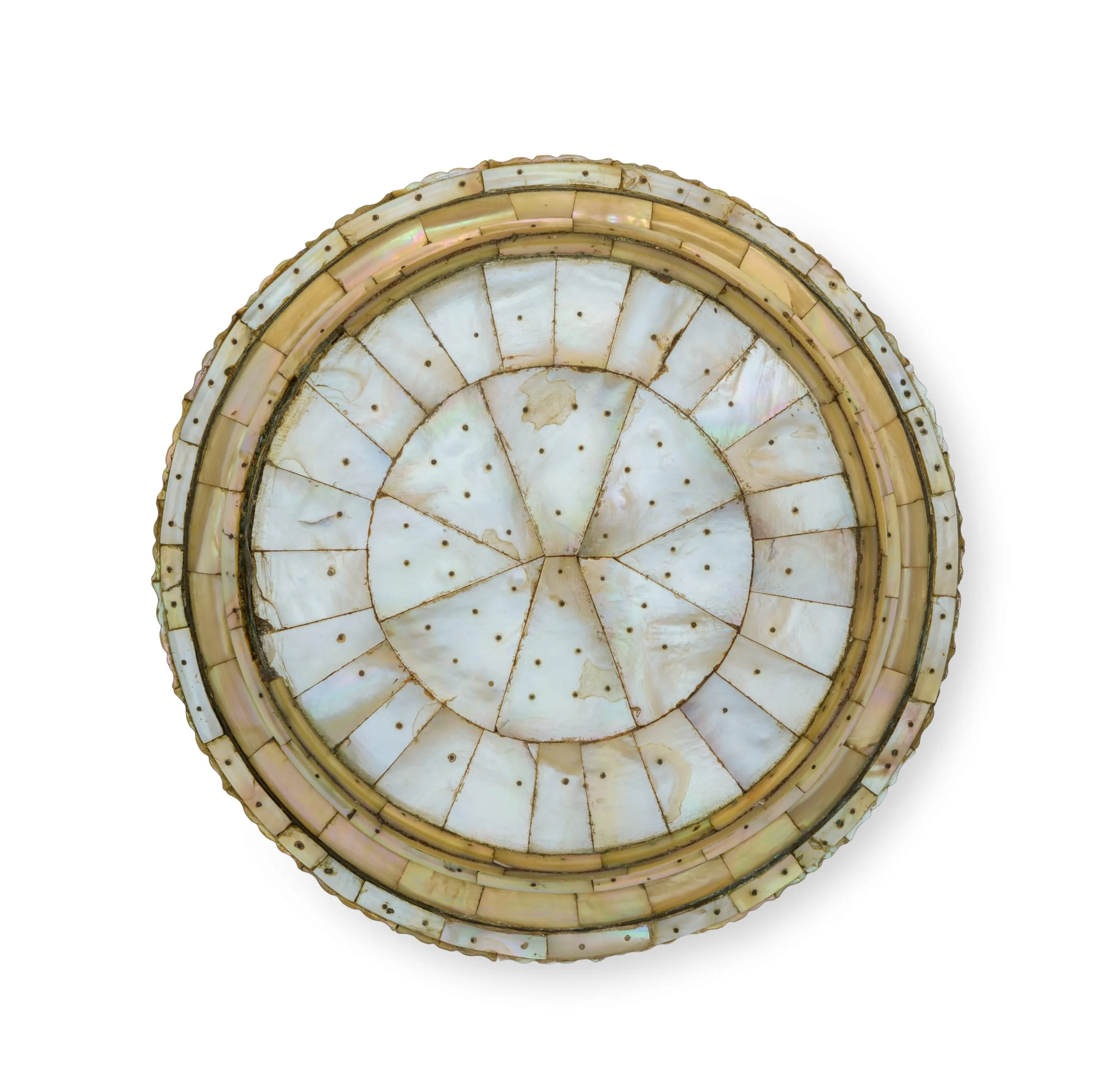
This double-walled Plate is made of thin sections of the shell of a Green Sea Snail (turbo marmoratus) mounted with pins onto a copper substrate. The shallow dish rests on a pronounced ring foot. It rises to a curved cavetto (concave moldings forming the side walls) and a flat horizontal rim with an elegantly scalloped border. The dazzling interior face has a large central roundel encircled by concentric bands of decoration. The innermost band is a wide circular border. It is followed by a radiating series of lotus-like petals bordered by interstitial lunettes adjoining the curved side wall. The underside has coarser pattern of overlaid mother-of-pearl plaques.
Fine tableware, writing implements, and storage boxes adorned with mother-of-pearl plaques were among the earliest and most sought after luxury items made in western India as export ware for the Portuguese market in the 16th and 17th centuries. Inventory records and surviving examples from various royal collections from across Europe document their importation by the mid-16th century. Mother-of-pearl work is recorded in a late 16th-century Mughal court chronicle as being produced in the Ahmedabad province, located in the modern state of Gujarat. The small corpus of extant examples features variant geometric, floral, and calligraphic arrangements of the mother-of-pearl sections, which are pin-mounted onto a copper or teak framework or set in a resinous ground of lac or mastic.
- Selected Bibliography
- Zumaya, Diva. The World Made Wondrous: the Dutch Collector's Cabinet and the Politics of Possession. Los Angeles: Los Angeles County Museum of Art, 2023.