LACMA

ShopMembershipMyLACMATickets
LACMA
Los Angeles County Museum of Art
5905 Wilshire Blvd.
Los Angeles, CA 90036
info@lacma.org
(323) 857-6000
Sign up to receive emails
Subscribe
© Museum Associates 2025

Museum Hours

Monday

11 am–6 pm

Tuesday

11 am–6 pm

Wednesday

Closed

Thursday

11 am–6 pm

Friday

11 am–8 pm

Saturday

10 am–7 pm

Sunday

10 am–7 pm


  • About LACMA
  • Jobs
  • Building LACMA
  • Host An Event
  • Unframed
  • Press
  • FAQs
  • Log in to MyLACMA
  • Privacy Policy
© Museum Associates 2025
Collections

José de Páez
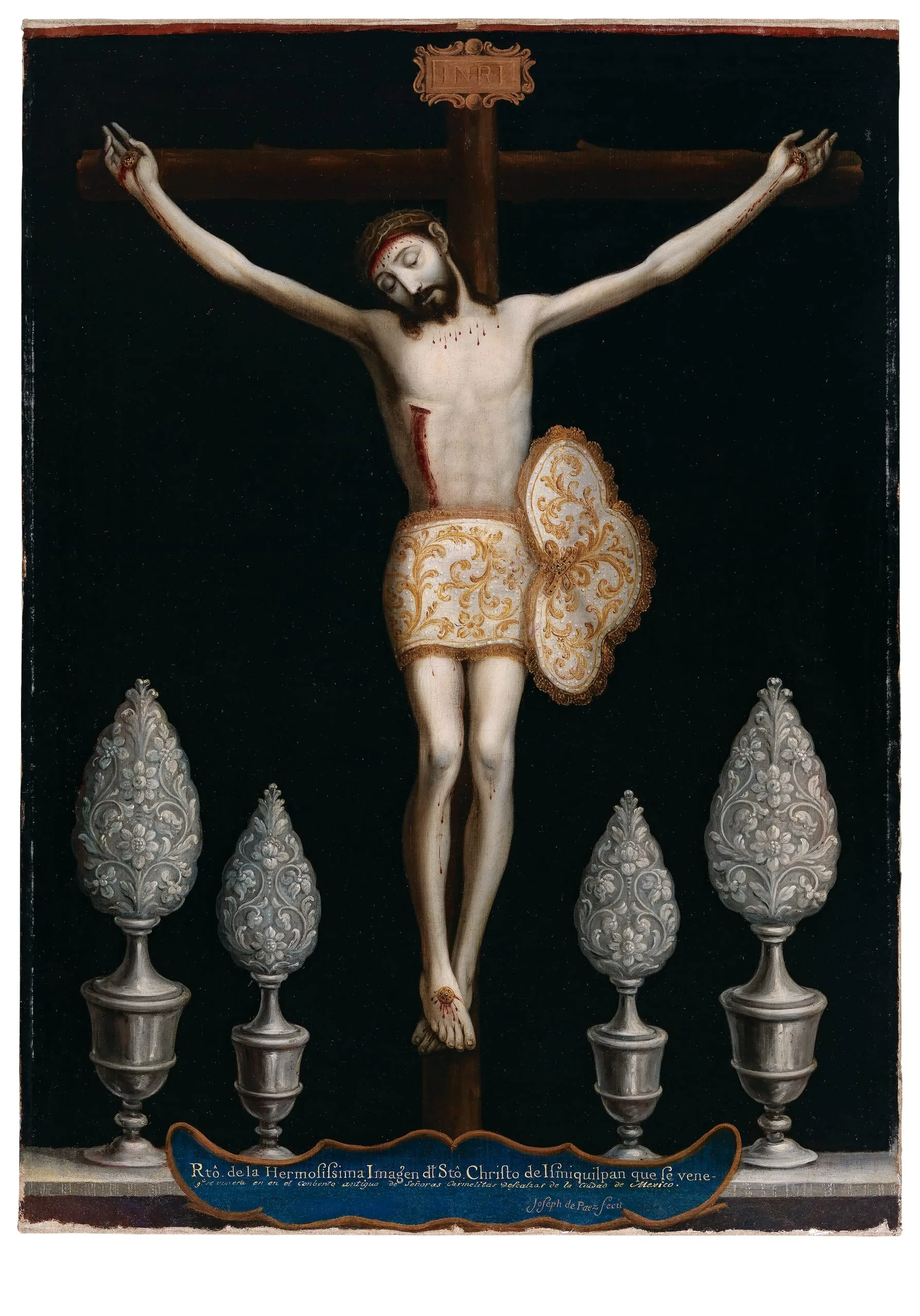
Christ of Ixmiquilpan or “Señor de Santa Teresa” (Cristo de Ixmiquilpan o “Señor de Santa Teresa”)circa 1750-1760

Not on view
Oil painting of a crucifixion scene, pale figure on a dark wooden cross wearing an embroidered gold and white loincloth, flanked by four silver decorative vessels below, with a Spanish inscription along the bottom edge
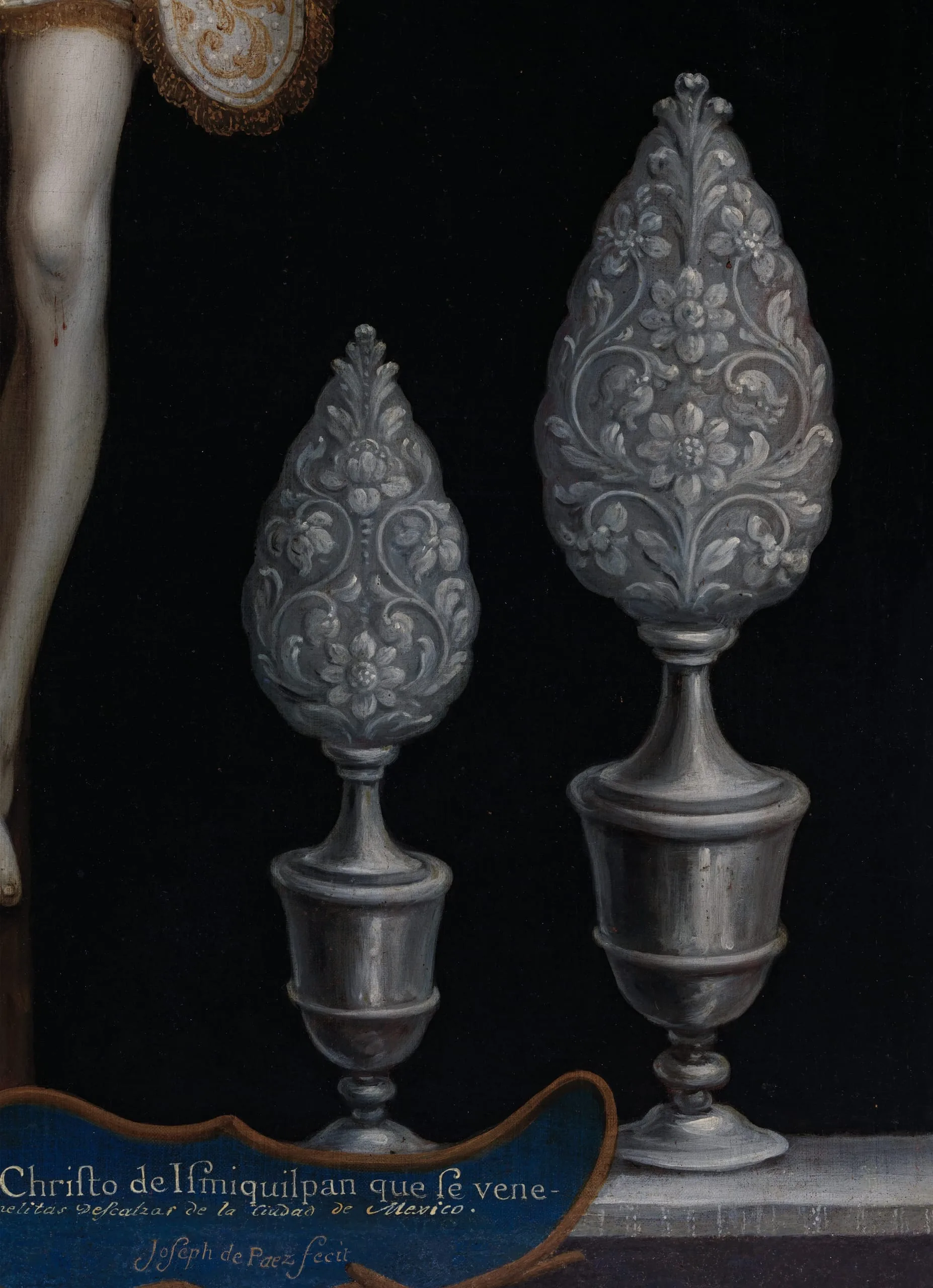
Oil painting detail showing two ornate silver altar vases with teardrop-shaped finials decorated in relief with scrolling acanthus leaves and flowers, set against a black background on a stone ledge, with a partially visible figure at upper left and a Latin-script inscription on a blue cartouche at bottom.
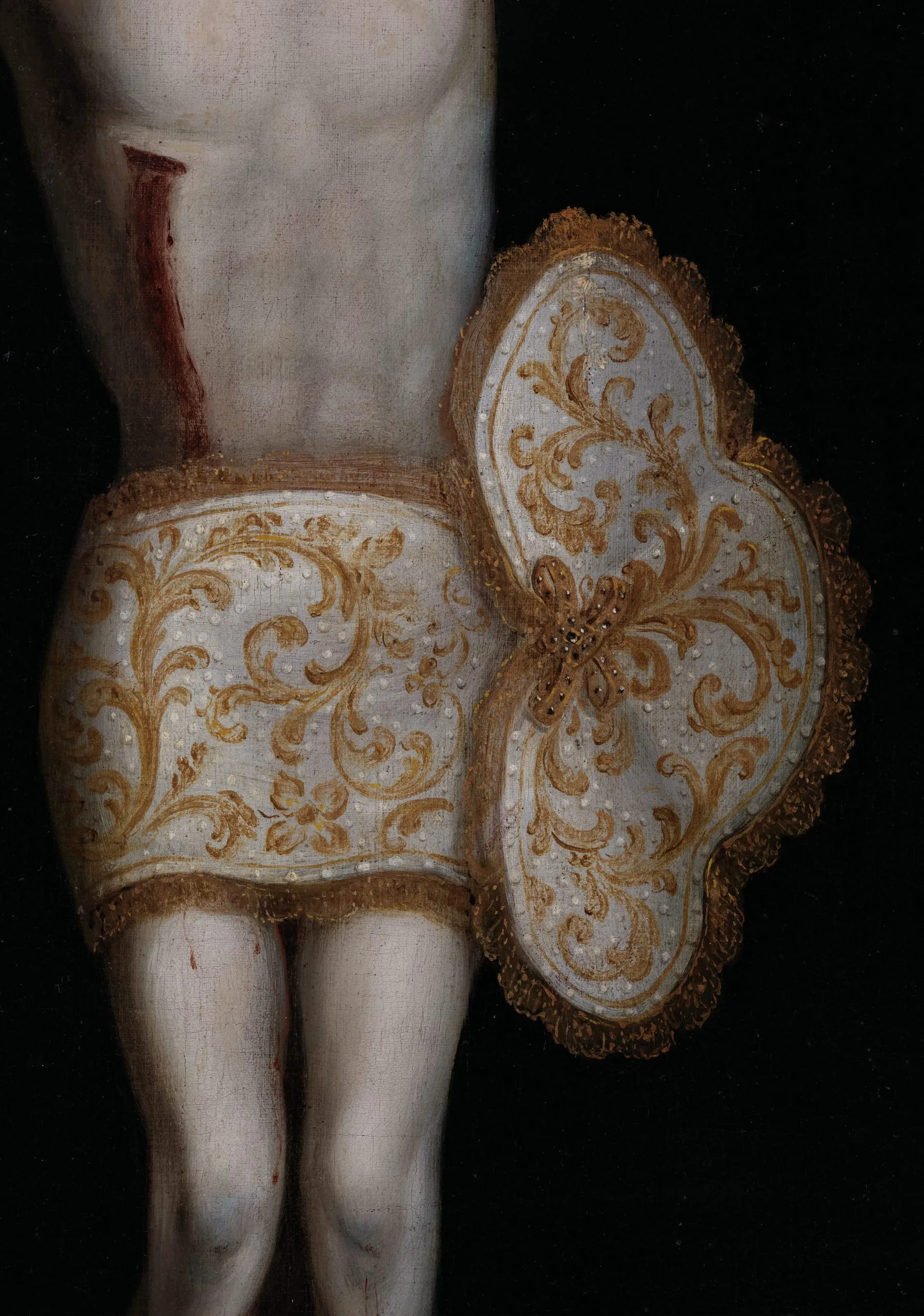
Oil painting detail of a figure's torso and legs against a black background, wearing an ornate white loincloth with gold scrollwork embroidery and a quatrefoil decorative panel; a wound is visible on the side.
Artist or Maker
José de Páez
Mexico, 1721-circa 1790
Title
Christ of Ixmiquilpan or “Señor de Santa Teresa” (Cristo de Ixmiquilpan o “Señor de Santa Teresa”)
Date Made
circa 1750-1760
Medium
Oil on canvas
Dimensions
Unframed: 33 3/4 × 24 1/2 in. (85.7 × 62.2 cm); framed: 42 × 32 1/2 × 2 in. (106.68 × 82.55 × 5.08 cm)
Credit Line
Purchased with funds provided by the Bernard and Edith Lewin Collection of Mexican Art Deaccession Fund
Accession Number
M.2012.143.2
Classification
Paintings
Collecting Area
Latin American Art
Curatorial Notes

The Christ of Ixmiquilpan was a life-size cornstalk-paste image (imagen en caña de maíz) venerated at the church of Mapethé, near the town of Ixmiquilpan, Mexico. In the seventeenth century the sculpture had become disfigured and was ordered buried with the next townsperson to die. Six years passed without any deaths. Suddenly, the effigy detached from the cross and miraculously renovated itself. In 1621 the image was transferred to the Carmelite convent of Santa Teresa in Mexico City. Its fame as a miracle worker grew, yet only a few copies after the original on its altar were created for private and public veneration.


From exhibition Archive of the World, 2022 (for more information see the catalogue entry by Ilona Katzew in the accompanying publication, cat. no. 18, pp. 114–17)

Provenance
Antigüedades Pedro Montelongo, Seville, 1996; Caylus Anticuario SA, Madrid, 1997; Frederick and Jan Mayer, Denver, 1997; Valery Taylor Gallery (Valery Taylor Brown), Denver, 2012; LACMA, 2012.
Selected Bibliography
  • Katzew, Ilona, ed. Archive of the World: Art and Imagination in Spanish America, 1500–1800: Highlights from LACMA’s Collection. Exh. Cat. Los Angeles: Los Angeles County Museum of Art; New York: DelMonico Books/D.A.P., 2022.
  • Taylor, William B. Theater of a Thousand Wonders: A History of Miraculous Images and Shrines in New Spain. New York: Cambridge University Press, 2016.
Selected Exhibition History
  • Archive of the World: Art and Imagination in Spanish America, 1500–1800. June 12, 2022 - October 30, 2022
  • Archive of the World: Art and Imagination in Spanish America, 1500–1800. June 12, 2022 - October 30, 2022
  • Archive of the World: Art and Imagination in Spanish America, 1500–1800. October 20, 2023 - January 28, 2024
  • Archive of the World: Art and Imagination in Spanish America, 1500–1800. October 20, 2023 - January 28, 2024
  • Archive of the World: Art and Imagination in Spanish America, 1500–1800. June 22, 2024 - September 08, 2024
  • Archive of the World: Art and Imagination in Spanish America, 1500–1800. June 22, 2024 - September 08, 2024