LACMA

ShopMembershipMyLACMATickets
LACMA
Los Angeles County Museum of Art
5905 Wilshire Blvd.
Los Angeles, CA 90036
info@lacma.org
(323) 857-6000
Sign up to receive emails
Subscribe
© Museum Associates 2026
  • About LACMA
  • Jobs
  • Building LACMA
  • Host An Event
  • Unframed
  • Press
  • FAQs
  • Log in to MyLACMA
  • Privacy Policy
© Museum Associates 2026
Collections

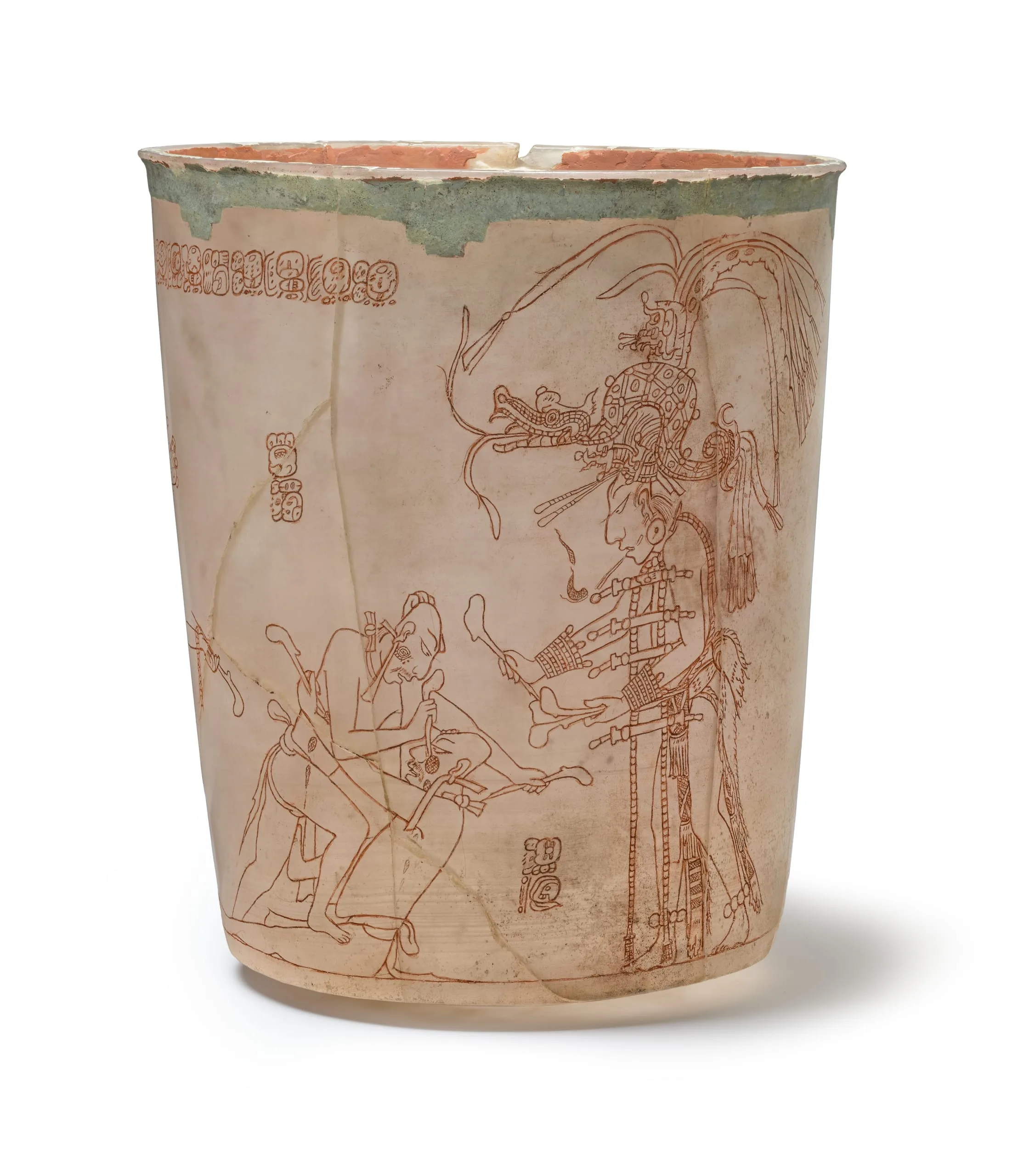
A Ballplayer's Drinking Cup600–900 CE

On view:
Geffen Galleries
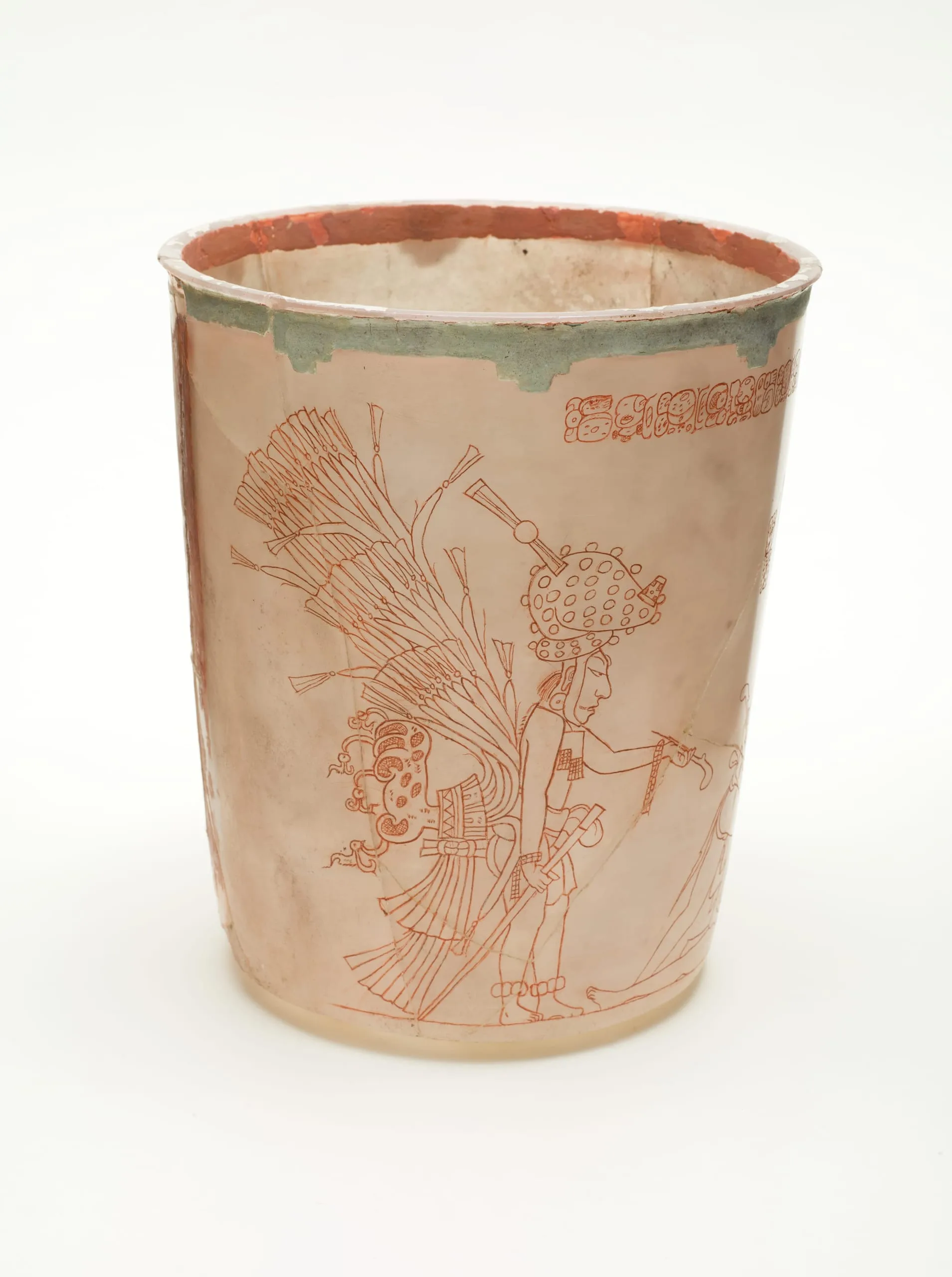
Maya ceramic cylinder vessel with cream slip, decorated with red-brown painted glyphs and figural scene showing elaborately costumed figures, with sage green pigment at the rim
Cylindrical ceramic vessel with cream slip and red-painted Maya figural scene; two elaborately dressed figures with large feathered fans and dotted headdresses, accompanied by a band of Maya glyphs near the rim; traces of blue-green pigment along the upper exterior.
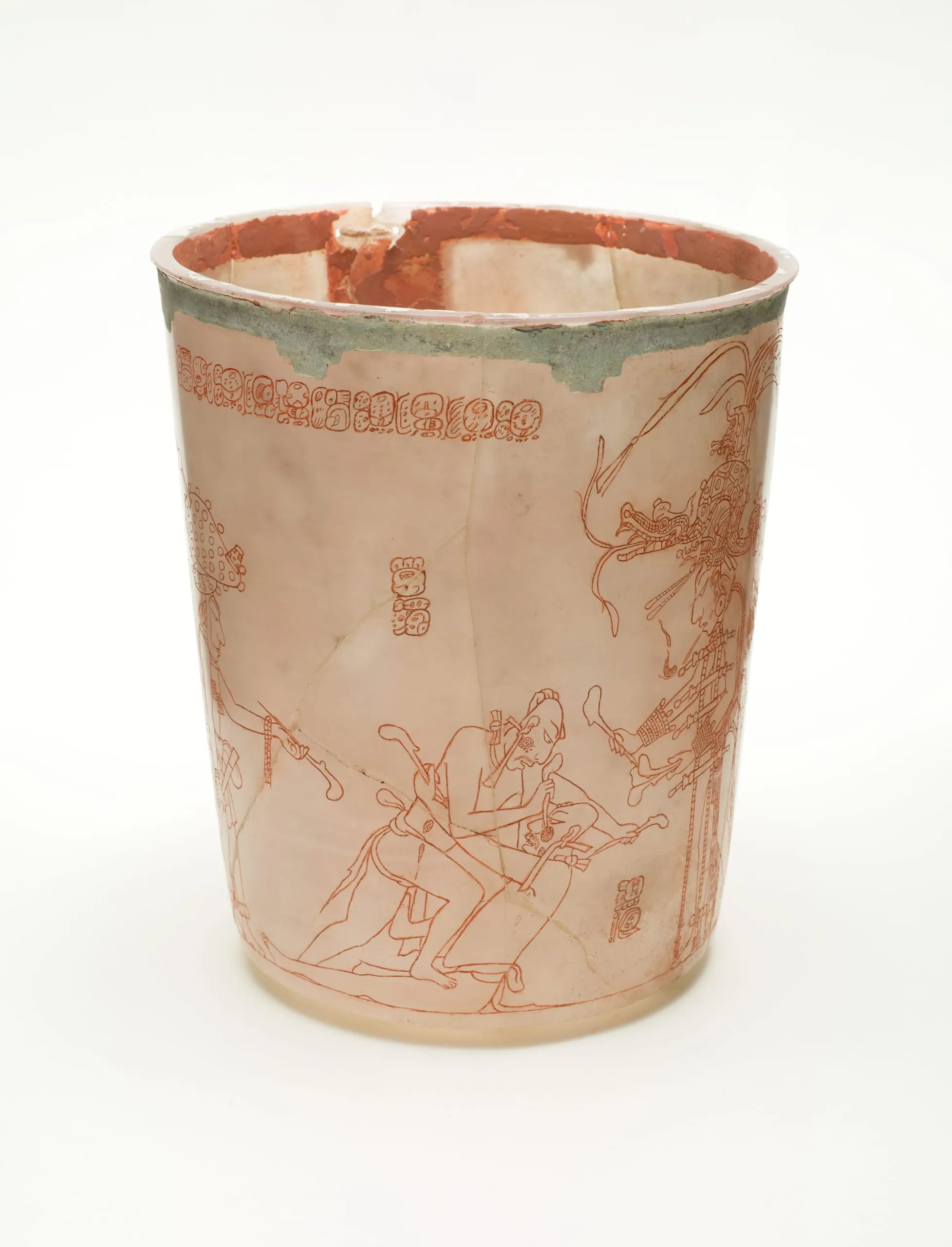
Cylindrical Maya ceramic vessel with cream slip and red-painted figural scene; a band of Maya glyphs runs below the rim with traces of green pigment; incised and painted figures in dynamic poses with a supernatural deity figure at right.
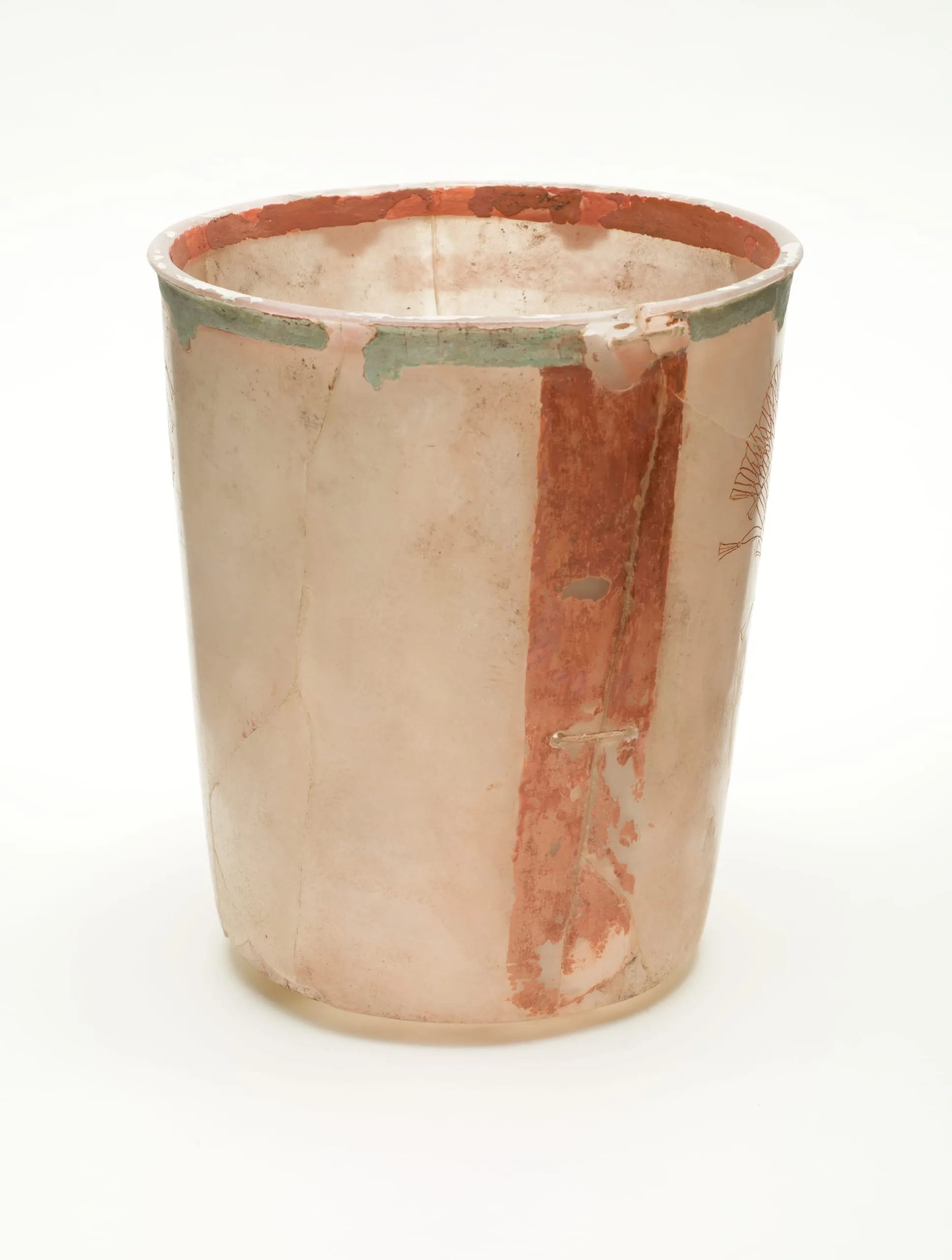
Ceramic beaker with slightly flared rim, pale buff surface with remnants of red and green painted decoration, showing significant wear and paint loss.
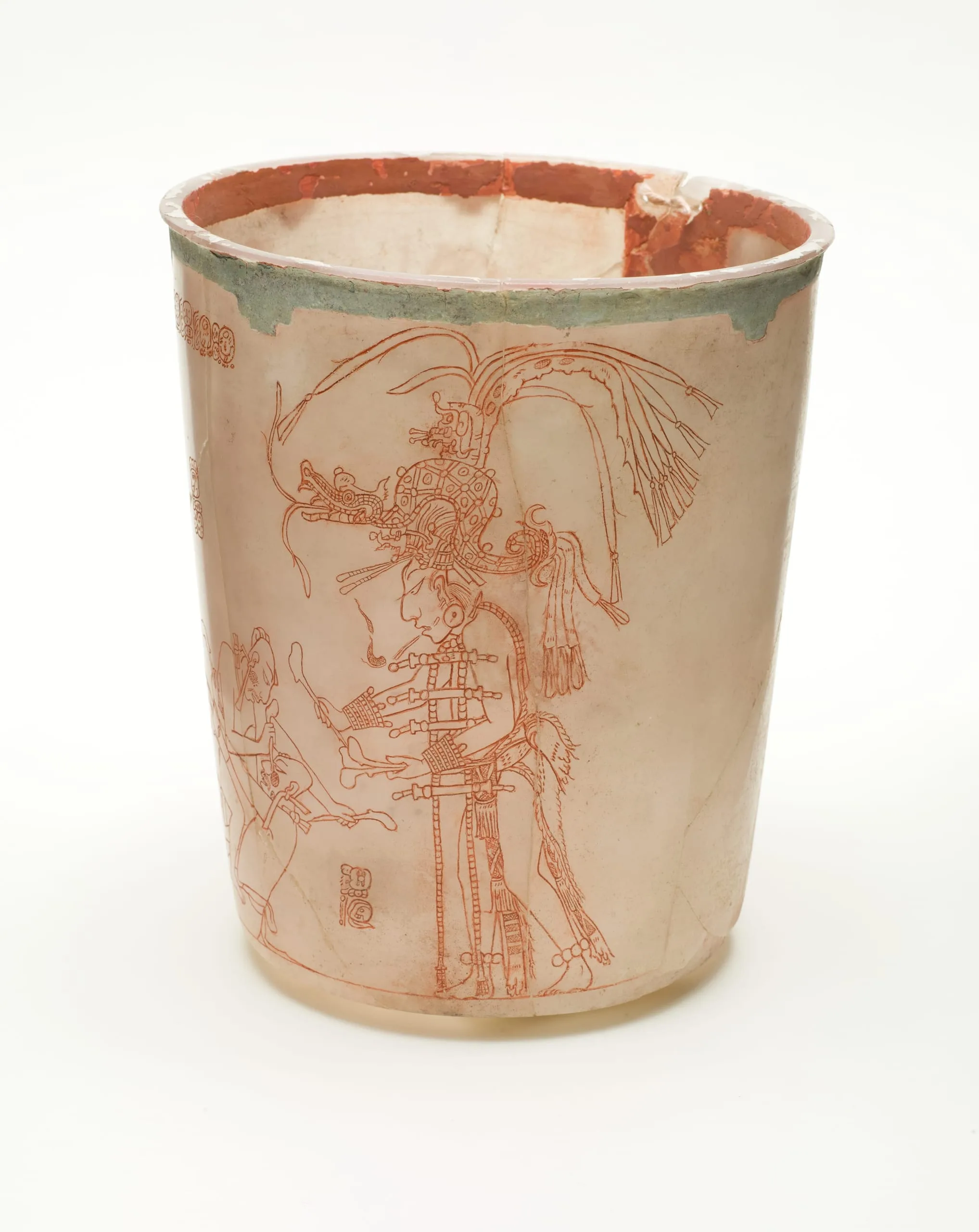
Cylindrical ceramic vessel with cream slip and red-painted rim, incised with fine-line Maya figural scenes depicting a standing elaborately dressed figure with feathered headdress and a second figure at left; small Maya glyphs visible near lower center.
Title
A Ballplayer's Drinking Cup
Culture
Maya
Place Made
Guatemala, Northern Petén
Date Made
600–900 CE
Medium
Travertine with pigment
Dimensions
Diameter: 7 1/2 in. (19.05 cm) Height: 9 in. (22.86 cm)
Credit Line
Anonymous gift
Accession Number
M.2010.115.875
Classification
Stone
Collecting Area
Art of the Ancient Americas
Curatorial Notes

This is an exquisite example of a rare category of object in Classic Maya society: the travertine drinking vase. Travertine, a form of limestone with a sugary, translucent appearance when polished, requires a sculptor with specialized skill to work. The vessel’s delicate form and the finely incised details of its imagery attest to the remarkable abilities of the artist who created it. The scene etched into the surface of the vase, and rubbed with red pigment, depicts at its center two grappling combatants wielding sharpened bones, perhaps deer ulnae. Their shaven heads, the knotted cords around their necks, and the strips of barkpaper pulled through their earlobes indicate that they are captives. One, named in the caption above him as took’ aj chak xib, “Flint, he, the great/fierce male,” has gained advantage over the other, gouging his cheek while the other stabs at his side. Each combatant appears to be the champion of an attendant, both of whom stand to the side with additional weapons at the ready. Their dress marks them as elites. On the left, a man wears a scribe’s turban, along with a backrack bedecked in plumage and a fantastic oversized jaguar paw; on the right, a man draped in jade jewels and smoking a cigar bears on his head the accoutrements of a king, including a jade diadem headband (M.2010.115.245) and an elaborate feathered headdress.

The text along the rim of the vase does not relate to the pugilistic scene below. Instead, it names the object as a drinking cup belonging to a ballplayer, someone who must have held an elite position in society to own something so rare and finely crafted. As a luxury item used in palatial settings, the vase likely held a frothy chocolate drink.

Alyce de Carteret

2025
Selected Bibliography
  • Houston, Stephen. The Gifted Passage: Young Men in Classic Maya Art and Text. New Haven: Yale University Press, 2018.
  • Looper, Matthew. The Beast Between: Deer in Maya Art and Culture. Austin: University of Texas Press, 2019.
  • Magaloni, Diana, Davide Domenici, and Alyce de Carteret. We Live in Painting: the Nature of Color in Mesoamerican Art. Los Angeles: Los Angeles County Museum of Art, 2024.
Selected Exhibition History
  • The Ancient Maya World: Masterworks from the Permanent Collection. Saturday, December 1, 2012- Sunday, March 2, 2014

Related Exhibitions