- Title
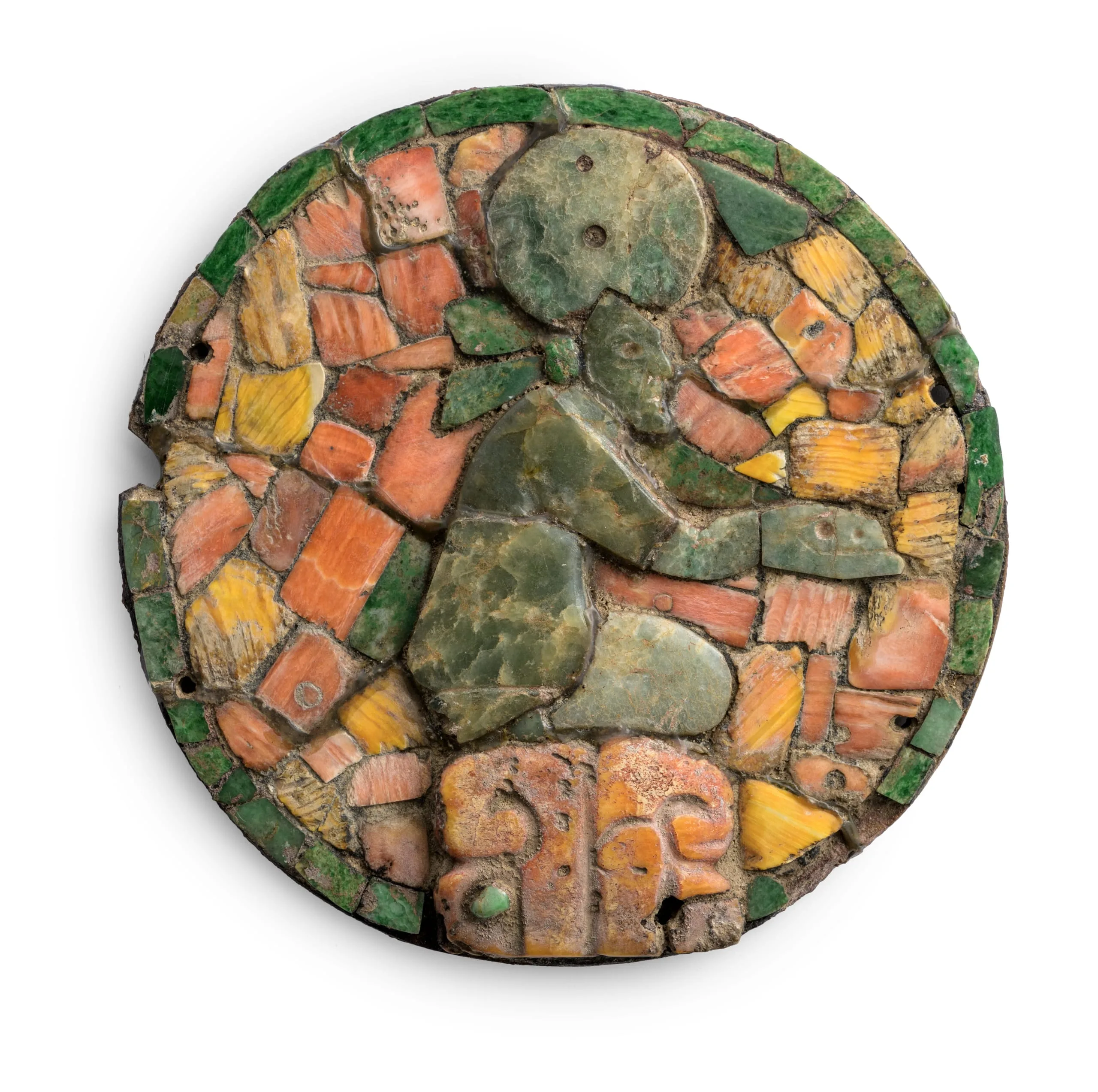
- Mosaic Mirror Back
- Date Made
- 600–900 CE
- Medium
- Coral, Spondylus shell, and jadeite
- Dimensions
- Diameter: 4 in. (10.16 cm); 4 x 4 x 3/10 in. (10.16 x 10.16 x 0.762 cm)
- Accession Number
- M.2010.115.725
- Curatorial Notes
This mosaic decoration is composed of greenstone, forming the image of a seated figure, and spiny oyster shell (Spondylus spp.), forming the throne on which he sits and the background of the scene. The old man, whose age is suggested by the wrinkles etched into his face, wears a distinctive rounded head wrap. Similar turbans appear in other mediums adorning scribes and supernatural figures.
The mosaic decorates the back of a mirror, whose reflective surface of polished pyrite has been lost. Throughout Mesoamerica, including among present-day Indigenous communities, mirrors play an important divinatory role, allowing skilled practitioners to see future events with a clarity of sight usually reserved for deities. Images in the reflections could be “read” as one might read a manuscript or a map. Palace scenes on painted Late Classic Maya (c. 600–850) ceramic vases often show members of the royal court consulting mirrors, and archaeological excavations have recovered numerous examples from elite contexts like royal tombs.
Alyce de Carteret
2024
- Selected Bibliography
- Magaloni, Diana, Davide Domenici, and Alyce de Carteret. We Live in Painting: the Nature of Color in Mesoamerican Art. Los Angeles: Los Angeles County Museum of Art, 2024.