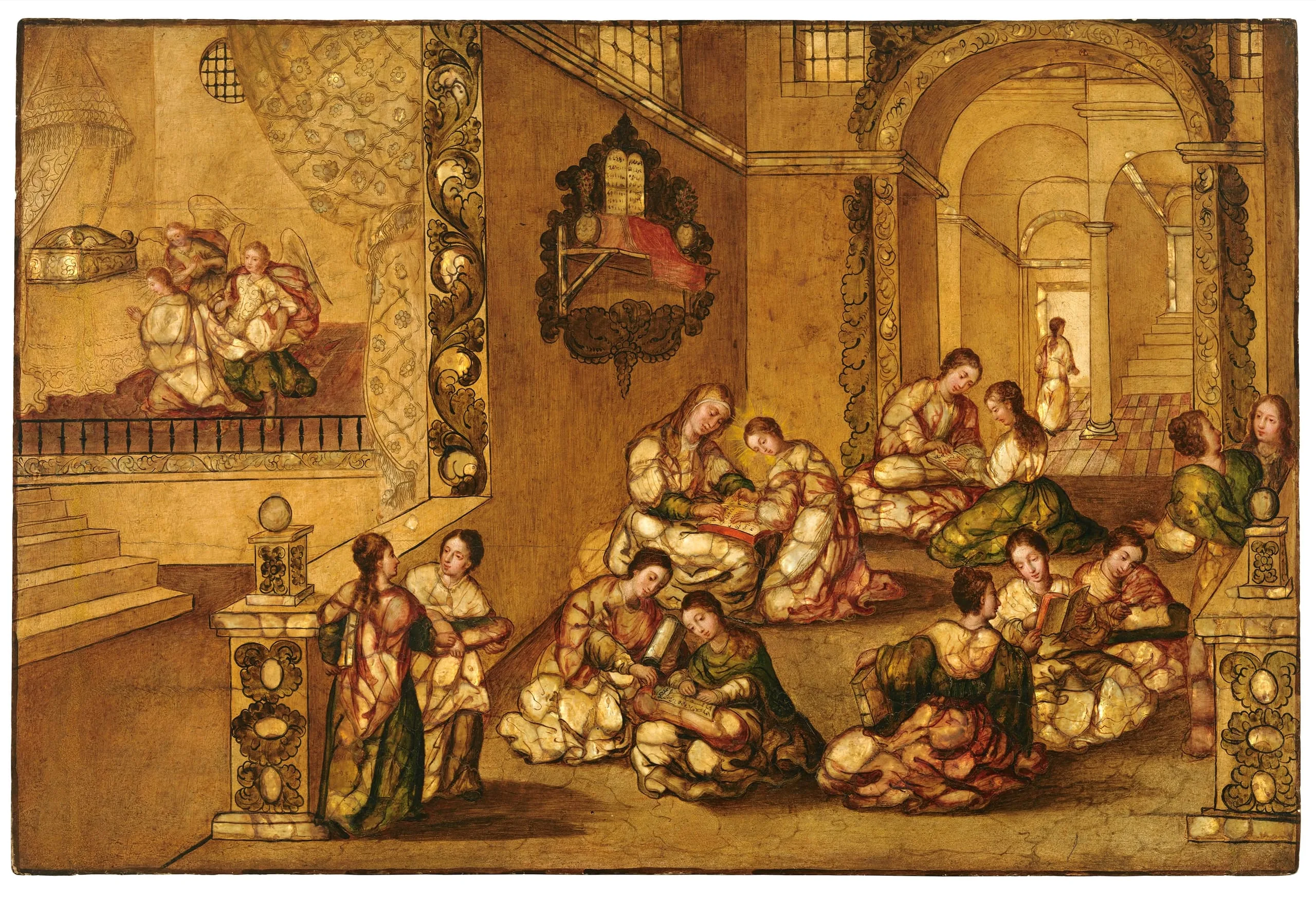
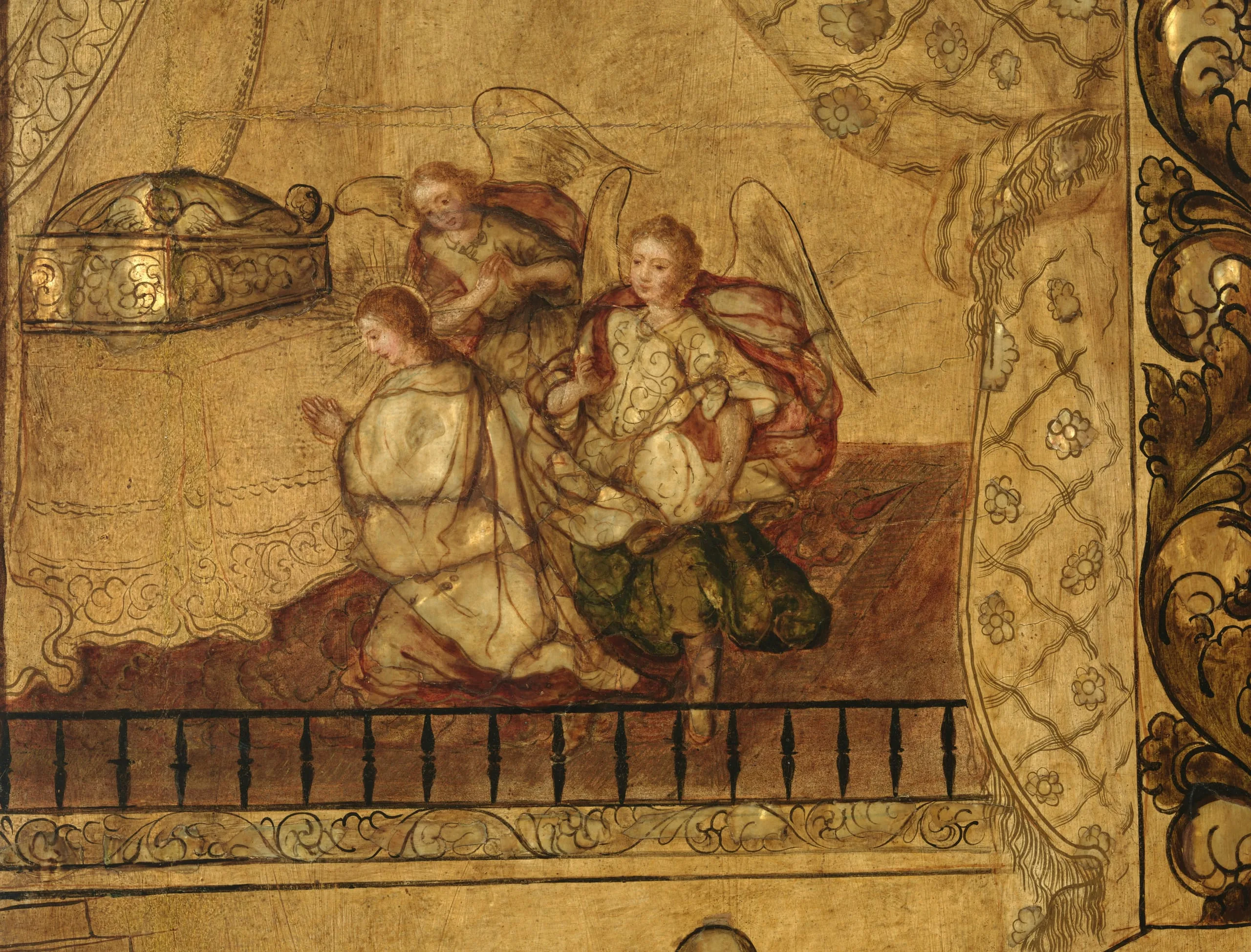
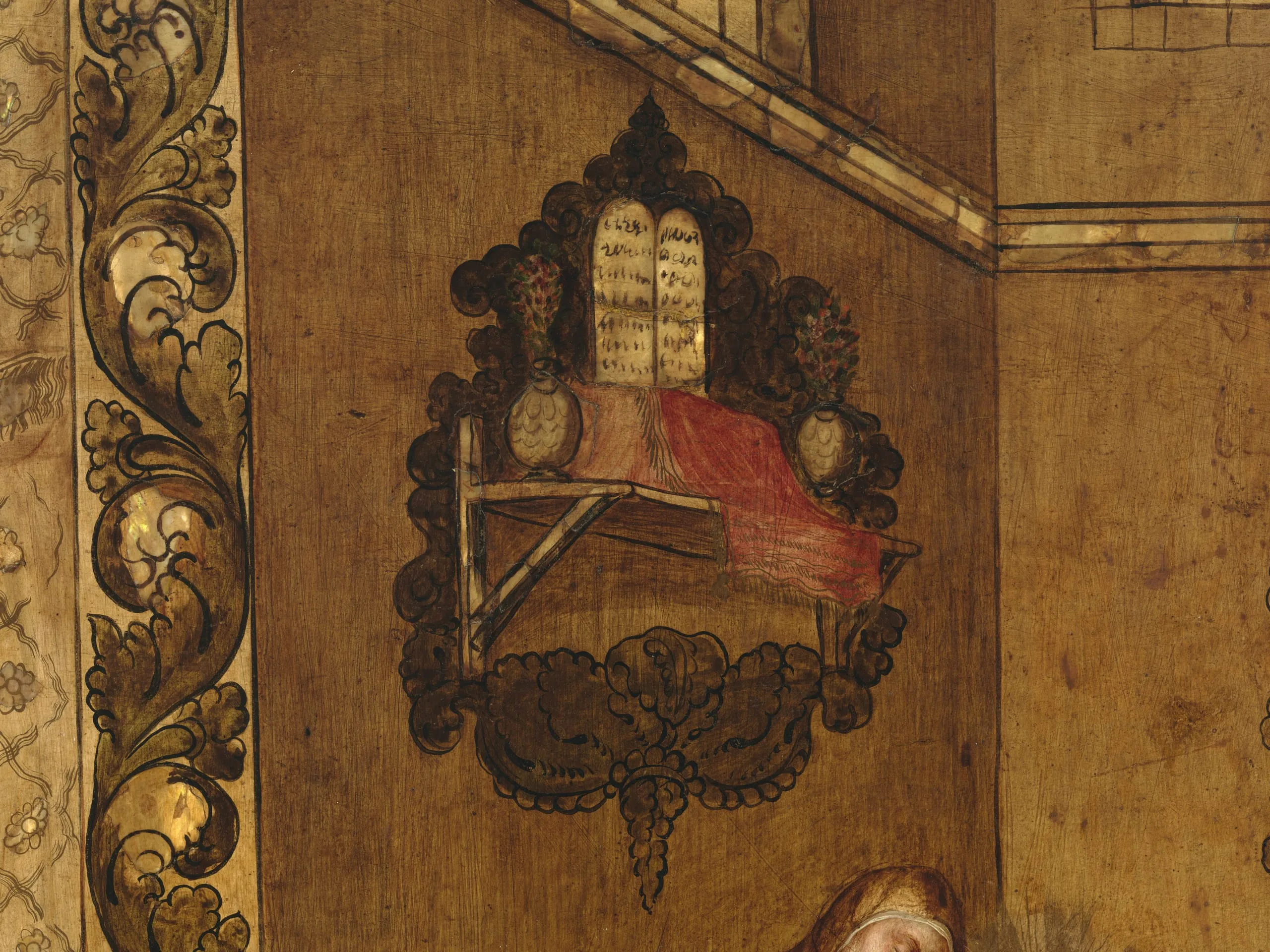
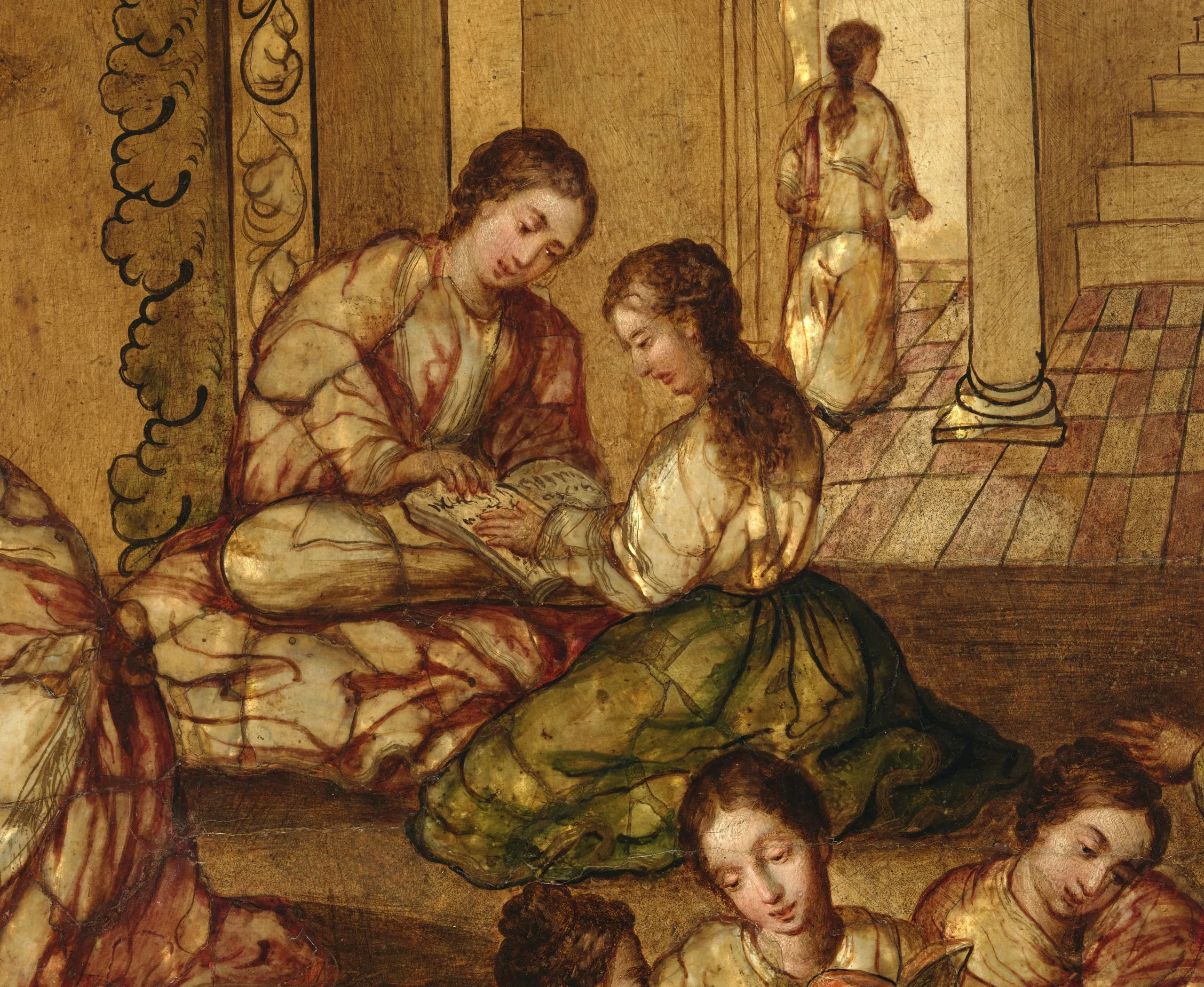
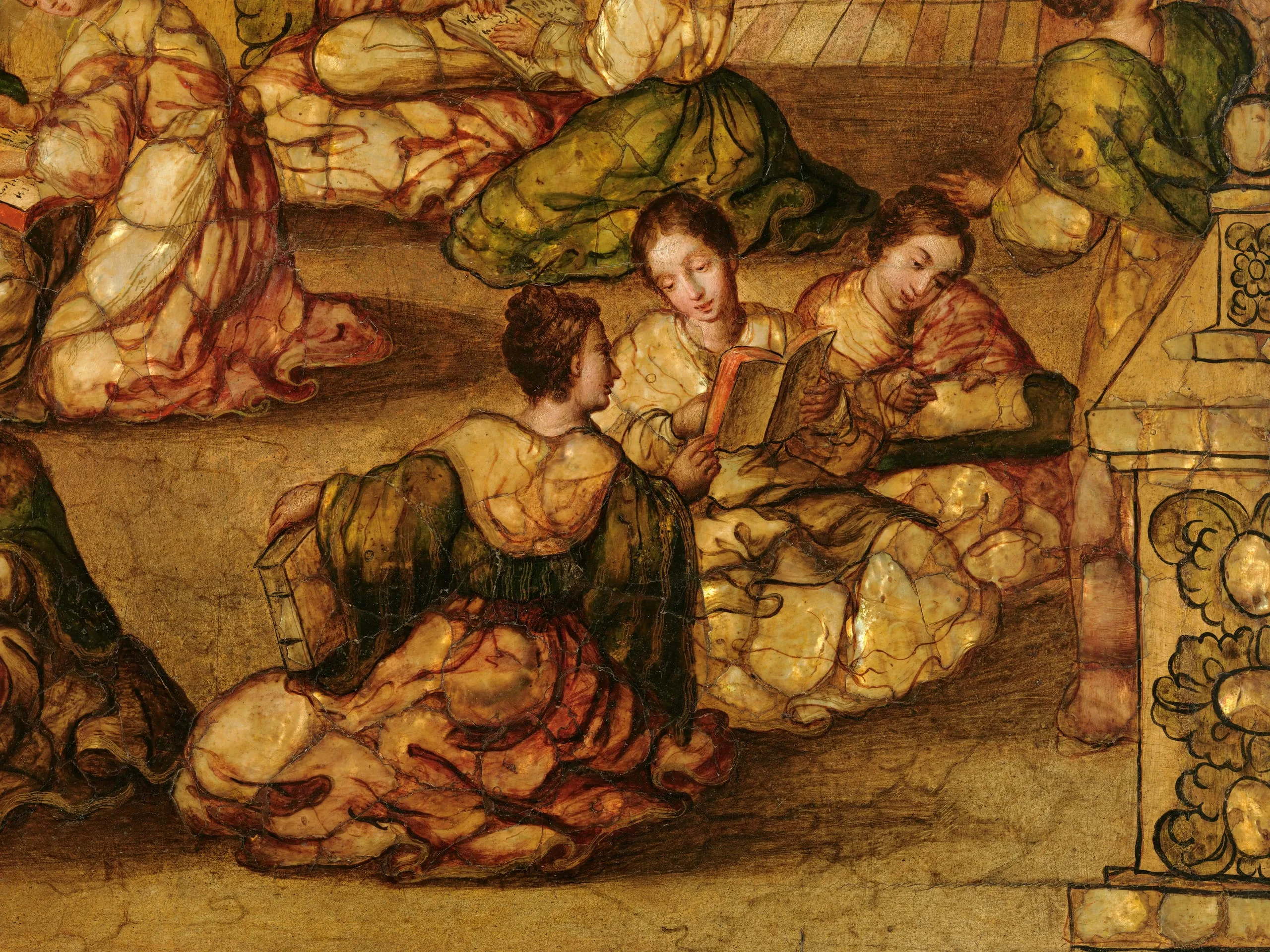
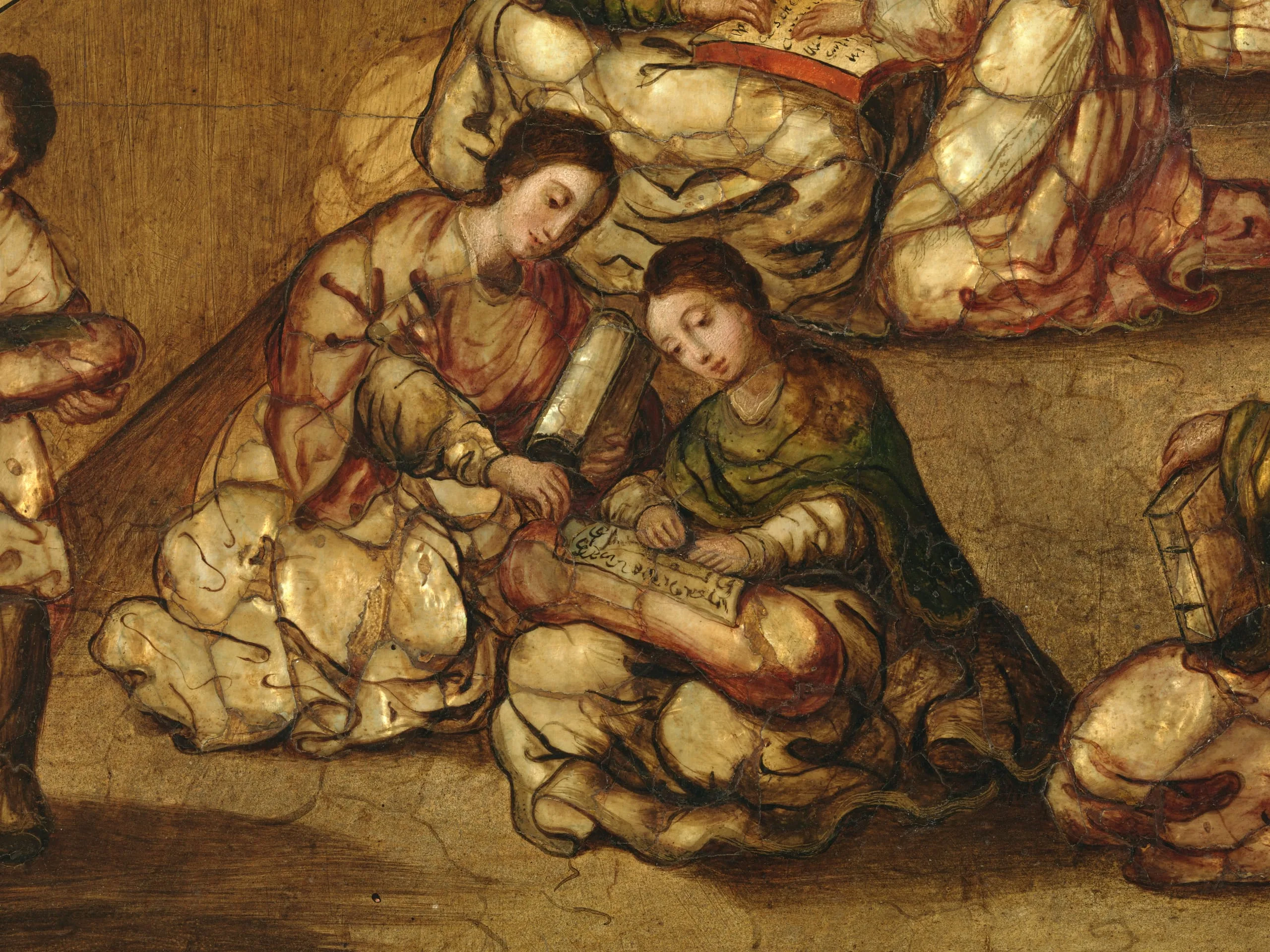
Among the most dazzling paintings invented in New Spain were those inlaid with mother-of-pearl, known as enconchados. Conceived in the traditional manner of Western painting, the works include shell fragments that reference a range of Asian decorative arts, which flowed in through various trade networks. Pearls had also been associated with the legendary riches of the Americas since the conquest. Their materiality connoted imperial power, ostentation, and wealth. The genre reached its apogee from roughly 1680 to 1700, and Miguel González was among its most salient practitioners. Aside from individual devotional pictures, many enconchados were created as multipanel series portraying the lives of the Virgin, Christ, and various saints—the iridescent nacre helping to suffuse the works with a sense of the divine. With their mixed technique, the opalescent enconchados stood at the juncture of imperial vision, global trade, religious fervor, and colonial invention.
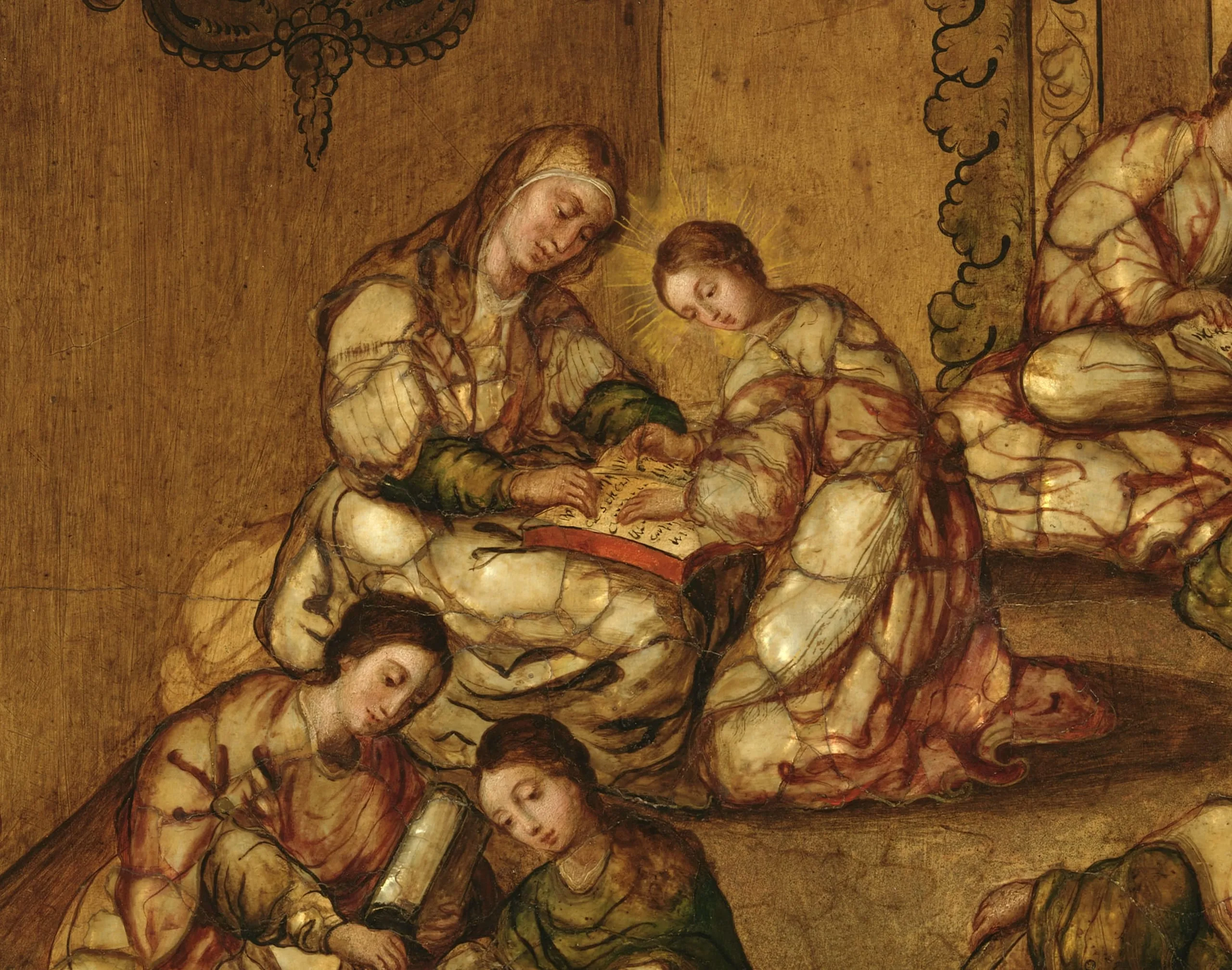
González’s Education of the Virgin was probably part of a larger set devoted to the Life of the Virgin. The subject had no scriptural basis but was described in medieval apocryphal texts and became popularized in German, English, and French books of hours. Visual precedents for the composition are rare, and González seems to have been as much attuned to Flemish prints of the Virgin sewing in the temple as to the recent upsurge in Spain of images of Saint Anne as Mary’s teacher.
From exhibition Archive of the World, 2022 (for more information see the catalogue entry by Ilona Katzew in the accompanying publication, cat. no. 65, pp. 264–74)