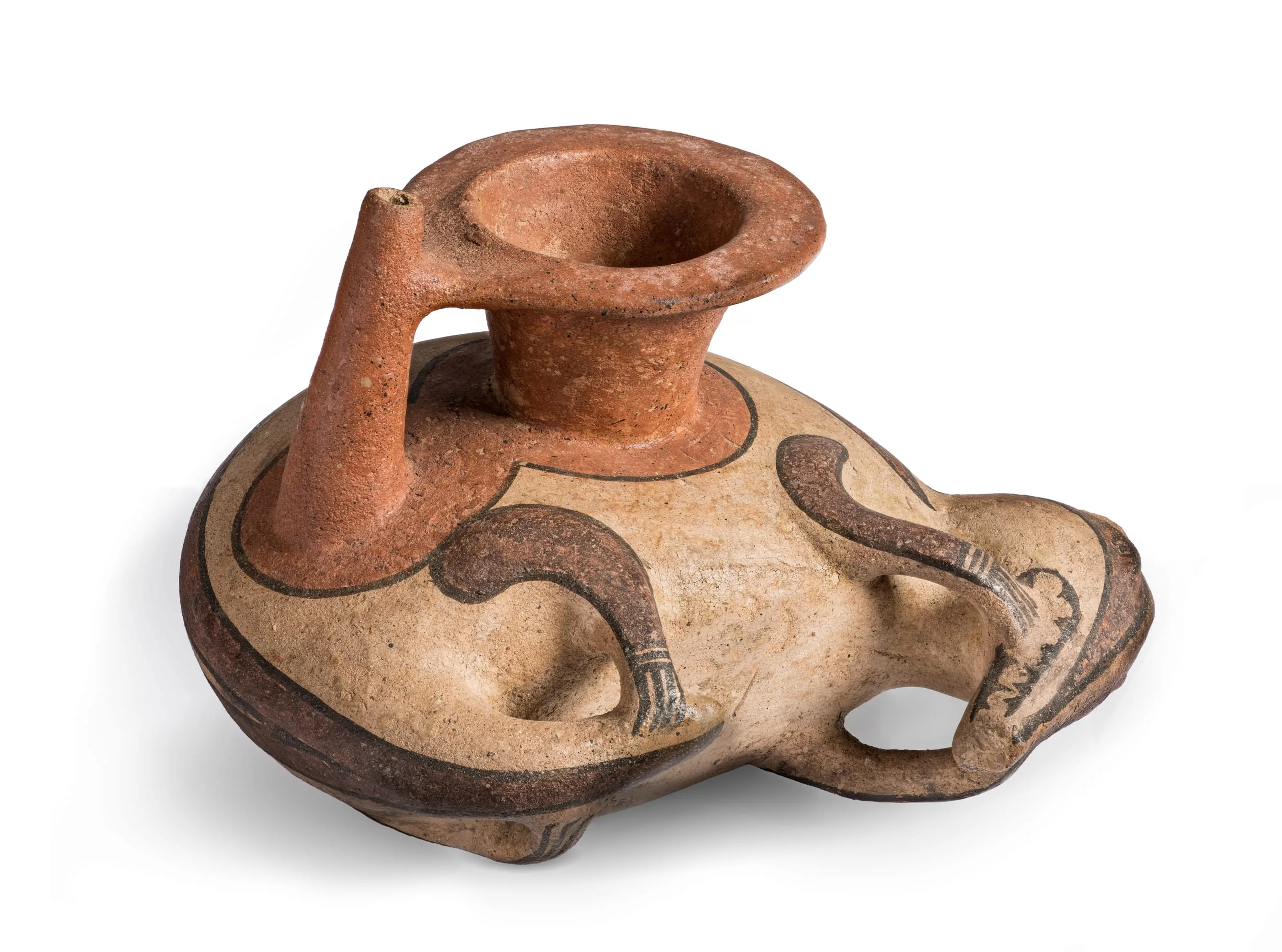
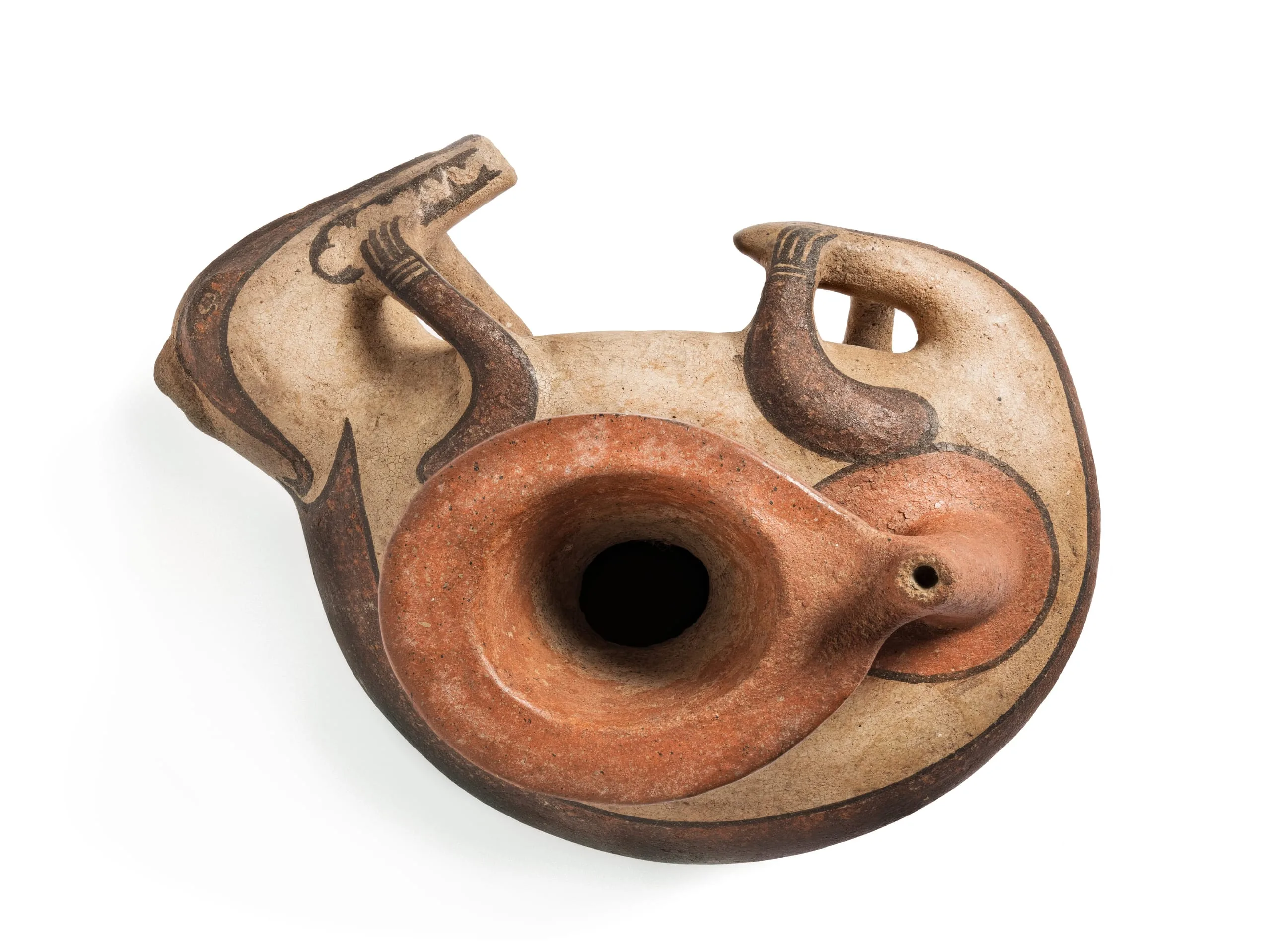
The body of this jar is modeled in the shape of a coati, curled up on its side. The coati (also called coatimundi), a relative of the raccoon, is widespread in Central and South America. When represented by Greater Coclé artists, coatis are always shown with one or both front paws touching the mouth, as here, perhaps in reference to the animal’s very dexterous hands. Two spouts emerge from its side, one wide, one narrow, connected by a short bridge handle. As is the case in many artistic traditions of the ancient Americas, ceramic sculptures are rarely just effigies of animals or humans but instead double as vessels or, indeed, are vessels modified to take figurative forms. What this vessel once contained is not known, but the elaborate, impractical form and decoration indicate it would only ever have been utilized for a few ceremonial or ritual purposes, perhaps in a grave offering.
2025