- Title
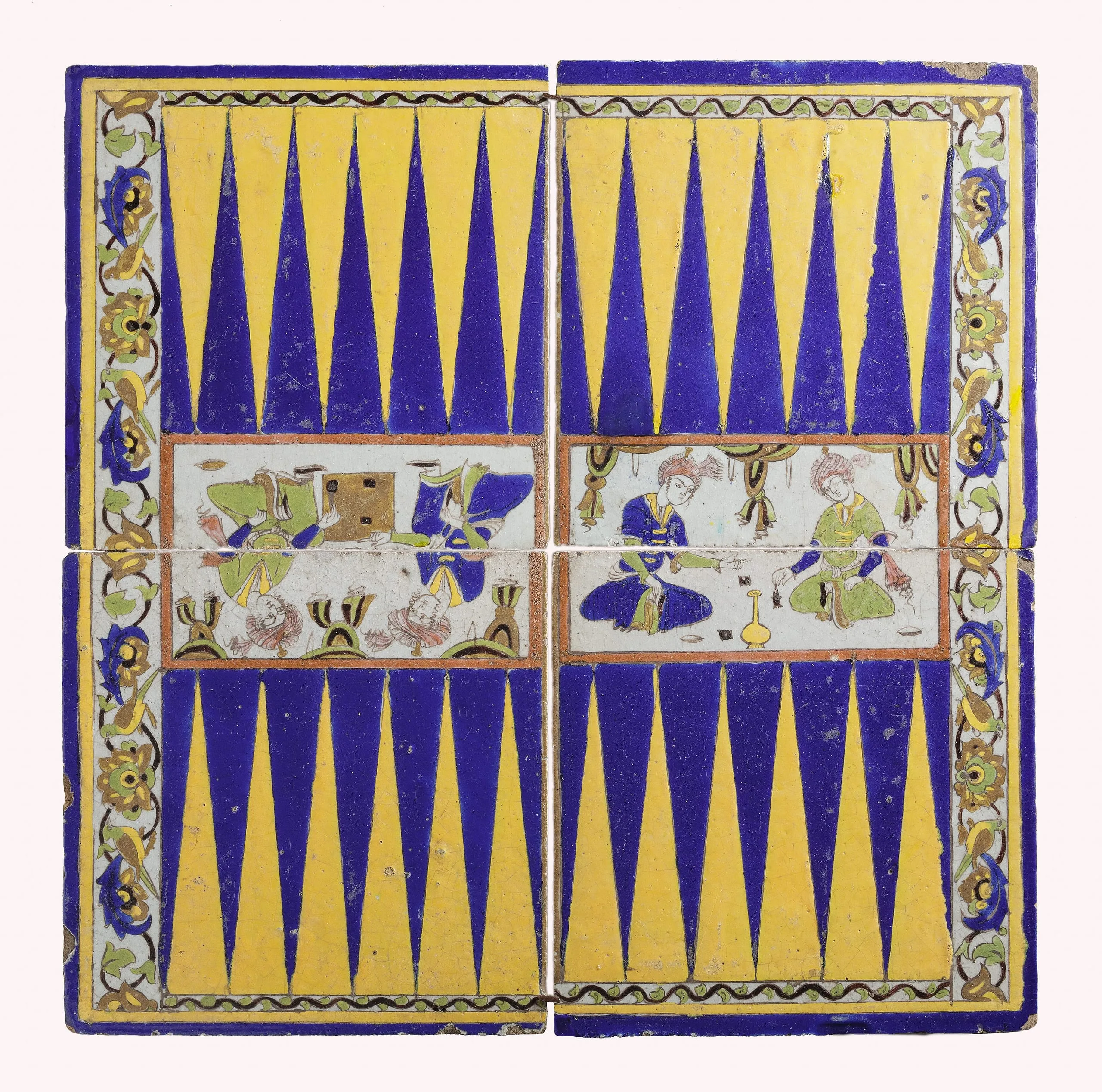
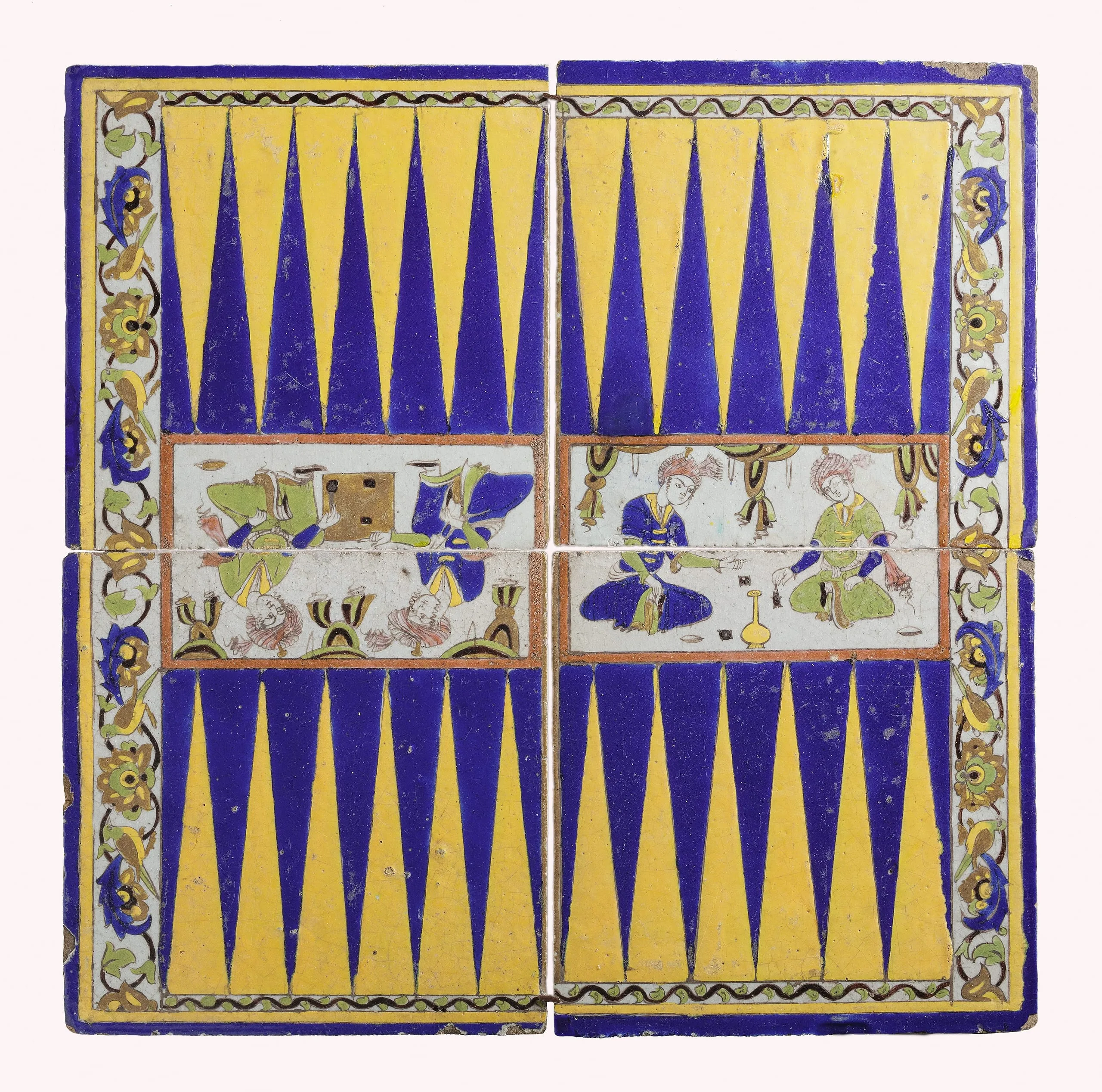
- Four Tiles Forming a Backgammon Board
- Date Made
- 17th century
- Medium
- Fritware, cuerda seca technique
- Dimensions
- a-d) 9 x 9 x 3/4 in. (22.86 x 22.86 x 1.91 cm) each
- Accession Number
- M.2012.22a-d
- Curatorial Notes
According to the Persian poet Firdawsi in his epic poem the Shahnama, chess was introduced to Iran from India in the sixth century by an envoy of the rajah, who threatened to cease paying tribute unless the Persians could solve the riddle of the chessboard and its pieces. Buzurgmihr, the shah’s vizier, or minister, recognized that chess was a game of war fought by symbolic armies; he invented the game of backgammon, or nard, as a reciprocal test of skill. In this charming and unusual backgammon board, which once may have served as floor tiles, tiny figures are shown seated on the ground, two of them playing a board game.