- Title
- Offering Bowl for Water
- Date Made
- mid-20th century
- Medium
- Silver repoussé
- Dimensions
- Height: 4 7/8 in. (12.38 cm); Diameter: 7 1/2 in. (19.05 cm)
- Accession Number
- M.2011.157.4
- Curatorial Notes
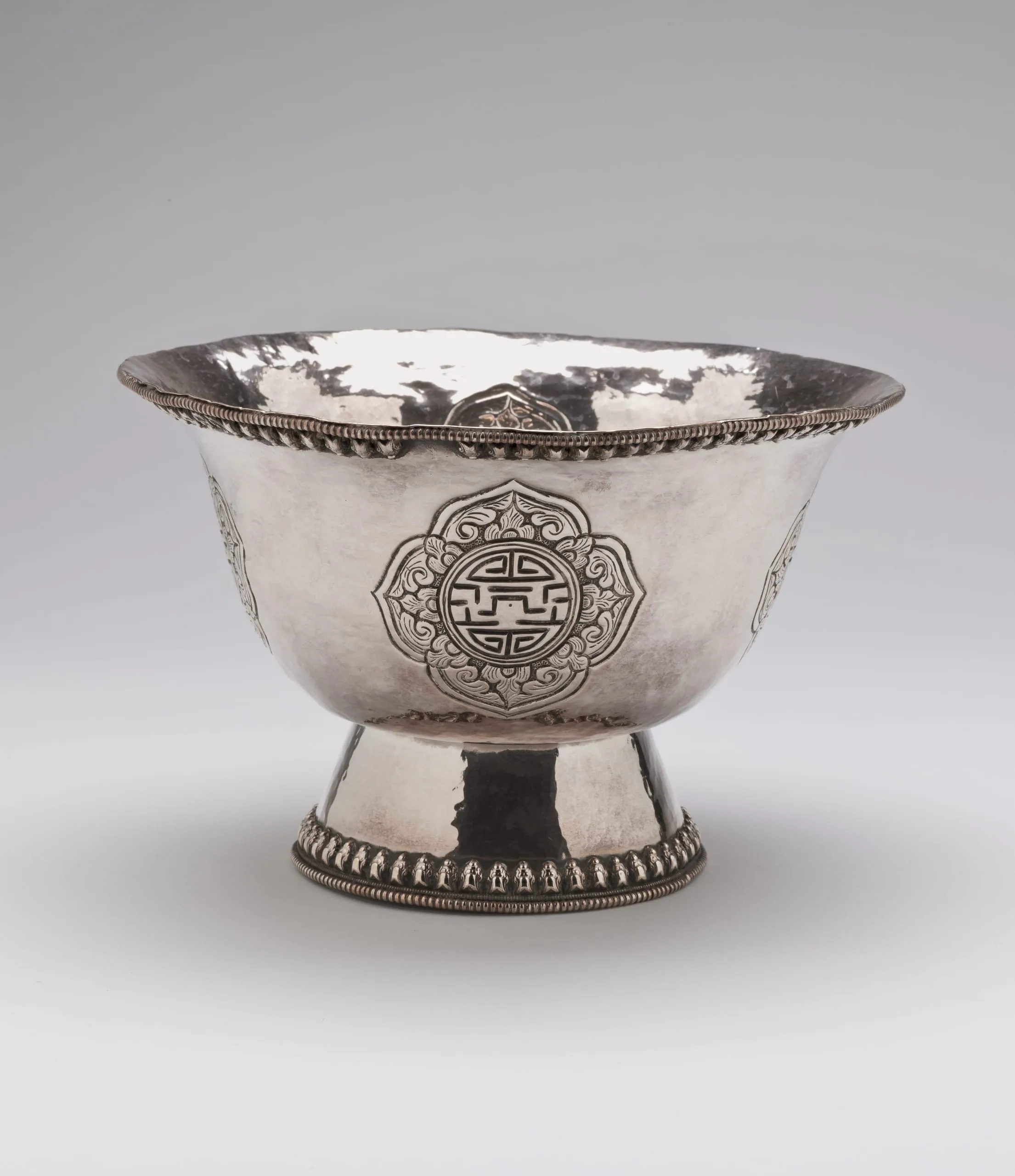
Offering bowls are a quintessential type of Tibetan ritualistic metalware. They are typically used in a set of seven on Tibetan altars and filled with water and other consecrated substances. Offering bowls for water (ting phor) can be made of silver, brass, bronze, ceramic, and, occasionally, gold. Metal offering bowls were often decorated with designs in repoussé or cloisonné enamel.
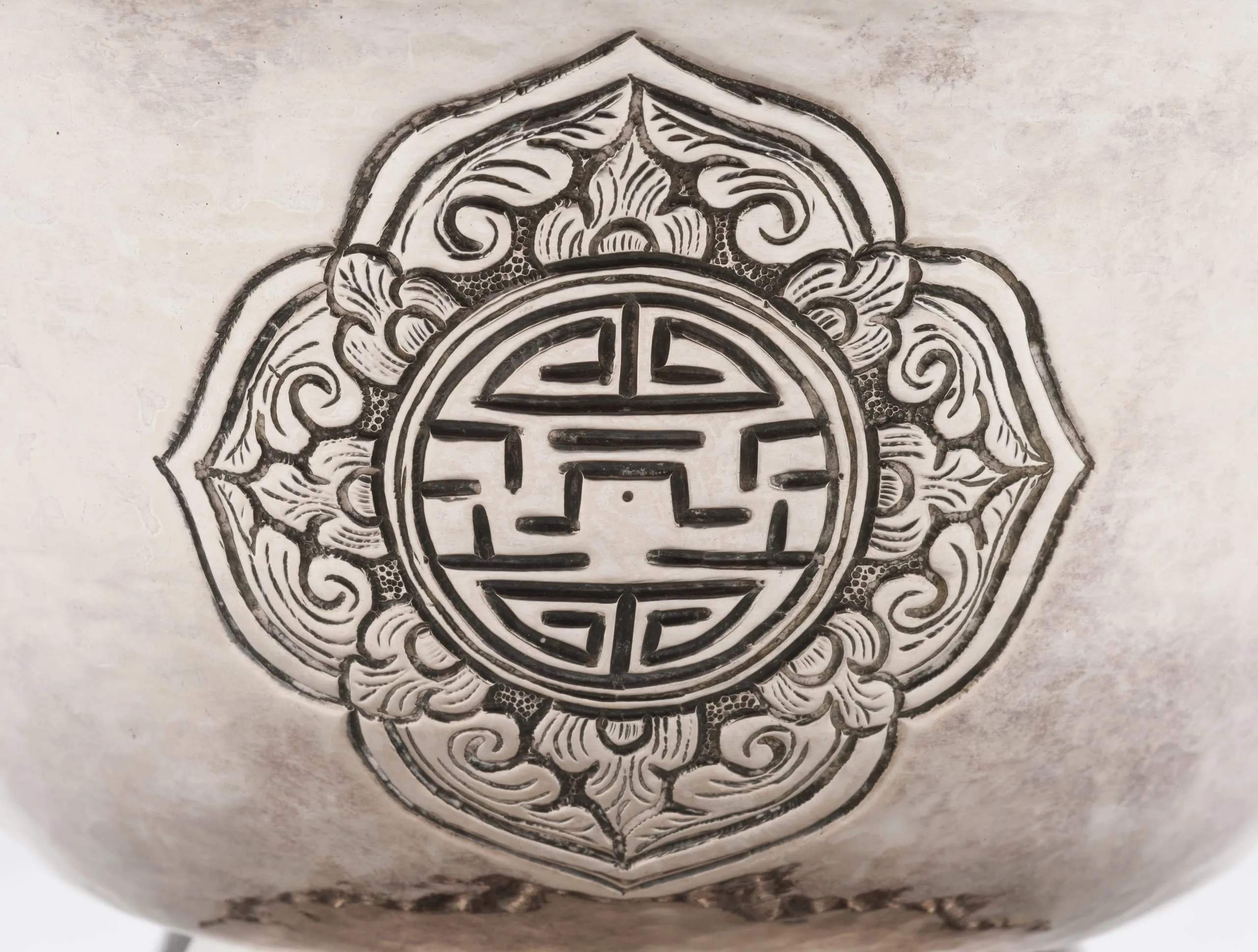
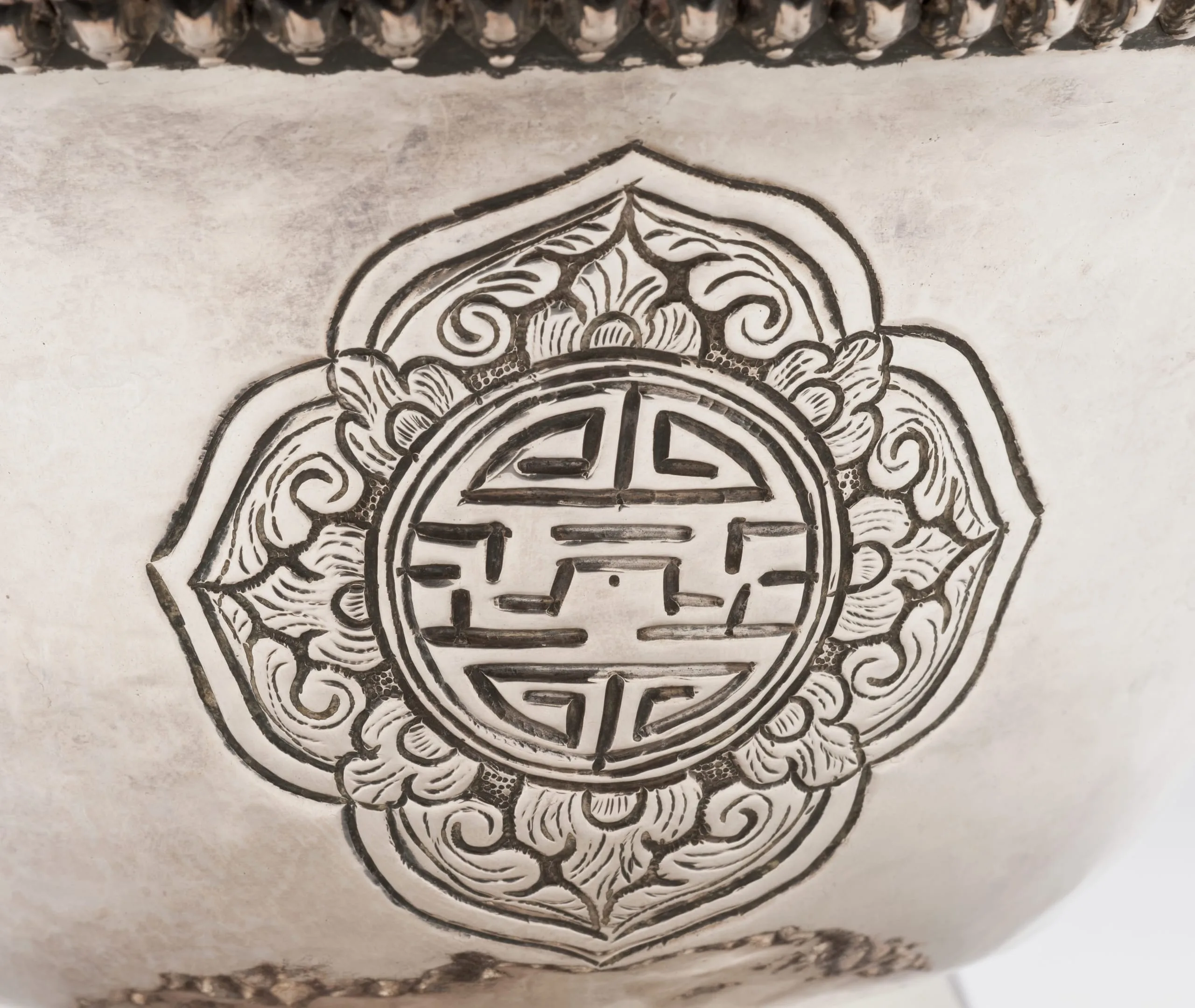
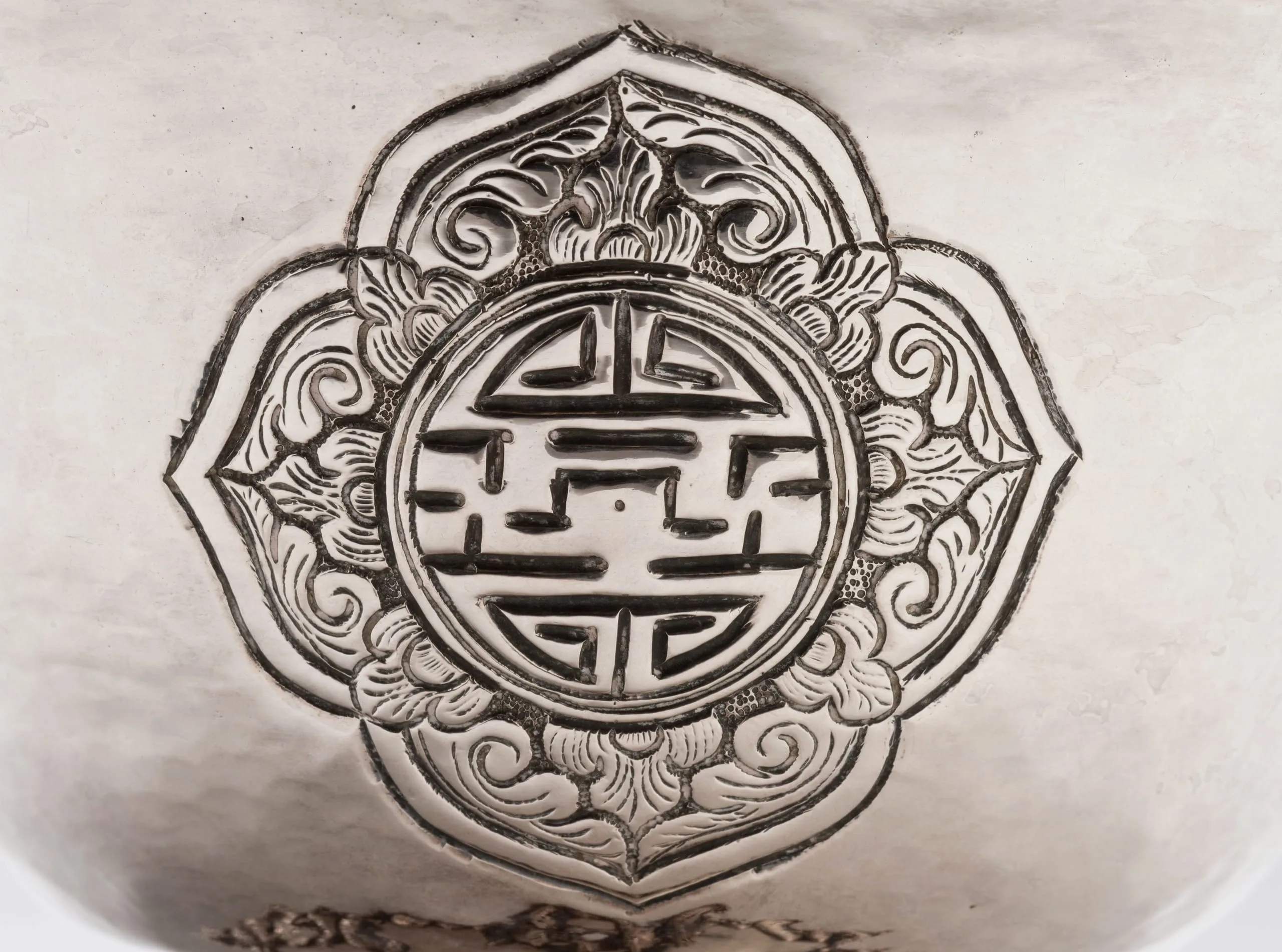
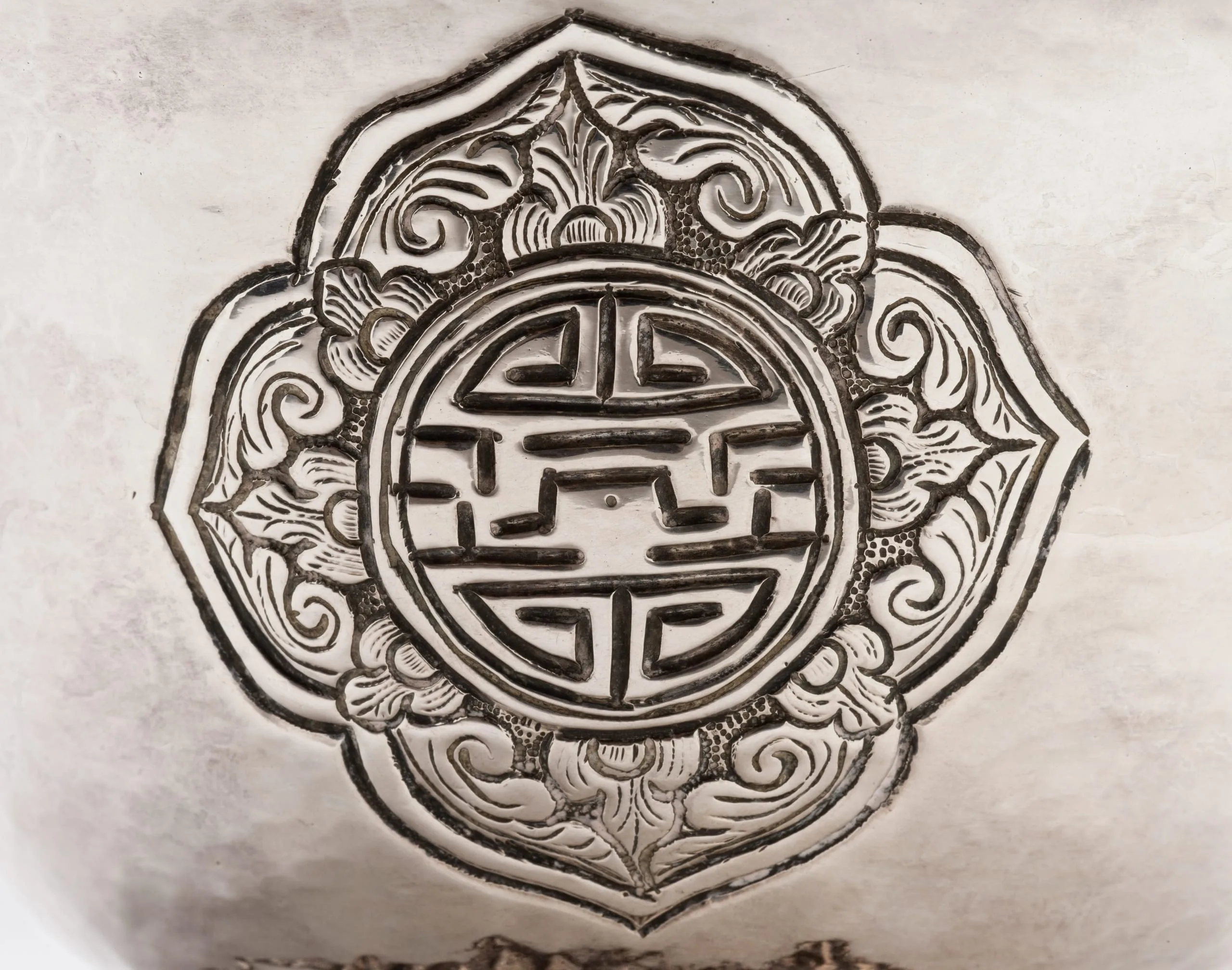
This Offering Bowl for Water, and it’s almost identical set-mate M.2011.157.5, are elegant in their formal simplicity and resplendent appearance. Both bowls are adorned on their opposing side walls with four lobed cartouches in repoussé that contain a rounded representation of the Chinese character shou (longevity). Each character is combined with the auspicious pan-Asian solar motif of a swastika and sauvastika (left-facing swastika) in the 3 o'clock and 9 o'clock positions respectively. The stylized symbols are formed by the negative spaces created within discontinuous boundary markings. Surrounding the central medallion are eight upright acanthus leaves that abut or intersect a perimeter of split acanthus leaves. The bowls are supported by a splayed foot embellished around the base with a band of goddess (?) figures and two basal borders of bead moldings. The same border designs are repeated underneath the flared rim of the bowls.