LACMA

ShopMembershipMyLACMATickets
LACMA
Los Angeles County Museum of Art
5905 Wilshire Blvd.
Los Angeles, CA 90036
info@lacma.org
(323) 857-6000
Sign up to receive emails
Subscribe
© Museum Associates 2025

Museum Hours

Monday

11 am–6 pm

Tuesday

11 am–6 pm

Wednesday

Closed

Thursday

11 am–6 pm

Friday

11 am–8 pm

Saturday

10 am–7 pm

Sunday

10 am–7 pm


  • About LACMA
  • Jobs
  • Building LACMA
  • Host An Event
  • Unframed
  • Press
  • FAQs
  • Log in to MyLACMA
  • Privacy Policy
© Museum Associates 2025
Collections

Unknown
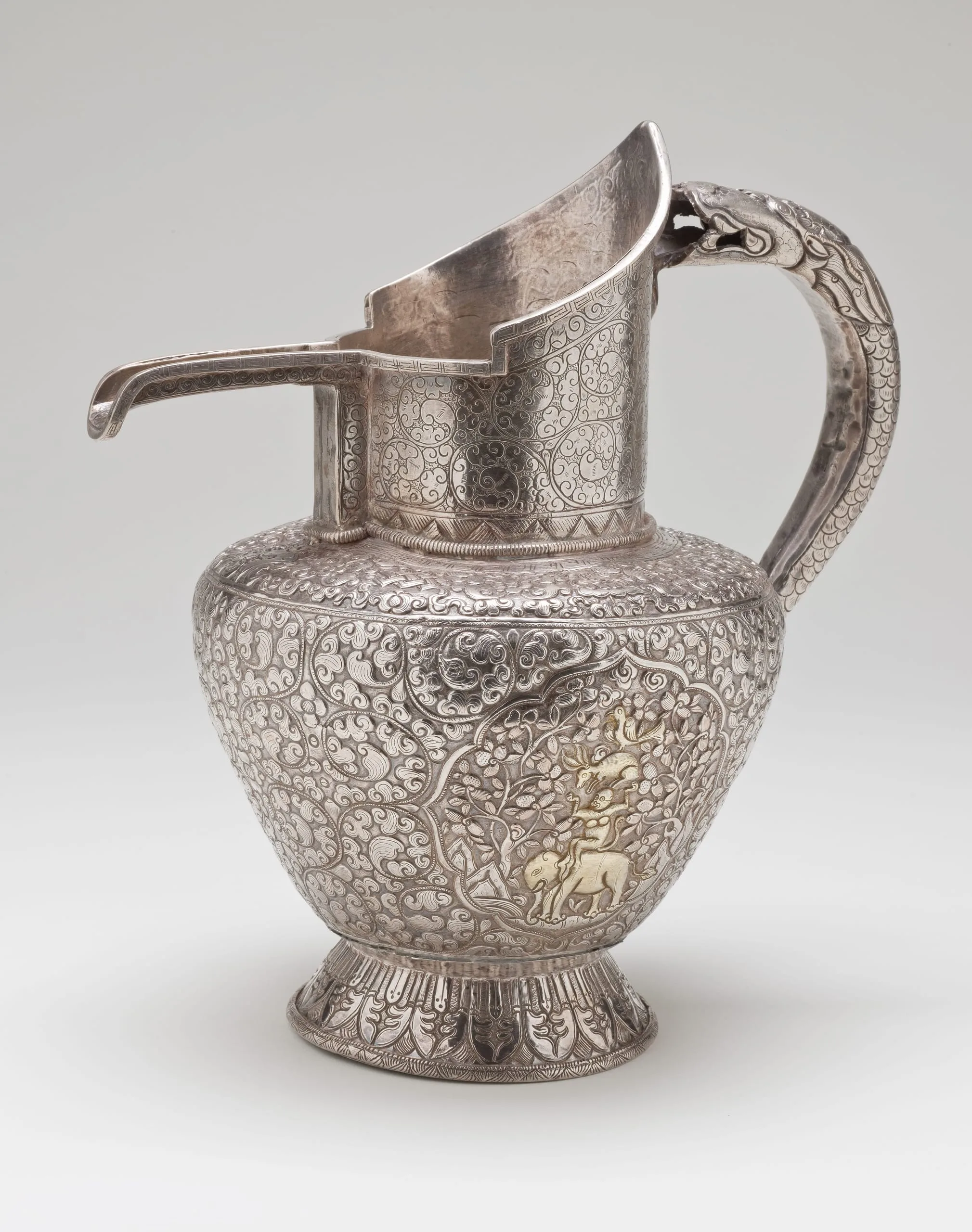
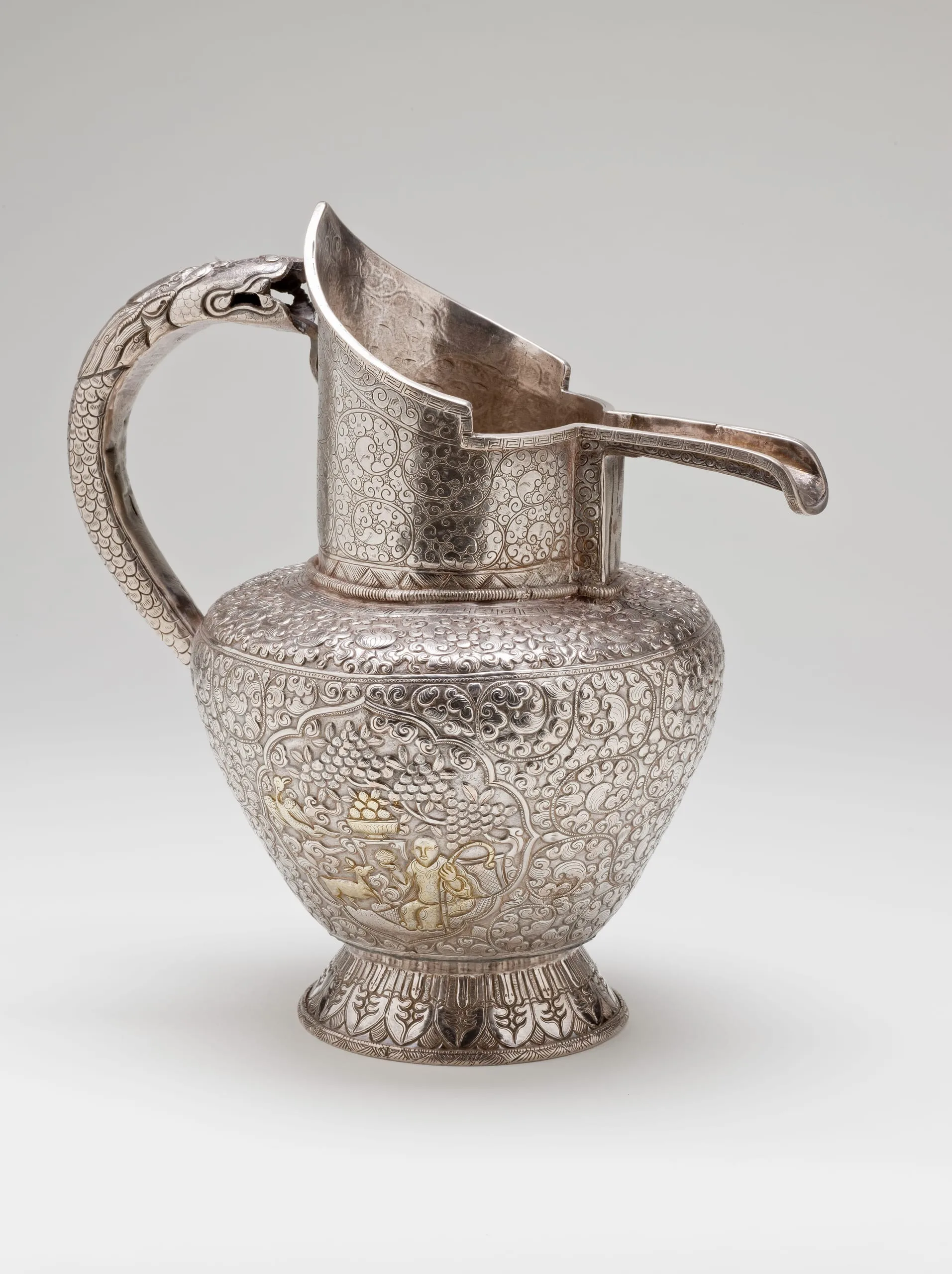
'Monk's Hat' Ewerlate 19th century

Not on view
Silver repoussé pitcher with bulbous body, angular spout, and scaled serpent handle, densely decorated with scrolling vines and gilded animal figures in a cartouche
Silver ewer with bulbous body on a lobed foot, densely repoussé-worked with scrolling foliage and gilt figural panels; dragon-head handle with scaled body, angled spout with scrolled tip.
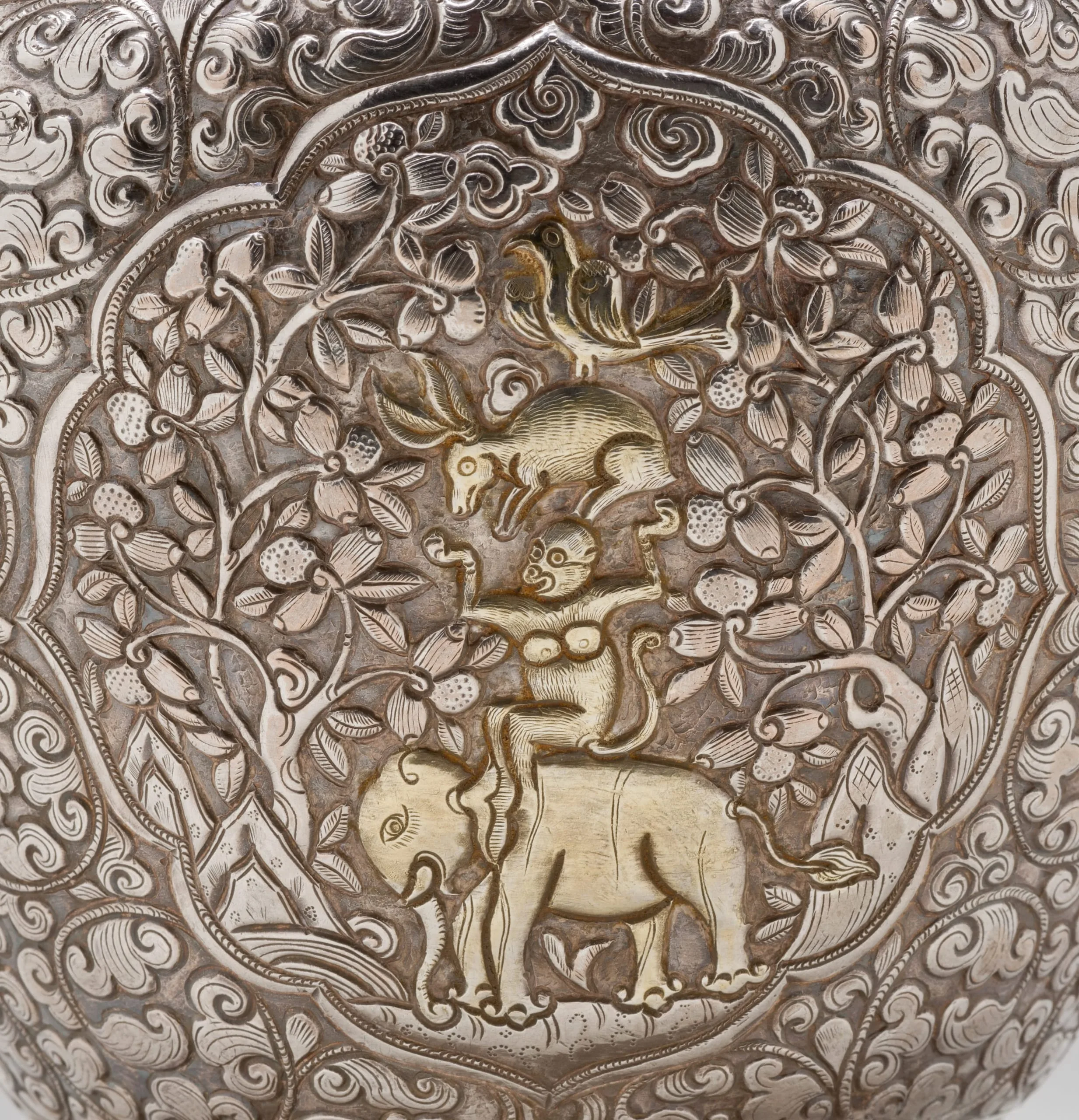
Repoussé silver vessel with gilt central medallion depicting stacked animals — elephant, monkey, and deer — surrounded by dense scrolling foliage, flowers, and birds in finely chased relief.
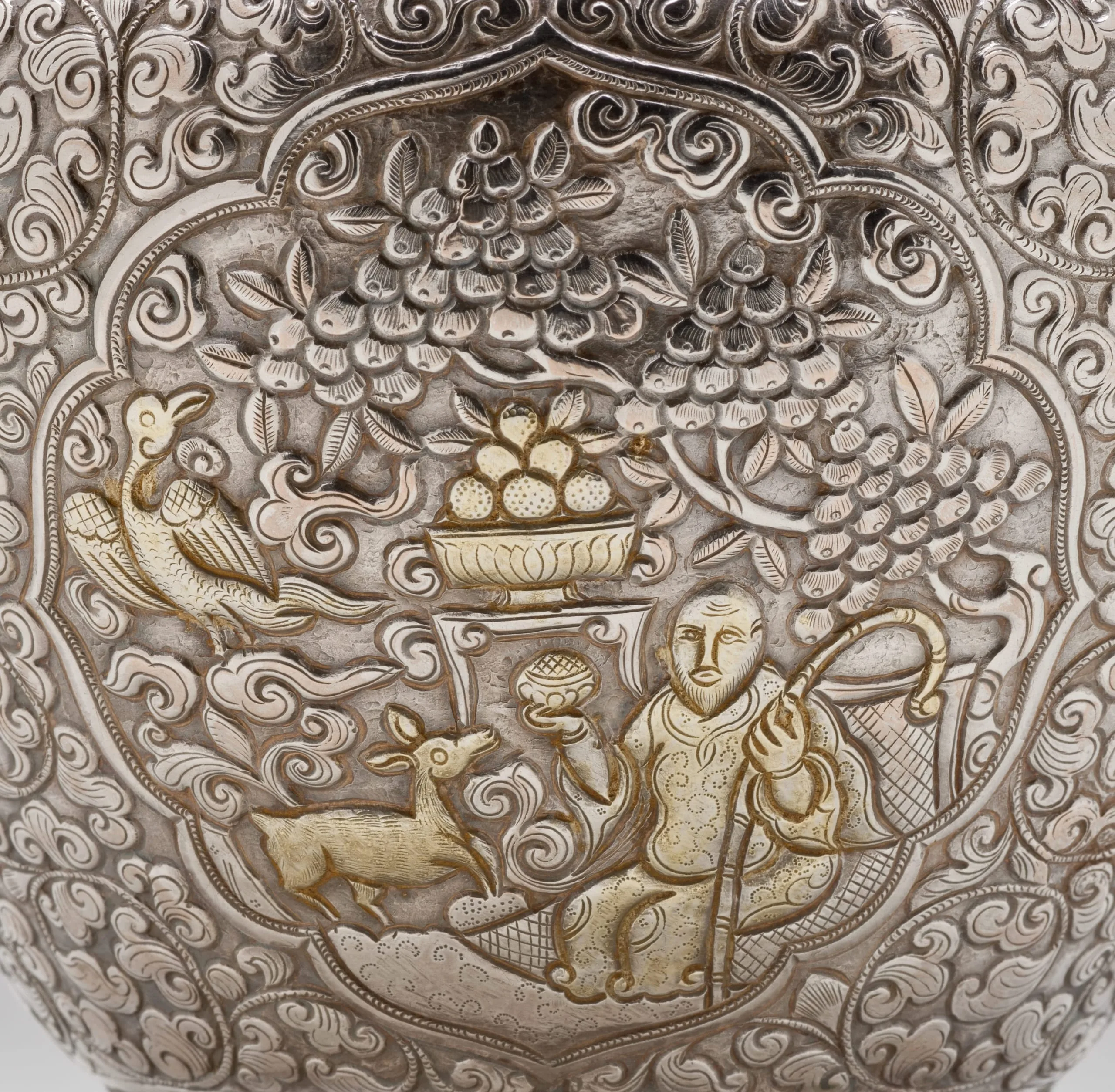
Close-up of a silver vessel with repoussé and gilt decoration; a lobed cartouche contains a bearded figure holding a staff beside a deer, a bird, and a fruit-laden offering bowl, surrounded by dense scrolling cloud and floral patterns.
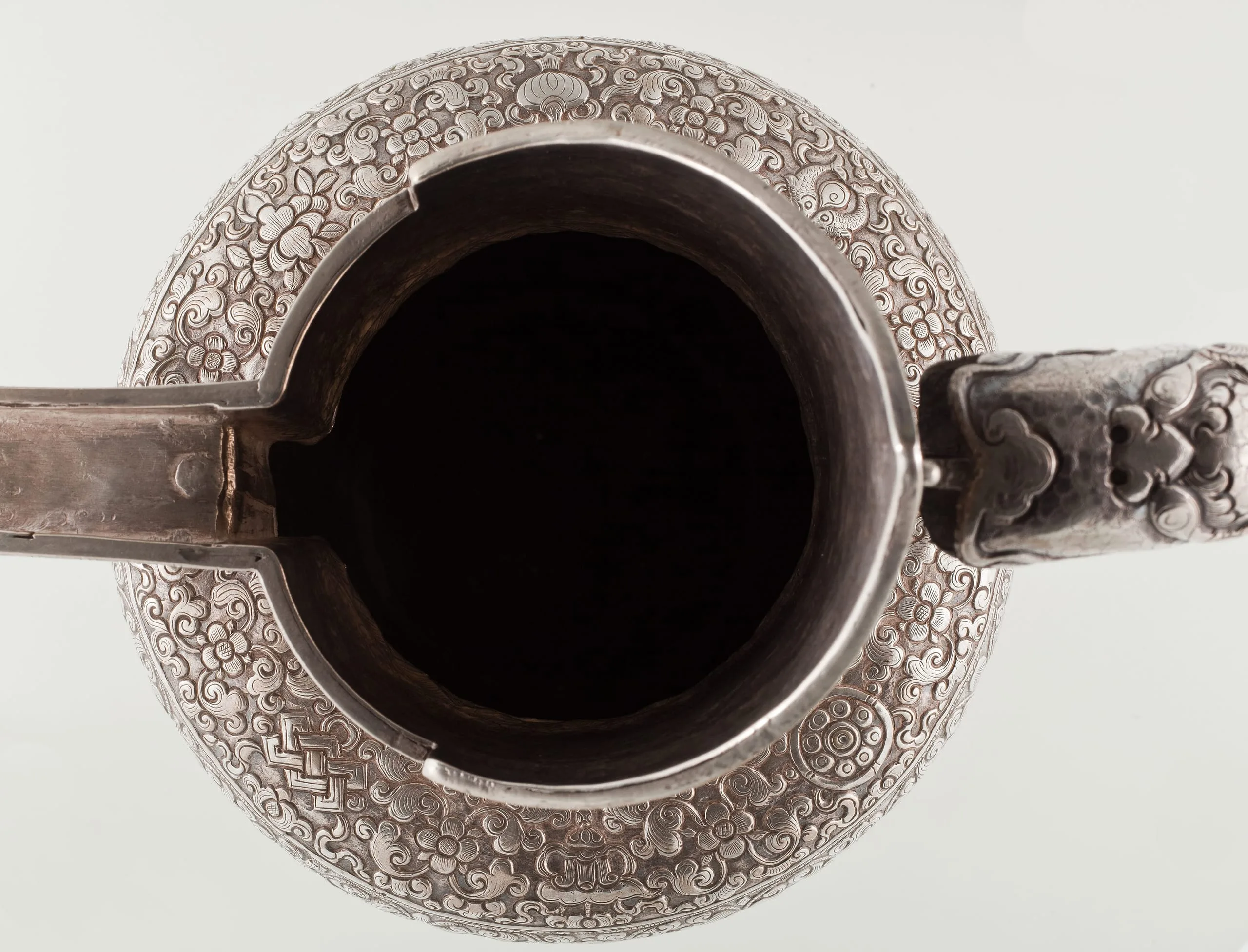
Silver vessel photographed from above, showing a wide circular opening surrounded by densely repoussé-worked surface with scrolling floral and geometric patterns; a flat, ornately decorated handle extends to either side.
Artist or Maker
Unknown
Title
'Monk's Hat' Ewer
Place Made
Tibet
Date Made
late 19th century
Medium
Parcel-gilt silver repoussé
Dimensions
9 3/8 x 8 3/4 x 6 1/2 in. (23.81 x 22.23 x 16.51 cm)
Credit Line
Gift of Julian Sands
Accession Number
M.2011.157.1
Classification
Furnishings
Collecting Area
South and Southeast Asian Art
Curatorial Notes

Known as a “Monk’s Hat” ewer (sengmaohu) on account of its similarity to the distinctive caps worn by some Tibetan Buddhist monks, this type of ewer was used to pour sanctified water into ceremonial offering bowls on Tibetan altars (see M.2011.157.4–.5). A cylindrical version was also used for ritually dispensing tea. Reportedly derived from earlier Tibetan metalware traditions, “Monk’s Hat” ewers were also fashioned in porcelain in Jingdezhen, China in the 15th century (see AC1999.38.7).

The ewer has a globular body supported by a splayed foot. It has a tall cylindrical neck surmounted by a 'monk’s cap' peaked rim with a long semicircular horizontal spout. The curved handle is in the form of a stylized dragon. The surface of the ewer is richly adorned with flowering lotus scrolls with geometric borders. The lotus scrolls are incised on the neck and executed in repoussé on the body and shoulders. The foot features complex lappets. There are two lobed cartouches on opposite sides containing narrative scenes. One depicts the Four Harmonious Animals of an elephant beneath a fruit tree with a monkey, hare, and bird standing on its back on top of each other. The scene is from a Buddhist jataka tale found originally in the Vinayavastu, which forms the first section of the Tibetan Buddhist canon, the Kanjur. The second cartouche presents the Six Symbols of Longevity from Chinese culture: the old man (Shou-lao, the Chinese god of long life), the tree, rock, water, birds, and deer.