LACMA

ShopMembershipMyLACMATickets
LACMA
Los Angeles County Museum of Art
5905 Wilshire Blvd.
Los Angeles, CA 90036
info@lacma.org
(323) 857-6000
Sign up to receive emails
Subscribe
© Museum Associates 2025

Museum Hours

Monday

11 am–6 pm

Tuesday

11 am–6 pm

Wednesday

Closed

Thursday

11 am–6 pm

Friday

11 am–8 pm

Saturday

10 am–7 pm

Sunday

10 am–7 pm


  • About LACMA
  • Jobs
  • Building LACMA
  • Host An Event
  • Unframed
  • Press
  • FAQs
  • Log in to MyLACMA
  • Privacy Policy
© Museum Associates 2025
Collections

Christian Marclay
The Clock2010

Not on view
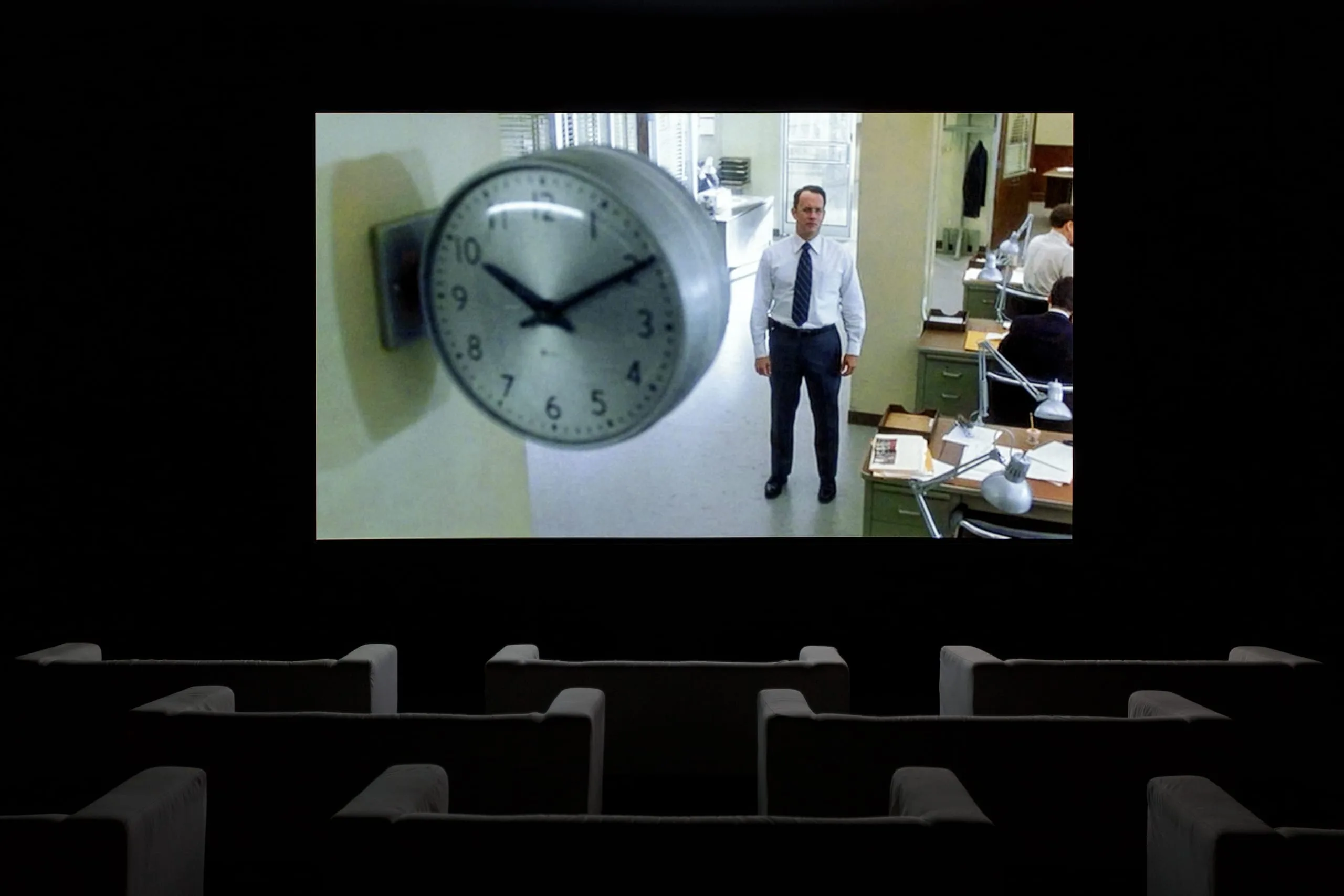
Color photograph of a darkened screening room with rows of gray chairs facing a large projected image of a man in a shirt and tie standing beside an oversized analog wall clock in an office setting
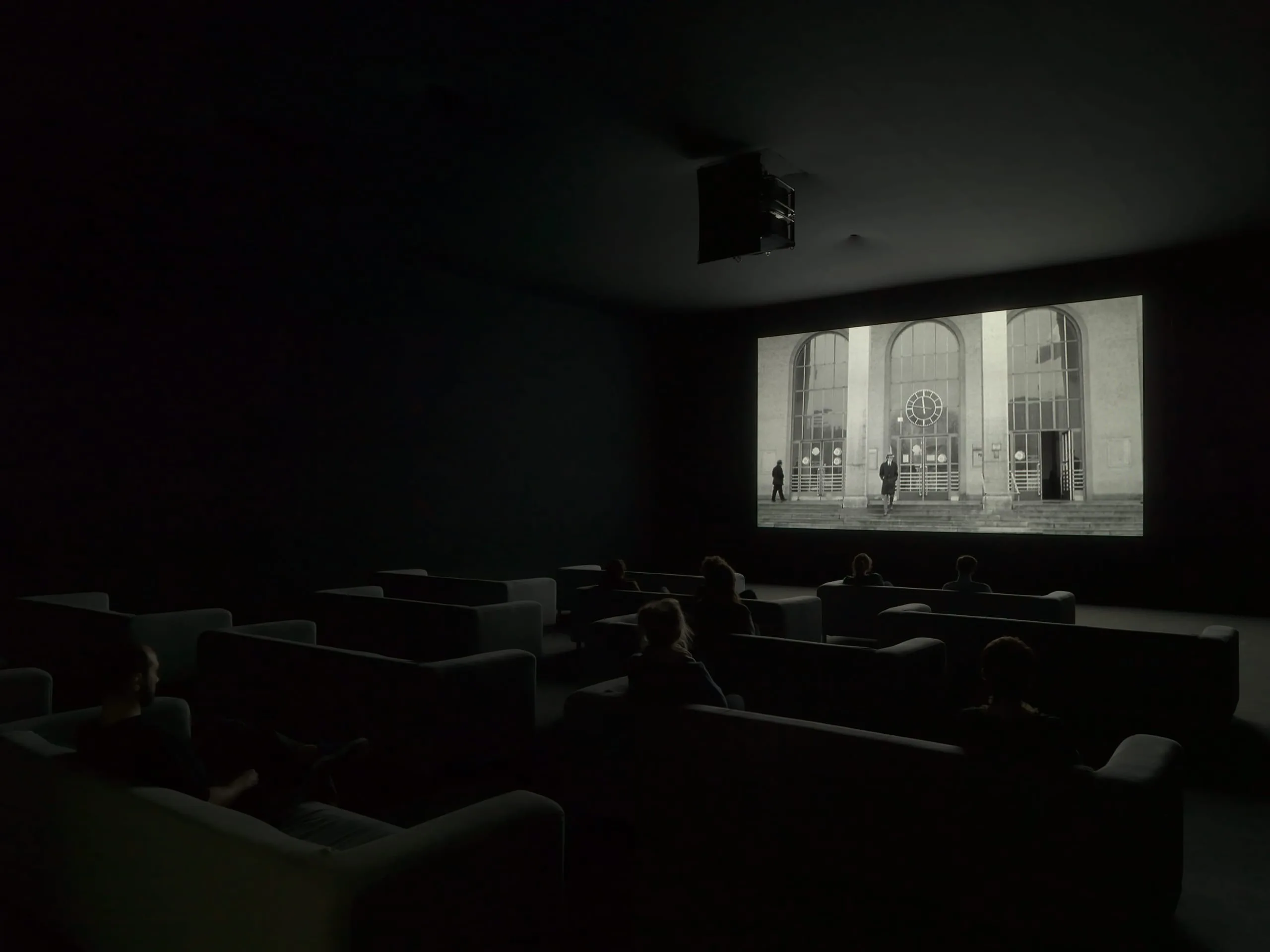
Video installation in a darkened gallery screening room; rows of low upholstered seating face a large projected screen showing a black-and-white film still of two figures standing before a monumental arched facade.
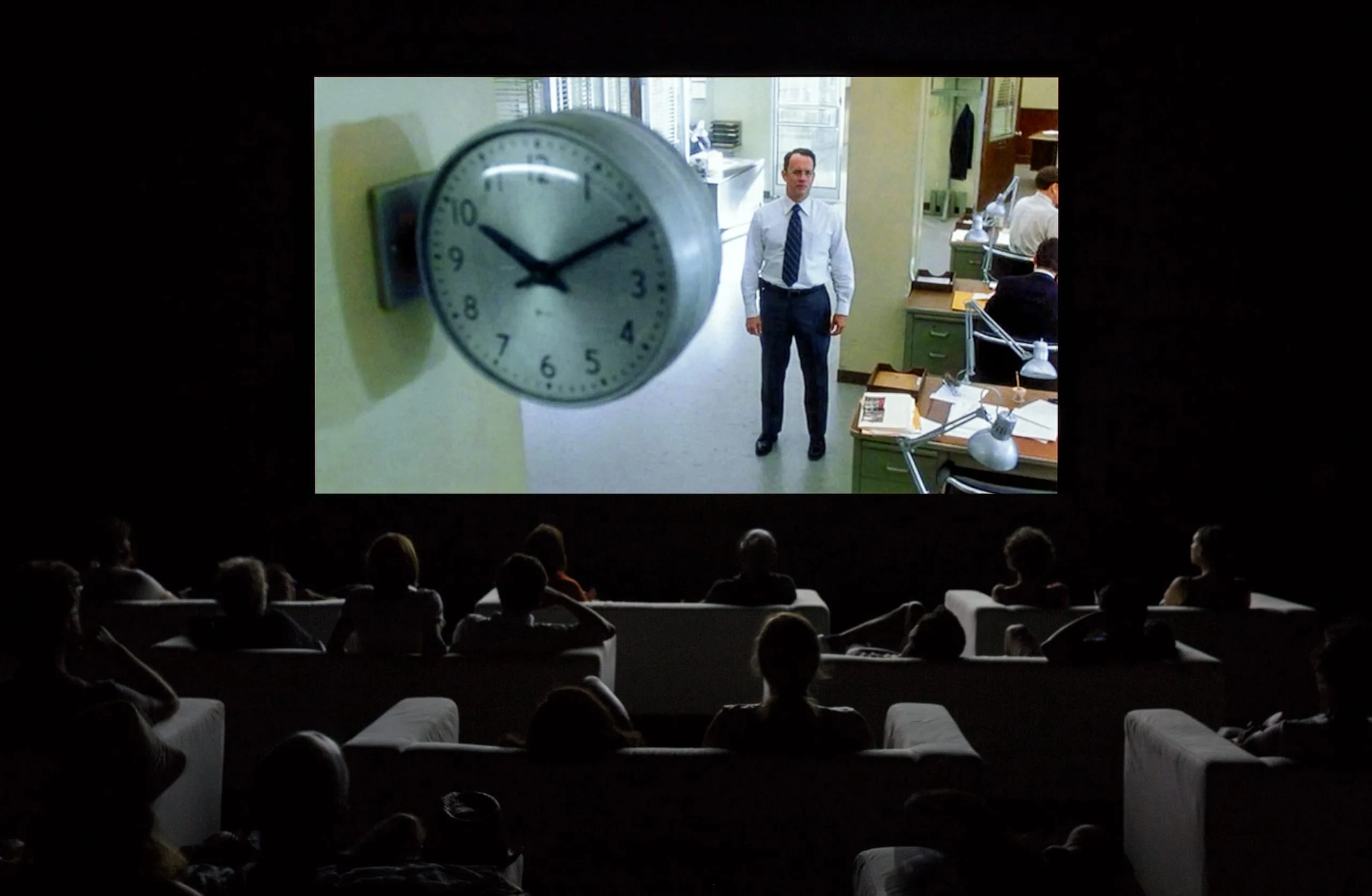
Video installation in a darkened gallery space; silhouetted viewers seated on white sofas face a large projected screen showing a man in a suit standing in an office corridor beside a prominent wall clock, with workers visible at desks in the background.
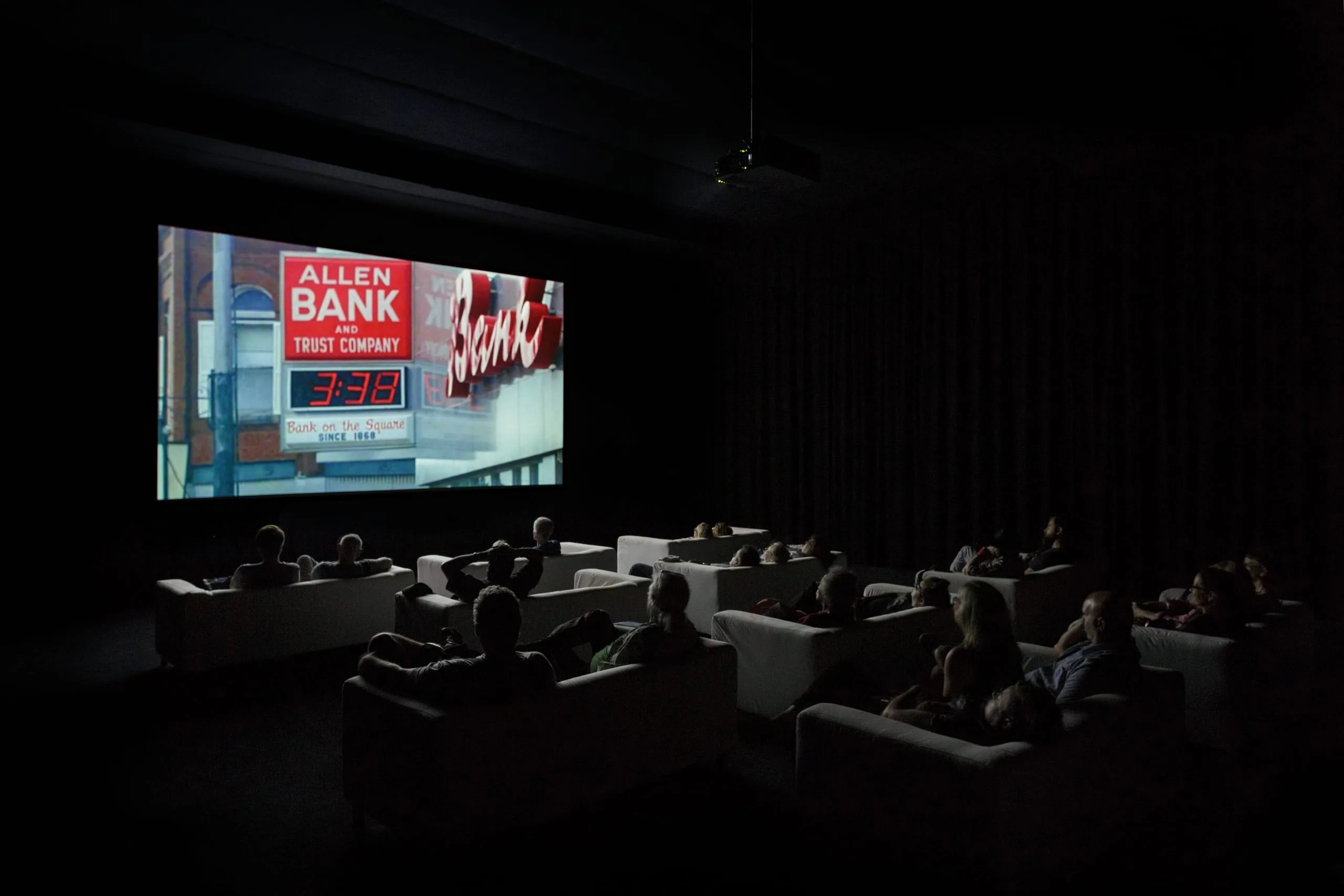
Video installation view: darkened screening room with rows of white sofas occupied by viewers facing a large projection. On screen, a close-up of a bank exterior sign reading 'Allen Bank and Trust Company' with a digital clock displaying 3:38.
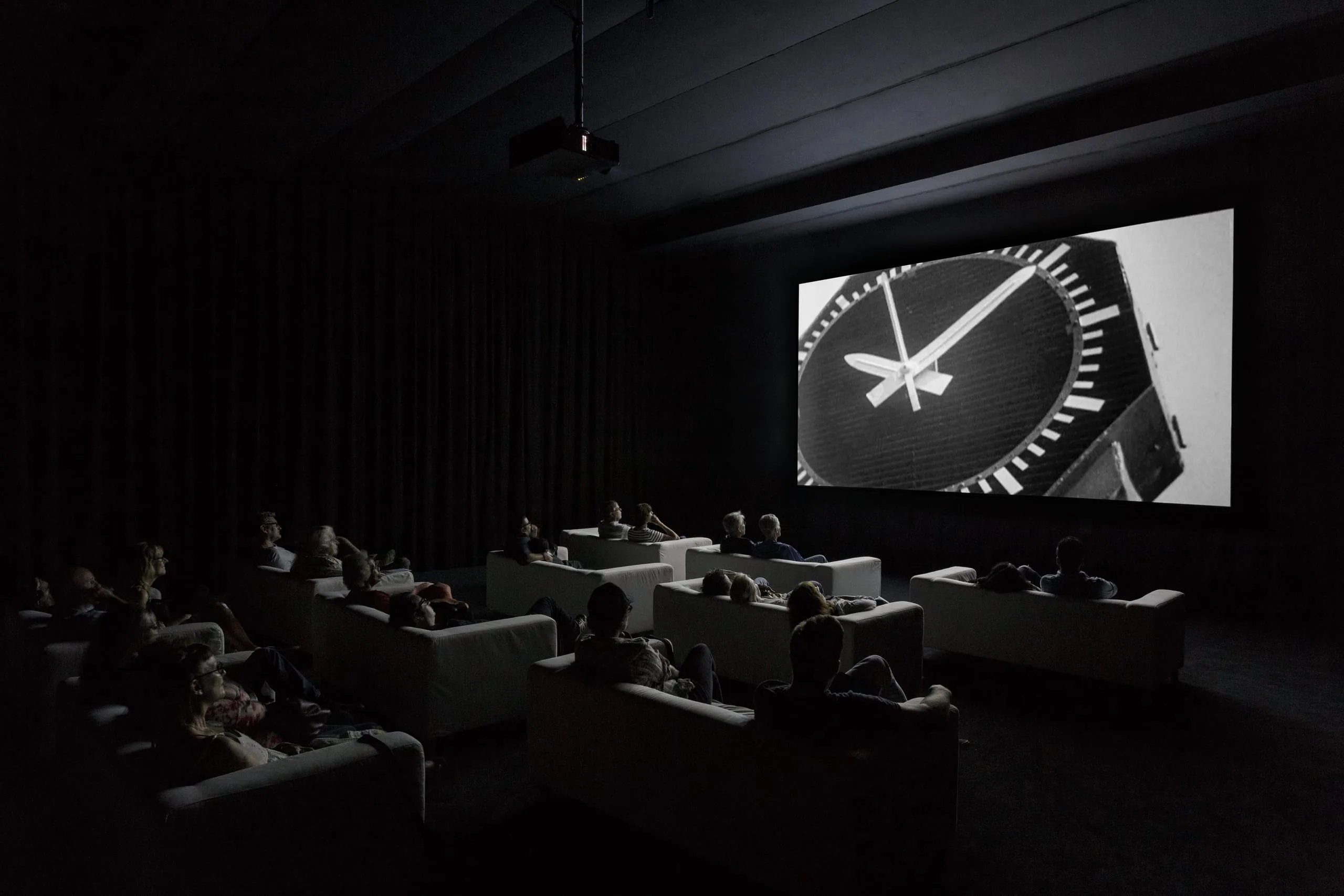
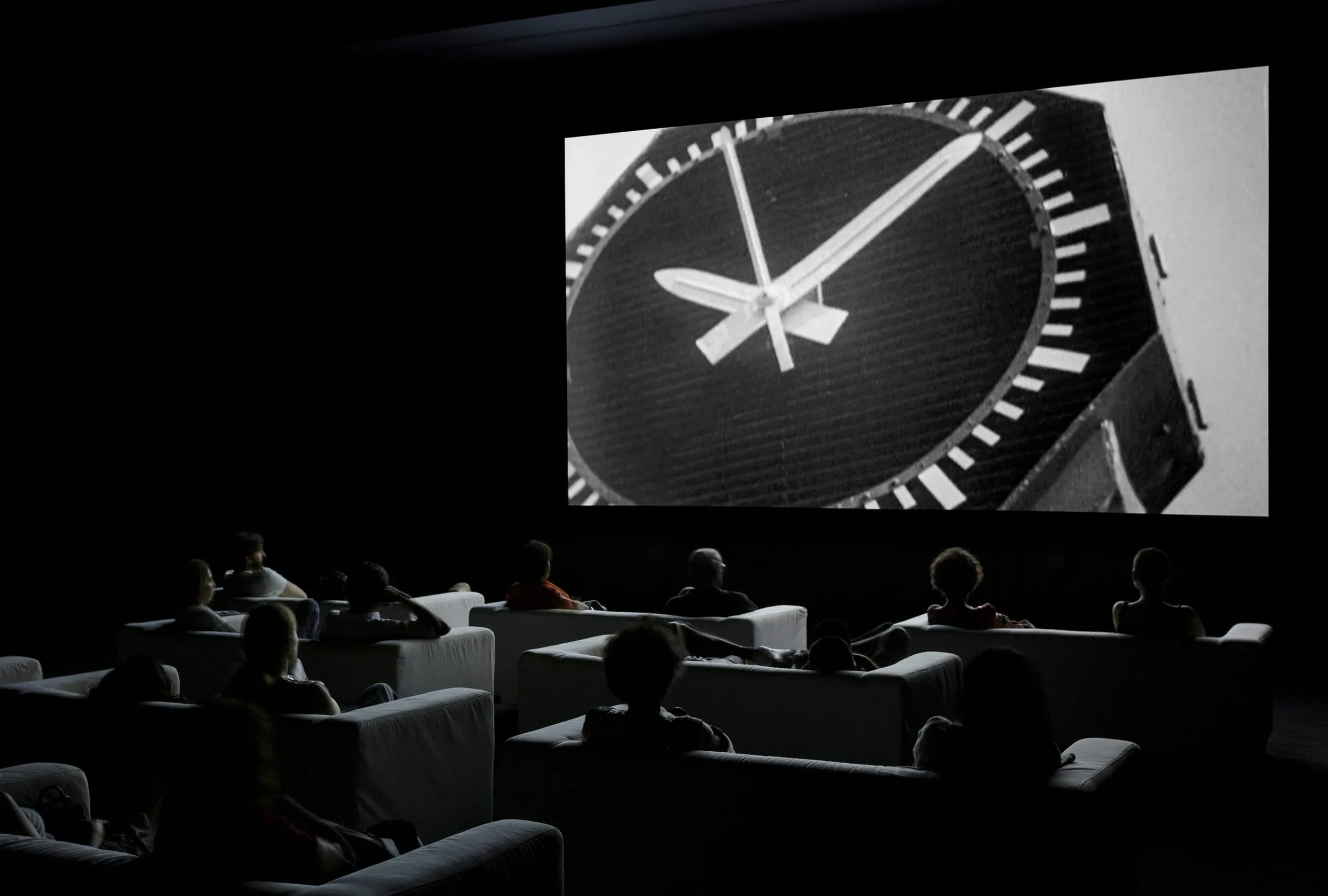
Video installation in a darkened gallery, viewers reclining on white modular sofas facing a large projection screen displaying a black and white close-up of a clock face with bold hands.
Video installation in a darkened gallery; viewers seated in rows of low white sofas face a large projection screen displaying a close-up black-and-white image of a clock face with bold hands.
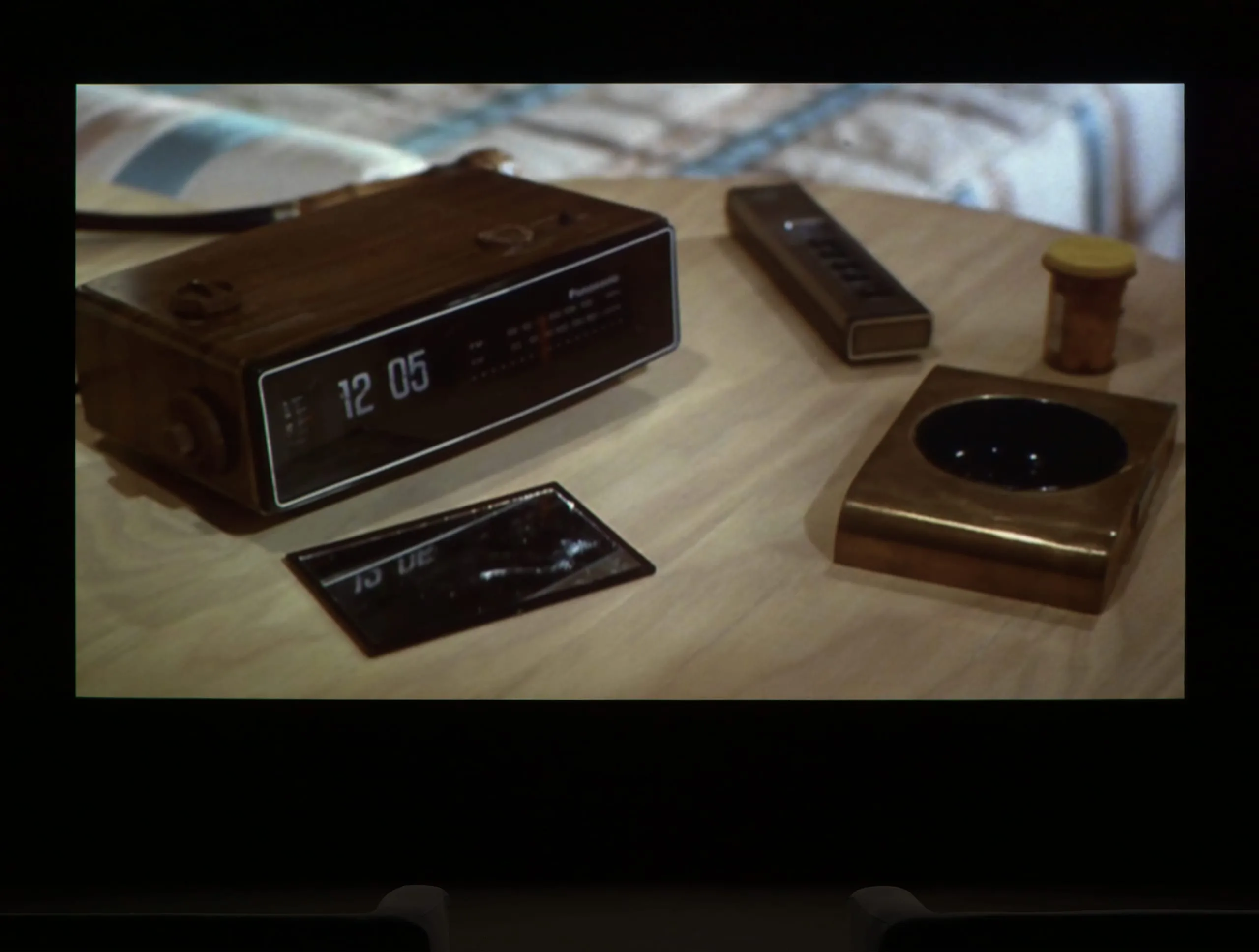
Color photograph of a bedside table with a wood-grained Panasonic flip clock radio displaying 12:05, alongside a remote control, small amber pill bottle, circular ashtray, and a reflective card, with a bed visible in the background.
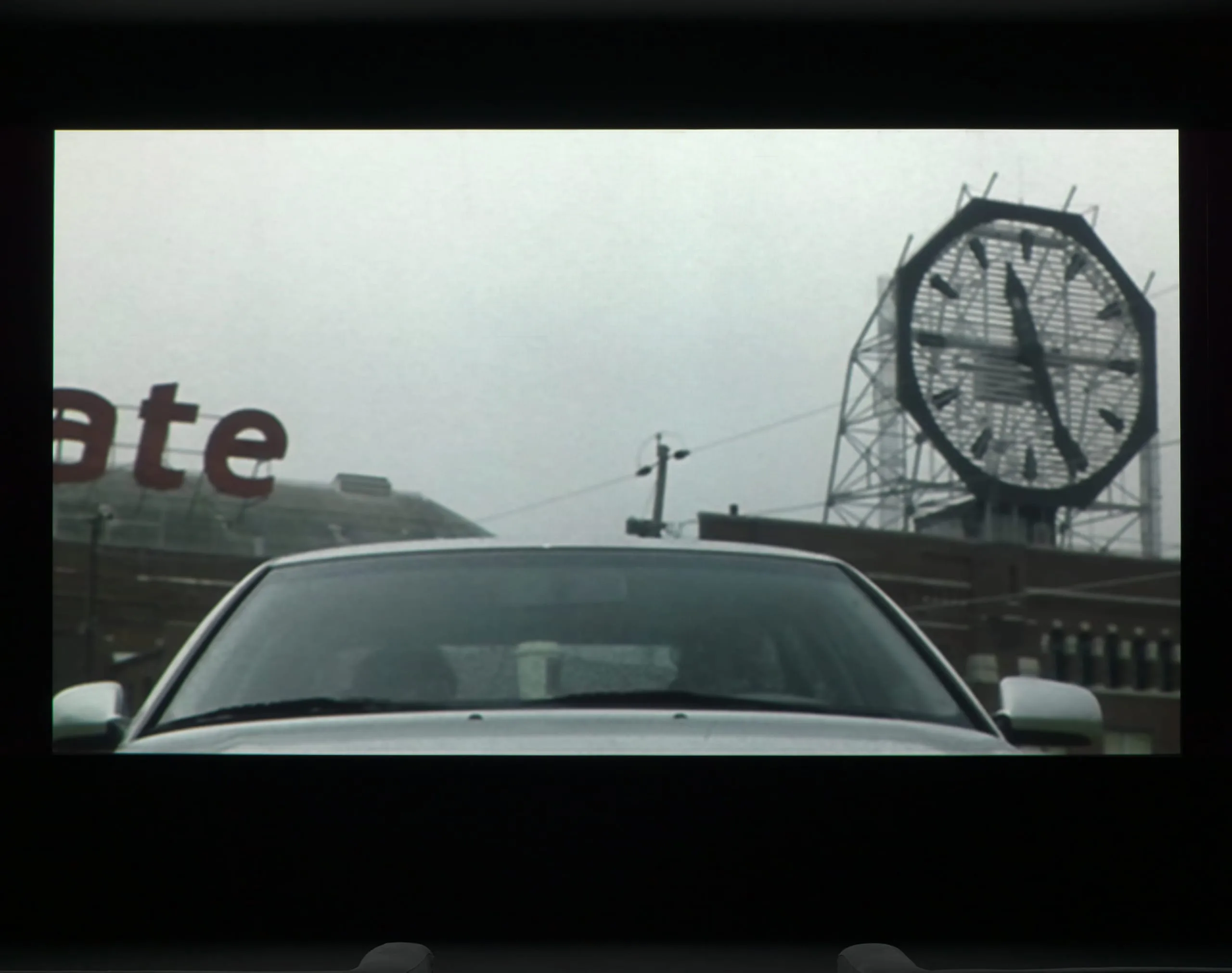
Video still or projected film image with black borders; low-angle view of a white car's roof and windshield against an overcast sky, with a large industrial clock tower and partial red lettered sign visible in the background.
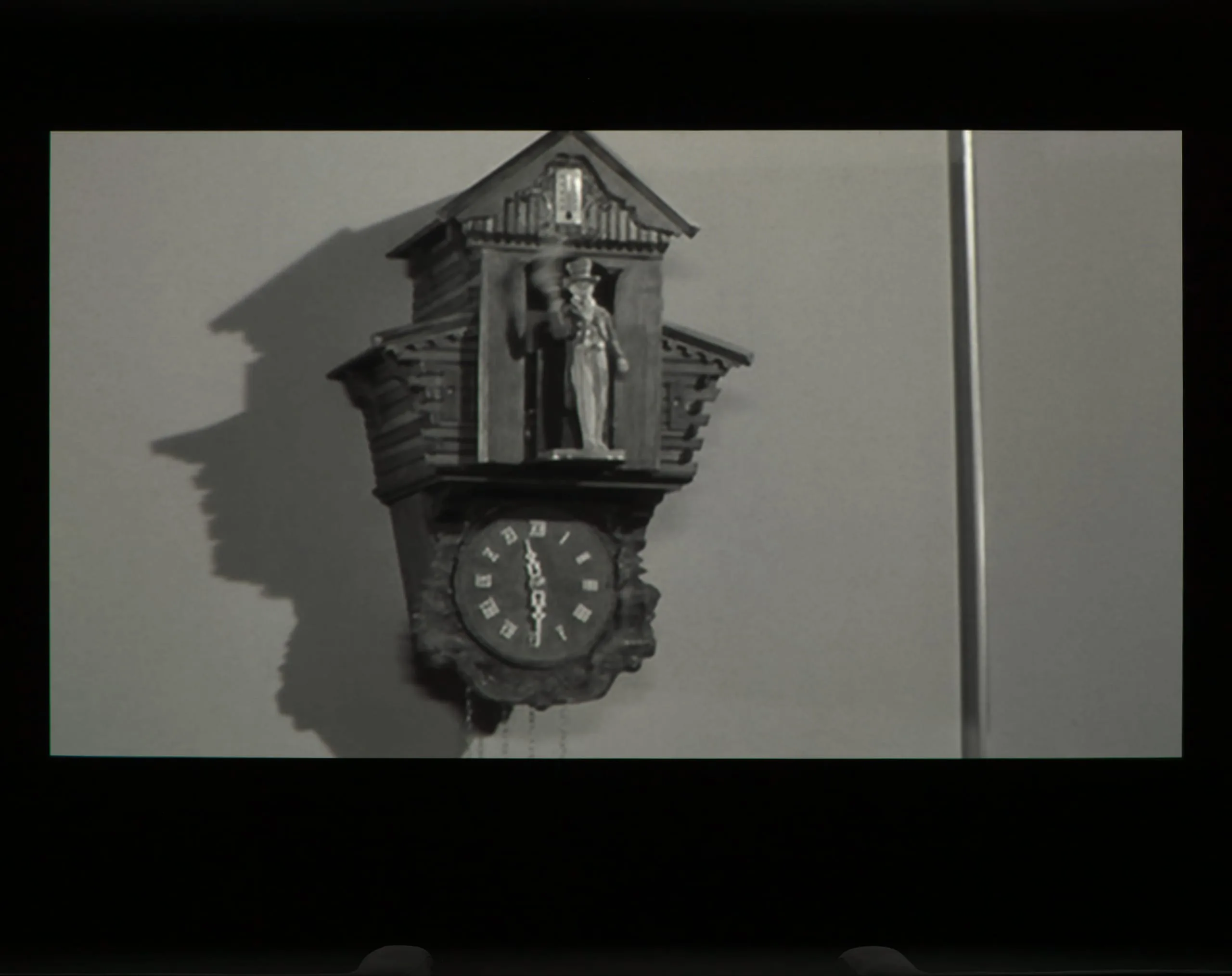
Black and white photograph of a carved wooden cuckoo clock mounted on a wall, with a small figurine emerging from an open door above a round clock face, casting a strong shadow to the left.
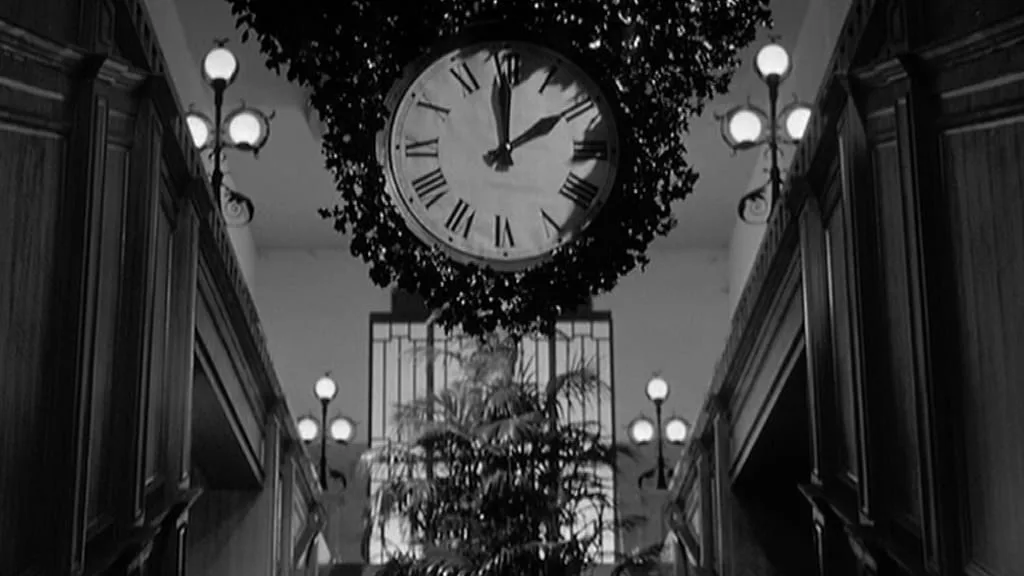
Black and white photograph, low-angle view of an interior corridor with a large round clock displaying Roman numerals, surrounded by dense foliage, flanked by ornate wall sconces and dark wooden paneling, with a potted palm and decorative iron railing visible below
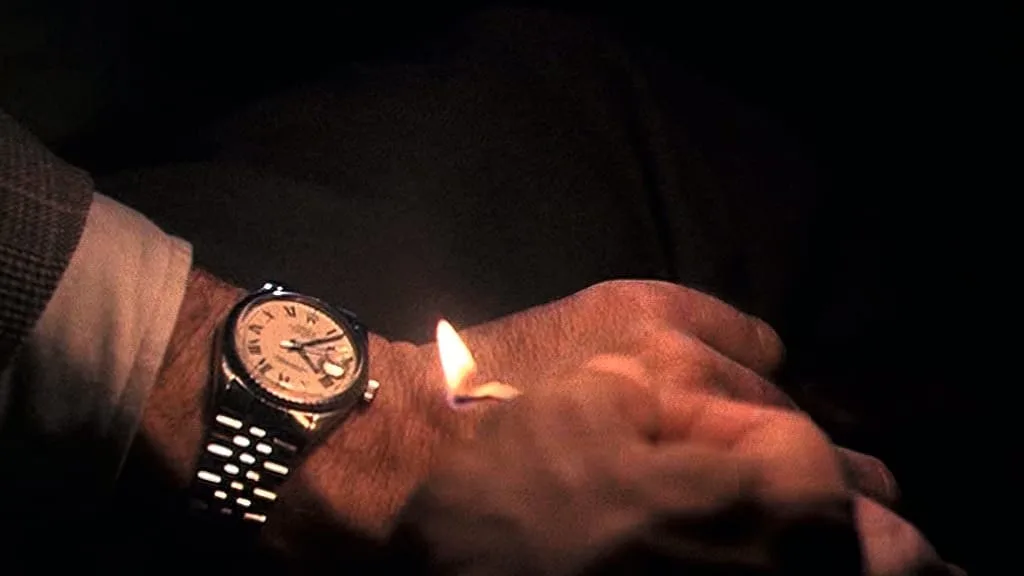
Color photograph, close-up of two hands cupping a small flame in near-darkness, one wrist wearing a metal bracelet watch with Roman numeral dial, warm orange light illuminating the skin against a black background
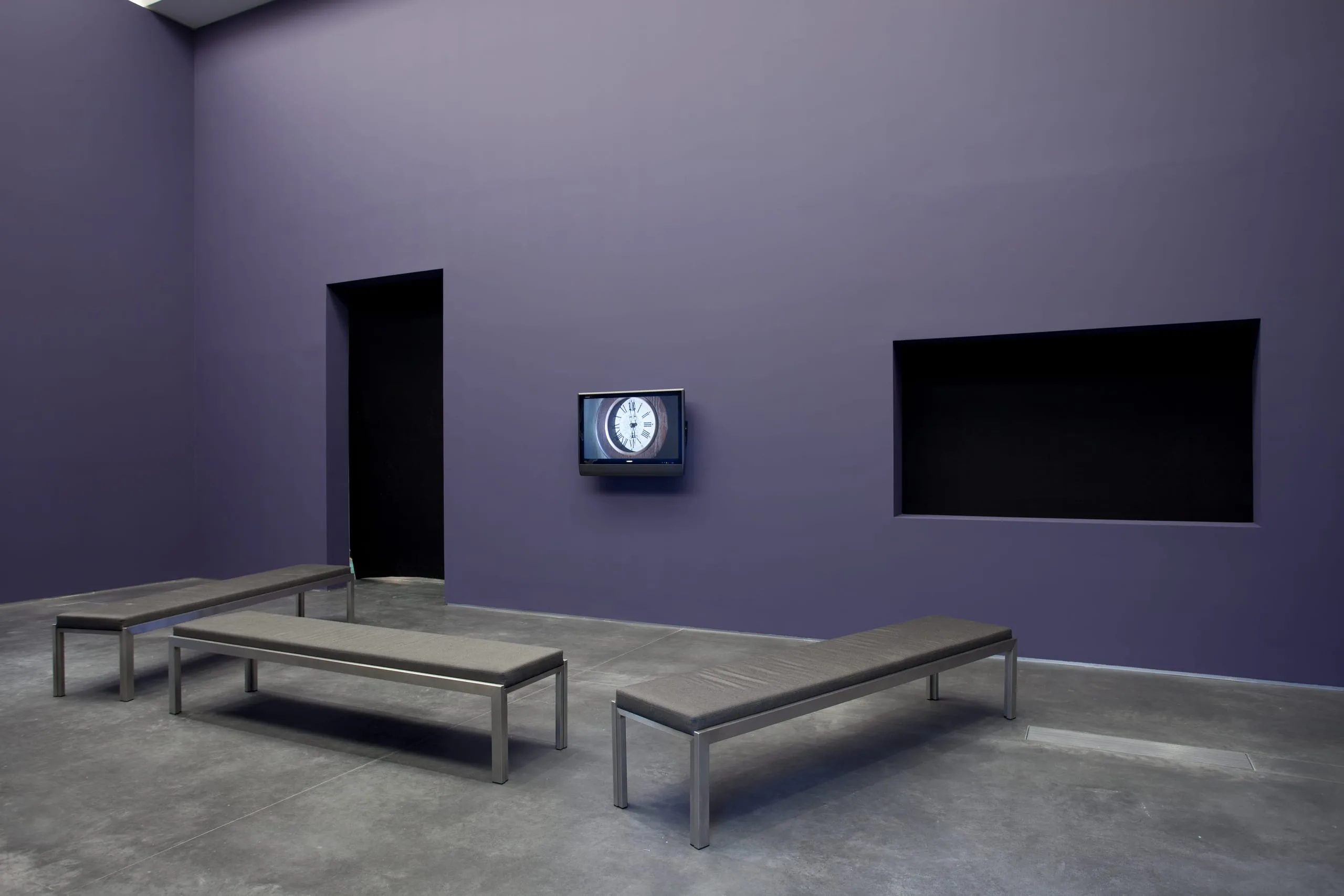
Installation view in a deep purple gallery room: a small CRT monitor mounted on the wall displays a close-up of a clock face, flanked by a dark doorway and a large black rectangular recess. Three low metal-framed benches with gray upholstered surfaces are arranged on a concrete floor in the foreground.
Artist or Maker
Christian Marclay
United States, born 1955
Title
The Clock
Date Made
2010
Medium
Single-channel video
Dimensions
Duration: 24:00:00
Credit Line
Purchased with funds provided by Steve Tisch through the 2011 Collectors Committee
Accession Number
M.2011.21.1-.3
Classification
Time Based Media
Collecting Area
Contemporary Art
Curatorial Notes

Pioneer sound artist Christian Marclay began manipulating gramophone records and creating time-based works using loops, skips and scratches on turntables as musical instruments in the 1970s. Working in sculpture, performance, video and other time-based media for nearly four decades, he incorporates strategies of collage, painting, appropriation, music composition, hip hop and DJing in his multimedia practice.

Since its premiere in London in October 2010, followed by its debut in New York February 2011, The Clock (2010) has been praised as a true masterpiece. Winner of the Golden Lion at the 54th Venice Biennale (2011), this twenty-four-hour single-channel montage is constructed out of moments in cinema and television history depicting the passage of time, in other words, scenes in which clocks and watches – “from clock towers to wristwatches and from buzzing alarm clocks to the occasional cuckoo” – appear. The Clock weaves together Marclay’s interests in collage and found visual and aural artifacts with his own roots in performance art. In this respect, the viewers become enmeshed in a durational performance piece.

The edited footage of clocks not only provides cues as to the role of time’s passage in the appropriated film narrative, but also serves as a functioning timepiece that marks the exact time for the viewer. When one sees The Clock at 1:15 pm, for example, the action (or inaction) in the clip will be taking place at the same moment for the viewer. Screened in a cinematic setting, it retains the rhythmic pulsations and tonal shifts typical of Marclay’s sound works but also plays with the viewer’s sense of expectation and surprise, drawing attention to time as a multifaceted protagonist in moving image. The Clock records the measure of time while also presenting a visual tapestry from, of, and about time in our frenzied twenty-first century existence, creating a conflation of tensions à propos the layered tempos of contemporary life. “If I asked you to watch a clock tick,” remarks Marclay, “you would get bored quickly, but there is enough action in this film to keep you entertained, so you forget the time, but then you’re constantly reminded of it.”

Marclay follows a long trajectory of artists interested in the history of cinema and the ways in which its footage or grammar can be appropriated and recontextualized. Experimental and documentary filmmakers have a long history since the dawning of the technology of using found or appropriated footage. The Russian filmmaker and scholar Jay Leyda devoted an entire book to the study of this method in Films Beget Films (1964) and connected the use of found footage in film to the collage techniques of Dadaism, Surrealism, and Constructivism, among other historical avant-gardes. An important, albeit much shorter, precedent to Marclay’s The Clock is Bruce Conner’s A Movie (1958), an experimental film which edits together clips from disparate sources, from stag to sports footage to mainstream melodramas, to create a meta-film. In A Movie’s complex building of cinematic time, Conner frustrates the viewer’s anticipation of a beginning, middle and end by throwing out all rules of linearity and narrative progression. Similarly, Marclay’s The Clock causes the viewer to ruminate on what David Velasco calls a film or television show’s “temporal grammar” in the way that Marclay “string(s) together this panoply of irrational times according to a rational tempo, he makes salient the idiosyncrasies of movie time,” (David Velasco in Artforum, February, 2011). The work pays homage to Andy Warhol’s eight-hour film, Empire (1964), in which the Empire State Building emerges from the white of sunset and goes dark immediately, the floodlights flicker for hours, mechanical notations such as lens flair, raindrops and camera bumps appear throughout, ending with near total darkness around 2:00 am. In its paradoxes of mechanical and metaphoric tension and humor, it also recalls Swiss artist duo Peter Fischli and David Weiss’s signature film The Way Things Go (1987), in which an overly-engineered 100-foot Rube Goldberg device performs a very simple task in the form of a series of chain reactions in twenty-nine minutes.

While more recent works by artists such as Douglas Gordon and Candice Breitz employ the use of found footage to comment on the limitations of authorship and artificiality of dramatic codes in a postmodern era, Marclay uses sampled segments to reformat our understanding of media’s discrete components. For example, in 2002, Marclay created Video Quartet, a montage that deftly created a musical composition out of individual clips from movies. While Video Quartet conveyed Marclay’s complex engagement with audio culture, and his ability to craft something wholly new out of foraged components, The Clock turns a collection of seemingly banal shots (of timepieces) into a compendium of cinema’s extraordinarily complex relationship to time and memory. (Christine Y. Kim, Associate Curator Contemporary Art)