- Title
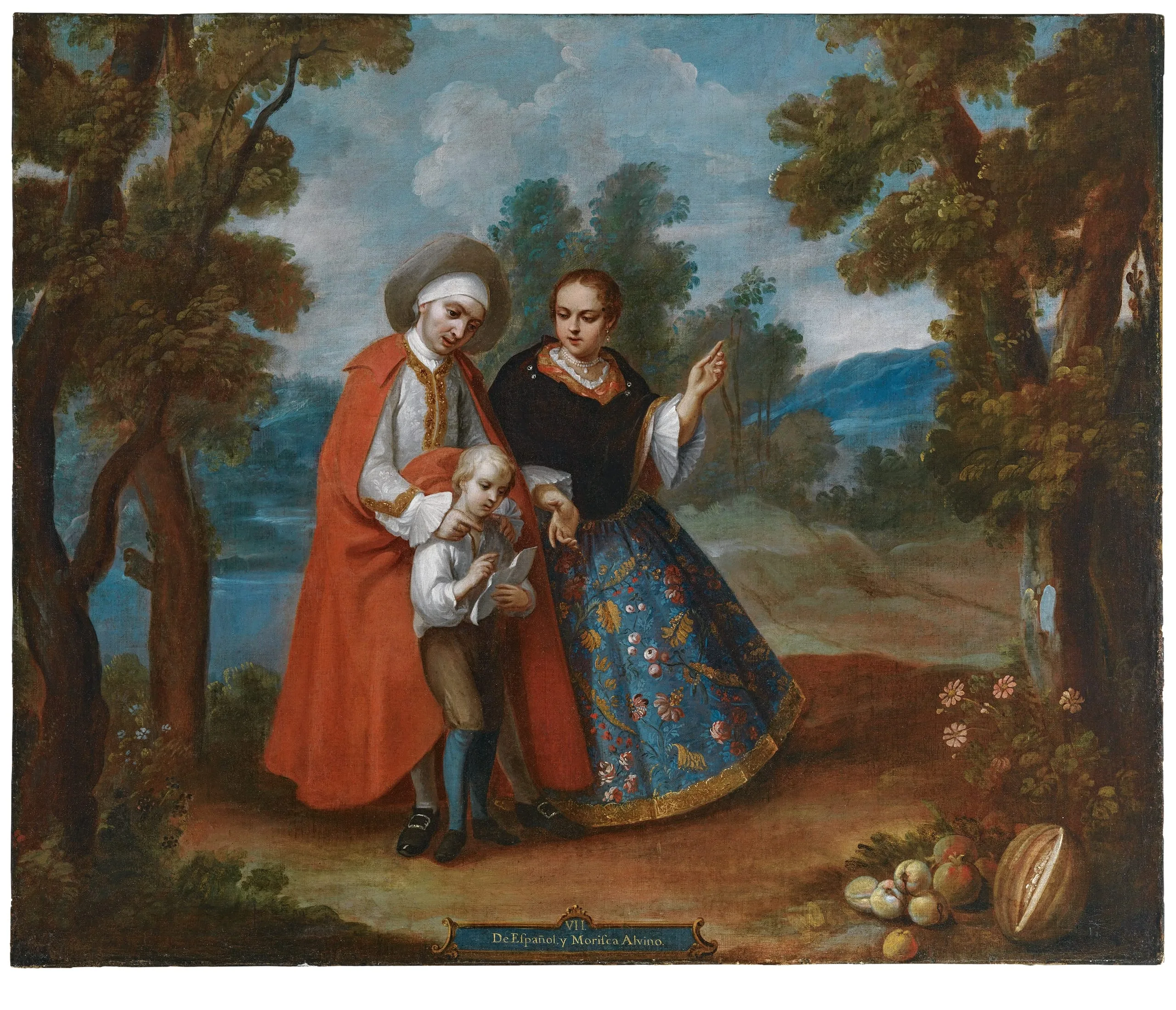
- VII. From Spaniard and Morisca, Albino (VII. De español y morisca, albino)
- Date Made
- circa 1760
- Medium
- Oil on canvas
- Dimensions
- Unframed: 39 7/16 × 47 7/16 in. (100.2 × 120.5 cm); framed: 41 5/16 × 49 5/8 × 1 1/2 in. (104.9 × 125.98 × 3.81 cm)
- Accession Number
- M.2011.20.1
- Curatorial Notes
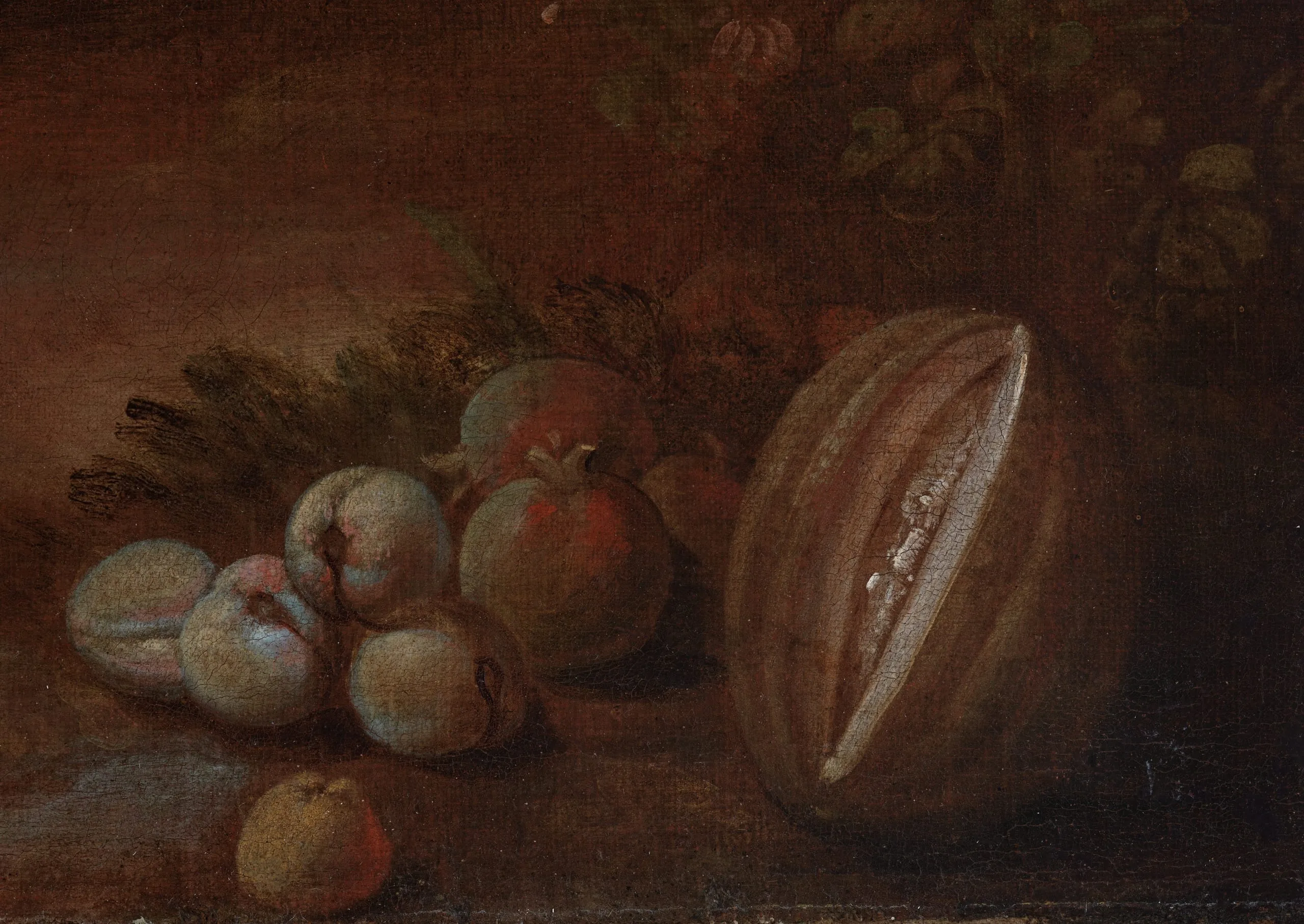
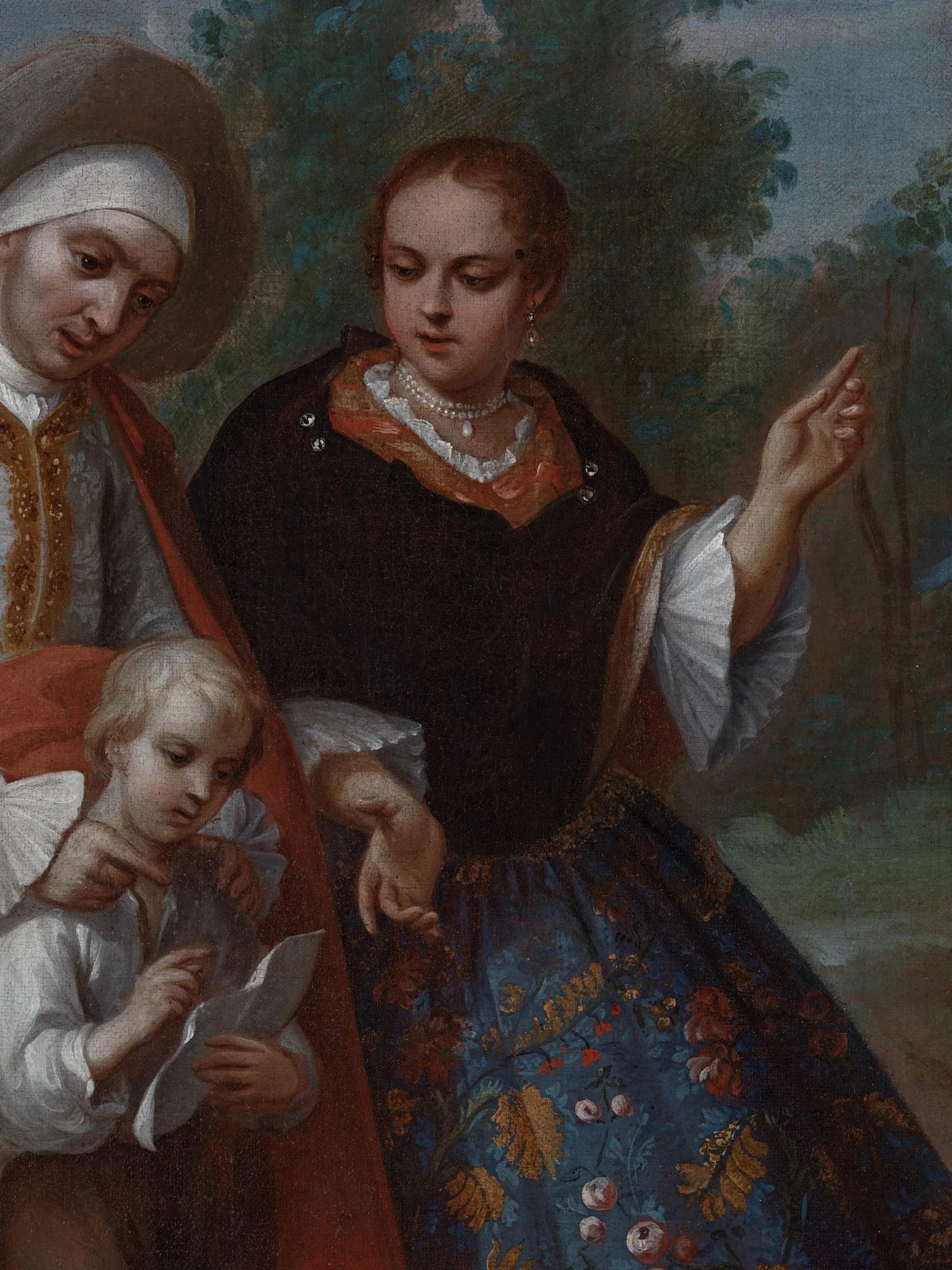
A fashionably dressed man, woman, and child stroll together in a lush landscape that includes a still-life arrangement of local and imported fruits. The scene’s apparently idealized view of colonial family life masks a more difficult subject. The title at the bottom of the work reveals that it belonged to a set of casta paintings (see also M.2011.20.2 and M.2011.20.3). Typically created as sets of sixteen canvases, casta paintings document the process of racial mixing among Amerindians, Spaniards, and Africans. Each scene depicts a man and a woman of a different race with one or two of their children. The inscriptions rank the family groups by race and class and often include zoological and other derogatory descriptive terms.
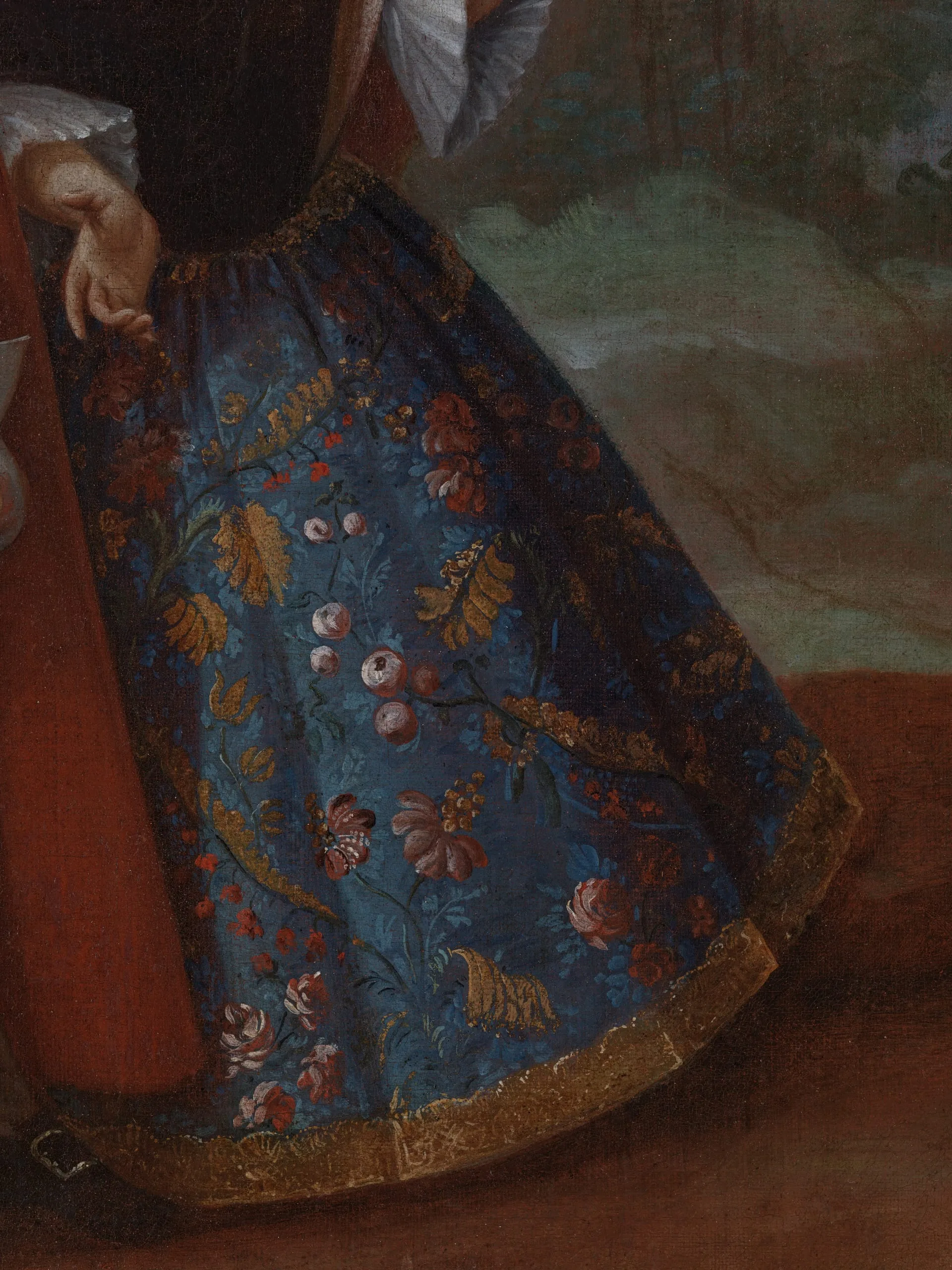
Here, the mother’s distinctive overblouse was worn by women of African descent and was fastened with colorful ribbons and gold and silver brooches. Such fashions developed in response to sumptuary laws that banned Black women from wearing Spanish-style clothing. The Spanish man wears a three-piece suit, a red cape, and a broad hat (chambergo) with a fashionable white Mexican cap (gorro) underneath, as he teaches his albino son to read. Despite the genre’s emphasis on racial classification, the inclusion of local products presented Spanish America as a place of boundless natural wonder and emphasized the colonists’ pride in the diversity and prosperity of the land—a tension that permeates the genre.
Ilona Katzew
2024
- Provenance
Charles Samuel Hainworth (1873–1957), United Kingdom, early 20th century; by inheritance to his son Henry Charles Hainworth (1914–2005), Geneva, 1957; Derek Johns Ltd., London, 2010; LACMA, 2011.
- Selected Bibliography
- Katzew, Ilona, ed. Archive of the World: Art and Imagination in Spanish America, 1500–1800: Highlights from LACMA’s Collection. Exh. Cat. Los Angeles: Los Angeles County Museum of Art; New York: DelMonico Books/D.A.P., 2022.
- Katzew, Ilona. “De español y torna atrás, tente en el aire by Juan Patricio Morlete Ruiz,” Chiricú Journal 3, no. 2 (2019): 17–19.
Ilona Katzew, “New Acquisition: Three Casta Paintings by Juan Patricio Morlete Ruiz,” Unframed, April 21, 2011, https://unframed.lacma.org/2011/04/21/new-acquisition-three-casta-paintings-by-juan-patricio-morlete-ruiz.
- Selected Exhibition History
- Contested Visions in the Spanish Colonial World. November 6, 2011 - January 29, 2012
- Archive of the World: Art and Imagination in Spanish America, 1500–1800. June 12, 2022 - October 30, 2022
- Archive of the World: Art and Imagination in Spanish America, 1500–1800. October 20, 2023 - January 28, 2024
- Archive of the World: Art and Imagination in Spanish America, 1500–1800. June 22, 2024 - September 08, 2024