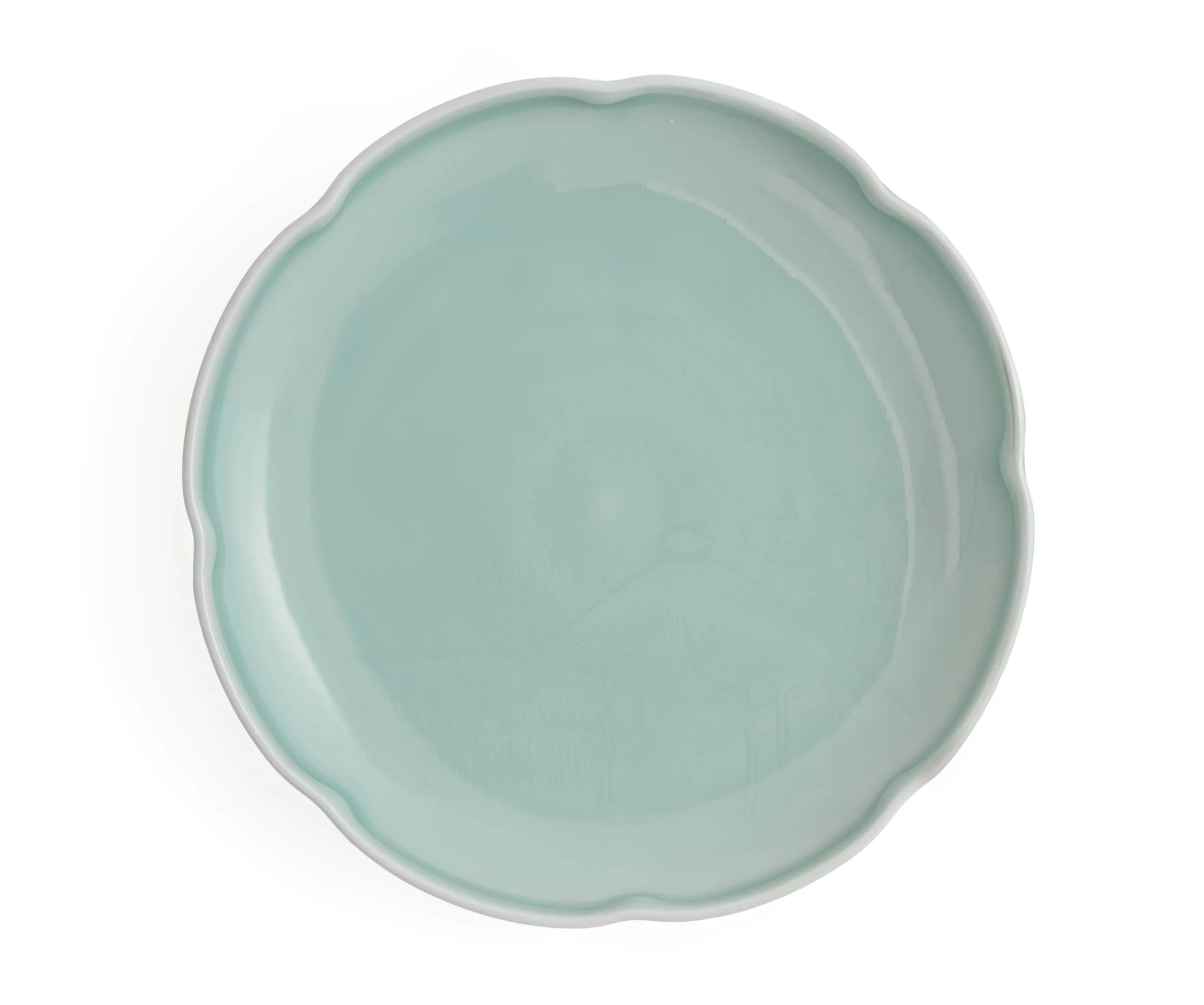
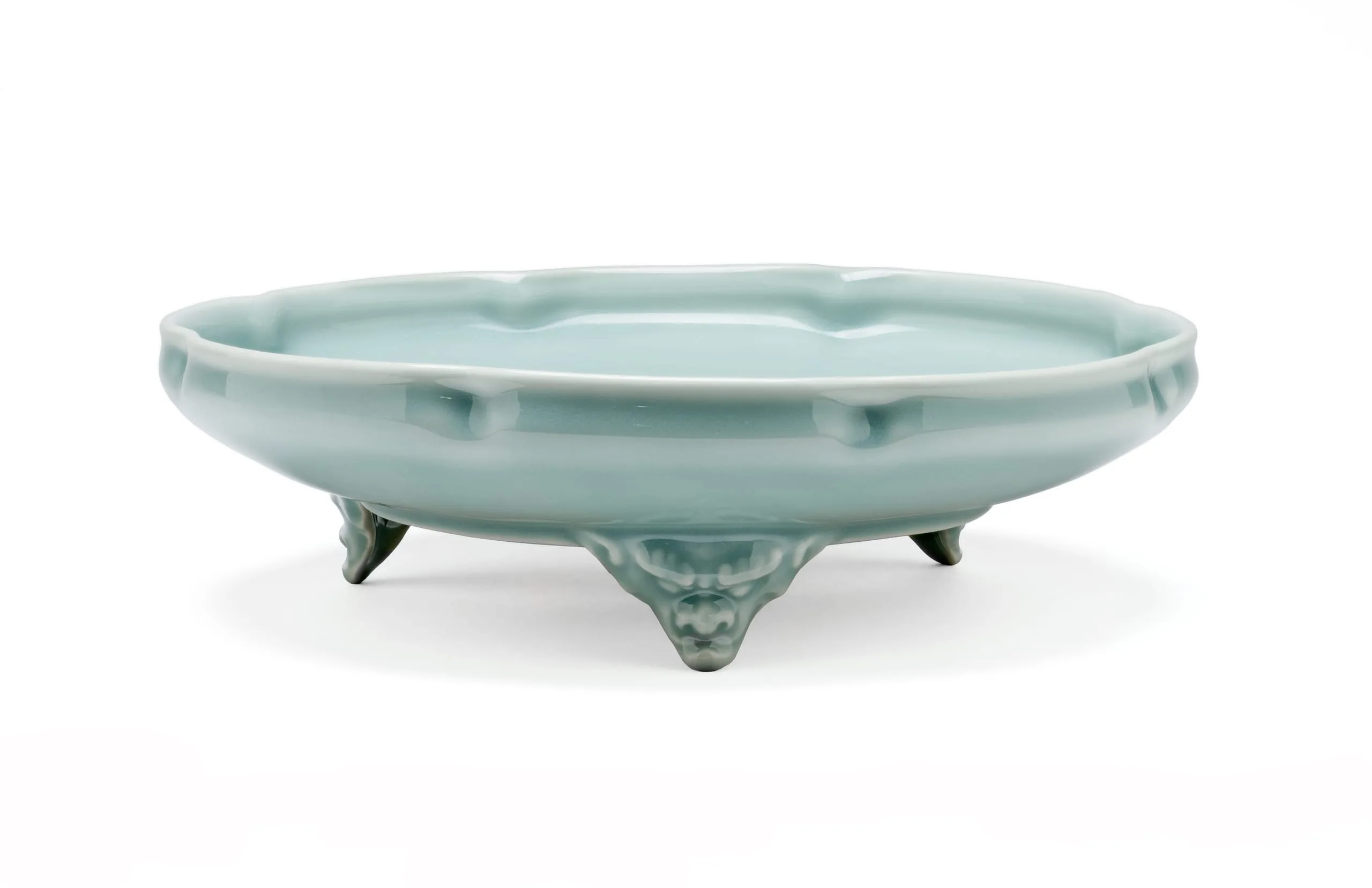
This large bowl is completely covered in an astonishingly beautiful celadon glaze, unique to the Nabeshima kilns in the domains of the Lord of Nabeshima. These Nabeshima porcelains were made in very small numbers, were never sold on the open market, and were made only for the use of the Lords of Nabeshima and other domains, or for the use of the Tokugawa Shogun himself. The Nabeshima kilns were tightly guarded, and to betray the secrets of their glazes and firing techniques was a crime punishable by death. Recent scholarship has confirmed that, on occasion, the Shogun himself chose certain designs that he wished to see made in Nabeshima porcelain, strengthening the tie between Shogunal patronage and the extremely limited and carefully controlled production of this rarified group of kilns. This large bowl bears a beguiling "pie-crust" edge and an extremely rare under-glaze intaglio design incised into the clay before the glaze was applied: the design is of a hut or gazebo in the center, a brushwood fence to the left, and a tree to the right. The bowl is supported by three large feet in the form of Kimen (demon faces that repel evil spirits), also an extremely rare occurrence on Nabeshima porcelains. The exposed clay surface surrounding the foot (the center of which is glazed in celadon), reveals the highly distinctive reddish clay unique to Nabeshima porcelains, dotted with the distinctive white spur marks that are also seen in Nabeshima porcelains made in the period when they are at their height, circa 1680-1710. (Robert Singer, Curator Japanese Art)