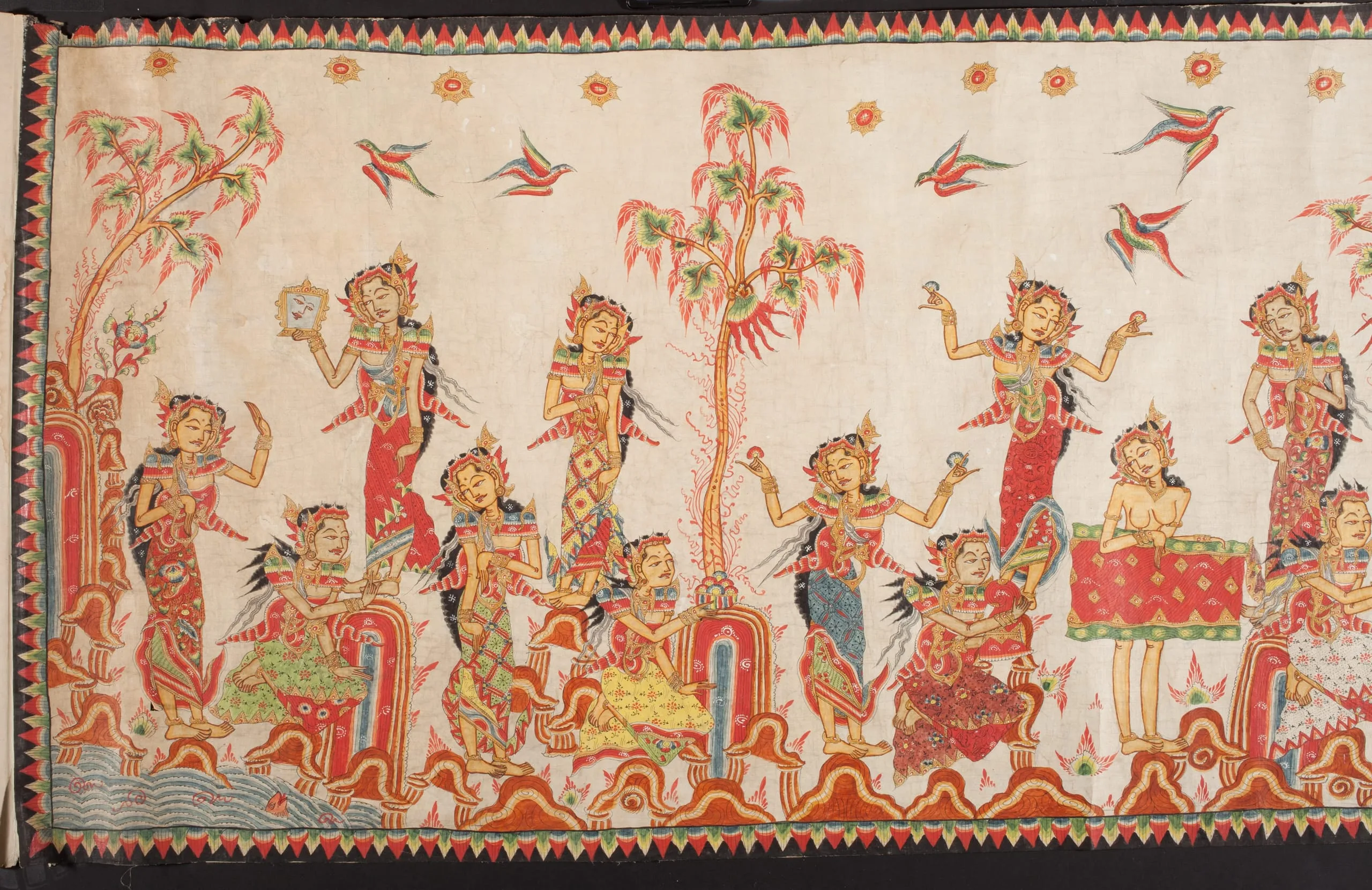
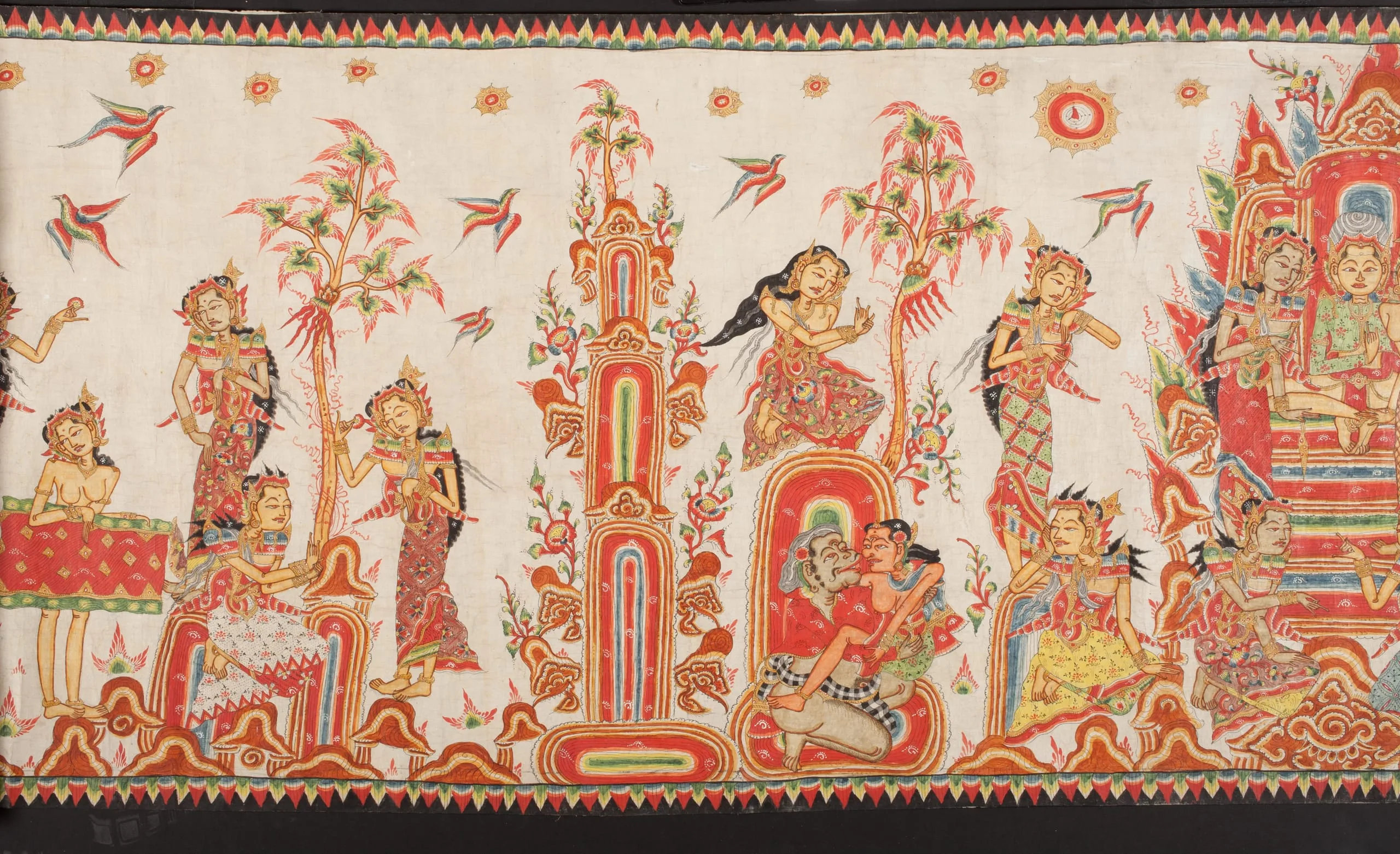
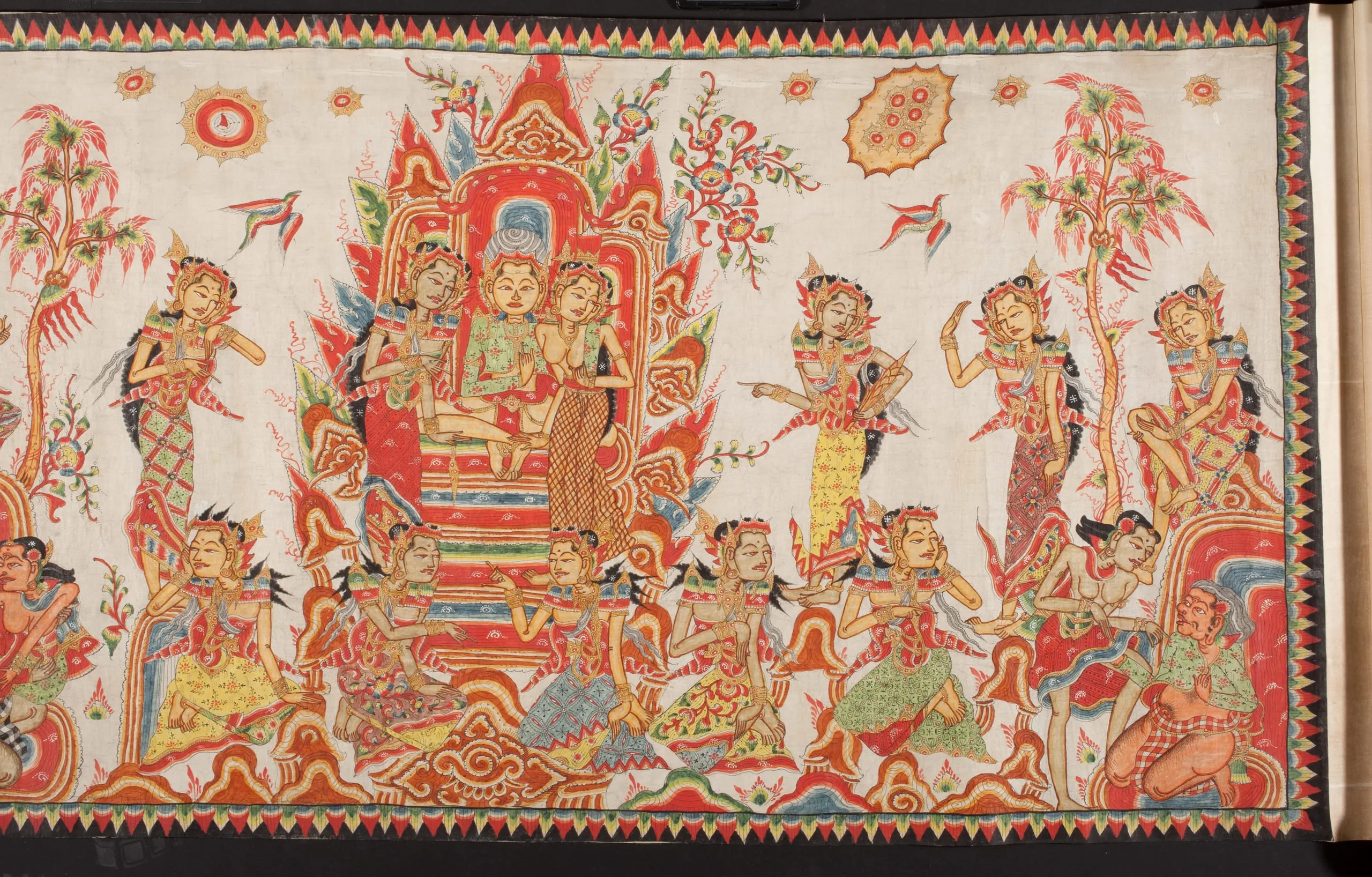
This painted scroll epitomizes the court paintings that flourished in Bali in the village of Kamasan between the mid-19th and early 20th century. Narrative paintings depicting mythological subjects were commissioned by the nearby kingdom of Klungkung to decorate palaces and temples for royal rituals and special occasions such as weddings. This scroll illustrates a scene from Barata-Yuda, a local version of the Indian Mahabharata. It depicts the story of Arjuna, a major hero of the epic, who is shown meditating atop Mount Indrakila in preparation for a great battle with the demon Niwatakawaca. The Hindu god Indra sends a troupe of beautiful nymphs to test his spiritual prowess by dancing erotically around Arjuna. Formerly in the Ananda Coomaraswamy Family Collection.
Western scholars and artists came to Bali in the 1920s, enthralled with what they considered a paradisiacal and unrecorded culture. Anthropologists such as Margaret Mead (1901-1978) and Gregory Bateson (1904-1980) created in their scholarship an idealized cultural template, while artists such as Walter Spies (1895-1942), Rudolph Bonnet (1895-1978), and Miguel Covarrubias (1904-1957) created artistic styles based on local and Western artistic models. Balinese artists quickly adopted these new styles, which encouraged them to experiment with traditional Kamasan forms. Such experimentations led to the formation of a modernist painting tradition in Bali and subsequently across Indonesia through the 20th century.