LACMA

ShopMembershipMyLACMATickets
LACMA
Los Angeles County Museum of Art
5905 Wilshire Blvd.
Los Angeles, CA 90036
info@lacma.org
(323) 857-6000
Sign up to receive emails
Subscribe
© Museum Associates 2025

Museum Hours

Monday

11 am–6 pm

Tuesday

11 am–6 pm

Wednesday

Closed

Thursday

11 am–6 pm

Friday

11 am–8 pm

Saturday

10 am–7 pm

Sunday

10 am–7 pm


  • About LACMA
  • Jobs
  • Building LACMA
  • Host An Event
  • Unframed
  • Press
  • FAQs
  • Log in to MyLACMA
  • Privacy Policy
© Museum Associates 2025
Collections

Unknown
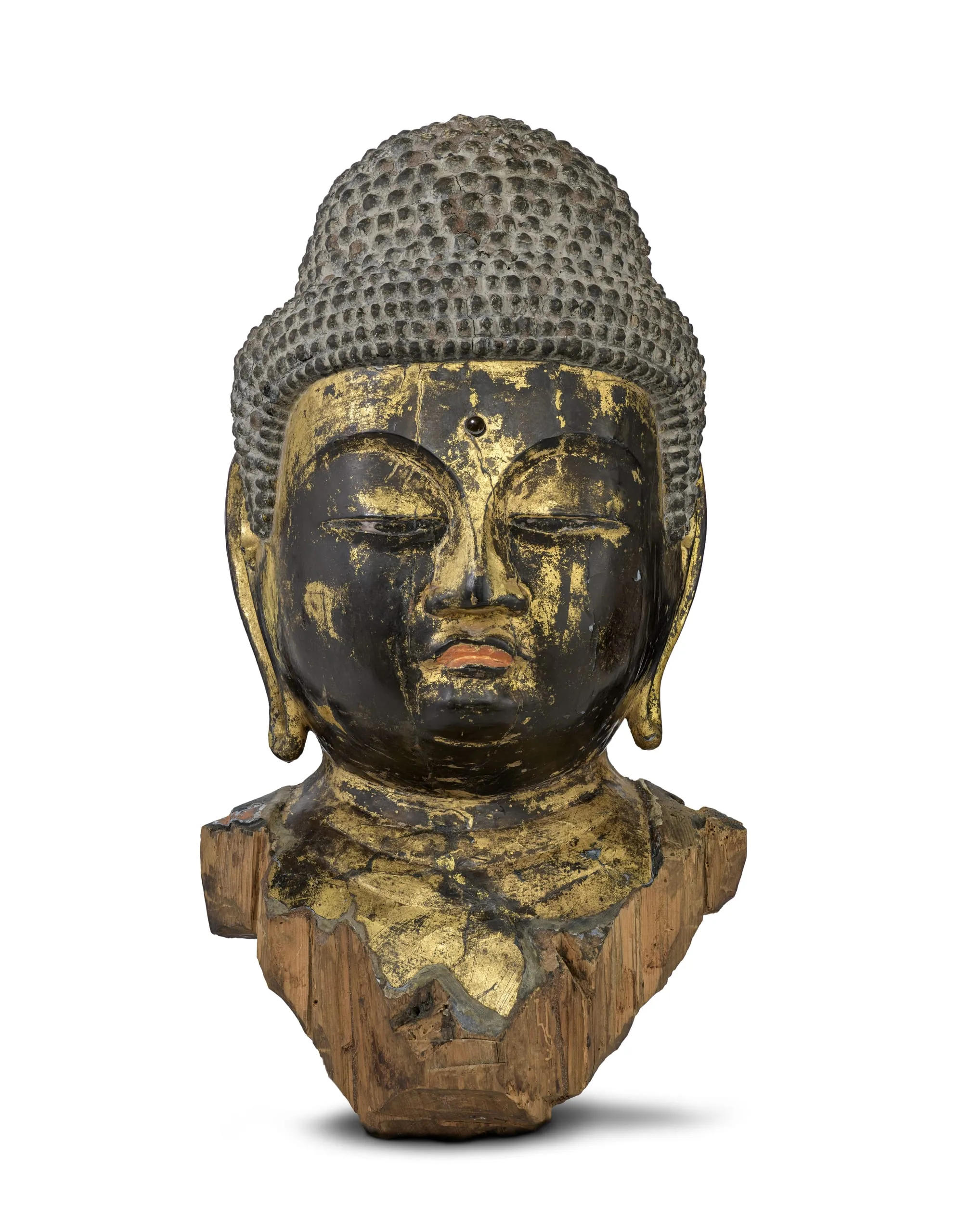
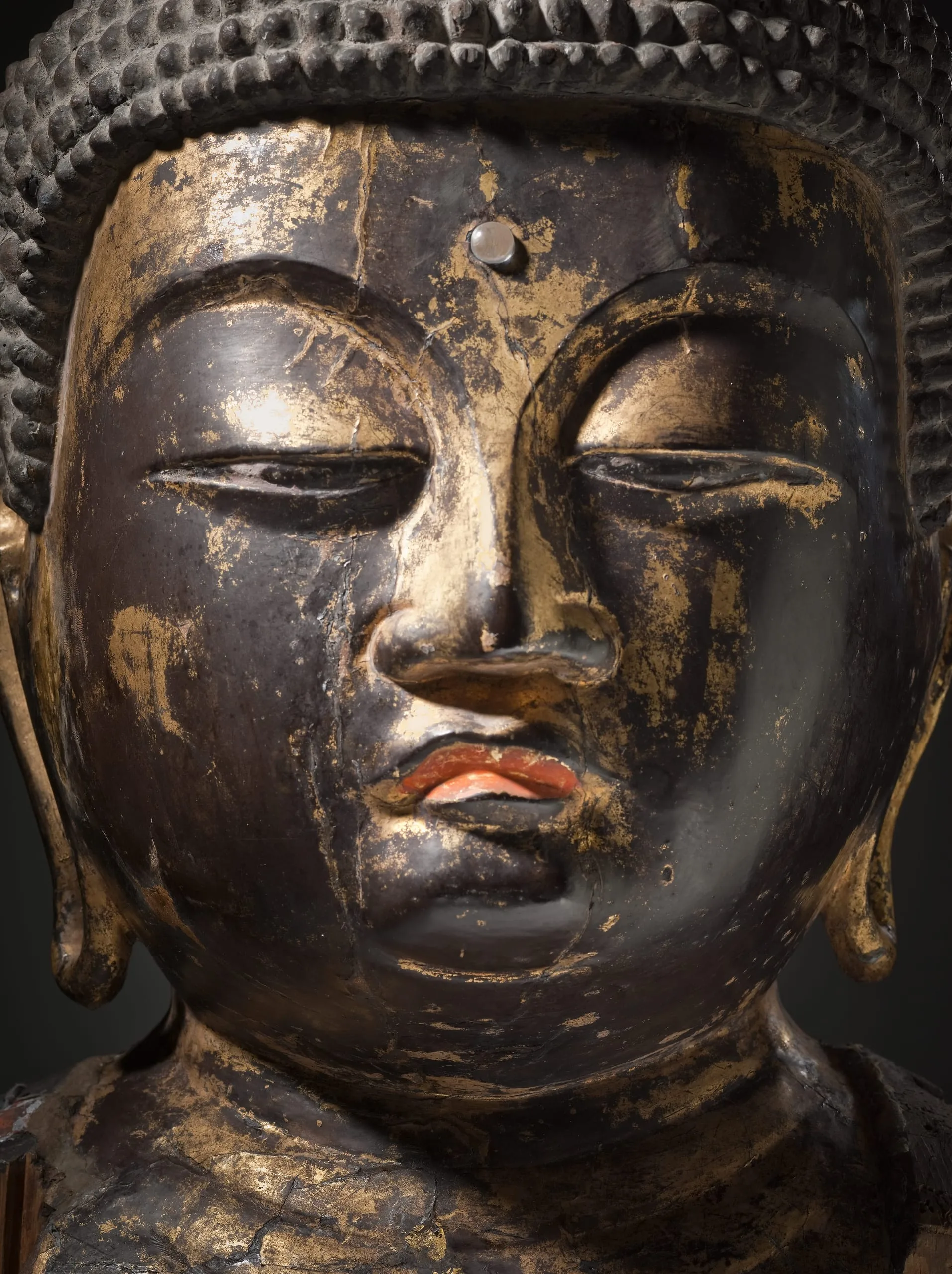
Head of a Buddhafirst half 11th century (Heian period, 794-1185)

Not on view
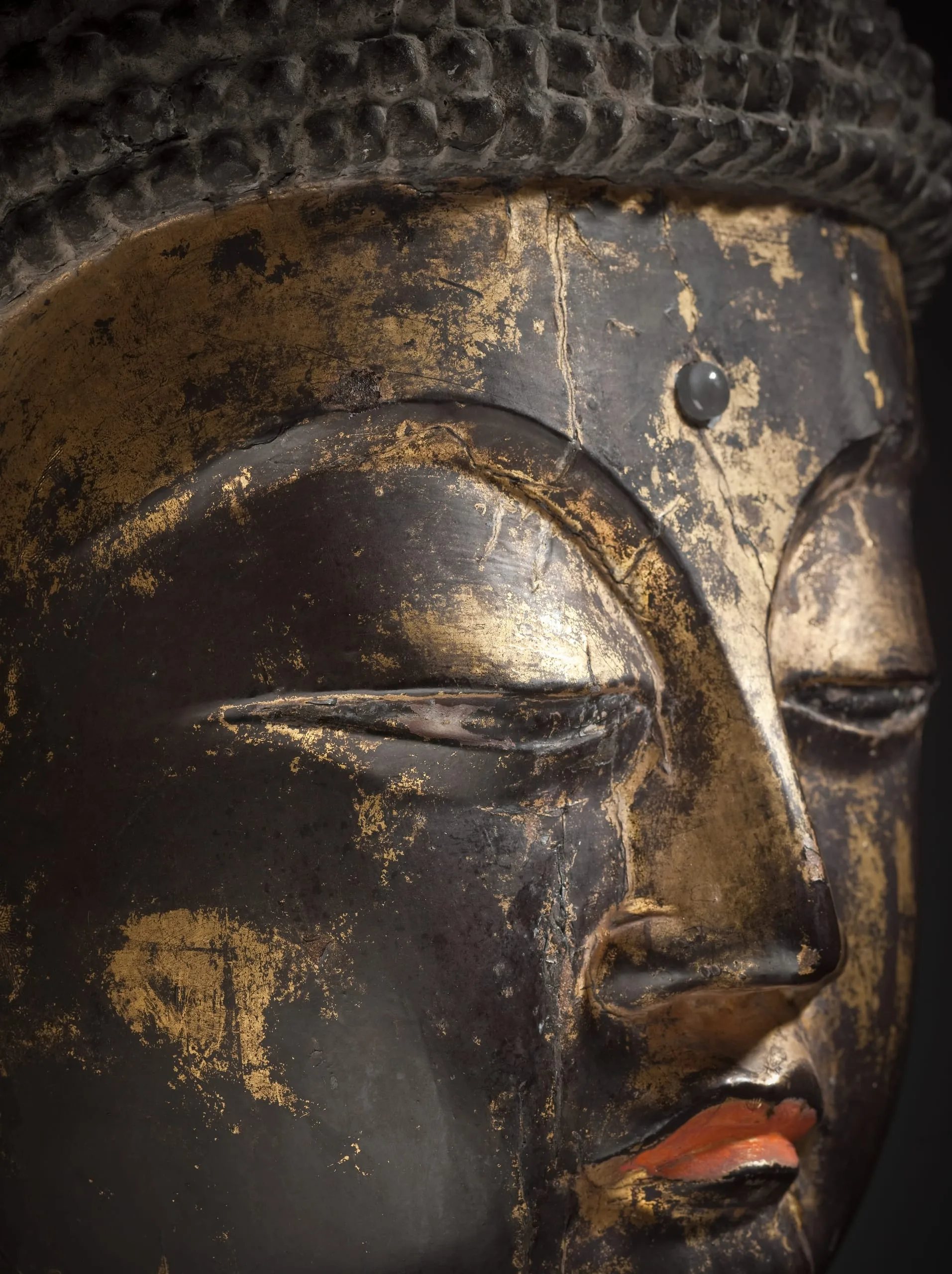
Wooden sculpture of a Buddha head, bust-length, with gold leaf and black lacquer surface, elongated ears, half-closed eyes, and tightly curled hair rising to a rounded peak
Carved wooden Buddha head with traces of black lacquer and gold leaf, featuring ushnisha with rows of rounded curls, downcast eyes, and red-pigmented lips; fragmentary neck and shoulders reveal raw wood beneath worn gilded surface.
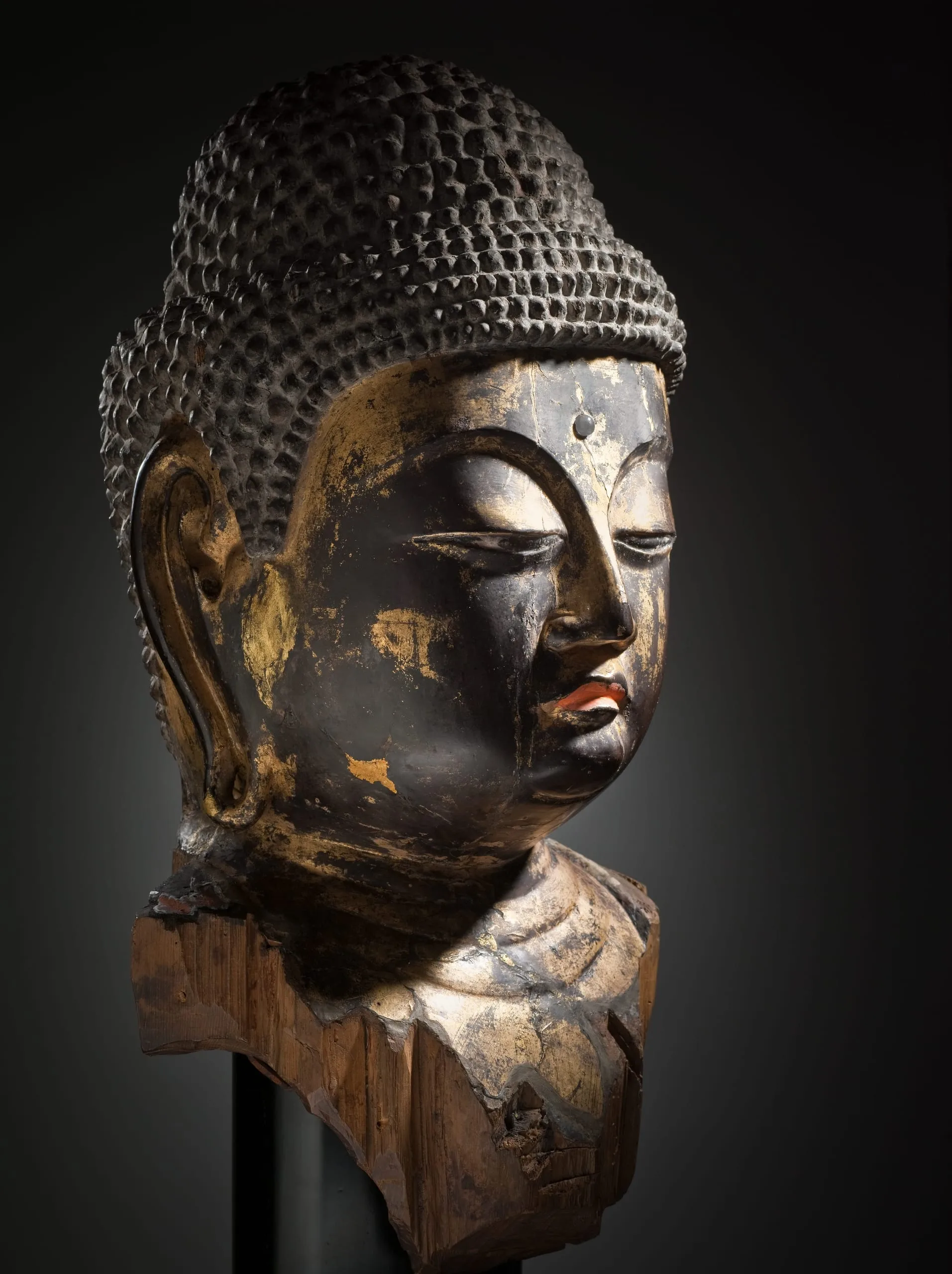
Wooden sculpture of a Buddha head with ushnisha of raised spiral curls, downcast eyes, and elongated ears; traces of black lacquer and gold leaf over the surface, with red pigment on the lips; fragmentary neck and rough wooden base below.
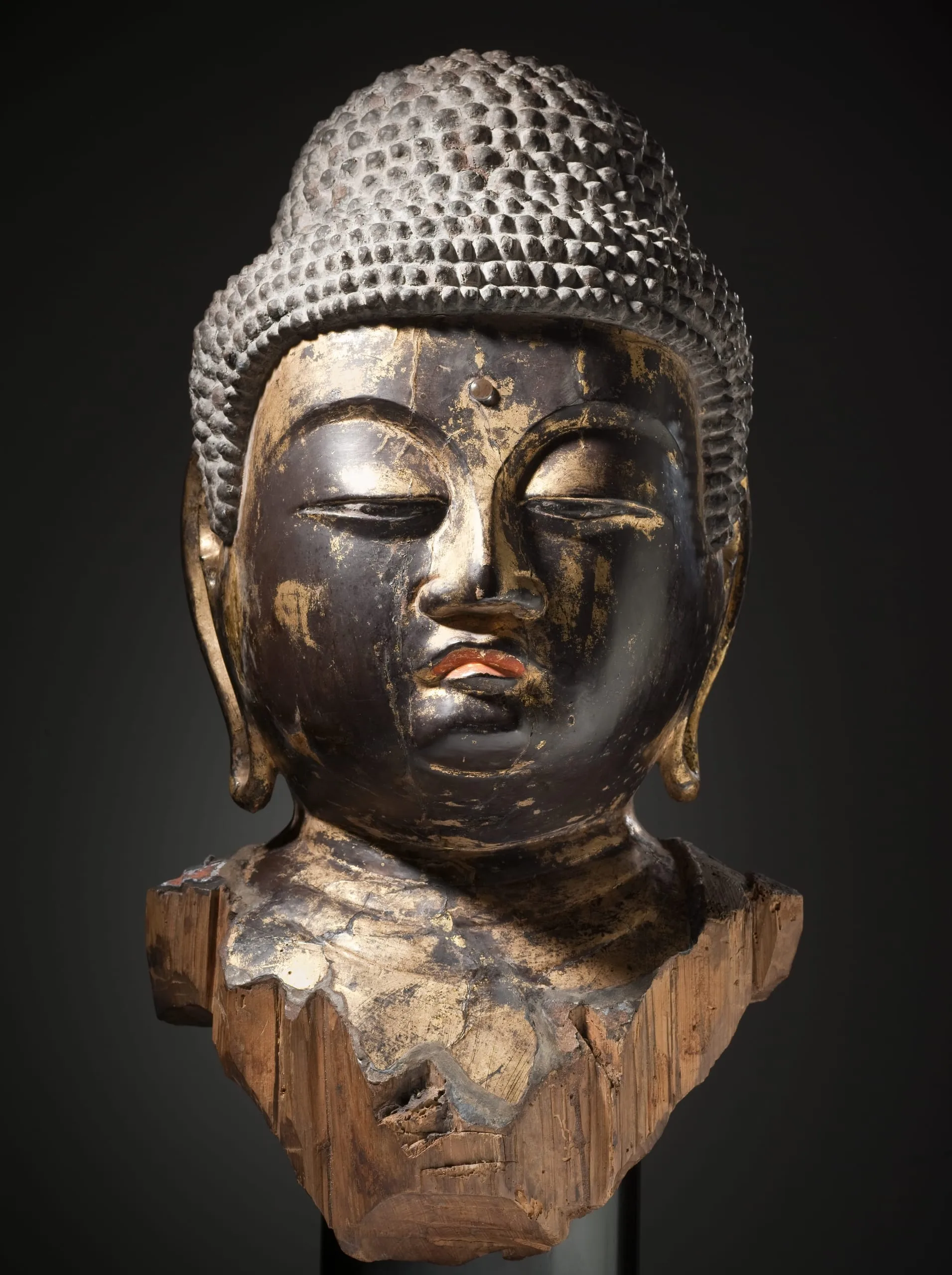
Carved wooden Buddhist head with lacquered and gilded surface, showing downcast eyes, urna mark on forehead, red-pigmented lips, and rows of textured ushnisha curls; worn gilding reveals dark lacquer beneath.
Close-up of a lacquered wood Buddhist figure, face with downcast eyes, urna gem at the forehead, and red-pigmented lips; worn gilding reveals dark lacquer beneath; curled ushnisha visible at top.
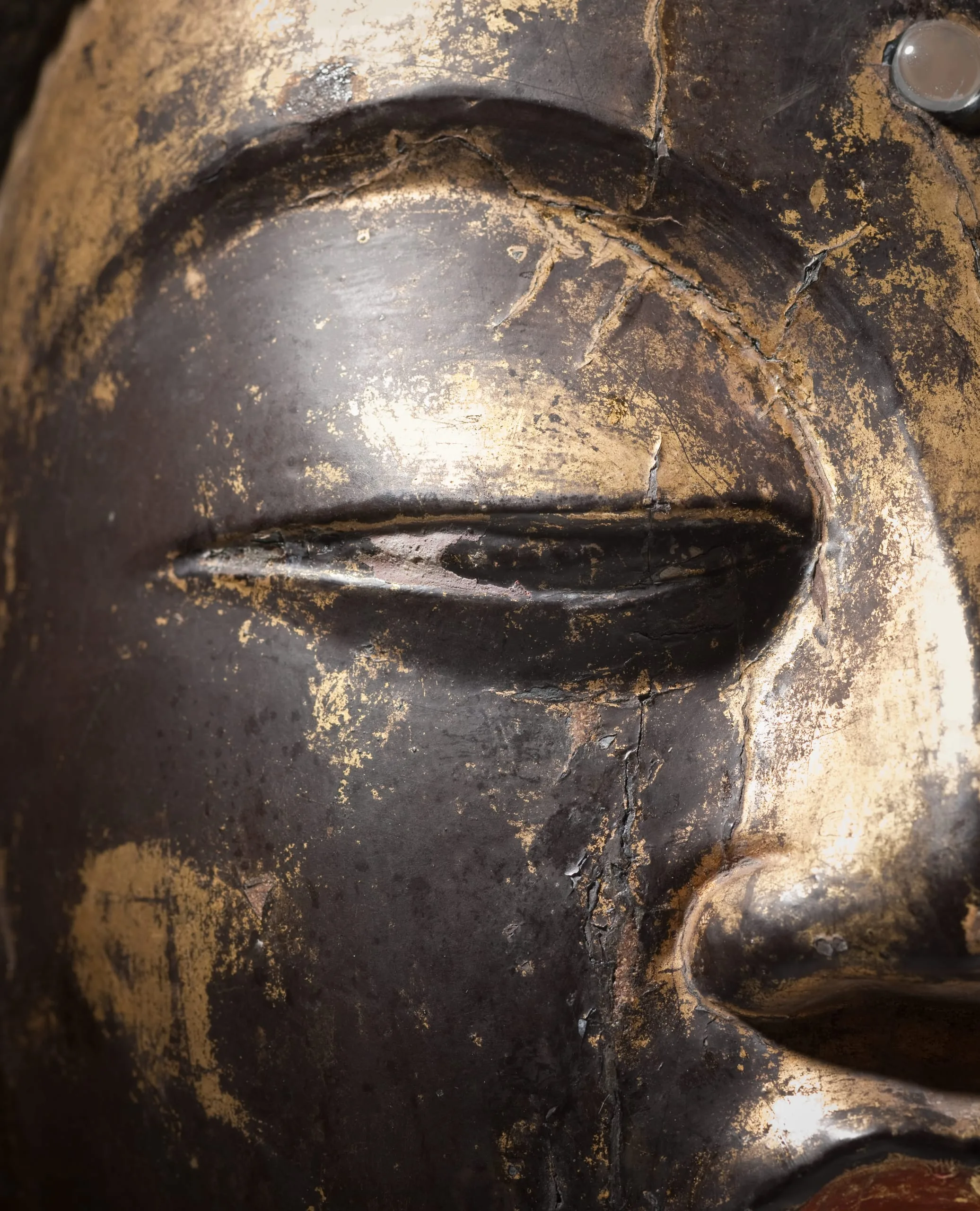
Close-up detail of a wooden sculptural head, dark lacquered surface with areas of worn gilt, showing a downcast eye with carved lid and partial view of nose; cracked and flaking finish reveals layers beneath.
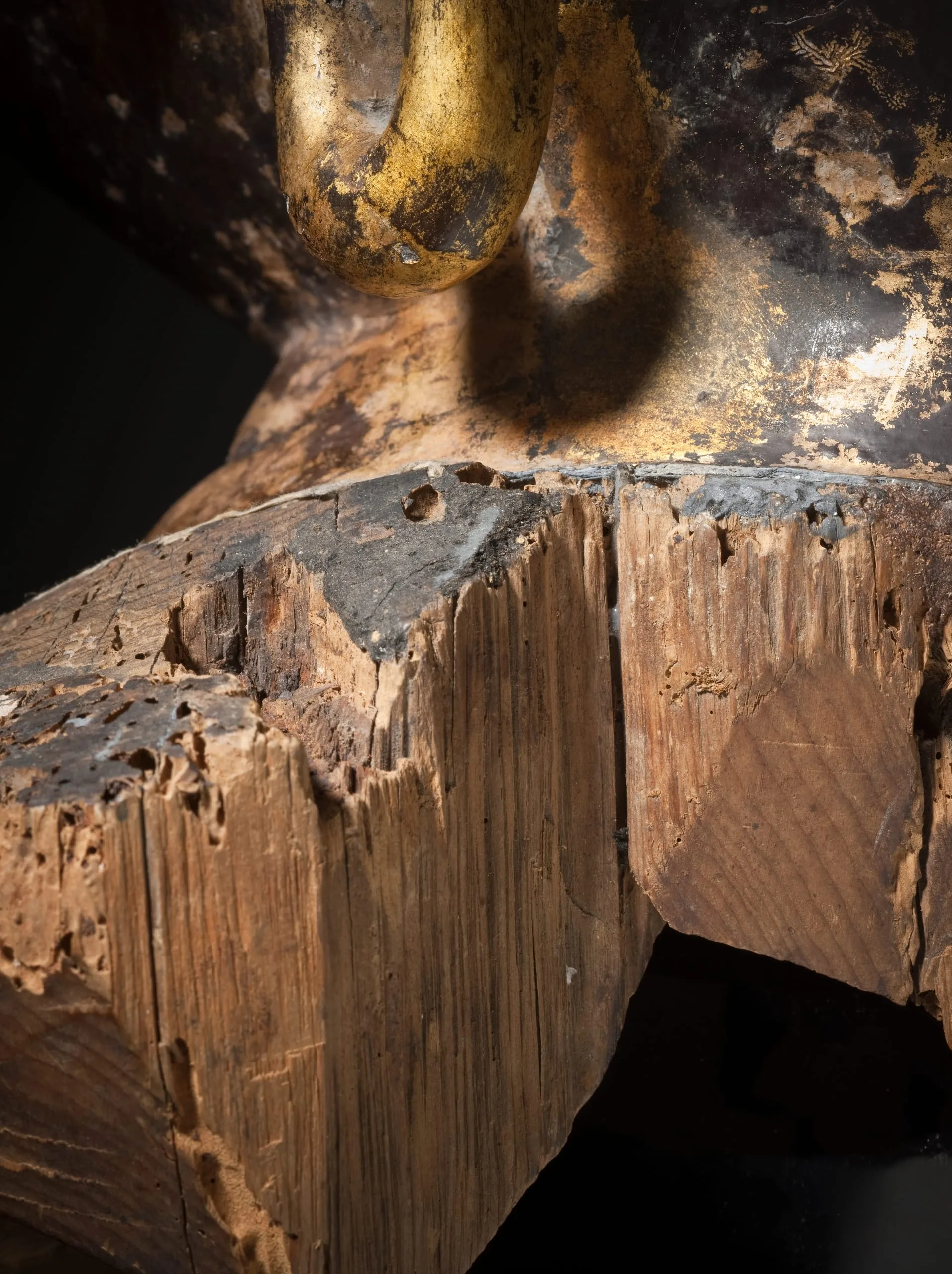
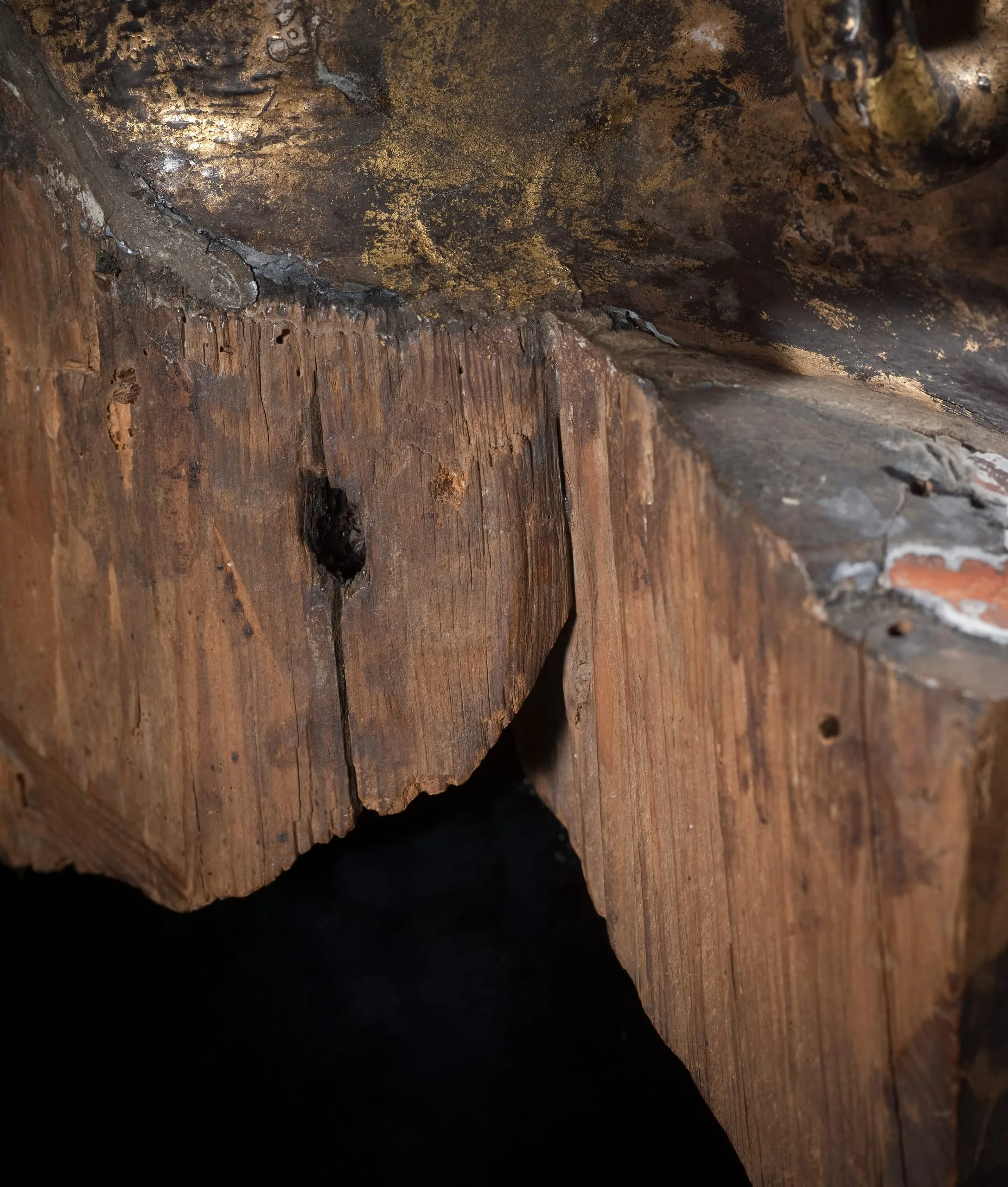
Close-up detail of a wooden sculpture showing heavily weathered and worm-eaten wood at the base, transitioning to remnants of black lacquer and gilded gold leaf surface above.
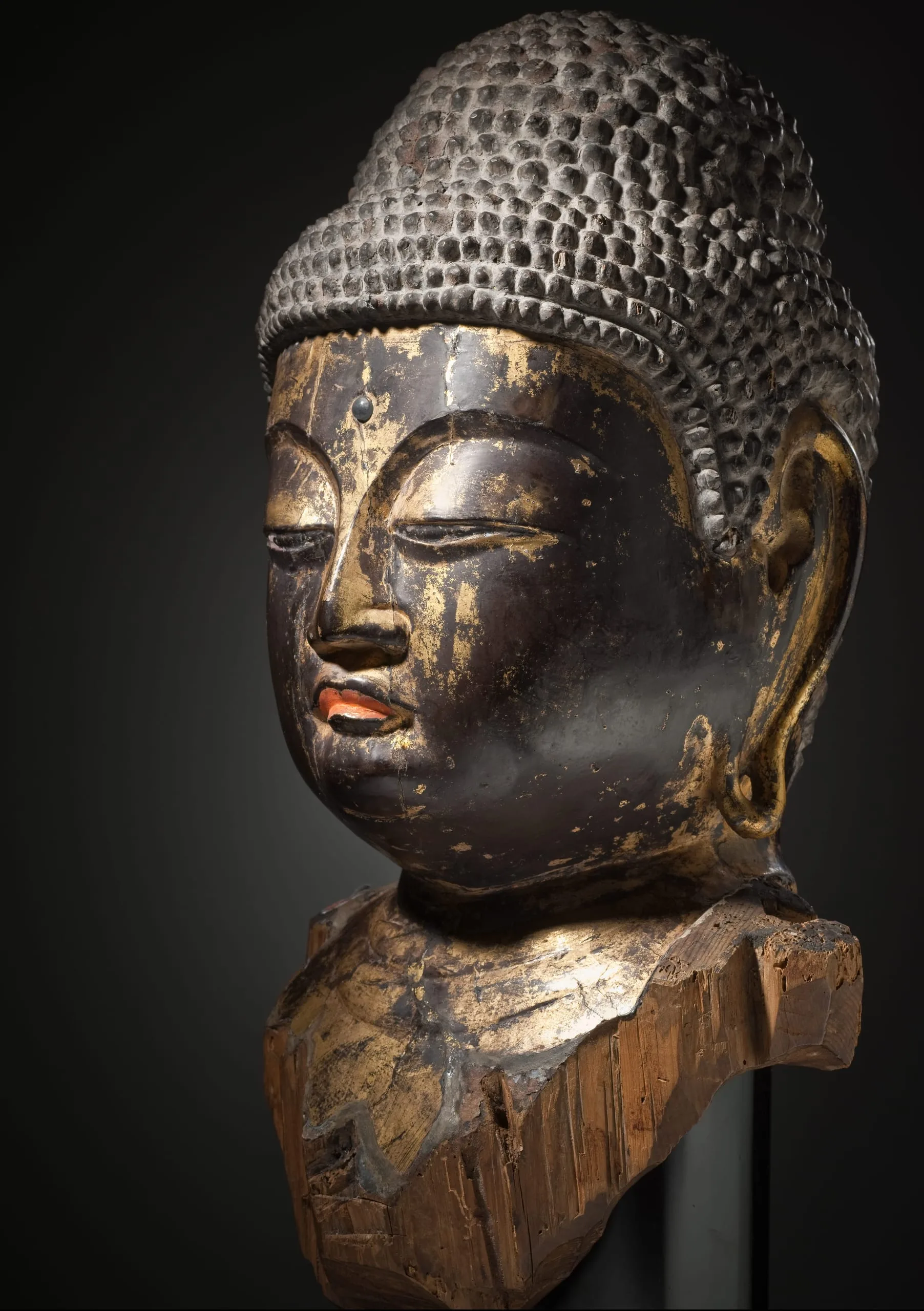
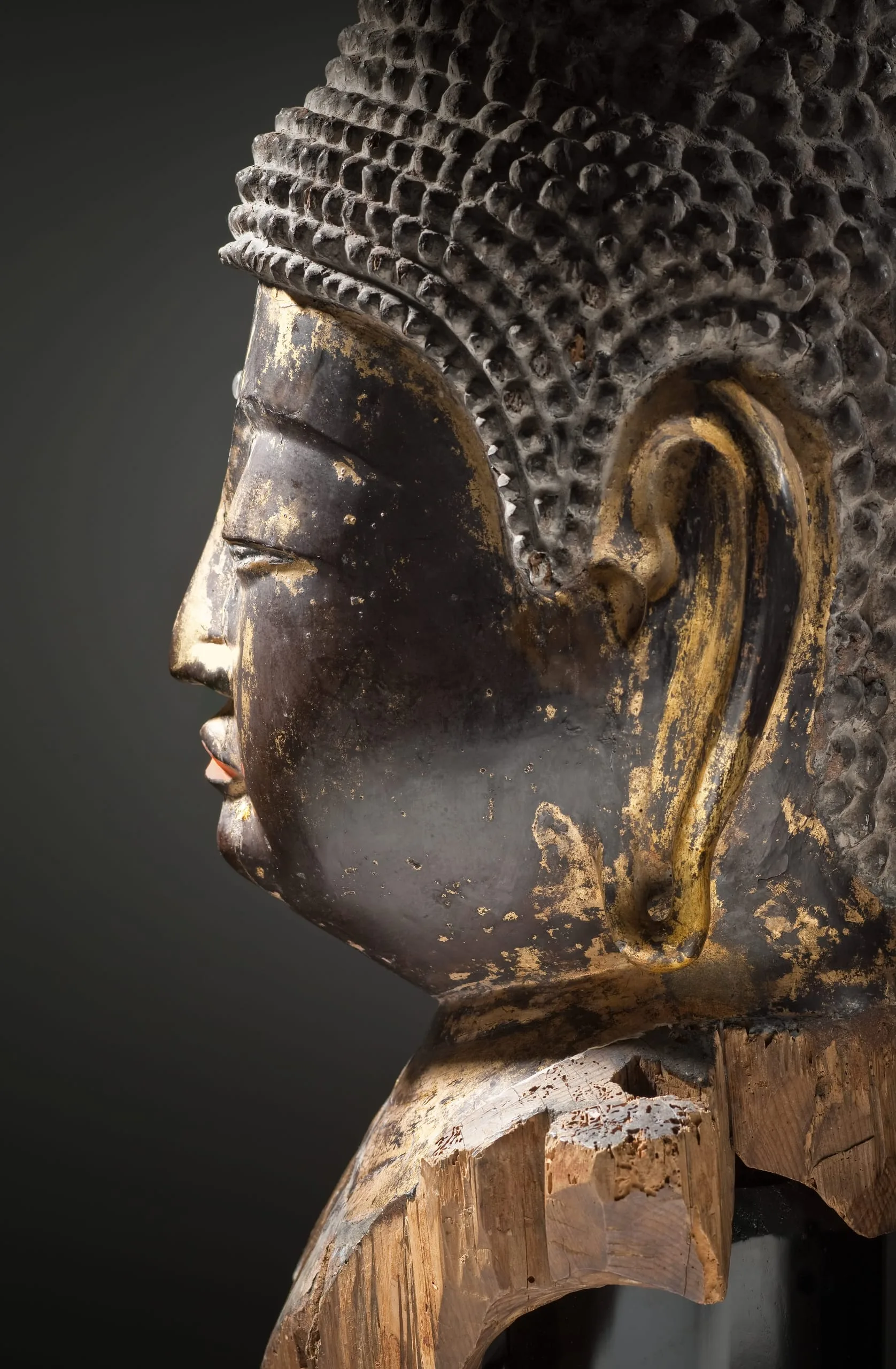
Carved wooden Buddha head in left profile, with lacquered black surface and remnants of gilt gilding on the elongated ear and ushnisha of tightly coiled curls; paint loss reveals underlying wood at the neck.
Close-up of a lacquered and gilded Buddha head, dark ground with worn gold leaf surface, downcast eyes with elongated lids, urna mark at center of forehead, red-pigmented lips, and textured ushnisha visible at top.
Close-up detail of a wooden sculpture showing heavily weathered and cracked wood grain, with remnants of gilded and painted polychrome surface in gold, red, and black at upper edges, against a dark background.
Artist or Maker
Unknown
Title
Head of a Buddha
Place Made
Japan
Date Made
first half 11th century (Heian period, 794-1185)
Period
Heian period (794 - 1185)
Medium
Wood, lacquer, gilt, and crystal
Dimensions
22 x 12 1/2 x 11 in. (55.88 x 31.75 x 27.94 cm)
Credit Line
Gift of the 2011 Collectors Committee
Accession Number
M.2011.22
Classification
Sculpture
Collecting Area
Japanese Art
Curatorial Notes
This large head was originally part of an eight-foot-tall Buddha, probably that of Amida, creator of the Pure Land of the West. Made of cypress wood, it was lacquered in black and covered with gold leaf, traces of which remain. It bears the requisite characteristics of a Buddha: the crystal third eye emitting infinite light, the tight curls of hair, and the elongated ears. The head of a Buddhist statue is by far its most important element: the power, meaning, and compassion of the Buddha is expressed through its face. The construction of this head is of an ancient type seen only in sculpture of the eleventh century or before, called wari-hagi-zukuri (splitting, carving out, and rejoining). In this technique the head is first carved from a single large block of wood, then split into halves along a vertical line behind the ears, creating a front half and back half. Both of these halves are then hollowed out using a chisel, and the two halves rejoined. This technique produces a sculpture that is lighter and far less likely to crack due to dryness. (Robert Singer, Curator Japanese Art)