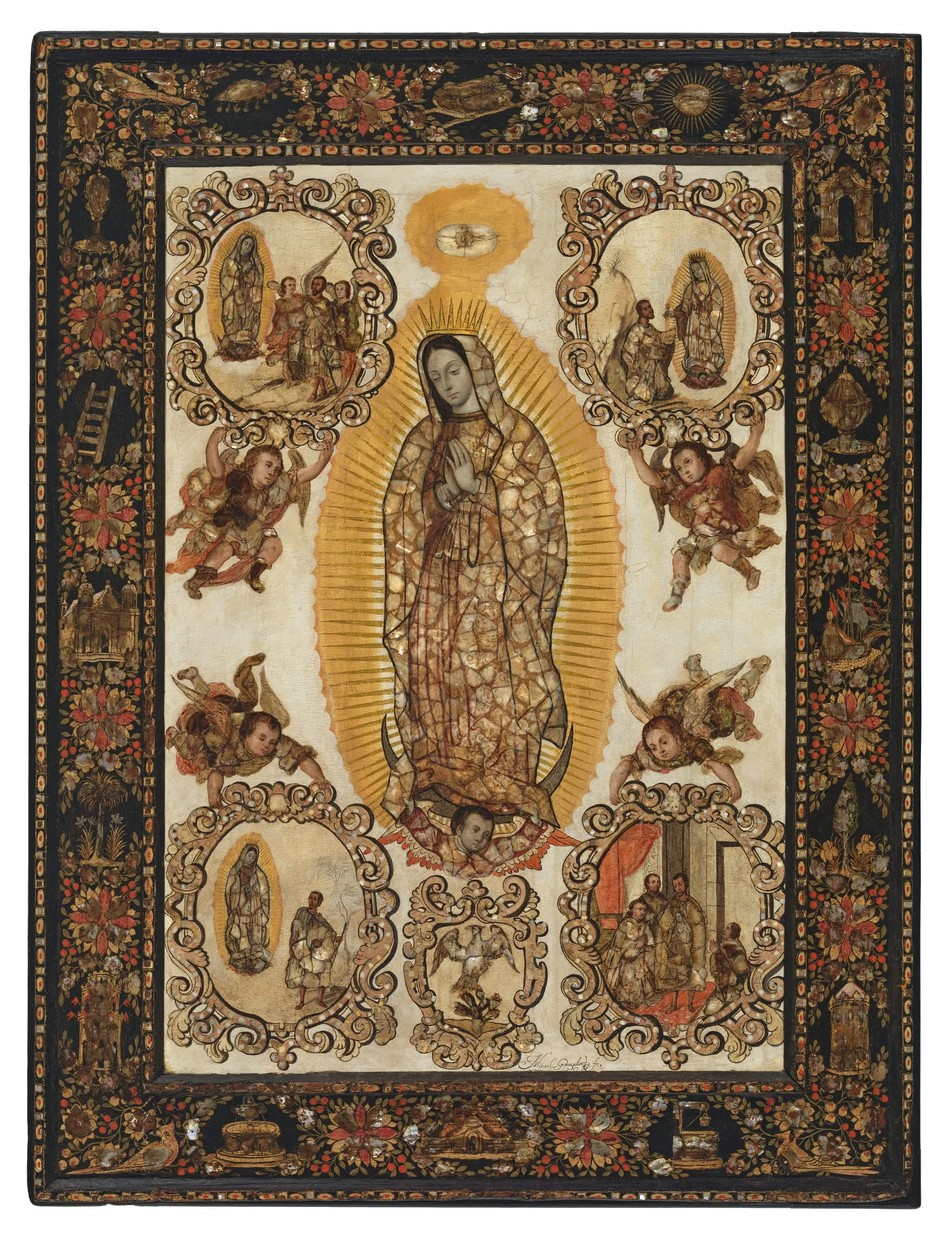
Among the most dazzling paintings invented in New Spain were those inlaid with mother-of-pearl, known as enconchados. Conceived in the traditional manner of Western painting, the works include shell fragments that reference a range of Asian decorative arts, which flowed in through various trade networks. Pearls had also been associated with the legendary riches of the Americas since the conquest. Their materiality connoted imperial power, ostentation, and wealth. The genre reached its apogee from roughly 1680 to 1700, and Miguel González was among its most salient practitioners. Aside from individual devotional pictures, many enconchados were created as multipanel series portraying the lives of the Virgin, Christ, and various saints—the iridescent nacre helping to suffuse the works with a sense of the divine. With their mixed technique, the opalescent enconchados stood at the juncture of imperial vision, global trade, religious fervor, and colonial invention.
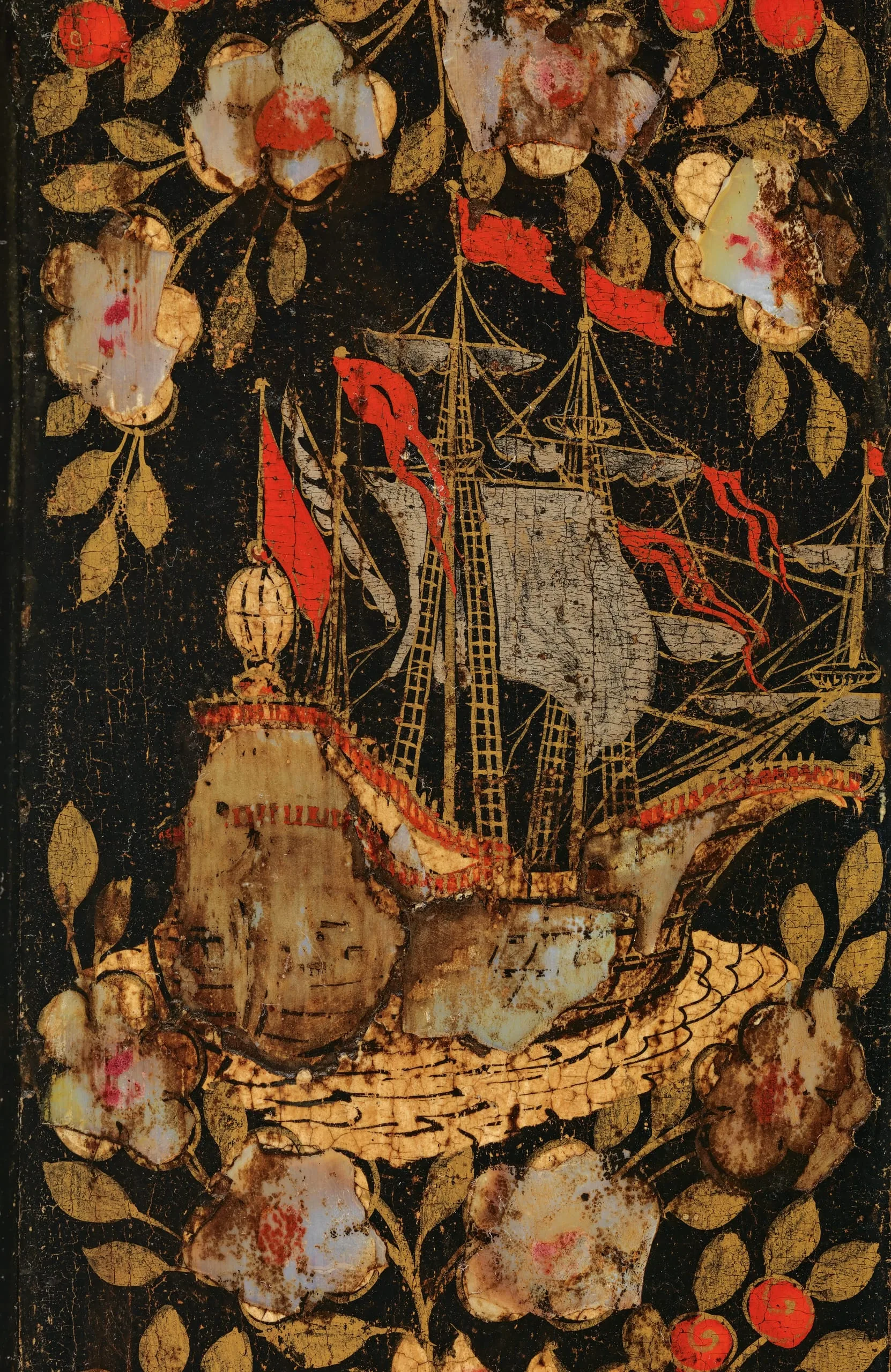
This work depicts the famous Virgin of Guadalupe placed atop an eagle perched on a cactus, Mexico City’s legendary coat of arms. She is surrounded by four roundels that narrate her three apparitions to the Native seer Juan Diego in 1531 and the moment when he unveiled her miraculously imprinted image on his cape before Bishop Juan de Zumárraga (r. 1530–48). Supporting each corner medallion, fluttering angels impart a sense of playful dynamism to the composition, echoing the flickering shimmer of the inlaid shells. The lacquer-imitation frame, with its densely packed ornamentation, constitutes an integral element of the work. Painted and inlaid with mother-of-pearl, it combines floral motifs and birds with Marian symbols—including those of the Litany of the Virgin. Elaborate frames were highly valued and could often command higher prices than the paintings themselves.
From exhibition Archive of the World, 2022 (for more information see the catalogue entry by Ilona Katzew in the accompanying publication, cat. no. 64, pp. 264–74)