LACMA

ShopMembershipMyLACMATickets
LACMA
Los Angeles County Museum of Art
5905 Wilshire Blvd.
Los Angeles, CA 90036
info@lacma.org
(323) 857-6000
Sign up to receive emails
Subscribe
© Museum Associates 2026
  • About LACMA
  • Jobs
  • Building LACMA
  • Host An Event
  • Unframed
  • Press
  • FAQs
  • Log in to MyLACMA
  • Privacy Policy
© Museum Associates 2026
Collections

Sèvres Porcelain Manufactory
Cup and Saucer1812-1813

Not on view
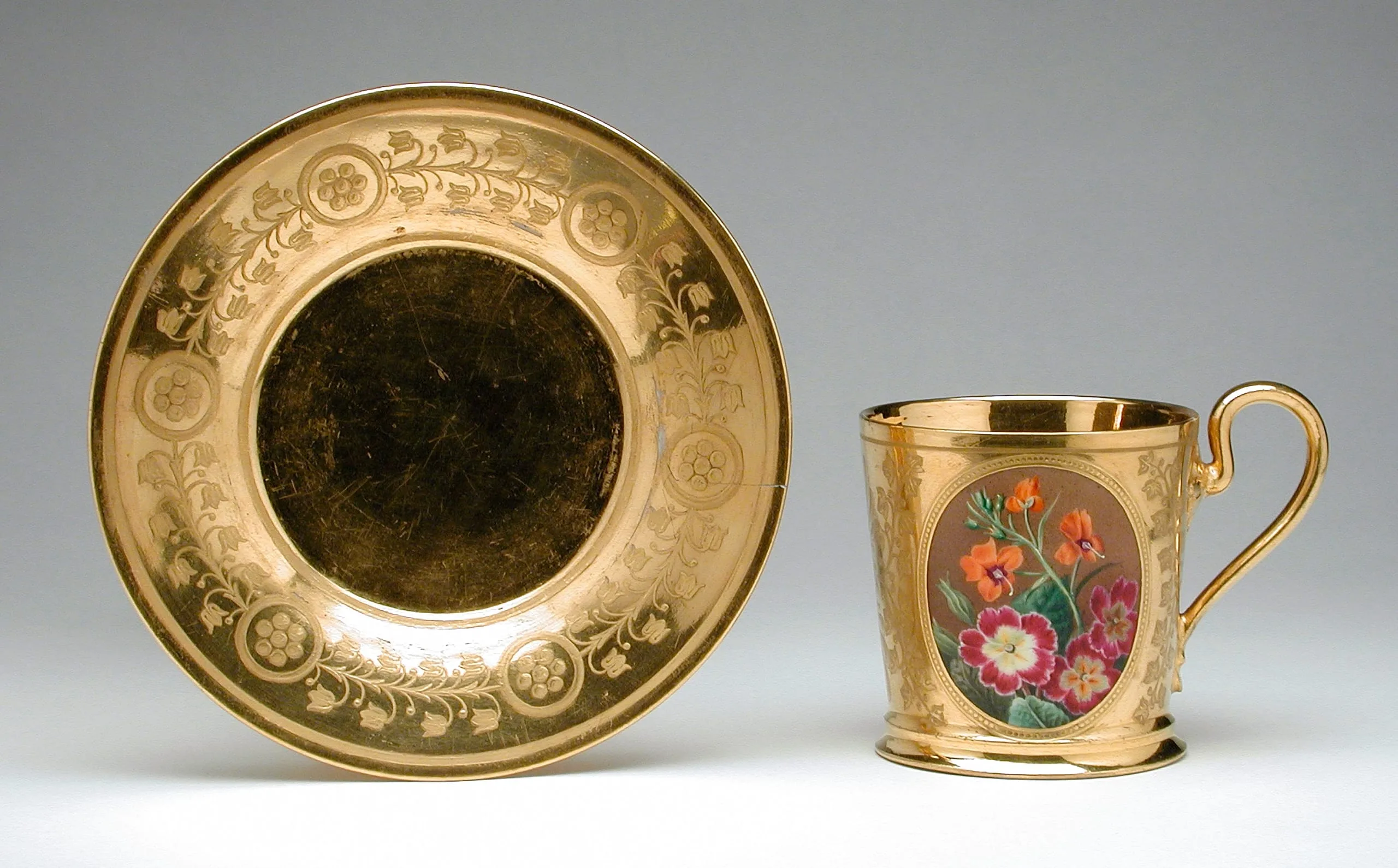
Porcelain cup and saucer, both covered in burnished gold glaze; cup features an oval cartouche with a painted bouquet of orange and pink flowers on green leaves
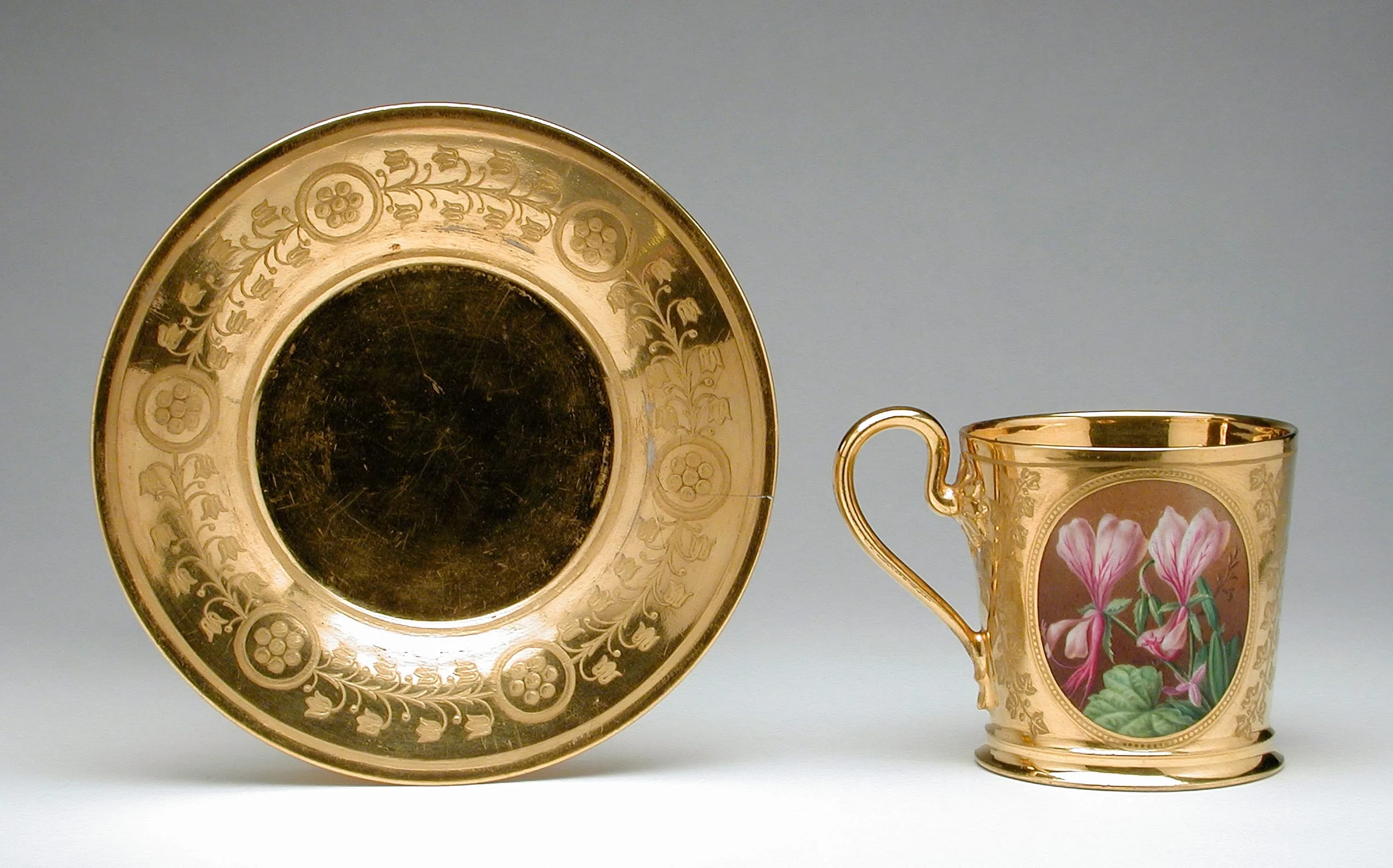
Porcelain cup and saucer with heavy gilt ground; saucer features engraved foliate and rosette scrollwork; cylindrical cup bears a painted oval medallion of pink cyclamen with green leaves.
Manufacturer
Sèvres Porcelain Manufactory
France, Sèvres, established 1756
Painter
Georgius J. Van Os
Holland, active France, 1782-1861
Title
Cup and Saucer
Place Made
France
Date Made
1812-1813
Medium
Porcelain with enamel, gilding, and glaze
Dimensions
Dimensions vary
Credit Line
William Randolph Hearst Collection
Accession Number
49.13.5.5a-b
Classification
Furnishings
Collecting Area
Decorative Arts and Design
Curatorial Notes

Floral still-life painting reached its peak of popularity in the Netherlands in the seventeenth century. This still-life tradition was kept alive into the eighteenth and nineteenth centuries by Dutch and Flemish artists living in Paris. Among them was Georgius Jacobus Johannes van Os, the son and brother of well-known Dutch artists. After establishing a successful practice in Amsterdam, van Os moved to Paris, where between 1811 and 1815, and again from 1820 to 1822, he worked at the Sèvres Porcelain Manufactory as a specialist painter of flowers on porcelain. Van Os decorated each piece in this sumptuous tea service (see also 49.13.5.1, .2a-b, .3a-b, .4, and .6a-b) with finely observed flowers. Such gilded and hand-painted porcelain required great technical skill during firing to preserve the intricate design. The early nineteenth century saw a revival of interest in Dutch and Flemish still-life painting and a general preference for such highly refined technique. These trends coincided with the determination of the Sèvres factory director, Alexandre Brongniart, to promote the broad range of enamel colors he had perfected.

The tea service has an illustrious history. It was commissioned in 1813 by Napoleon and Empress Marie-Louise as a New Year’s gift for Napoleon’s sister Pauline Bonaparte, Princess Borghese.
Selected Bibliography
  • Hopkins, Henry T., ed. Illustrated Handbook of the Los Angeles County Museum of Art. West Germany: Bruder Hartmann, 1965.

Related Unframed

Related Unframed

This Weekend at LACMA: Ken Price and Drawing Surrealism Close, Christopher Nolan in Person, Polanski's Tess, and More
  • January 4, 2013
The Fusion of Beauty and Function: 17th and 18th Century French Ceramics
  • October 8, 2012
Designed Dining: The Ellen Palevsky Cup Collection at LACMA
  • March 21, 2011