- Artist or Maker
- Paul László
Hungary, active United States, California, Beverly Hills, 1900-1993 - Title
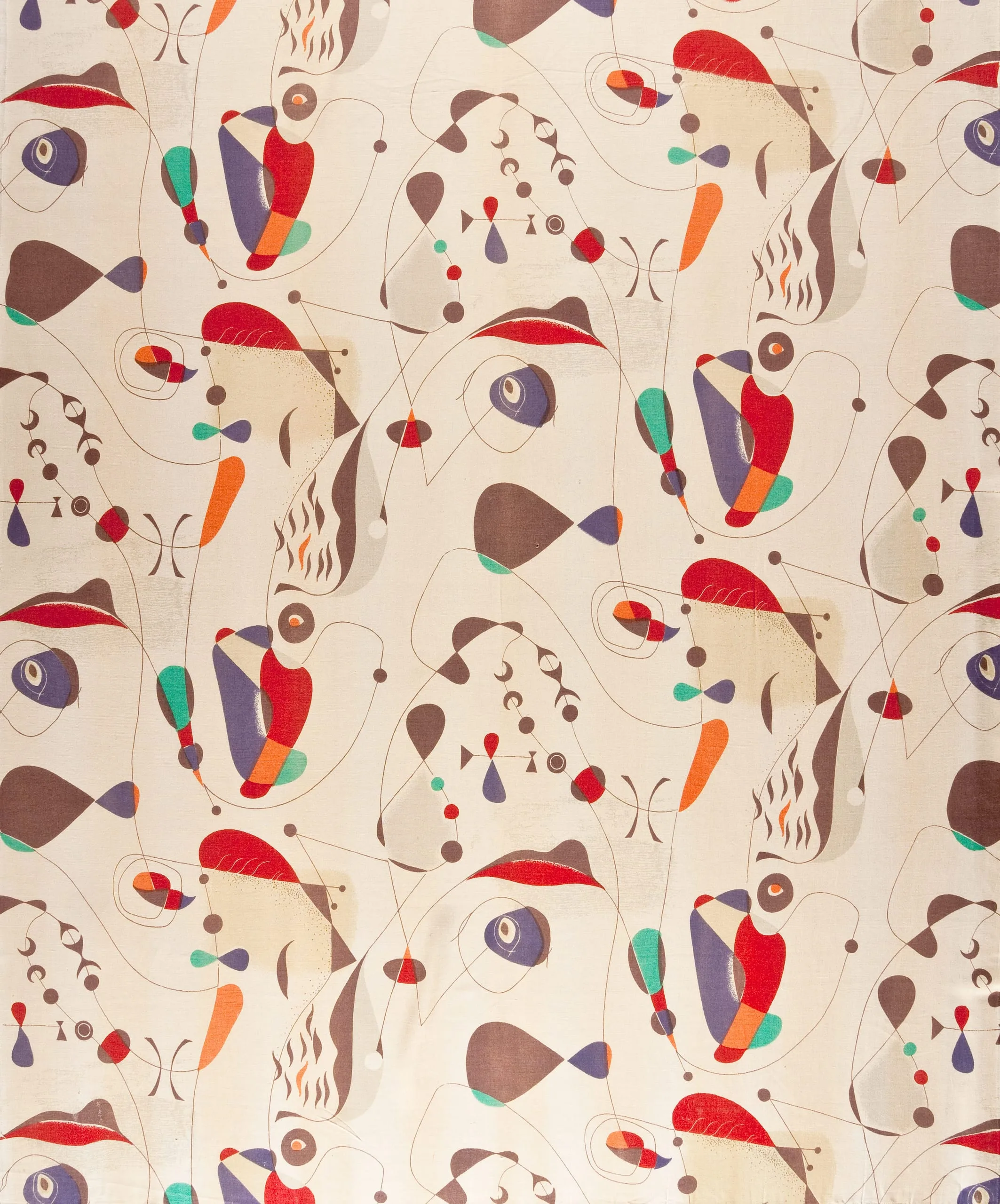
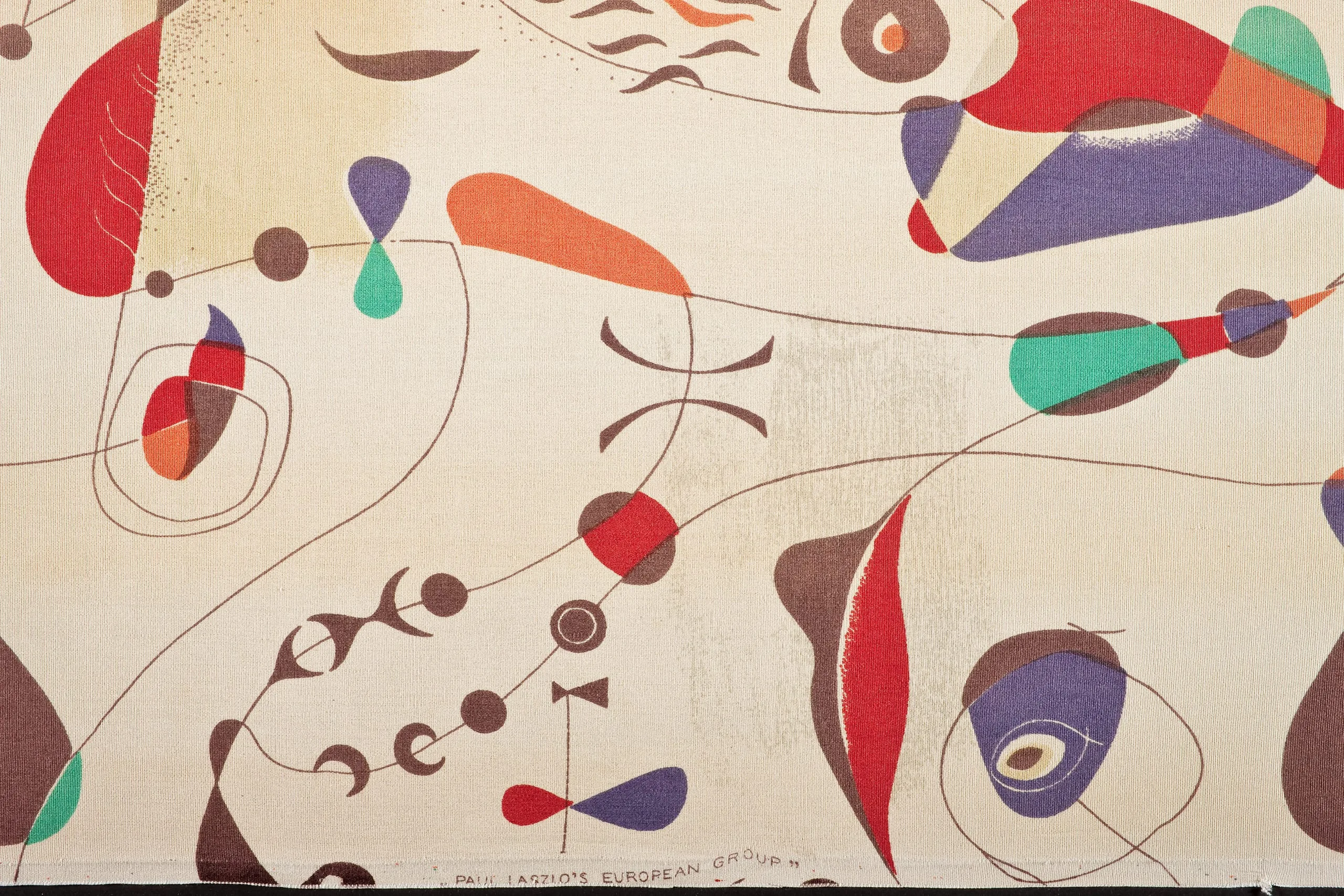
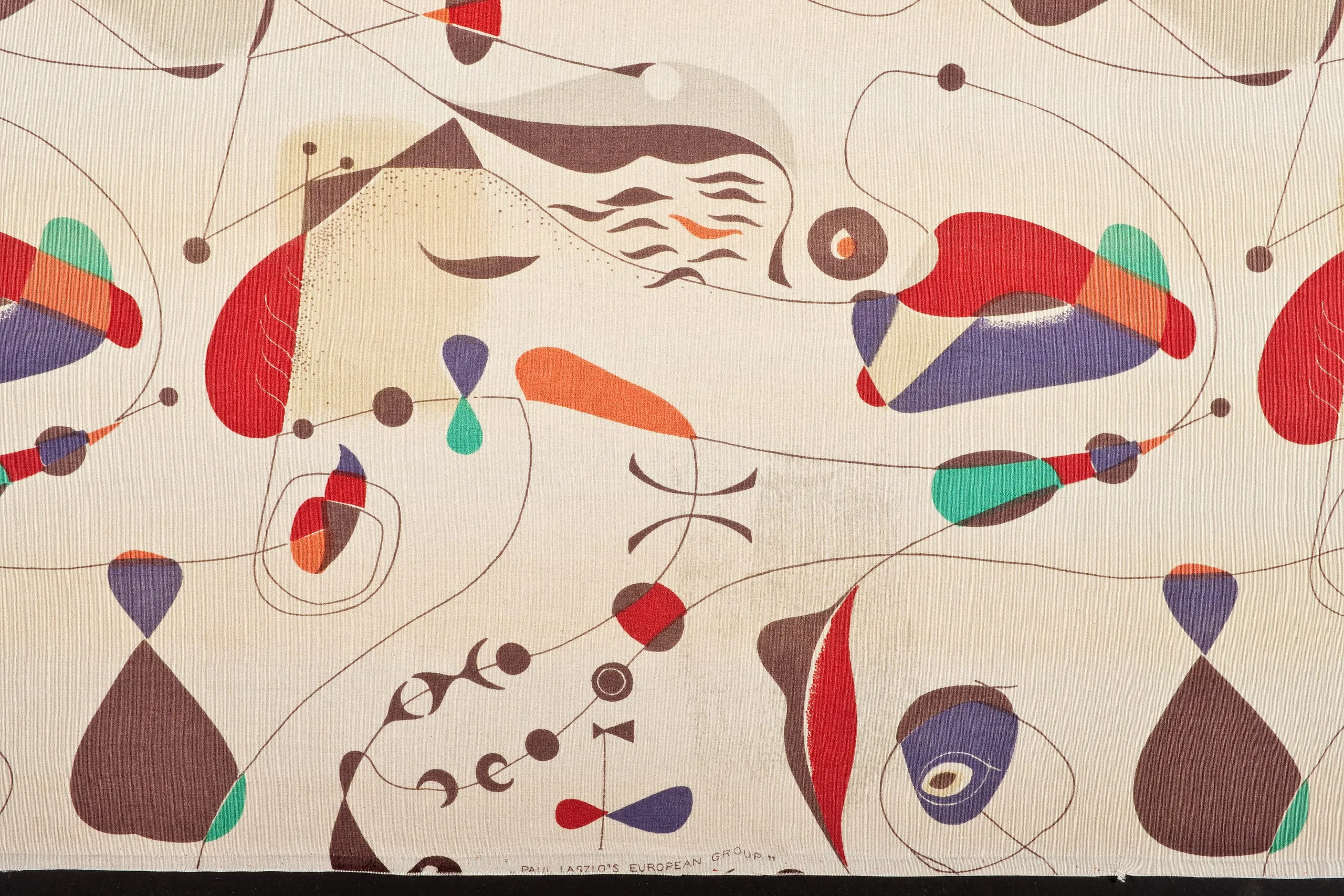
- Textile, 'Paul László's European Group'
- Date Made
- circa 1954
- Medium
- Rayon and cotton plain weave
- Dimensions
- 107 1/2 × 48 in.
- Accession Number
- M.2010.163
- Curatorial Notes
Large-scale panes of glass became available on the domestic market for the first time after World War II, allowing homes to have floor-to-ceiling windows. These windows required draperies to block the intense sunlight that poured in during the day. László’s colorful biomorphic textile reflects the influence of early twentieth-century artists like Hans Arp and Joan Miró. It was used for both the draperies and the upholstery in the living room of the Genis family house in Beverly Hills.
(California Design, 1930–1965: "Living in a Modern Way," 2011-12)
- Selected Bibliography
- Kaplan, Wendy, ed. California Design, 1930-1965: Living in a Modern Way. Los Angeles: Los Angeles County Museum of Art; Cambridge, Mass.: MIT Press, 2011.
- Kaplan, Wendy, ed. Living in a Modern Way: California Design, 1930-1965. Los Angeles: Los Angeles County Museum of Art, 2013.
- Selected Exhibition History
- California Design, 1930–1965: "Living in a Modern Way". October 1, 2011 - June 3, 2012