Rosso Fiorentino was trained in the Florentine High Renaissance tradition, but reacted against its emphasis on beauty, balance, and harmony. As an early mannerist artist, he instead painted asymmetrical, emotionally charged compositions. His work was admired by the poet Aretino, and Rosso was named painter to the king of France. He died in France, possibly by suicide.
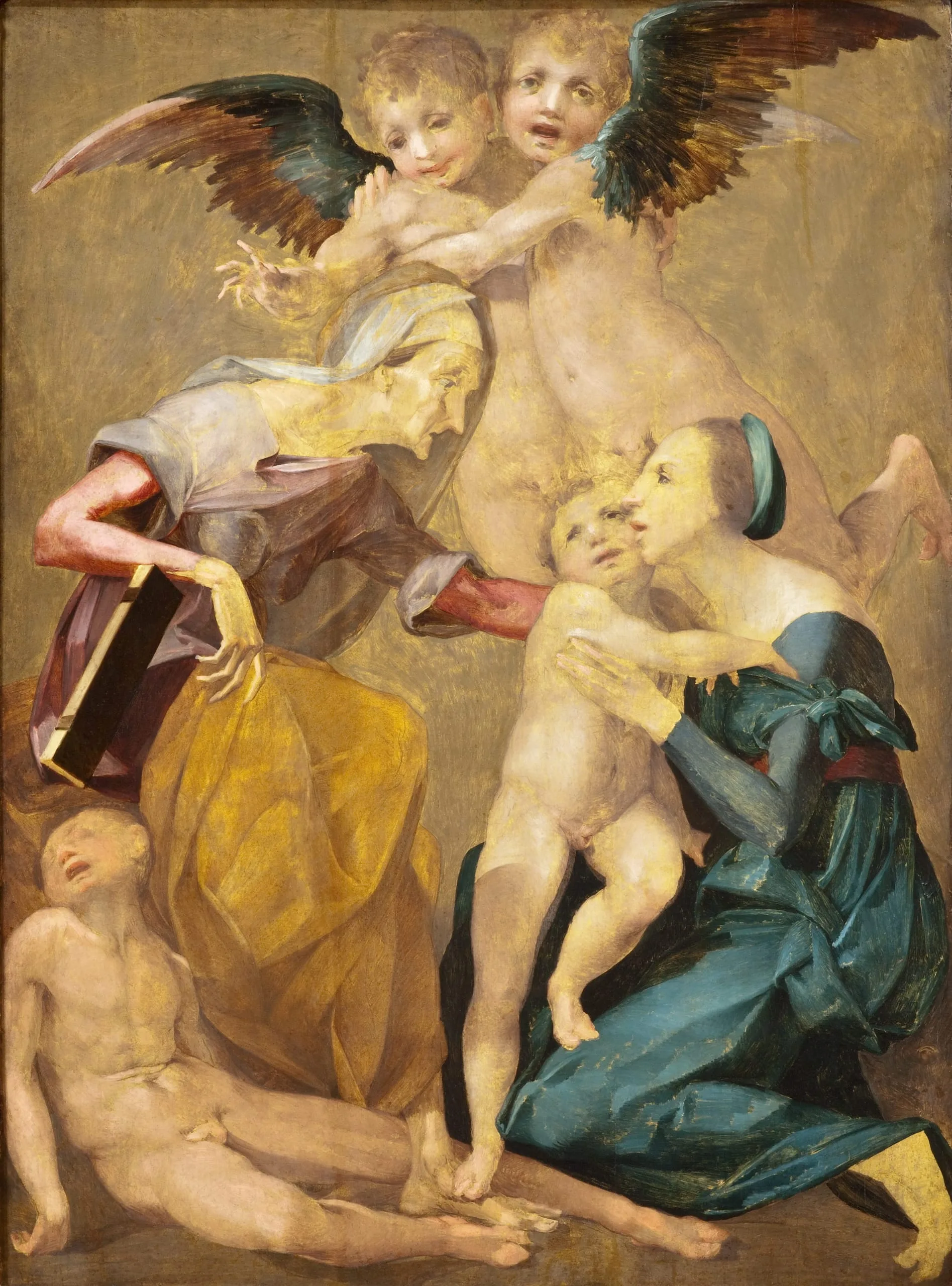
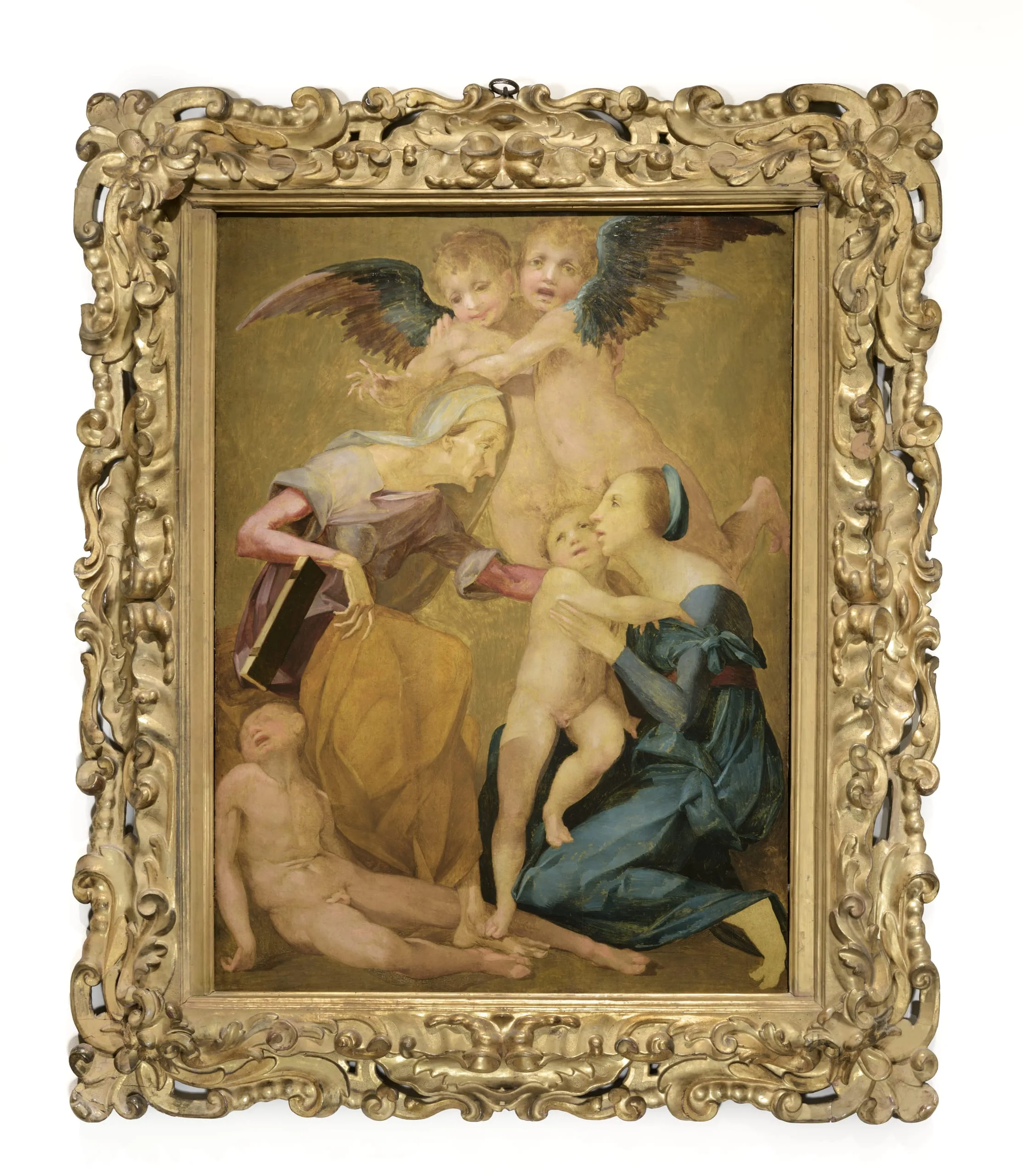
The subject of this unfinished painting is still unknown. The woman in blue at the right is the Virgin; she holds the frightened Christ Child in her arms. At the left the young Saint John the Baptist reclines in a troubled sleep and almost appears to be dead. The identity of the old woman at the left is unclear. She may be Saint Anne (mother of the Virgin), Saint Elizabeth (mother of John the Baptist), or a Sibyl from classical mythology who foretold the future. This haunting image is one of the museum's masterpieces.
Mannerist artists often were influenced by other works of art. Here Rosso portrayed the young Saint John in a posture reminiscent of the dead Christ in Michelangelo's Pietà, a source easily recognized by viewers of the day, but Rosso abstracted the figures to project an intensely personal vision. His rapid application of the paint, more noticeable because the painting is unfinished, reinforces the work's uneasy urgency and visionary quality.