LACMA

ShopMembershipMyLACMATickets
LACMA
Los Angeles County Museum of Art
5905 Wilshire Blvd.
Los Angeles, CA 90036
info@lacma.org
(323) 857-6000
Sign up to receive emails
Subscribe
© Museum Associates 2026
  • About LACMA
  • Jobs
  • Building LACMA
  • Host An Event
  • Unframed
  • Press
  • FAQs
  • Log in to MyLACMA
  • Privacy Policy
© Museum Associates 2026
Collections

Unidentified artist
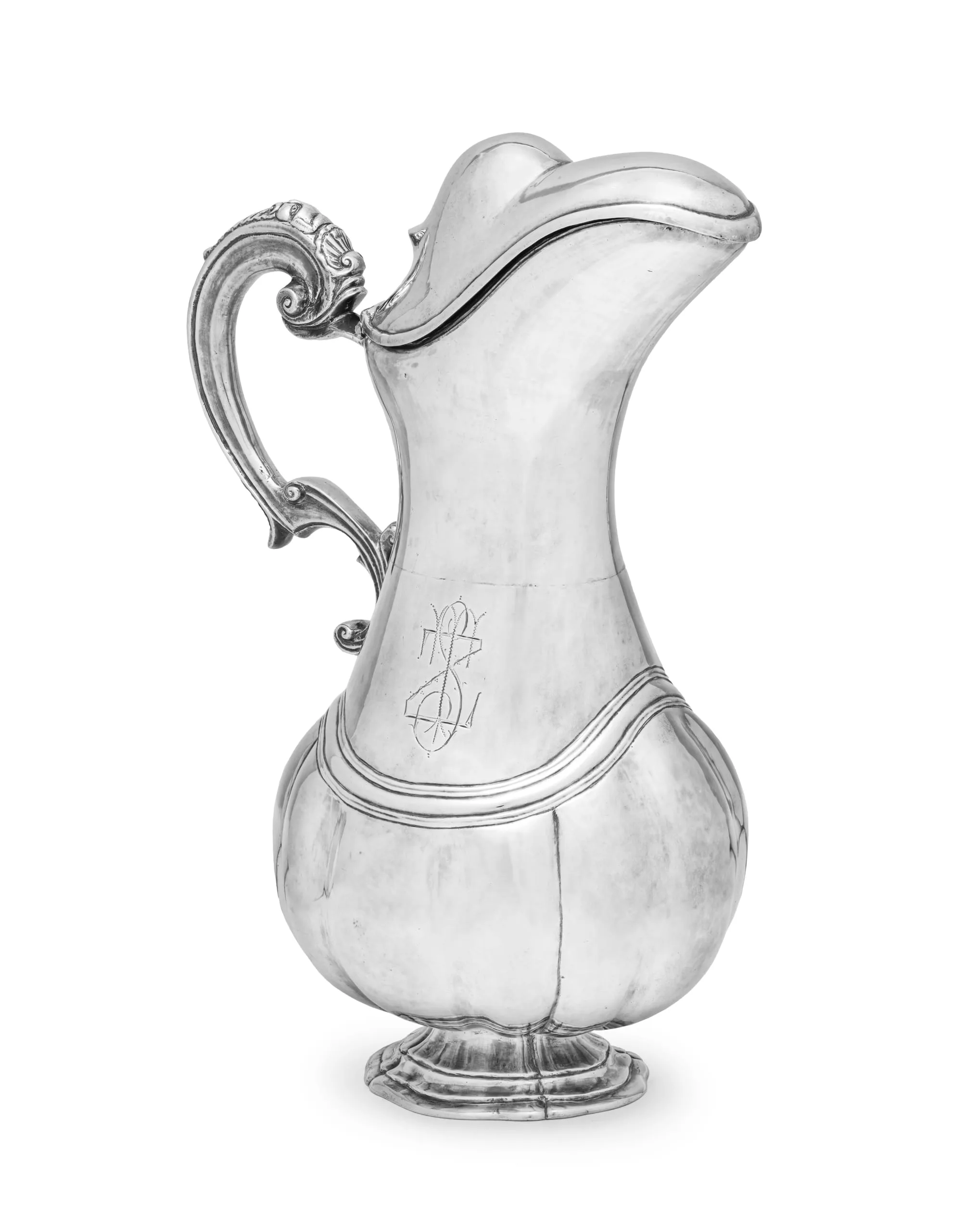
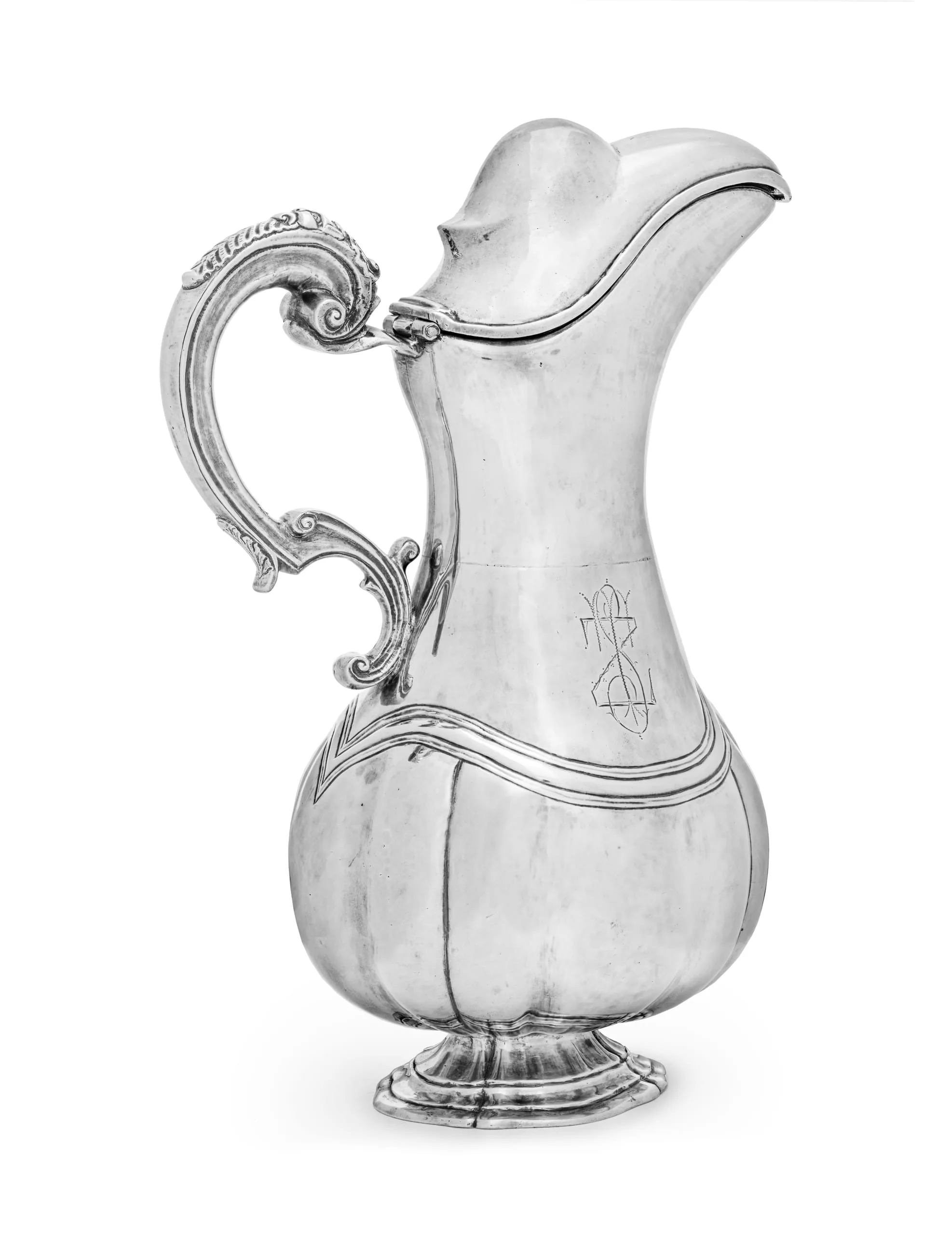
Pitcher (Jarra)circa 1765-1775

On view:
Geffen Galleries, Transatlantic Exchange and Its Legacies
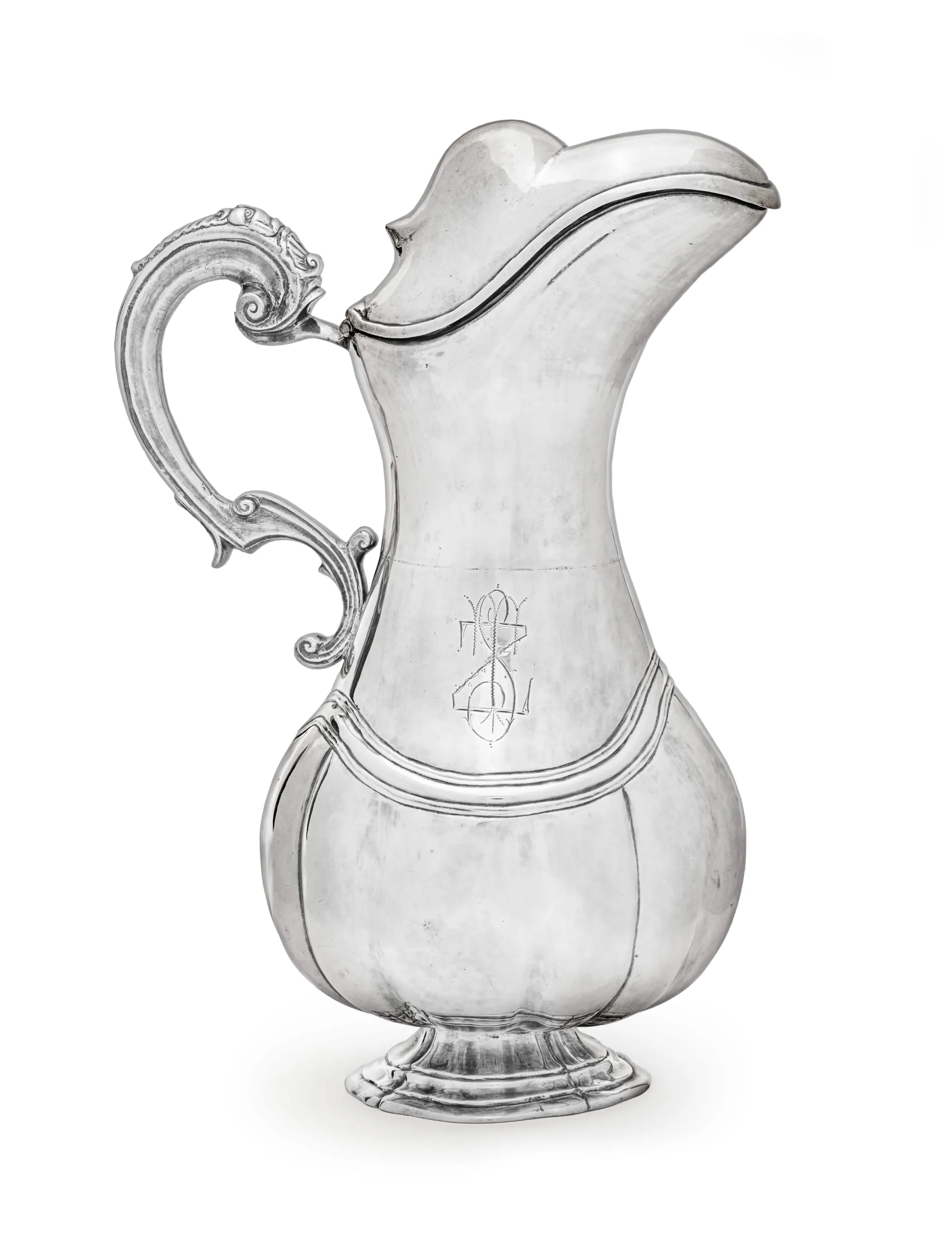
Silver pitcher with lobed lower body, tall tapering neck, hinged lid, and scrolling rococo handle, with an engraved monogram on the upper body
Silver ewer with lobed bulbous body tapering to a tall curved neck and shaped spout, raised on a stepped foot. Scroll handle with foliate mount, molded girdle, and engraved interlaced monogram on the body.
Silver ewer with bulbous lobed body, tall tapering neck, and hinged lid, raised on a stepped circular foot. Scroll-form handle with acanthus leaf decoration. Engraved interlaced monogram on the body.
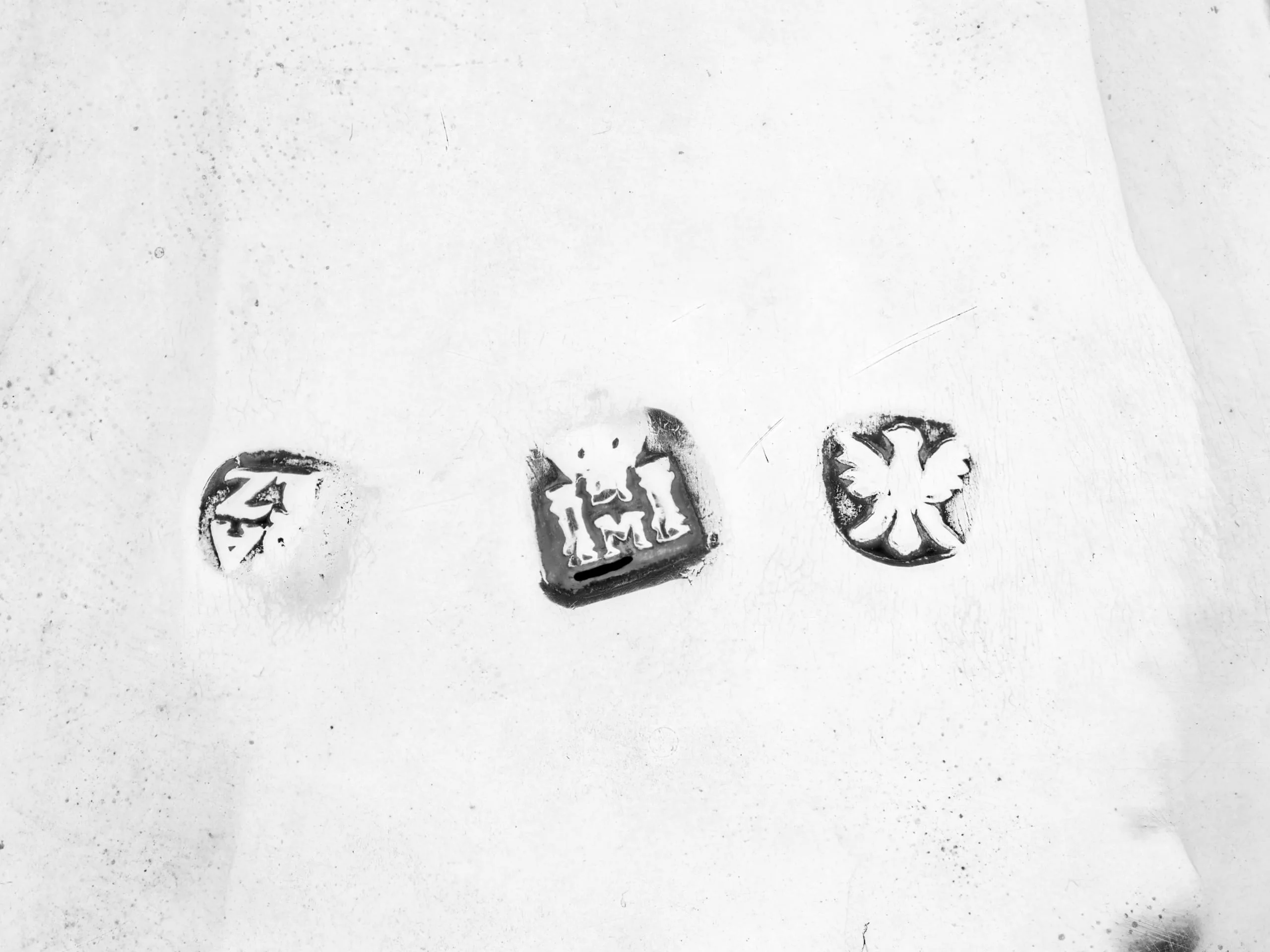
Close-up photograph of three silver hallmarks on a polished metal surface: a circular mark with a letter, a square cartouche with initials, and a shield-shaped mark with a floral or cross motif.
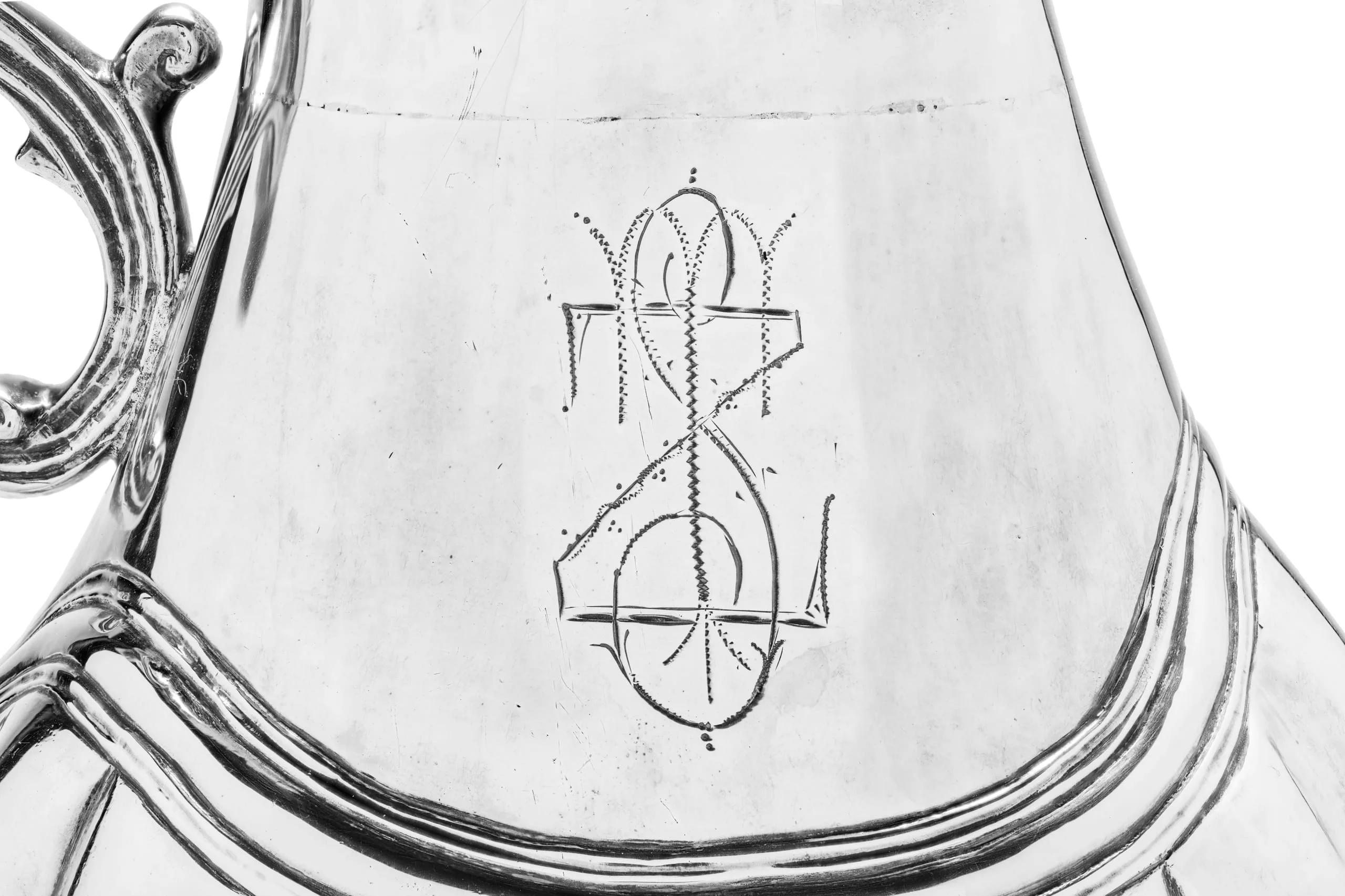
Close-up of a silver vessel's body, showing a scrolled handle at left and an engraved interlaced cypher monogram with dotted flourishes on the polished surface.
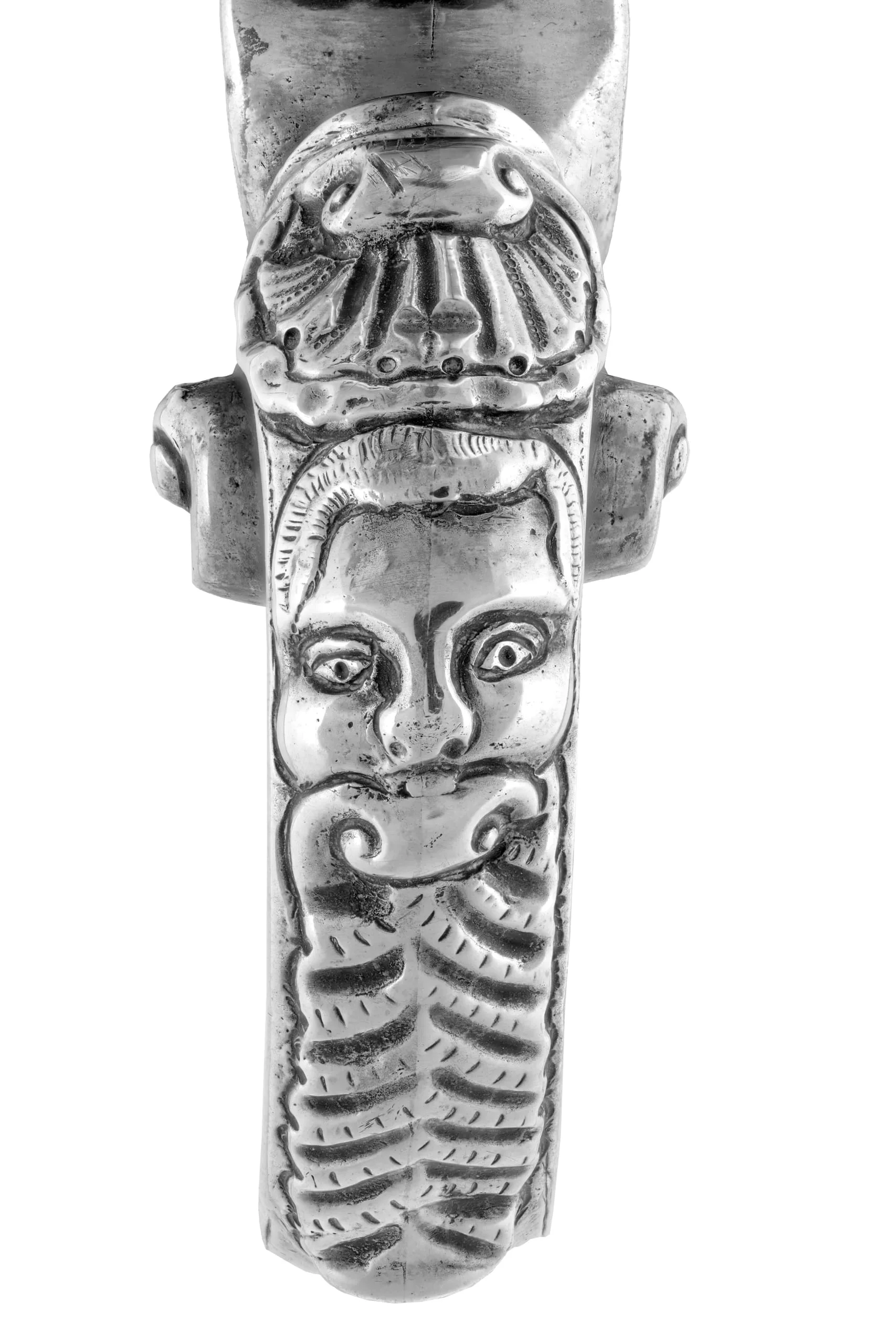
Silver repoussé fitting depicting a frontal male face with a layered, ridged beard and a horned helmet, with small projecting side elements, detailed incised surface work.
Artist or Maker
Unidentified artist
Title
Pitcher (Jarra)
Place Made
Mexico, Mexico City
Date Made
circa 1765-1775
Medium
Silver
Dimensions
10 × 7 × 6 in. (25.4 × 17.78 × 15.24 cm)
Credit Line
Purchased with funds provided by the Bernard and Edith Lewin Collection of Mexican Art Deaccession Fund
Accession Number
M.2010.112
Classification
Furnishings
Collecting Area
Latin American Art
Curatorial Notes

This fanciful ewer evidences the fashions and tastes of viceregal Mexico’s elites. The duck-billed mouth and lid were popular forms in Mexico at the time, as well as in Spain and France. The embellished handle with a mascaron is reminiscent of architectural ornamentation and suggests an awareness of international trends. Engraved initials (S, Z, and perhaps M) form a monogram that likely belonged to the owner, for whom this fine silver piece would have served as a symbol of their elevated status and wealth.

Silverwork was abundant in New Spain. Bountiful mines—including in Zacatecas, Guanajuato, Taxco, Pachuca, and San Luis Potosí—led to a booming silver industry and the development of a rich local silversmithing tradition. The copious amounts of raw material fueled the demand for both ecclesiastical and domestic silver, which was all highly regulated by the Spanish crown. This ewer bears three small identifying hallmarks: an assayer’s mark that guarantees the quality of the silver, a locality mark that indicates its place of manufacture as Mexico City, and a fiscal mark that signals that the necessary taxes were paid to the Spanish crown.

Rachel Kaplan

2024

Provenance
Robert “Mischa” Gross estate sale, Santa Barbara, California, 1984; Michael Haskell, Montecito, California, 1984; Daniel Murphy, 1994; Michael Haskell, Montecito, California, 2008; LACMA, 2010.