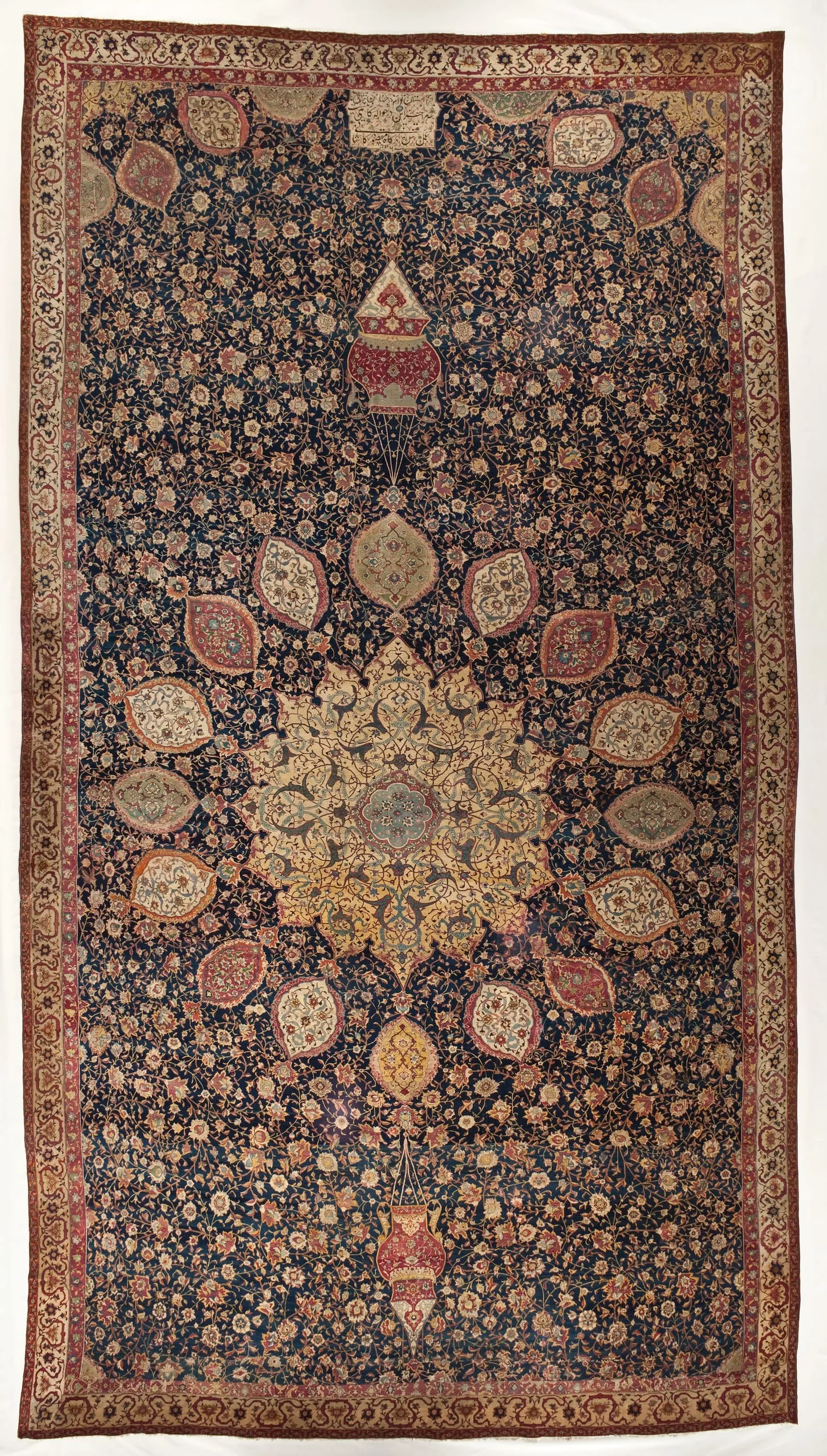
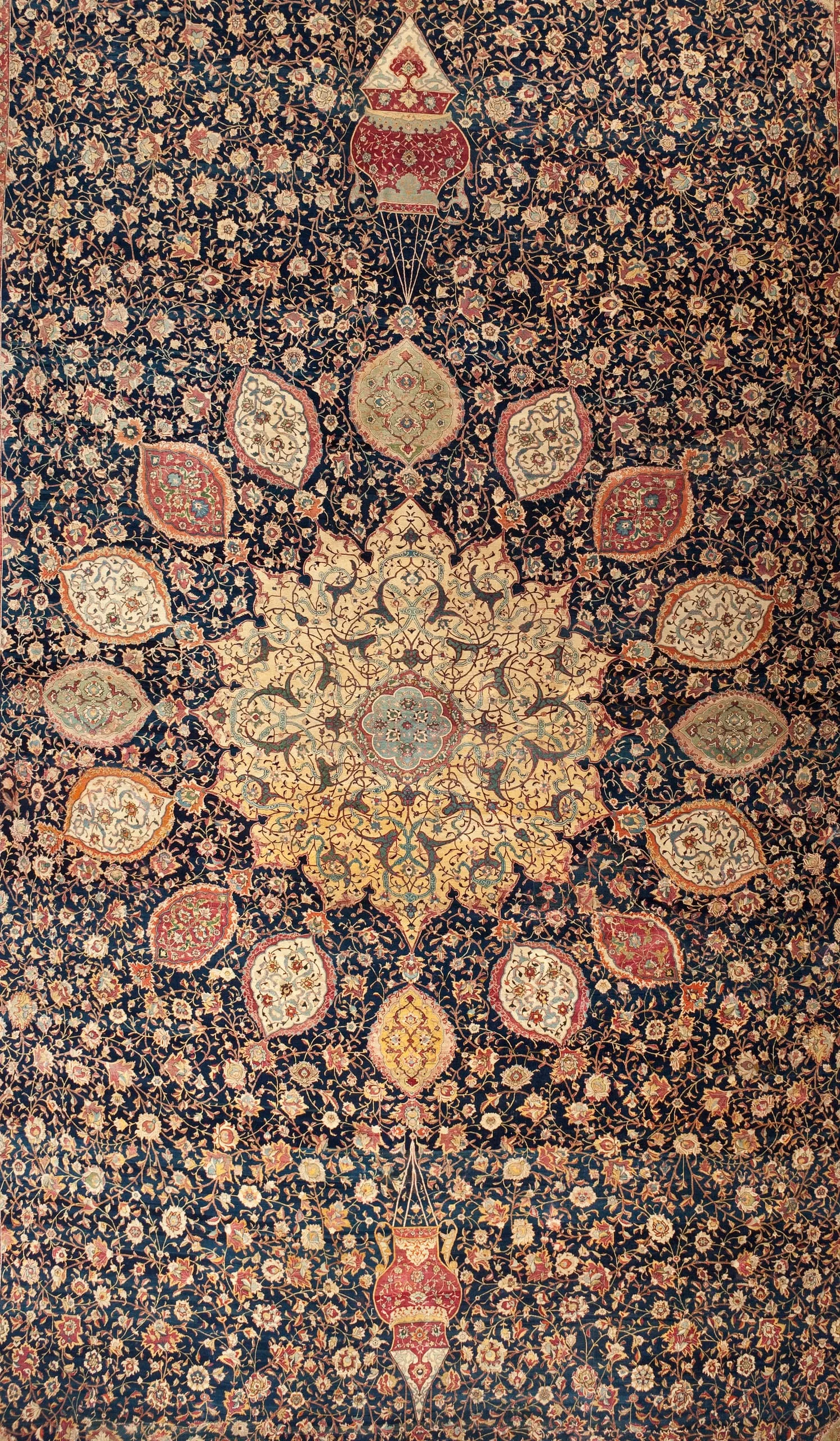
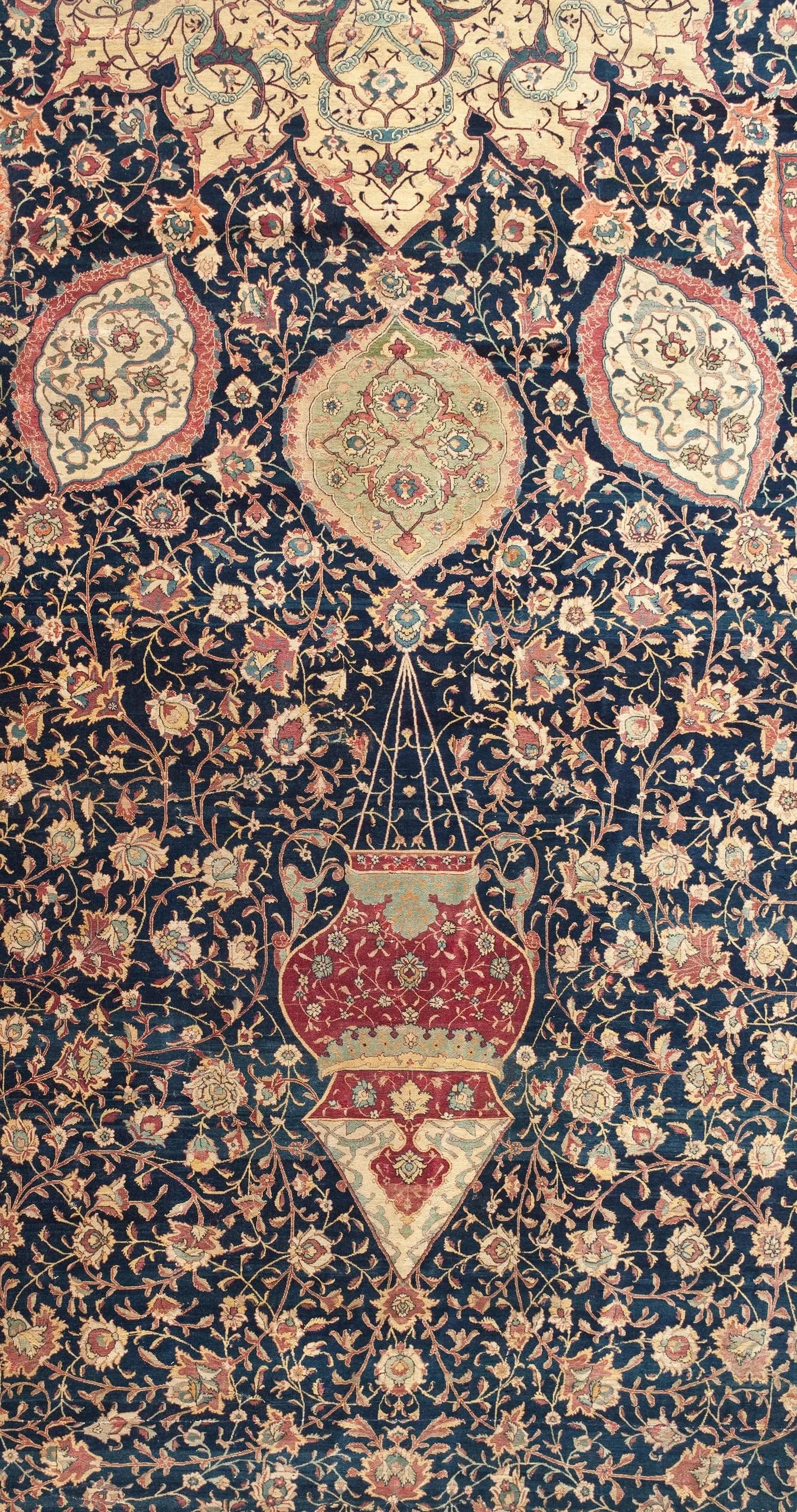
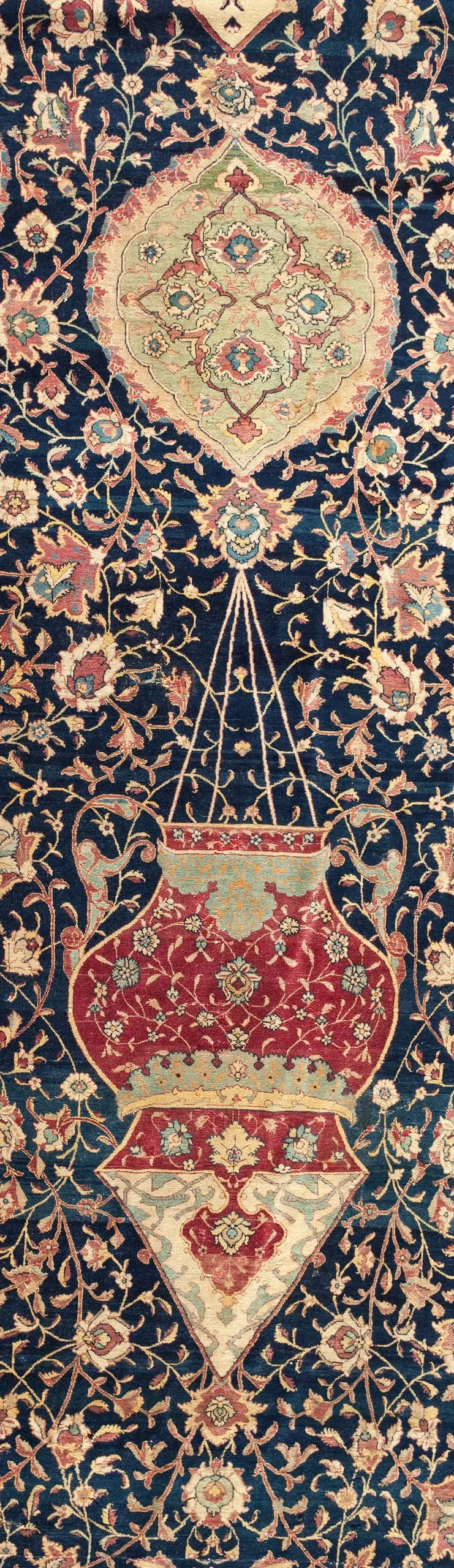
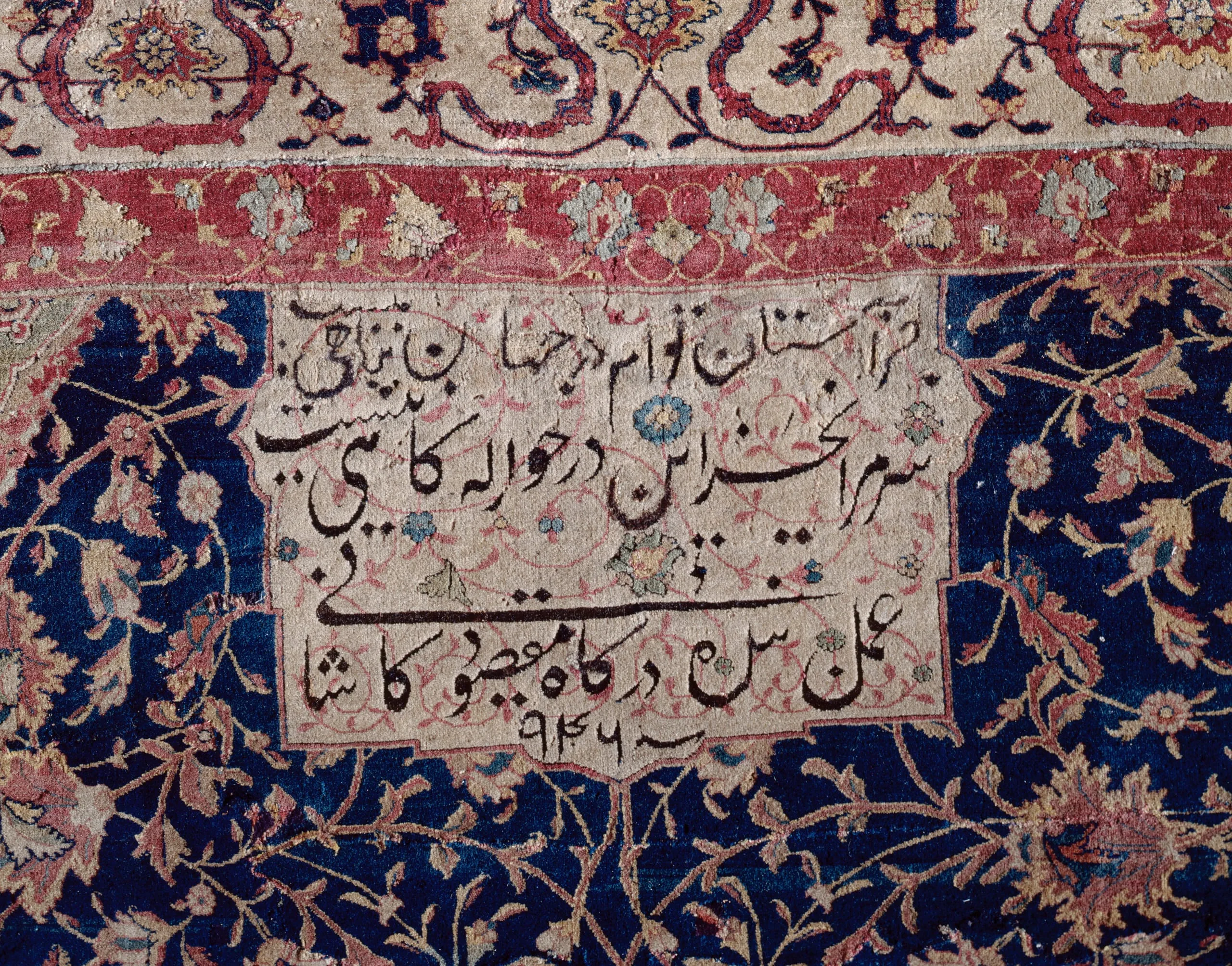
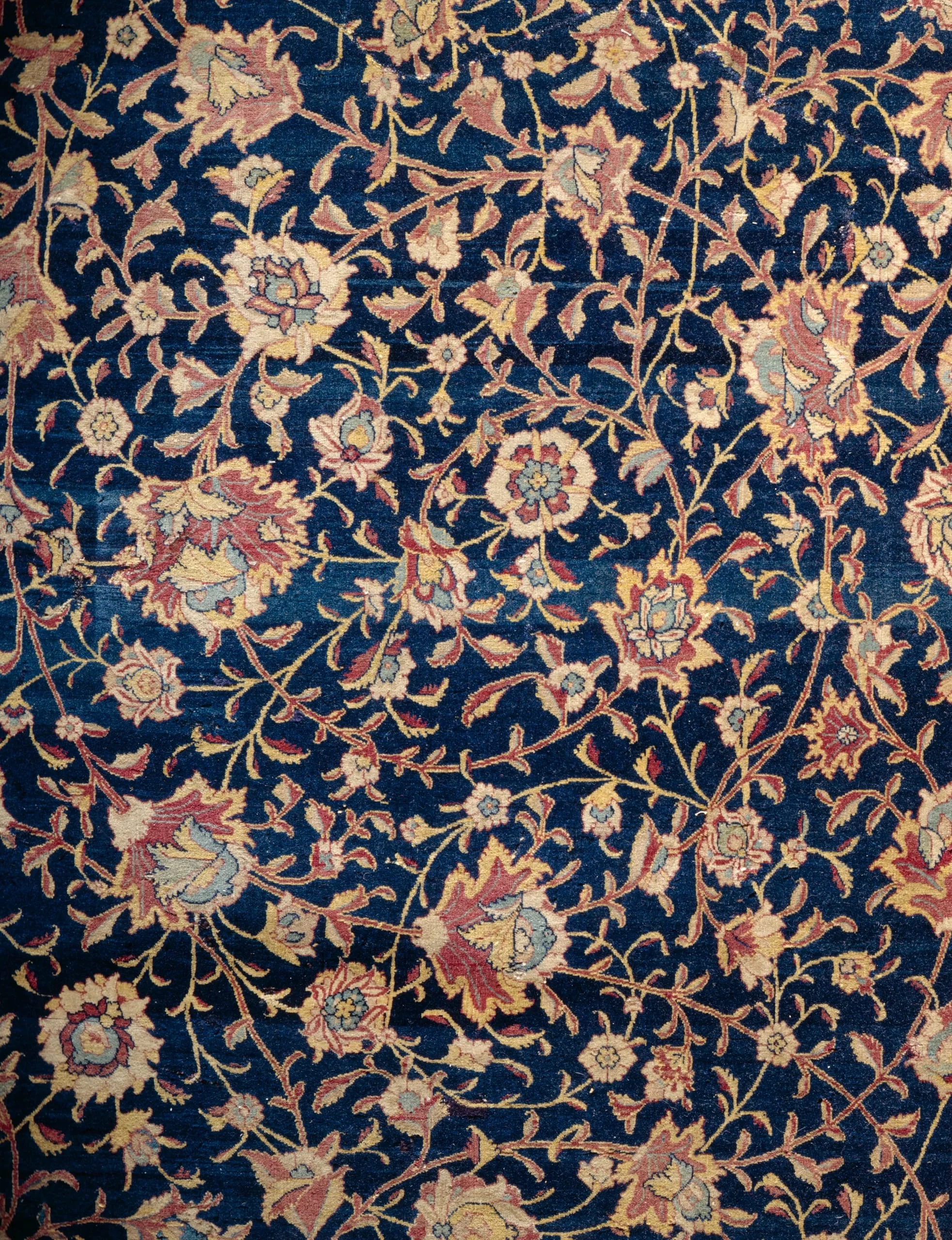
Carpets are perhaps the best-known art from historical Islamic lands, of which the most famous are those from Iran. Because of their fragile nature, it is only from the sixteenth century onward that Persian carpets have survived intact, although woven carpets have a longer history. The most renowned of all such carpets is a matched pair, the so-called Ardabil Carpets, this one at LACMA and its mate in the Victoria and Albert Museum, London. Brought to England in the late nineteenth century, the carpets were reported to have come from the ancestral shrine of the Safavid dynasty at Ardabil in northwestern Iran. The carpets are exceptional works of art not only on account of their design, which uniquely includes a depiction of lamps projecting from the top and bottom of the central medallion, but also because each is signed and dated.
The pendant carpets were perhaps made for the Janatsaray, the monumental domed structure at the Ardabil shrine complex, built by Shah Tahmasp (r. 1524−76), and would have been commissioned to fit side by side, to be rolled out and displayed on special occasions such as when the shah was in attendance. Given the size of the carpets, each would have taken several years to weave; however, it has been plausibly proposed that the two were woven simultaneously, on back-to-back looms. Indeed, apart from their inscriptions, which show small variations in the ligatures of the letters, the designs, which are picked out by the colored wool knots, are virtually identical, although the carpets themselves are no longer identical twins. Sometime before the Victoria and Albert Museum acquired their Ardabil in 1893, the outer borders and a section of the lower field are believed to have been removed from our carpet in order to repair the one now in London. The LACMA carpet was subsequently given a new outer border.
Predominantly blue, red, and yellow, the overall composition of the carpets—based on a central medallion with radiating pendants and quarter medallions repeated in the corners (only partially preserved on the LACMA example)—is ultimately derived from contemporary and earlier bookbinding and manuscript illumination. According to their dated inscriptions, the pair were made in 1539−40 by Maqsud of Kashan, a self-styled servant of the court, probably the designer who prepared the patterns and oversaw the project. He would also likely have been the one to select the Persian couplet inscribed just above the signature and date, which is from a ghazal (ode) by the preeminent fourteenth-century lyrical poet Hafiz. In the context of the carpets, his words take on added meaning:
I have no refuge in this world other than thy threshold
My head has no resting place other than this doorway
Here, the word threshold—astan—also designates a shrine and may be used metaphorically to refer to the ruler, thereby linking the carpets to both the shrine and their presumed royal commissioner, Shah Tahmasp.
2024