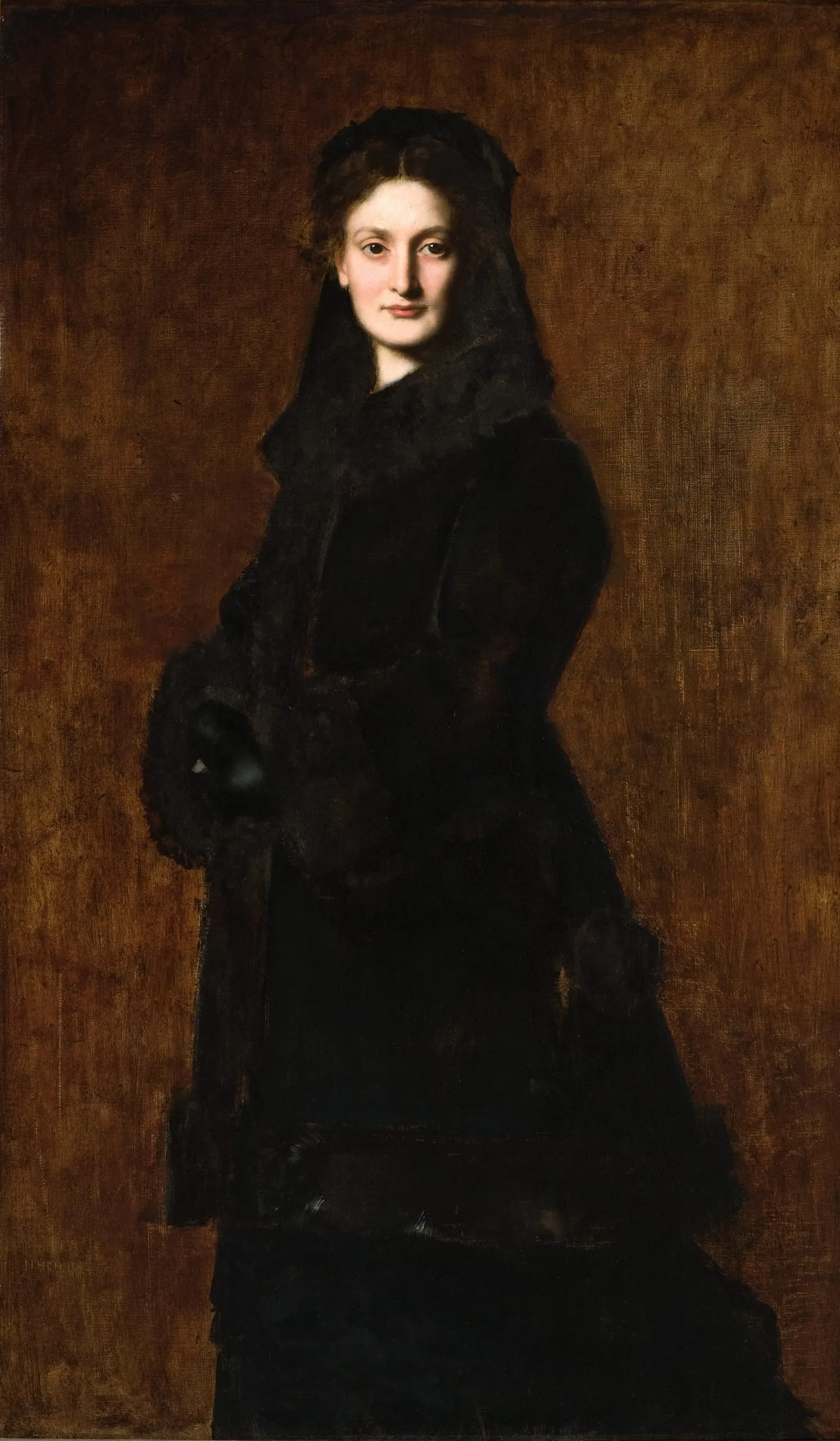
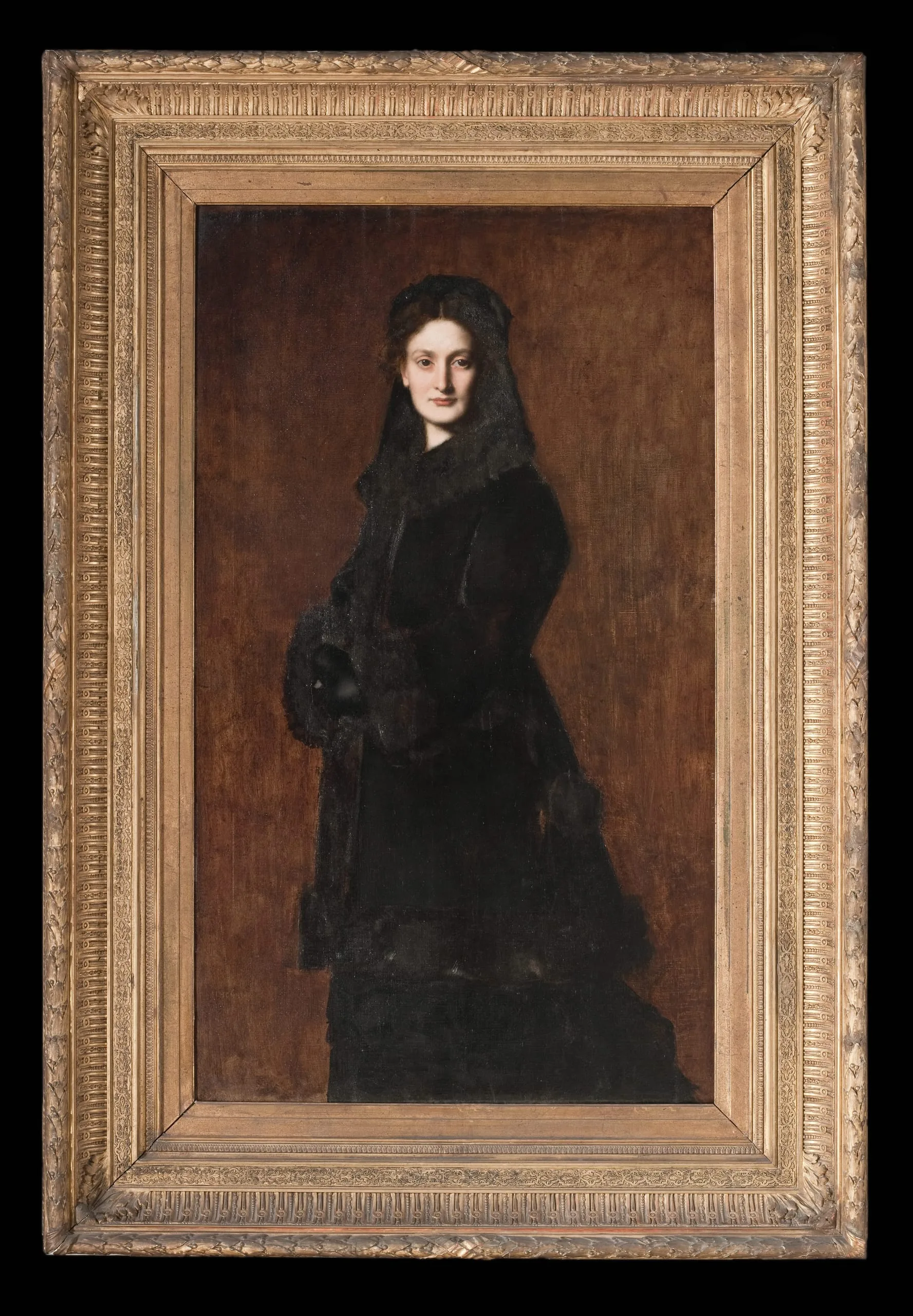
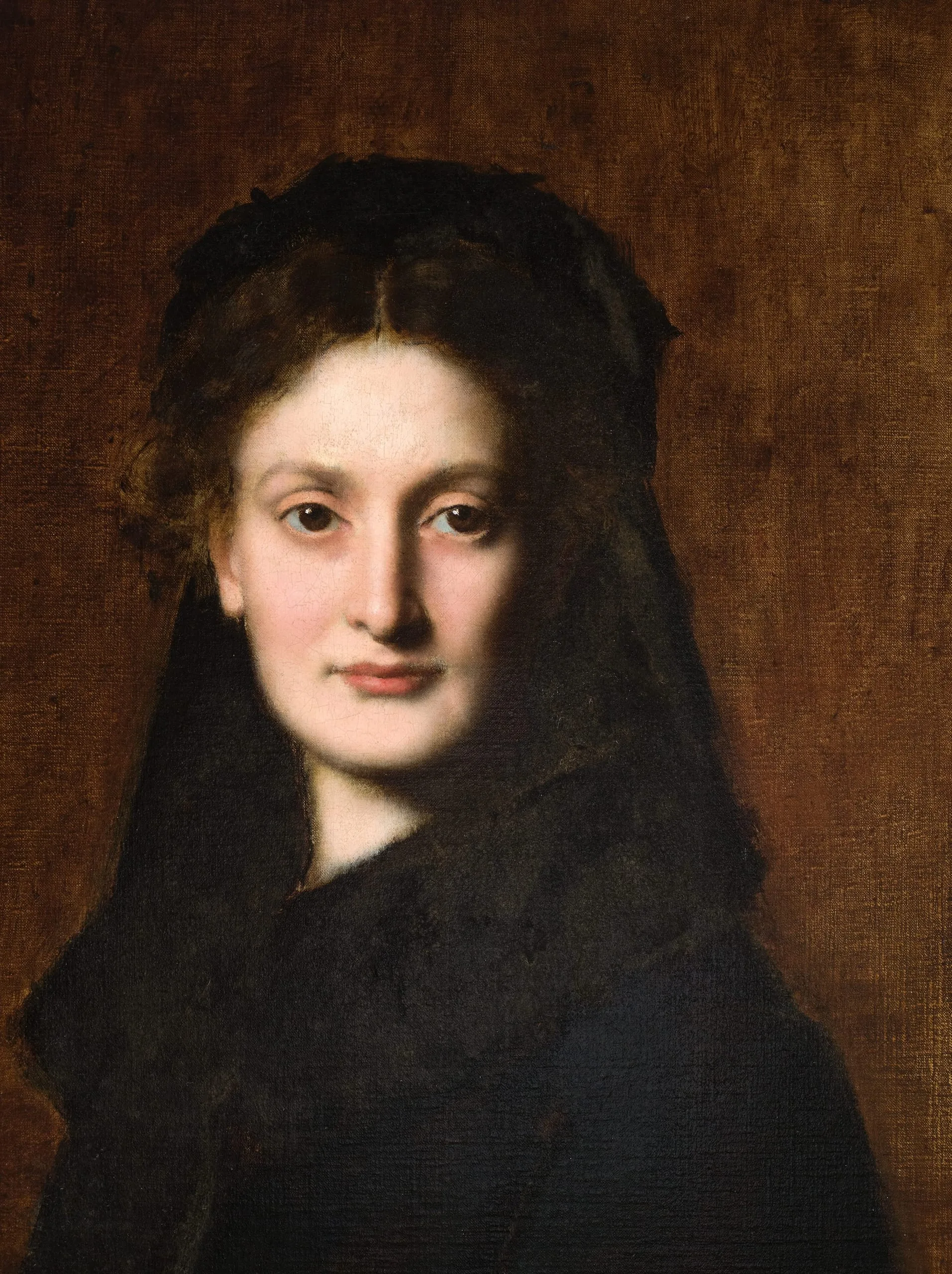
Jean-Jacques Henner's portrait of Madame Paul Duchesne-Fournet, the wife of a prominent politician of the French Third Republic, created a sensation in Paris. Its extravagant price of 10,000 francs—a sum rarely fetched by any commissioned portrait—contributed to the fame of the portrait. Upon its completion, many connoisseurs visited Henner's studio to see specifically the painting which the artist refused to exhibit publicly at the 1880 Salon, a decision that added without doubt to the aura that surrounded the work.
Henner is better known today for his many versions of academic nudes in misty landscapes, a genre that he developed toward the end of the nineteenth century and that brought him international fame. Earlier in his career, he was however one of the most sought-after painters of religious subjects and of portraits. Among the portrait painters of his generation, Henner developed a distinctive style. Less voluptuous than Carolus- Duran's but more spirited than Léon Bonnat's, Henner's portraits were particularly appealing to a clientele eager to display in a dignified manner their newly acquired wealth and social rank.
As in this portrait, Henner typically set the sitter against a plain background so as to enhance the subject's fine features. In this portrait, Madame Duchesne-Fournet's black outfit is thinly painted in a manner prefiguring Whistler,but the austere atmosphere of the composition also recalls the full-size portraits of van Dyck and Goya. Indeed, Henner, who had been academically trained, often introduced technical innovations in his paintings that make it impossible to define him with precision as a traditional or modernist artist.