- Title
- Untitled
- Date Made
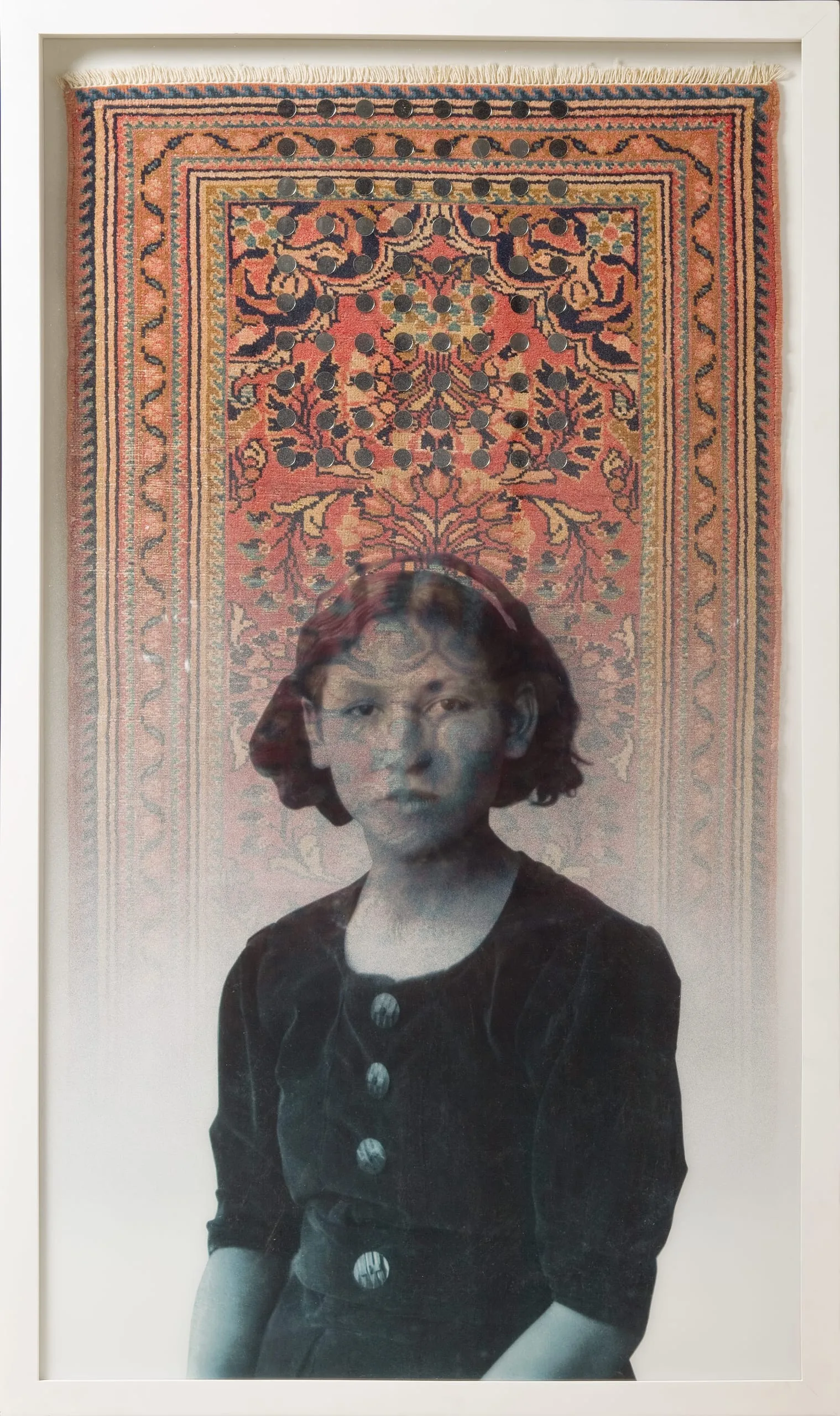
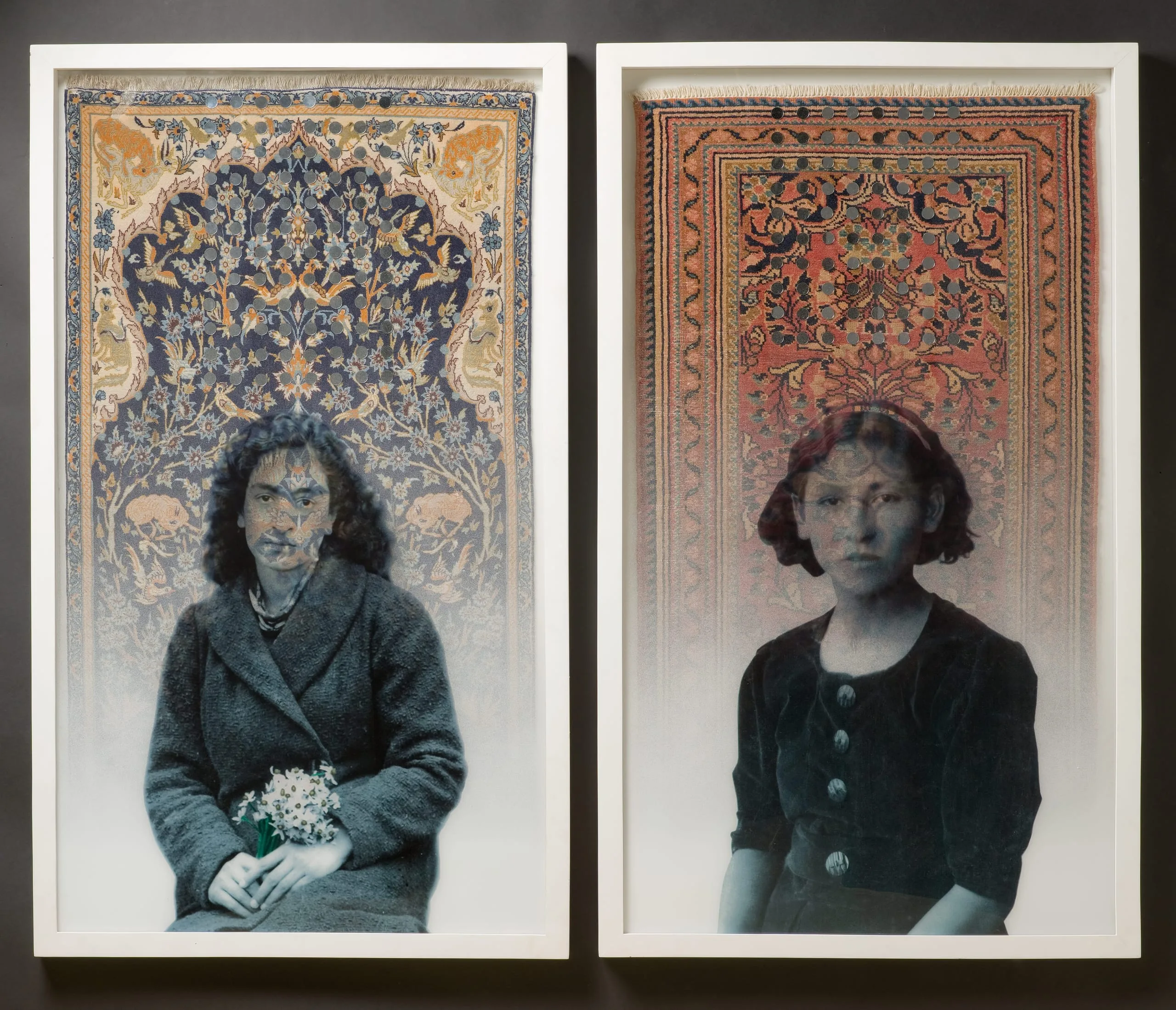
- 2009, carpet from first half of 20th century
- Medium
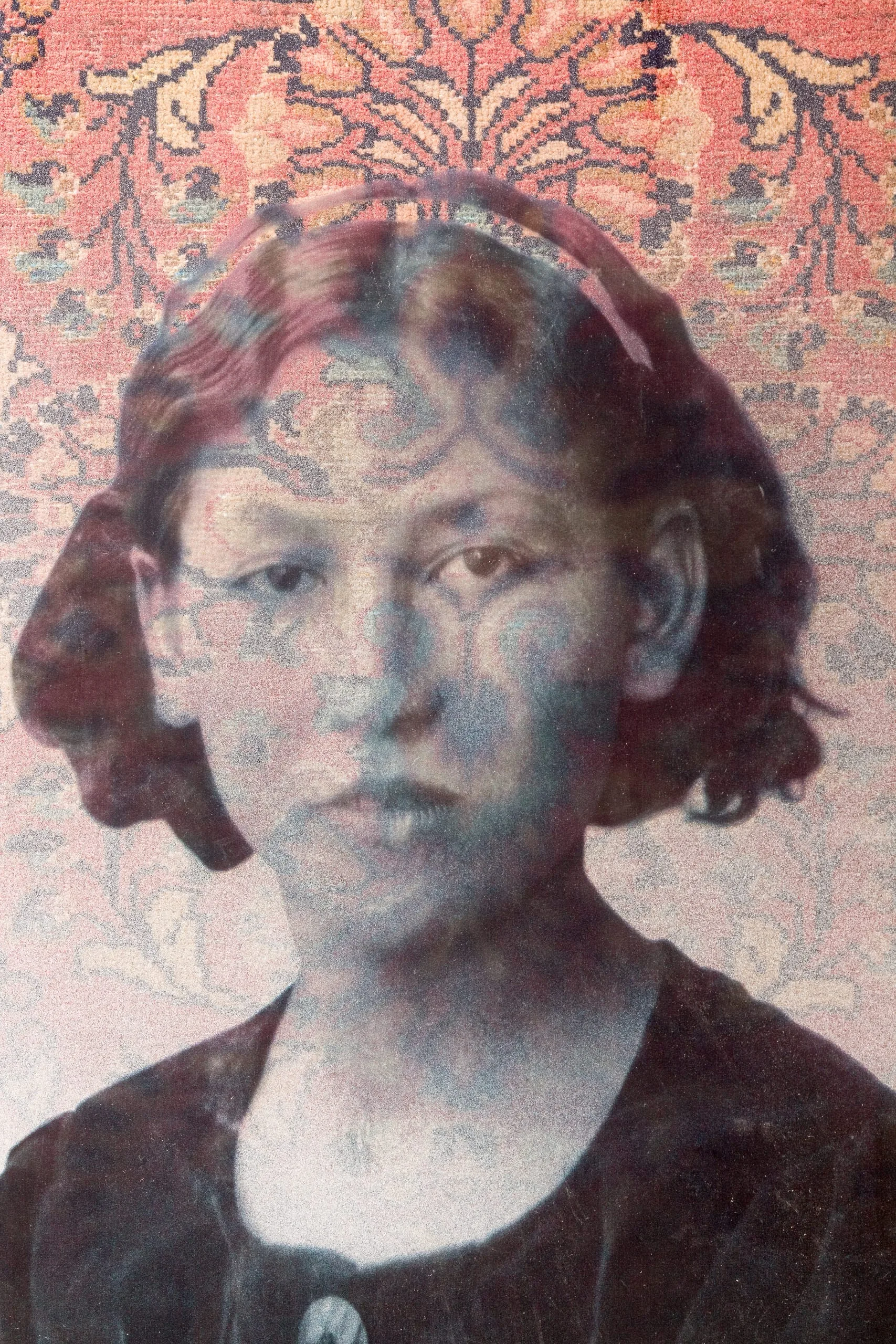
- Persian wool carpet with mirror shards under plexi, photo printed on plexi
- Dimensions
- Framed: 57 1/4 x 33 7/8 x 1 7/8 in. (145.41 x 86.04 x 4.76 cm)
- Accession Number
- M.2010.45.2
- Curatorial Notes
Under the leadership of Reza Shah Pahlavi (r. 1925–41), Iran was transformed into a modern nation-state.
As part of his reform movement, Reza Shah sought the elimination of the Islamic veil, and in 1936 a law
was enacted that decreed the compulsory uncovering of women. These twin works focus on two found
images from this period; they capture the first generation of Iranian women who were free to appear
without hijab in public and in photographs. The compositions incorporate contemporaneous Persian
carpets, which help to fix these young women in time and place, as well as small shards of mirror that
allow the viewer reflected in the cut glass to identify more closely with the nameless girls dressed in their
once-fashionable clothes.
Samira Alikhanzadeh often references the past as a means of exploring life in present-day Iran, but she
generally looks back only as far as the first half of the twentieth century. Old found family photographs and
mirrors are common themes in her work. She has participated in solo and group exhibitions in Europe,
North America, the Middle East, and especially in Tehran, where she lives and works.
- Copyright
- © Samira Alikhanzadeh