LACMA

ShopMembershipMyLACMATickets
LACMA
Los Angeles County Museum of Art
5905 Wilshire Blvd.
Los Angeles, CA 90036
info@lacma.org
(323) 857-6000
Sign up to receive emails
Subscribe
© Museum Associates 2025

Museum Hours

Monday

11 am–6 pm

Tuesday

11 am–6 pm

Wednesday

Closed

Thursday

11 am–6 pm

Friday

11 am–8 pm

Saturday

10 am–7 pm

Sunday

10 am–7 pm


  • About LACMA
  • Jobs
  • Building LACMA
  • Host An Event
  • Unframed
  • Press
  • FAQs
  • Log in to MyLACMA
  • Privacy Policy
© Museum Associates 2025
Collections

Dorothea Tanning
Xmas1969

Not on view
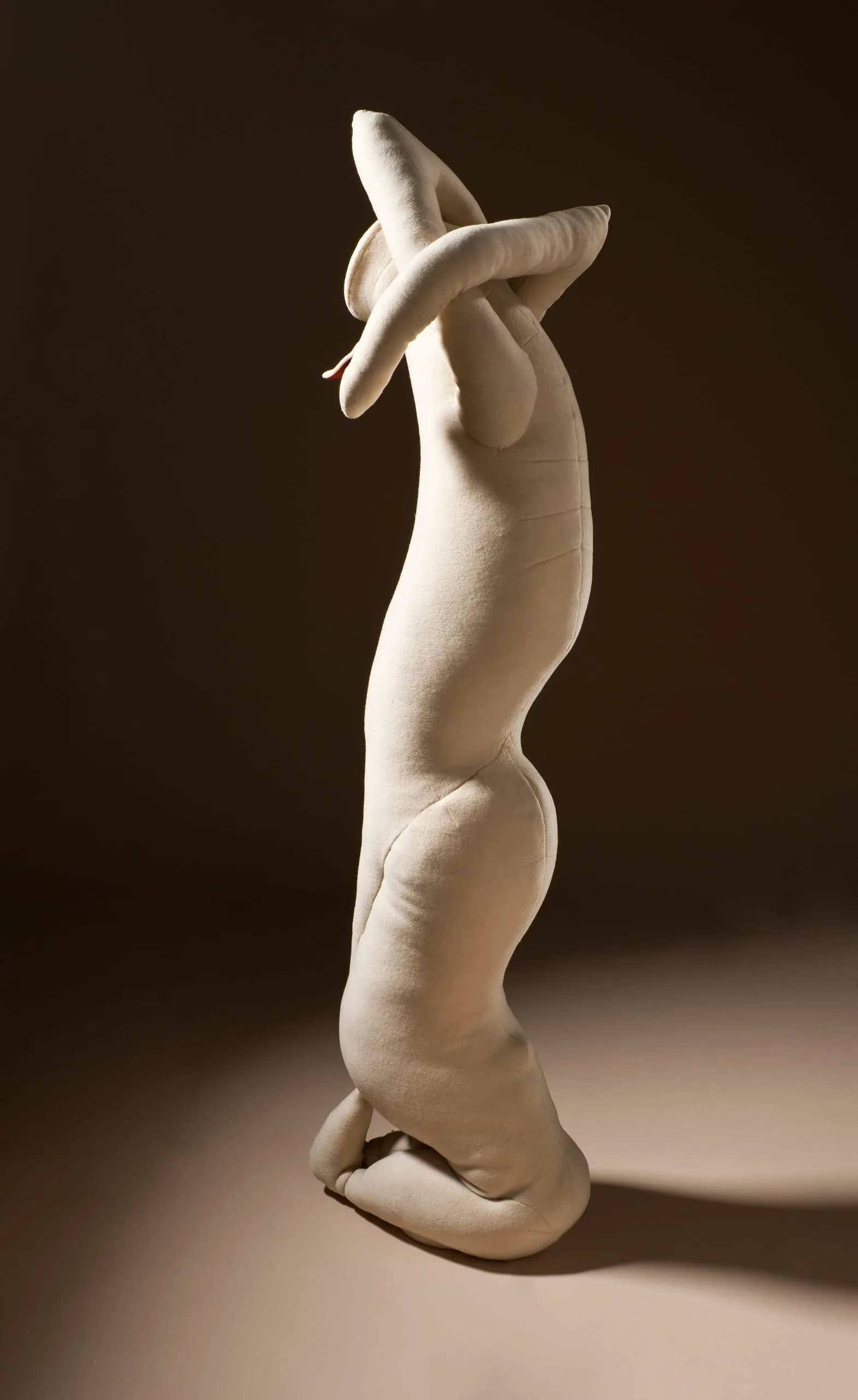
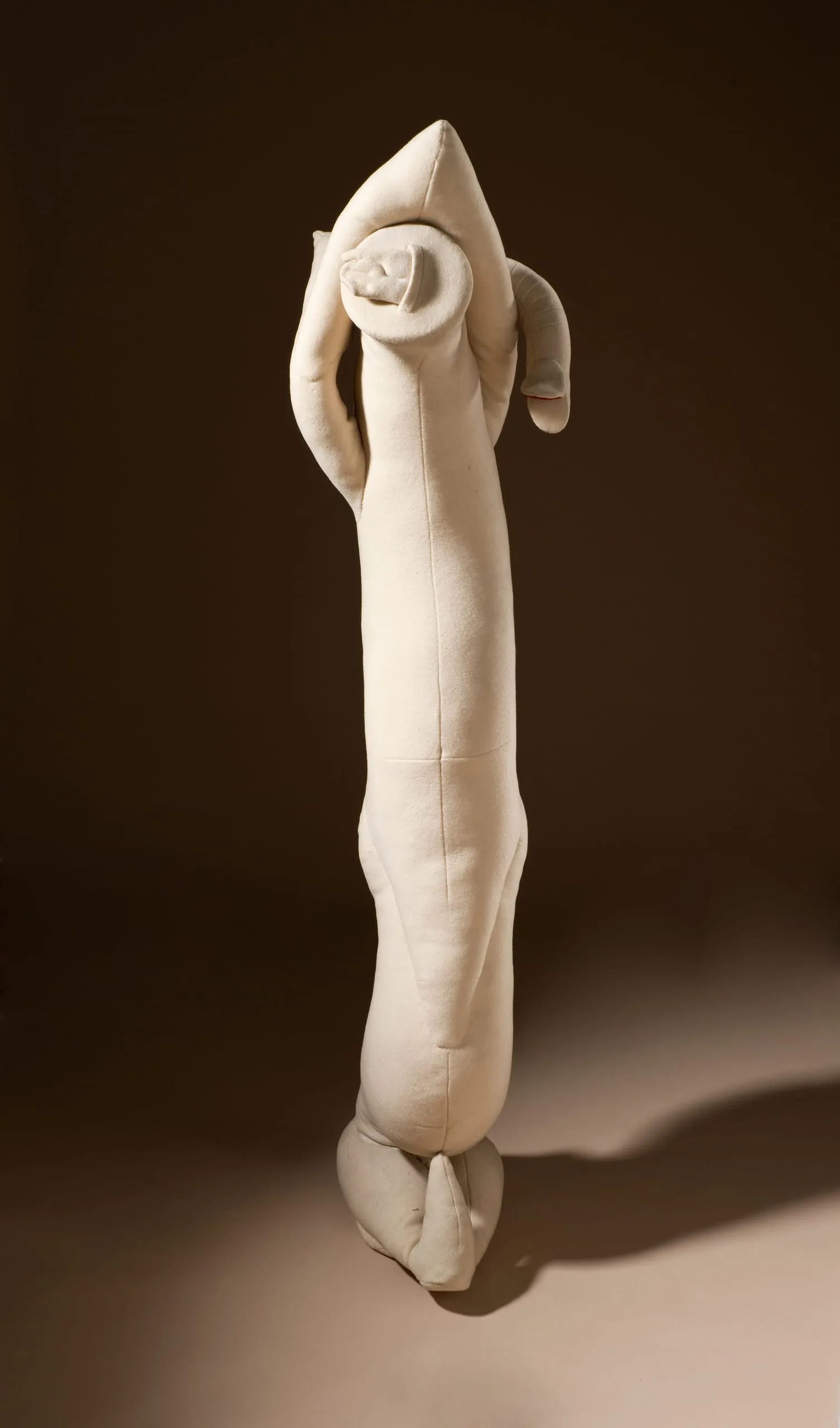
Tall, narrow stuffed fabric sculpture in cream-colored canvas, with a pointed tip, scrolled upper section, and two rounded lobes at the base
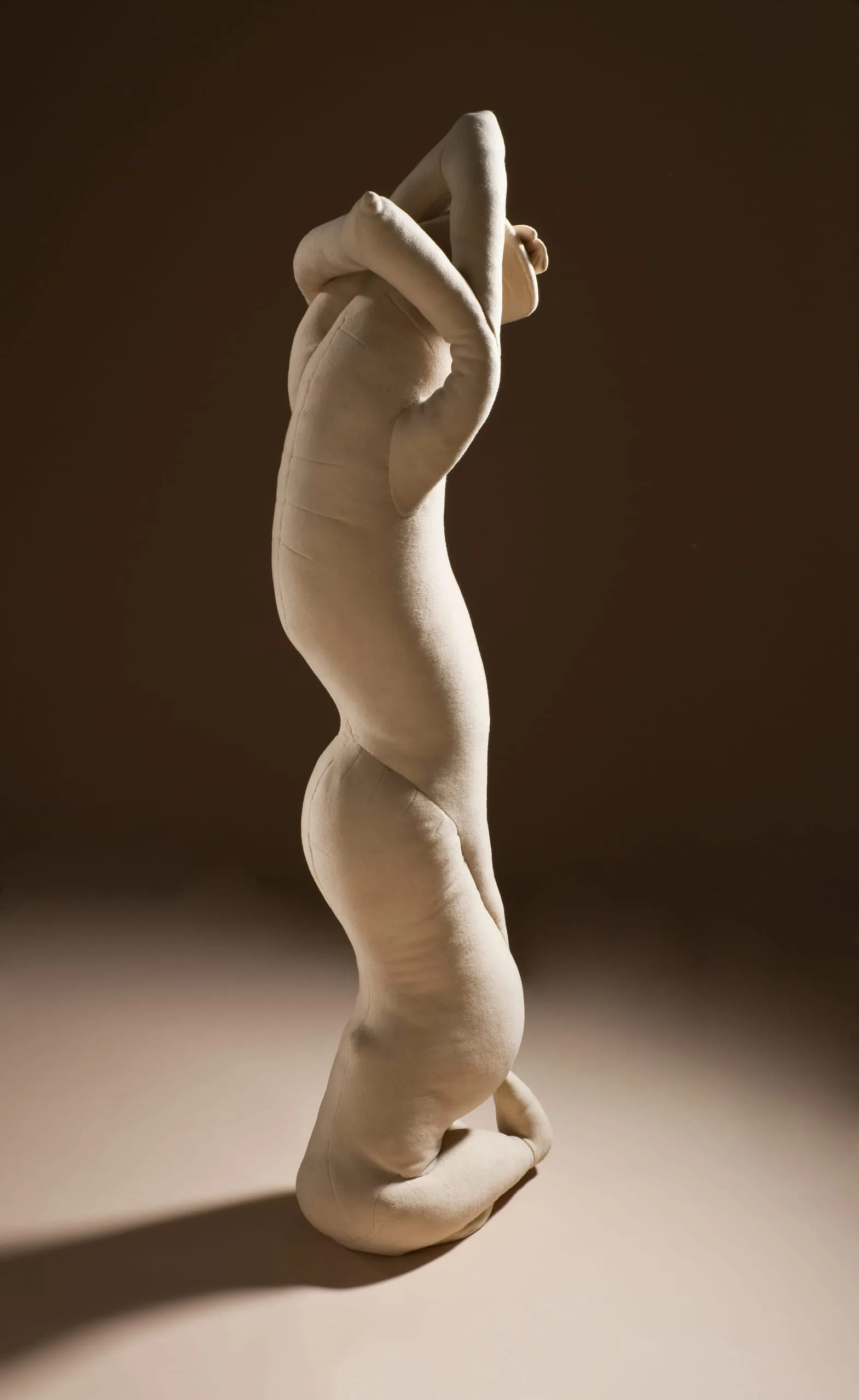
Soft sculpture of an upright abstract biomorphic form in cream-colored fabric, with rounded bulging segments, sewn seams, and splayed appendages at the top, photographed against a dark brown background.
Standing fabric sculpture of an abstracted human figure with softly rounded, bulbous forms, arms raised overhead, constructed from cream-colored sewn cloth with visible seams along the sinuous vertical silhouette.
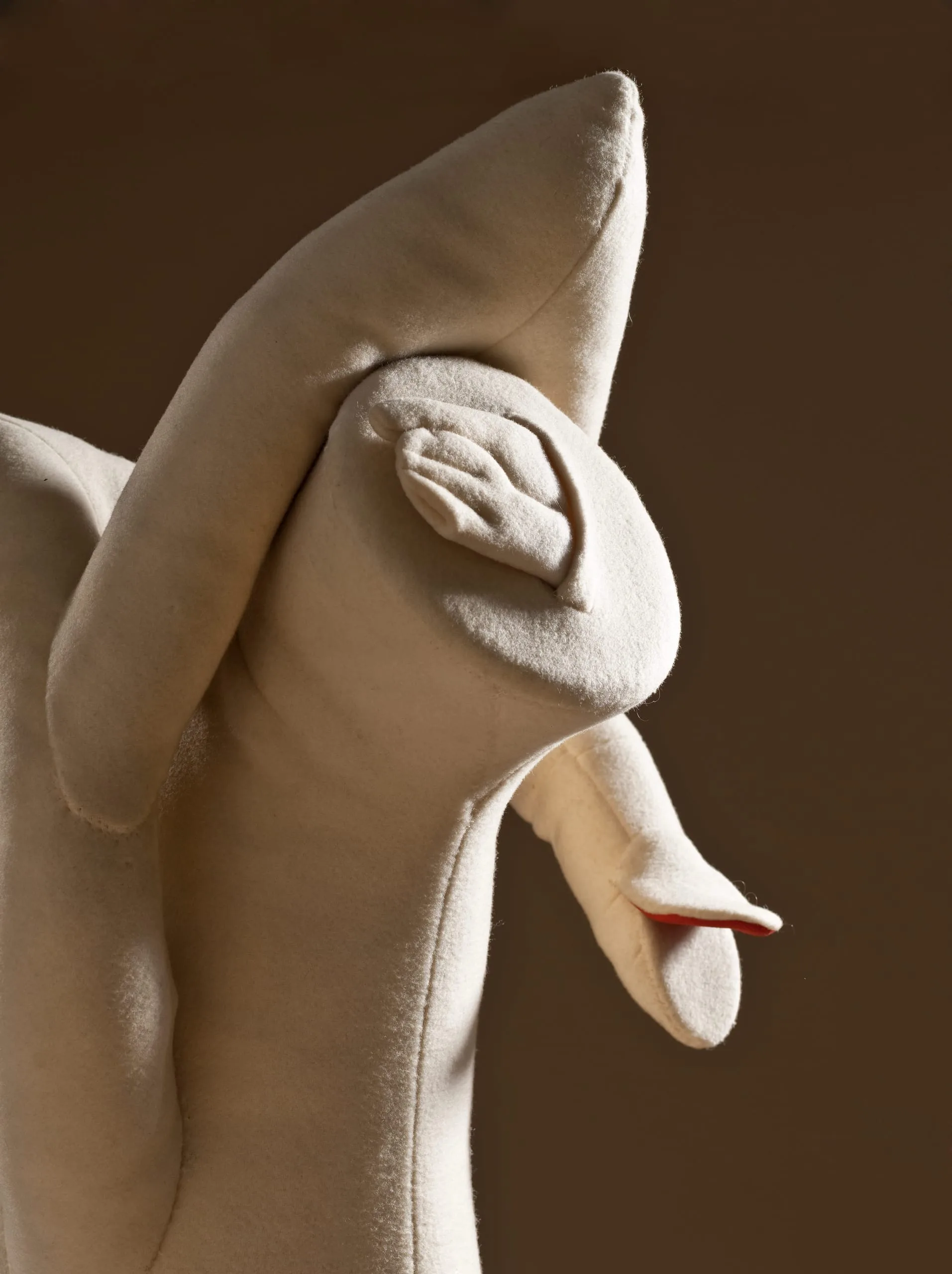
Close-up of a pale cream sculpture with smooth, rounded biomorphic forms; an abstracted figure with a raised pointed head, a small hand pressed against a curved torso, and an open beak-like protrusion with a red interior accent.
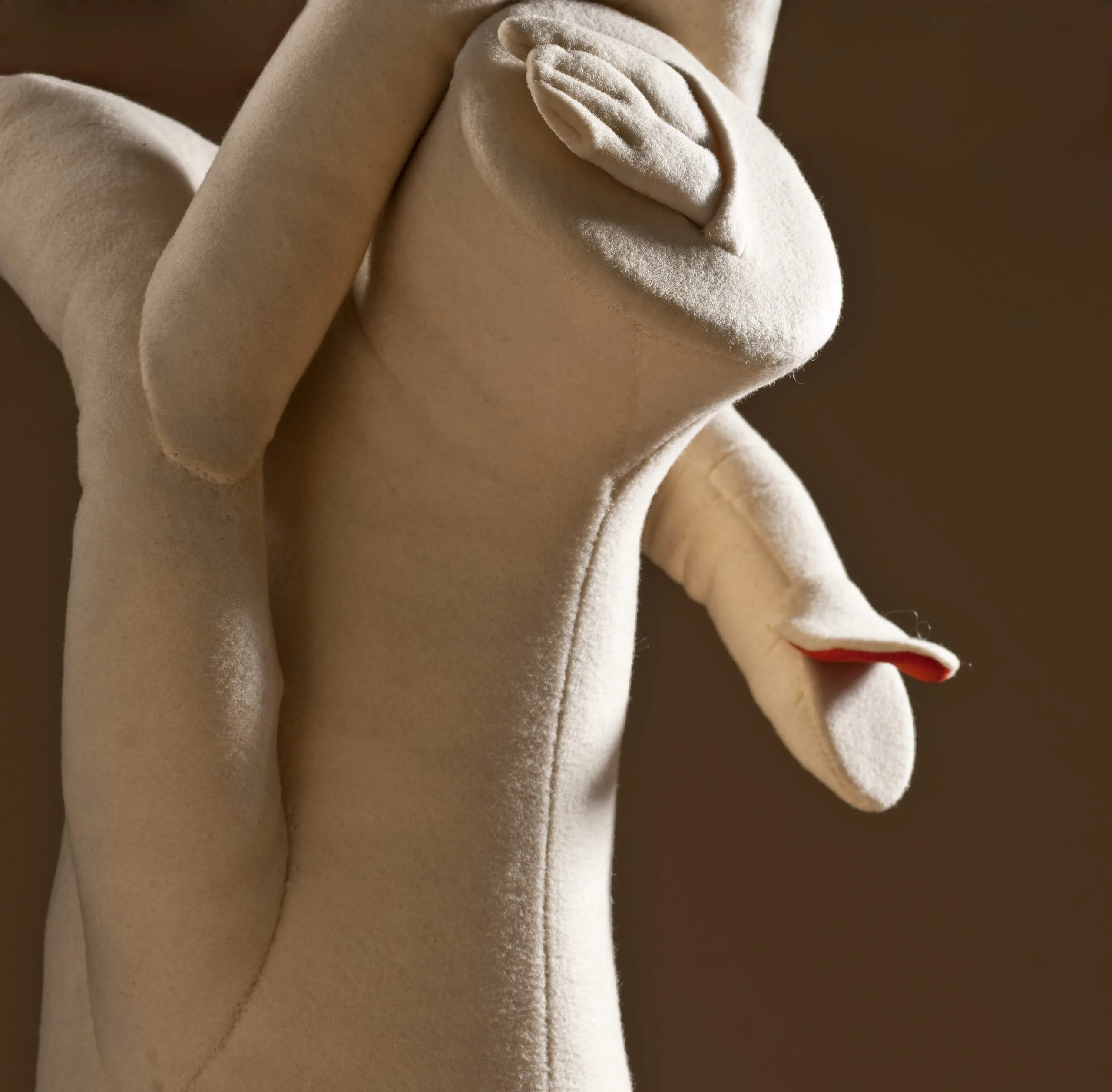
Soft sculpture of an abstracted human torso and limbs in cream-colored fabric, with smoothly sewn rounded forms suggesting arms crossing the chest; a small red accent visible at one cuff edge, against a warm brown background.
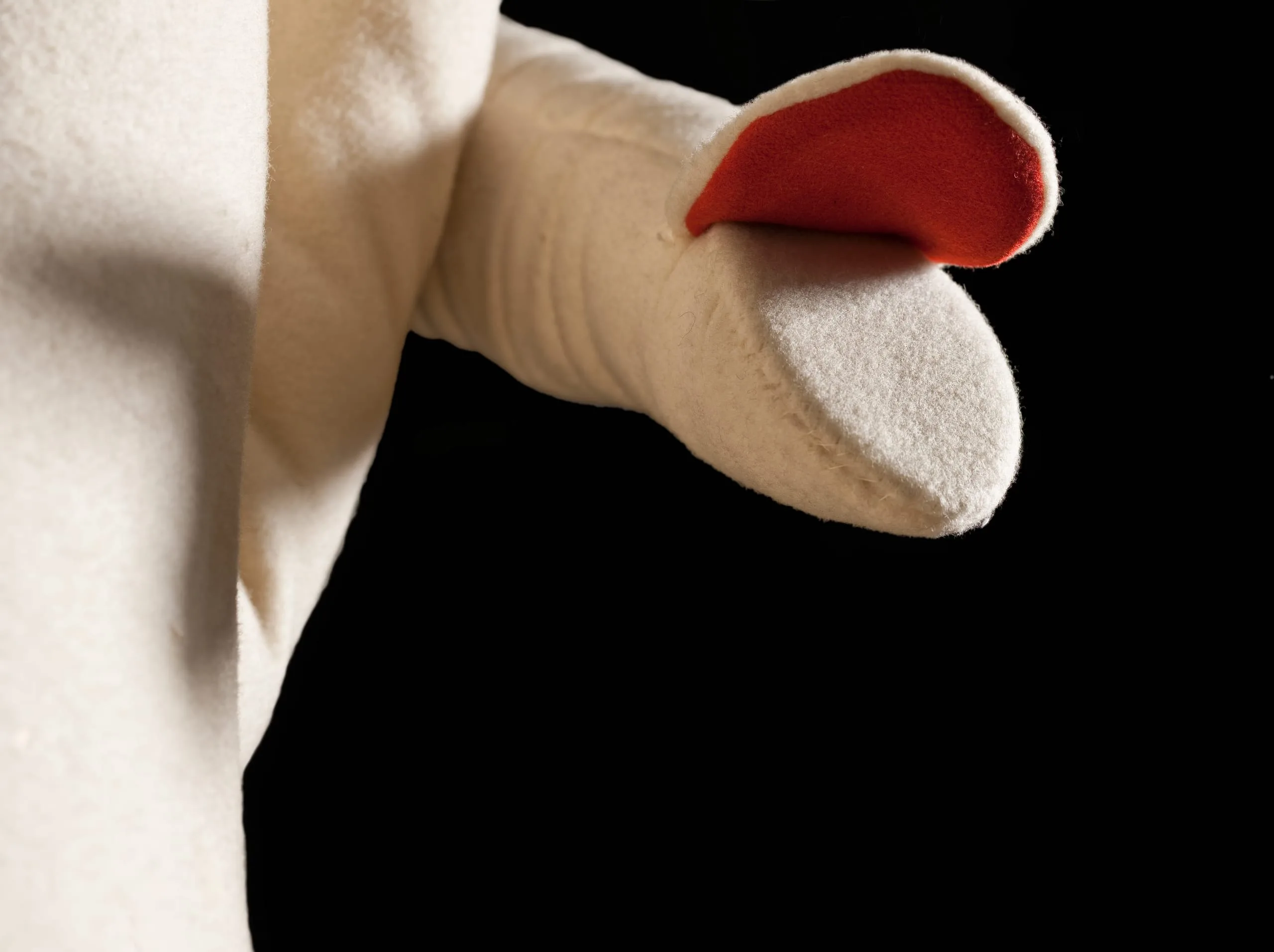
Close-up photograph of a soft sculpture or puppet hand, white fabric with a curved red accent, photographed against a black background.
Close-up detail of a felt hat in warm tan, showing intersecting seams at the crown with a slightly fuzzy, napped textile surface.
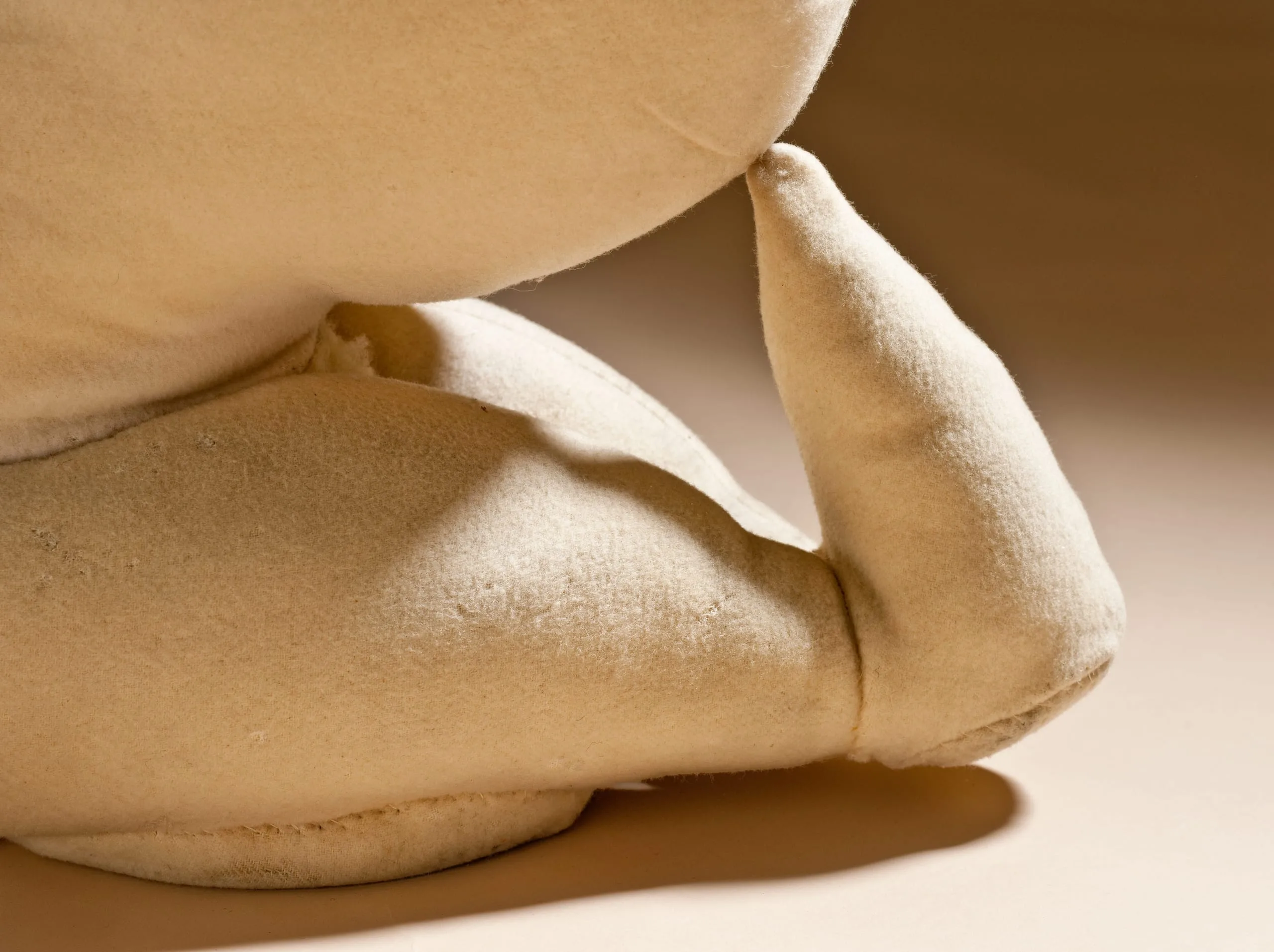
Close-up photograph of a ceramic sculpture with soft, folded forms in pale cream tones, mimicking fabric or draped cloth, with a matte, slightly textured surface.
Artist or Maker
Dorothea Tanning
United States, Illinois, Galesburg, active New York, New York City, 1910-2012
Title
Xmas
Date Made
1969
Medium
Fabric, metal, and wool
Dimensions
a) Body: 69 5/8 x 19 3/4 x 20 1/2 in. (176.85 x 50.17 x 52.07 cm); b) Appendage: 4 3/8 x 3 1/2 x 7/8 in. (11.11 x 8.89 x 2.22 cm)
Credit Line
Purchased with funds provided by the 2010 Collectors Committee, with additional funds generously provided by Jodie Evans with Lekha Singh, The Rosenthal Family Foundation, Peg Yorkin, the Kayne Foundation, Susan Adelman in honor of the artist’s 100th birthday, Irene Christopher, Viveca Paulin-Ferrell, American Art Deaccession Funds, Janice G. Gootkin, The Eileen F. and Mort H. Singer, Jr. Family fund in honor of Ilene Susan Fort, and J. Patrice Marandel
Accession Number
M.2010.36a-b
Classification
Sculpture
Collecting Area
American Art
Curatorial Notes
Xmas is the quintessential surrealist object. When its creator Dorothea Tanning was asked to explain the meaning of the bit of red cloth near the top of this pale, twisted fabric column, she replied, “X marks the spot”—a cryptic response that encourages more questions than answers. But what else would one expect from a Surrealist?
Tanning is the most important of American women Surrealists. Early in her career, through Max Ernst (who was first her lover, then husband), Tanning had entree into a remarkable international circle of avant-garde artists and evolutionary thinkers, including André Breton. In response to the seemingly meaningless destruction wrought by World War I, Breton and his followers aimed to transform art and the world, exploring the mysteries of life through the universals of the subconscious mind; it was the intellectual environment Tanning had longed for as a teenager in small-town Galesburg, Illinois.
Throughout her long career as a painter and sculptor in the United States and France, Tanning has probed the inner life of women from childhood to maturity, in particular delving into its darker realms. By casting her figures in shadowy interiors or by manipulating the human form into uncomfortable poses and distorted shapes, she conveyed the trauma of life experiences and stresses. The twisting, bulbous forms of Xmas have been a characteristic thread in Tanning’s art throughout her career, appearing in her well-known paintings as well as works in other media. Her soft sculptures appeared during an auspicious moment for women—the birth of the feminist movement—and clearly involve both the traditional feminine art of sewing and the blatant sexuality brandished by feminists at the time. Her works in this medium, such as Xmas, were also part of an international trend of the 1960s as evidenced by the contemporaneous work of Christo, Eva Hesse, Yayoi Kusama, and Claes Oldenburg, all of whom created artworks in materials that were fragile, the antithesis of traditional monumental media like bronze or stone—a definite statement about the tenuousness of contemporary life. (Ilene Susan Fort, The Gail and John Liebes Curator of American Art)
Selected Bibliography
  • Stephen Prina: Galesburg, Illinois+ Köln: Bucchandlung Walther König, 2016.
  • Dorothea Tanning: Behind the Door, Another Invisible Door. Madrid: Museo Nacional Centro de Arte Reina Sofía, 2018.