LACMA

ShopMembershipMyLACMATickets
LACMA
Los Angeles County Museum of Art
5905 Wilshire Blvd.
Los Angeles, CA 90036
info@lacma.org
(323) 857-6000
Sign up to receive emails
Subscribe
© Museum Associates 2026
  • About LACMA
  • Jobs
  • Building LACMA
  • Host An Event
  • Unframed
  • Press
  • FAQs
  • Log in to MyLACMA
  • Privacy Policy
© Museum Associates 2026
Collections

Four Sons of Horus26th dynasty (circa 664-525 BCE)

On view:
Geffen Galleries
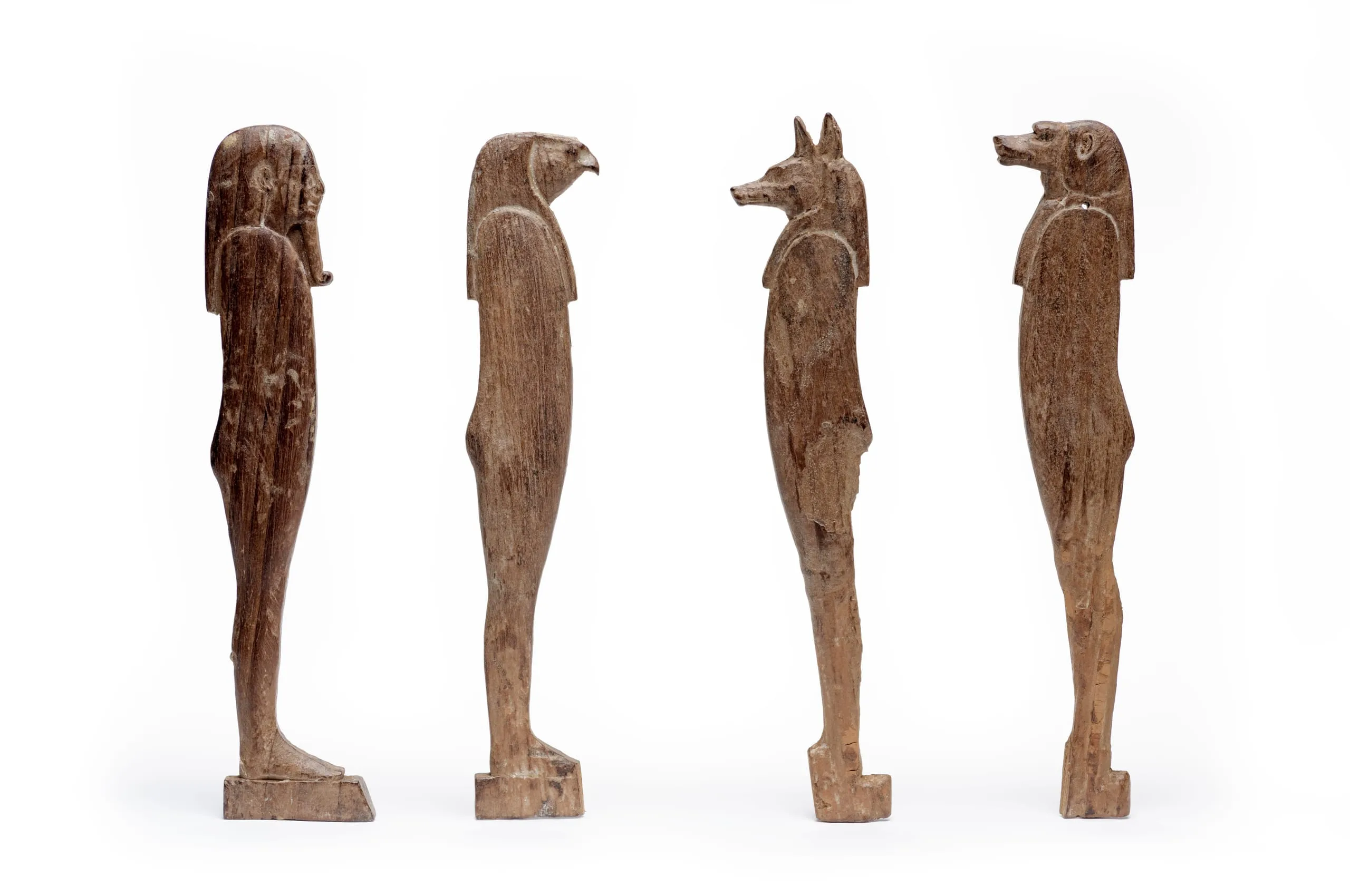
Four carved wooden Egyptian funerary figures shown in profile, each with a mummy-like body and a different animal or human head
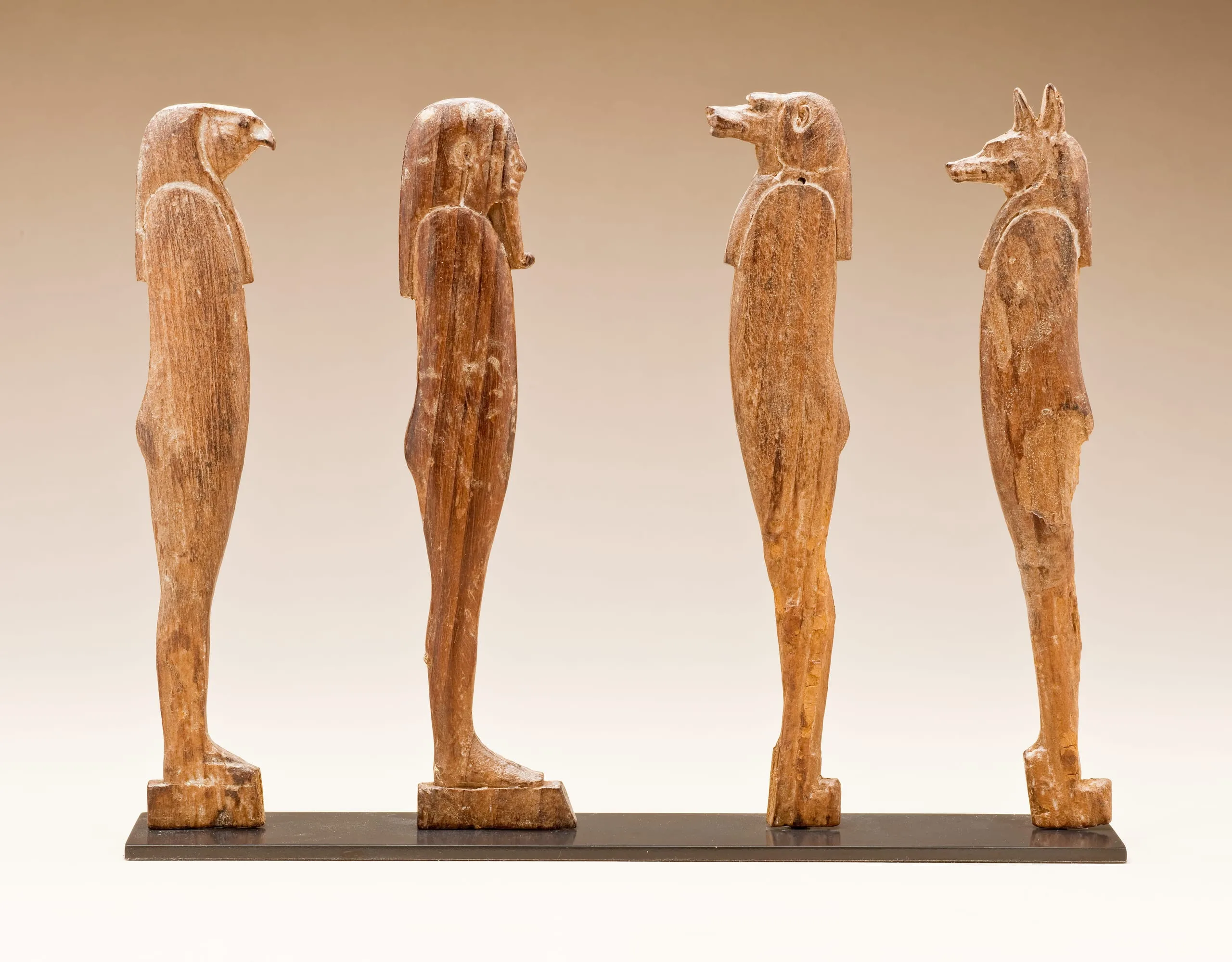
Four small carved wooden Egyptian funerary figures mounted on a dark base, each depicting a standing mummiform deity with a distinct animal or human head: falcon, human, jackal-like, and canine. Figures face alternating directions in profile, with visible wood grain and traces of pale pigment.
Title
Four Sons of Horus
Place Made
Egypt
Date Made
26th dynasty (circa 664-525 BCE)
Medium
Wood
Dimensions
.1-.4) each: 7 × 1 3/8 × 2 in. 7 × 7 1/4 × 1 3/4 in.
Credit Line
Ancient Art Deaccession Fund
Accession Number
M.2010.31a-d
Classification
Sculpture
Collecting Area
Egyptian Art
Curatorial Notes

These elegant wood figurines of the Sons of Horus may have served as upright elements on the back of a chair or as inlays on a funerary chest. They stand in profile as animal or human-headed beings, wrapped in a mummiform shroud. The elements of each figure are carefully contoured and detailed. The quartet of deities, or genii, known as the Sons of Horus appear in Egyptian texts and funerary practice as protectors of the deceased’s inner organs. From the 4th Dynasty (c. 2543−2436 BCE) onward, they also bear the title of “friend of the king,” assisting the pharaoh at the time of his death with the ascent to a resting place in the eastern sky by means of rope or wood ladders. During the mummification process undertaken for elite burials, inner organs were removed and placed in canopic jars. Each Son of Horus was assigned a specific identity, form, organ, protective goddess, and cardinal orientation:

Son of Horus

Imsety

Duamutef

Hapi

Qebehsenuef

form

human

jackal

baboon

hawk

organ

liver

stomach

lungs

intestines

protective goddess

Isis

Neith

Nephthys

Serket

orientation

south

east

north

west

Early canopic jars were topped with stoppers in the form of human heads; by the end of the 18th Dynasty (c. 1539−1292 BCE), these lids were made in the image of each genius. Inscriptions on sarcophagi and tomb walls usually depict the Sons of Horus in their individual forms. From the Third Intermediate Period (c. 1076−655 BCE) onward, use of their image expands. They continue to be depicted on coffins and canopic jars but are also used in amulet form, wrapped within the binding of the mummy or on other funerary equipment.

Provenance
[Nicolas Koutoulakis (1910–1996), Paris and Geneva, c. 1960s, by inheritance to]; Emmanuel and Daphne Koutoulakis, Geneva, Switzerland, sold October 2008 to; [Rupert Wace (b.1955), Ancient Art, London, sold 2010 to]; LACMA.