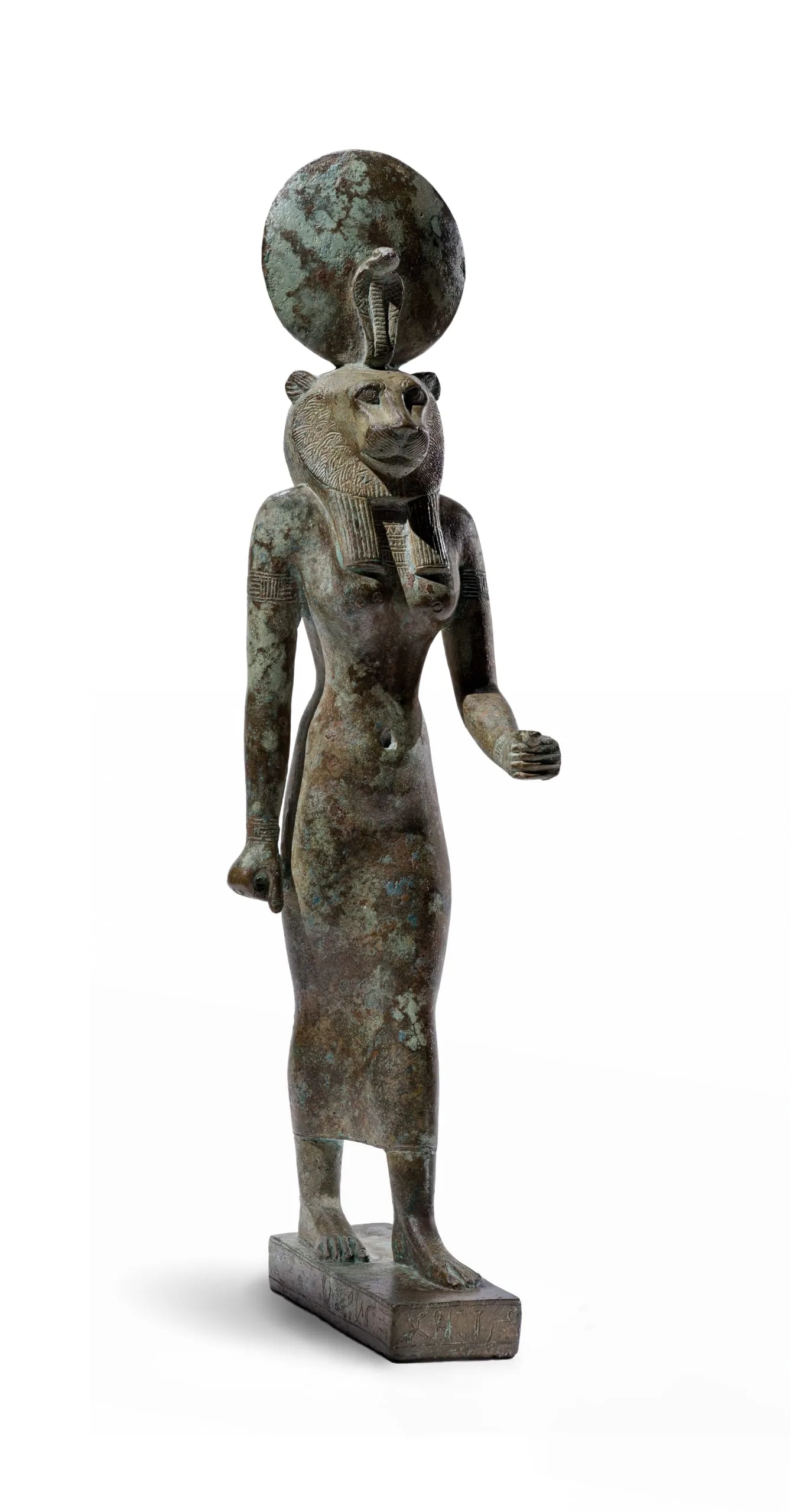
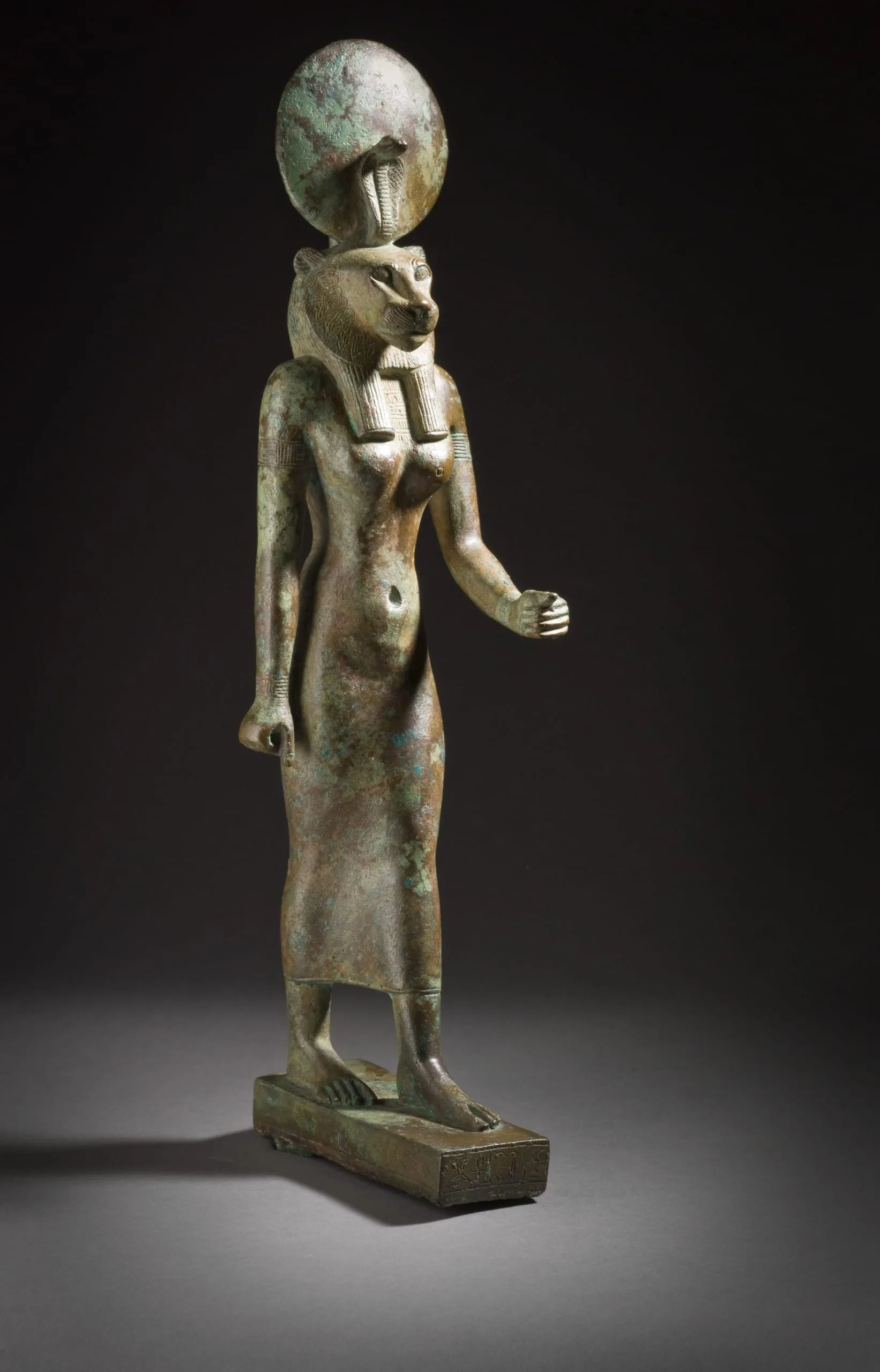
This elegant striding bronze figure represents the goddess Wadjet, tutelary deity of Lower Egypt (the northern portion of the country). Often represented as a rearing cobra on the headdresses of Egyptian pharaohs, she was believed to strike enemies of the king with lethal force. Known as a uraeus, this element became a standardized feature of royal headgear and was also depicted above the foreheads of other gods, including Osiris, lord of the underworld.
Wadjet, along with Nekhbet, her southern counterpart, was frequently invoked in tomb and temple inscriptions to provide protection. Here, she is identified by the dedicatory text on the rectangular base. The figure is remarkably intact, preserving the full sun disk, the uraeus emerging from the disk and coiled at the back, and the inscribed base and tangs for attachment to an ancient pedestal or other support. The clenched fists probably held attributes such as a wadj papyrus scepter and an ankh. The narrow-waisted figure is treated in an exceptionally refined and supple manner, with the contours of the breasts, abdomen, and thighs clearly visible beneath the thinly rendered garment. Finely incised details such as the patterning of the mane (Wadjet was one of several goddesses depicted as a lioness), broad collar, armbands, and bracelets are carefully delineated. A striated tripartite hairstyle protrudes from beneath the mane’s ruff.
The preserved portion of the inscription also includes the donor’s name and parentage (Pa-net, son of Rew-re). The figure was probably dedicated as an offering in a temple and also may have served as a container for the remains of a sacred animal. During the Late Period, large quantities of bronzes were deposited in temples and shrines as votive offerings by the pious Egyptians to signal their devotion to a particular deity.