LACMA

ShopMembershipMyLACMATickets
LACMA
Los Angeles County Museum of Art
5905 Wilshire Blvd.
Los Angeles, CA 90036
info@lacma.org
(323) 857-6000
Sign up to receive emails
Subscribe
© Museum Associates 2025

Museum Hours

Monday

11 am–6 pm

Tuesday

11 am–6 pm

Wednesday

Closed

Thursday

11 am–6 pm

Friday

11 am–8 pm

Saturday

10 am–7 pm

Sunday

10 am–7 pm


  • About LACMA
  • Jobs
  • Building LACMA
  • Host An Event
  • Unframed
  • Press
  • FAQs
  • Log in to MyLACMA
  • Privacy Policy
© Museum Associates 2025
Collections

Kanō Sansetsu
Tiger Drinking from a Raging Rivercirca 1640

Not on view
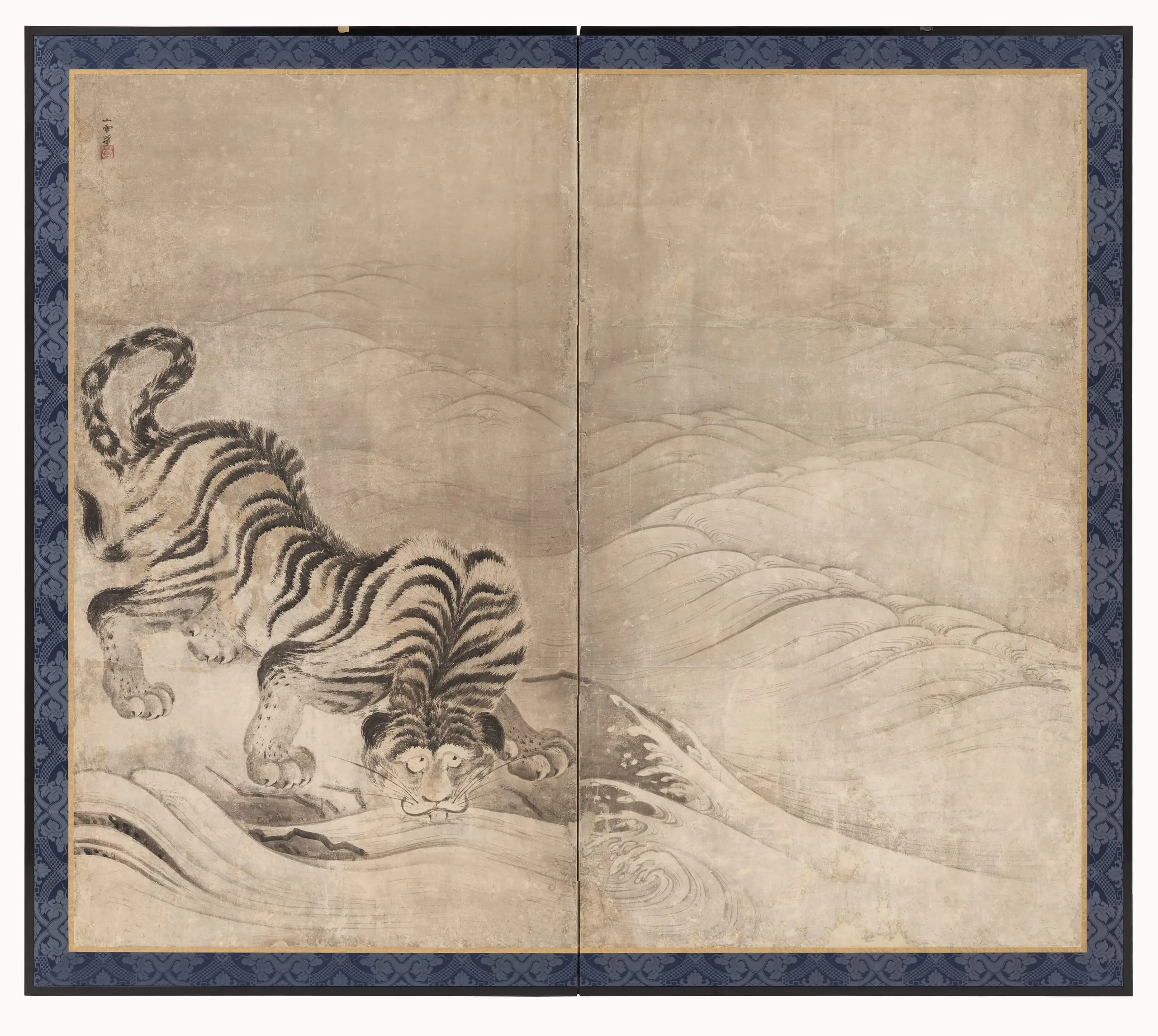
Two-panel folding screen, ink on paper, depicting a striped tiger crouching over stylized crashing waves, with navy blue patterned textile borders
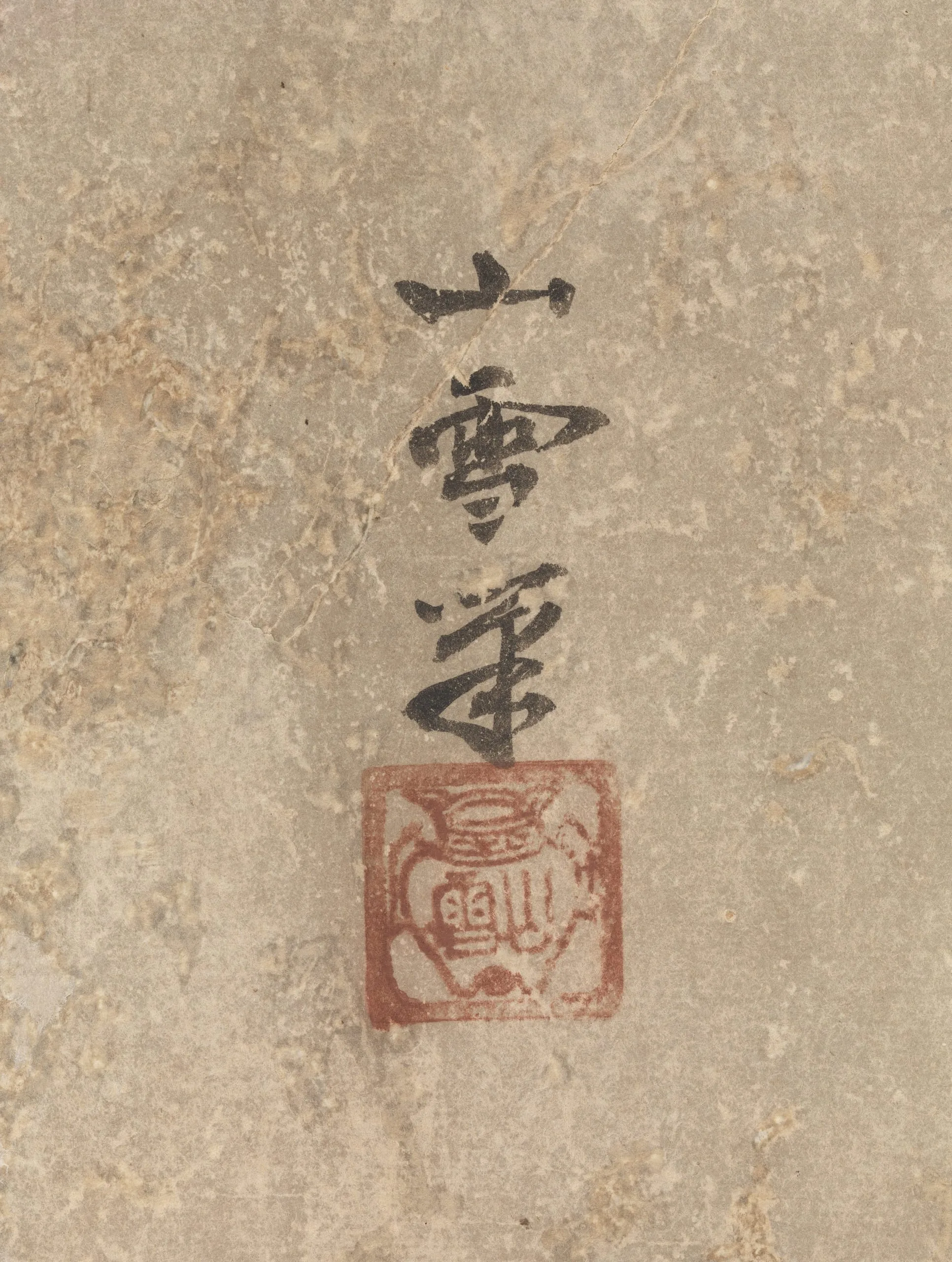
Detail of ink on paper showing three characters of Chinese calligraphy in semi-cursive script above a red square seal stamp depicting a decorative vessel.
Artist or Maker
Kanō Sansetsu
Japan, 1590-1651
Title
Tiger Drinking from a Raging River
Date Made
circa 1640
Period
Edo period (1603 - 1868)
Medium
Two-panel folding screen; ink on paper
Dimensions
Image: 59 1/4 x 68 in. (150.5 x 172.72 cm); Mount (open): 66 x 75 x 3/4 in. (167.64 x 190.5 x 1.91 cm)
Credit Line
Gift of the 2010 Collectors Committee
Accession Number
M.2010.34
Classification
Paintings
Collecting Area
Japanese Art
Curatorial Notes
Created in the Kanei period (1624–44), Tiger Drinking from a Raging River is the only signed screen painting by the celebrated artist Kano Sansetsu (1590–1651) to ever leave Japan. The most original Japanese artist of the seventeenth century, Sansetsu is often favorably compared to the eighteenth-century painter Ito Jakuchu, who is well represented in American collections.
Sansetsu’s legendary humor and originality infuse this wonderful painting. In East Asian yin-yang cosmology, the tiger (yin) is female and the dragon (yang) is male. As she takes a sip from the river, the tigress looks up at the cresting wave thinking, “I hope I don’t get drenched!” Since the Japanese had never seen an actual tiger, she has a leopard-like tail and paws, but tiger-like stripes everywhere else. The tigress takes up the entire left panel; rolling waves, stretching into the distance like a sinuous mountain range, fill the right panel. This important screen will be an icon of LACMA’s Japanese Art collection. (Robert T. Singer, Curator of Japanese Art)
Selected Bibliography
  • Singer, Robert T., and Kawai Masatomo, editors. The Life of Animals in Japanese Art. Washington, D.C.: National Gallery of Art, 2019.