LACMA

ShopMembershipMyLACMATickets
LACMA
Los Angeles County Museum of Art
5905 Wilshire Blvd.
Los Angeles, CA 90036
info@lacma.org
(323) 857-6000
Sign up to receive emails
Subscribe
© Museum Associates 2026
  • About LACMA
  • Jobs
  • Building LACMA
  • Host An Event
  • Unframed
  • Press
  • FAQs
  • Log in to MyLACMA
  • Privacy Policy
© Museum Associates 2026
Collections

Unidentified artists
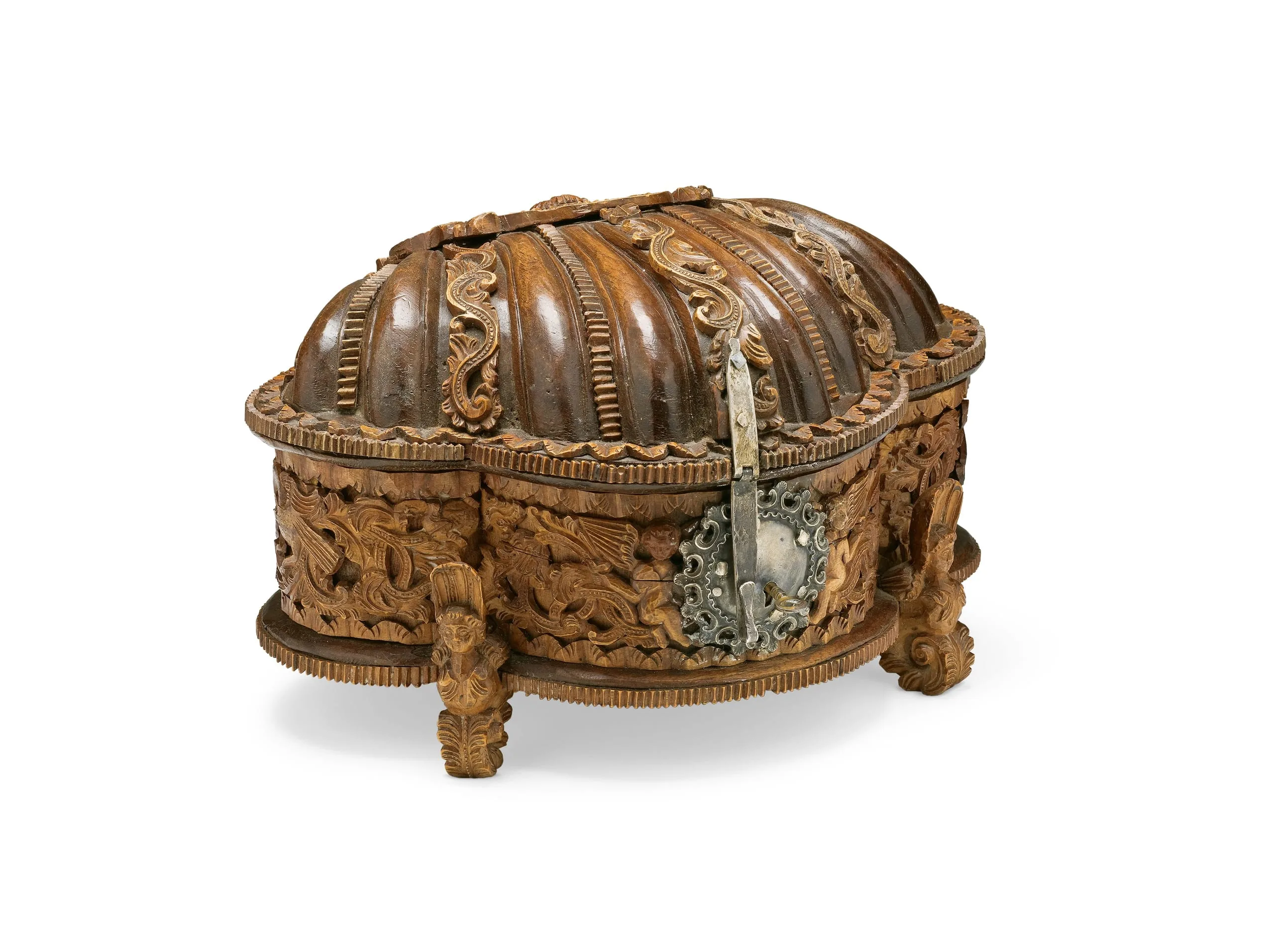
Herb Box (Yerbera)circa 1775-1790

Not on view
Carved lidded box with a domed ribbed nut-shell lid, openwork foliage-carved body, four leaf-carved feet, and a silver-toned metal clasp
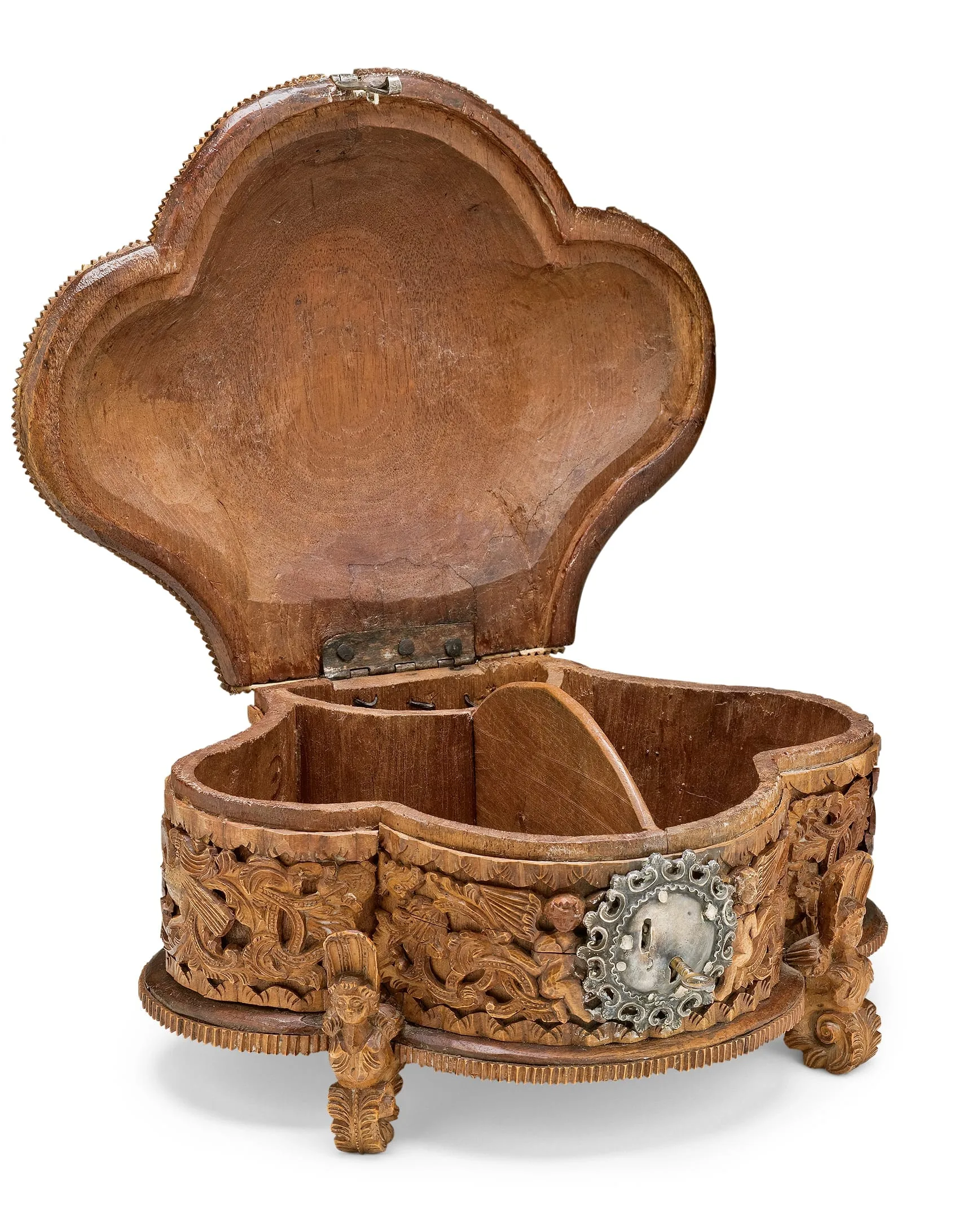
Carved wooden box in a quatrefoil shape, open to reveal a divided interior; exterior features densely pierced foliate and scroll carving with a silver escutcheon on the front, raised on four carved feet.
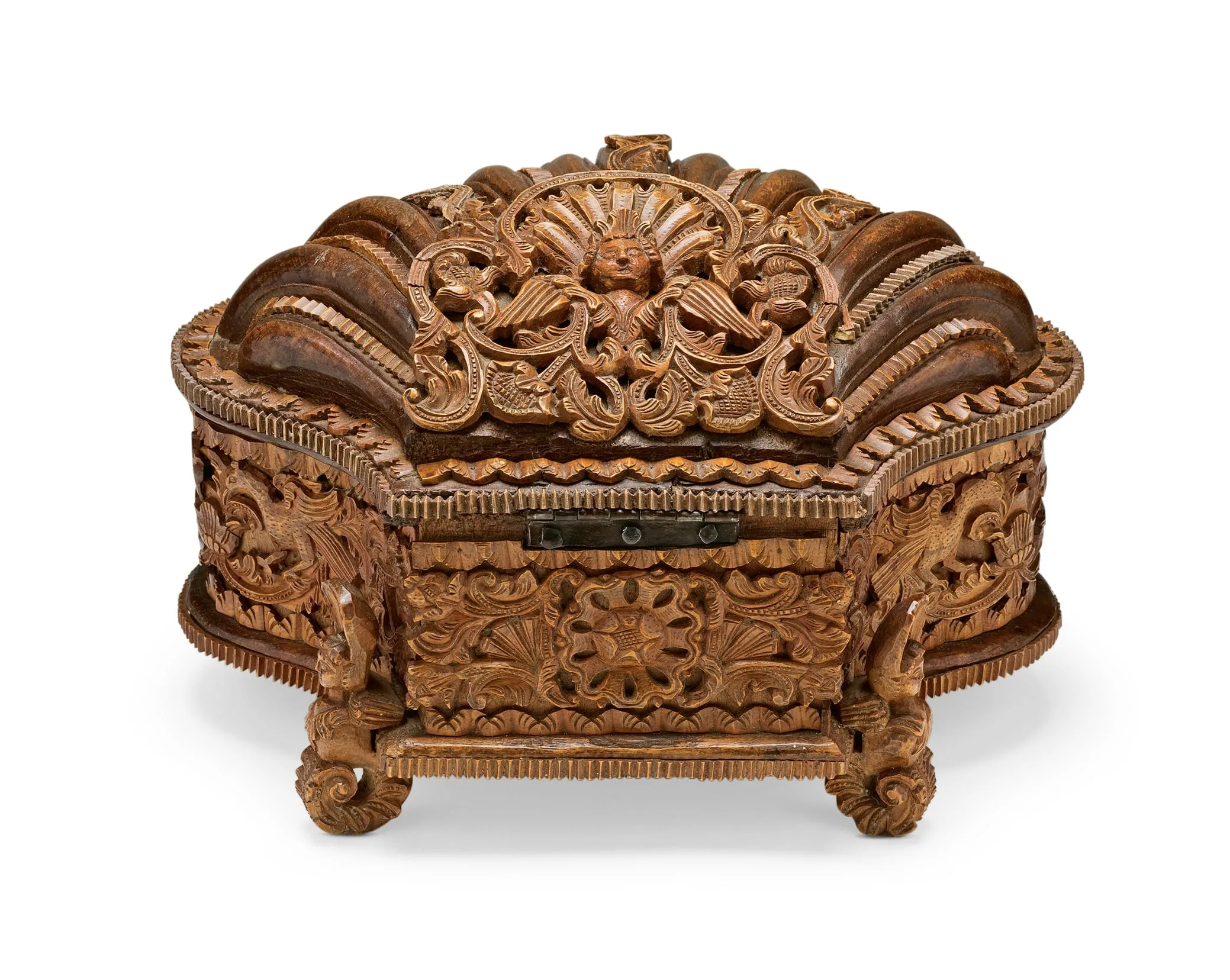
Carved wooden casket with octagonal body and domed scalloped lid, warm honey-brown tone throughout; densely pierced and relief-carved scrolling foliage covers all surfaces; a sunburst face motif crowns the lid; small claw feet support the base; metal hinge at center front.
Artist or Maker
Unidentified artists
Title
Herb Box (Yerbera)
Place Made
Bolivia, possibly Moxos or Chiquitos
Date Made
circa 1775-1790
Medium
Wood and silver
Dimensions
7 1/2 × 11 × 9 1/2 in. (19.1 × 27.9 × 24.1 cm)
Credit Line
Purchased with funds provided by the Bernard and Edith Lewin Collection of Mexican Art Deaccession Fund
Accession Number
M.2009.104
Classification
Furnishings
Collecting Area
Latin American Art
Curatorial Notes

Known today as yerberas (herb boxes) or coqueras (coca boxes), shell-shaped containers such as this were part of elite households in the southern Andes and highland Peru. The boxes were designed to store yerba maté leaves to brew tea, and perhaps also coca leaves and other substances. Densely ornamented, this example was created by Indigenous carvers of the Jesuit missions of Moxos and Chiquitos, in present-day Bolivia.

Located in the Amazon basin, on the fringes of the viceroyalty, Moxos and Chiquitos had become the stuff of myth. The Spaniards believed that the region was a kind of El Dorado and, beginning in the sixteenth century, made several failed forays in search of its fabled gold. The region was inhabited by different Indigenous tribes, each with their own language and traditions, whose subsistence depended on agriculture, hunting, and trade. The Jesuits first arrived in the area in 1667 as auxiliaries of Spanish colonizers based in the city of Santa Cruz de la Sierra, and over the next century established a complex network of largely self-sustaining missions, where different Indigenous groups were relocated for the purpose of evangelization and work in different types of trades.

Ilona Katzew

2024

Provenance
Josefina Enriqueta Valentina de Albuquerque (1901–1974), Córdoba and Buenos Aires, Argentina, c. 1920s–30s; by inheritance to private collection, Buenos Aires, 1974; Christie’s, New York, November 17–18, 2009, lot 175; LACMA, 2009.
Selected Bibliography
  • Katzew, Ilona, ed. Archive of the World: Art and Imagination in Spanish America, 1500–1800: Highlights from LACMA’s Collection. Exh. Cat. Los Angeles: Los Angeles County Museum of Art; New York: DelMonico Books/D.A.P., 2022.
Selected Exhibition History
  • Contested Visions in the Spanish Colonial World. November 6, 2011 - January 29, 2012
  • Archive of the World: Art and Imagination in Spanish America, 1500–1800. June 12, 2022 - October 30, 2022
  • Archive of the World: Art and Imagination in Spanish America, 1500–1800. October 20, 2023 - January 28, 2024
  • Archive of the World: Art and Imagination in Spanish America, 1500–1800. June 22, 2024 - September 08, 2024

Related Exhibitions

Related Unframed

Related Unframed

A Scavenger Hunt for Families through Archive of the World
  • October 5, 2022
  • Rachel Kaplan
Special Things: Boxes in Spanish America
  • July 20, 2022
  • Ilona Katzew