- Title
- Bowl
- Date Made
- late 15th century
- Medium
- Tinned copper
- Dimensions
- Height: 1 3/4 in. (4.45 cm); Diameter: 5 3/8 in. (13.65 cm)
- Accession Number
- M.2010.26
- Curatorial Notes
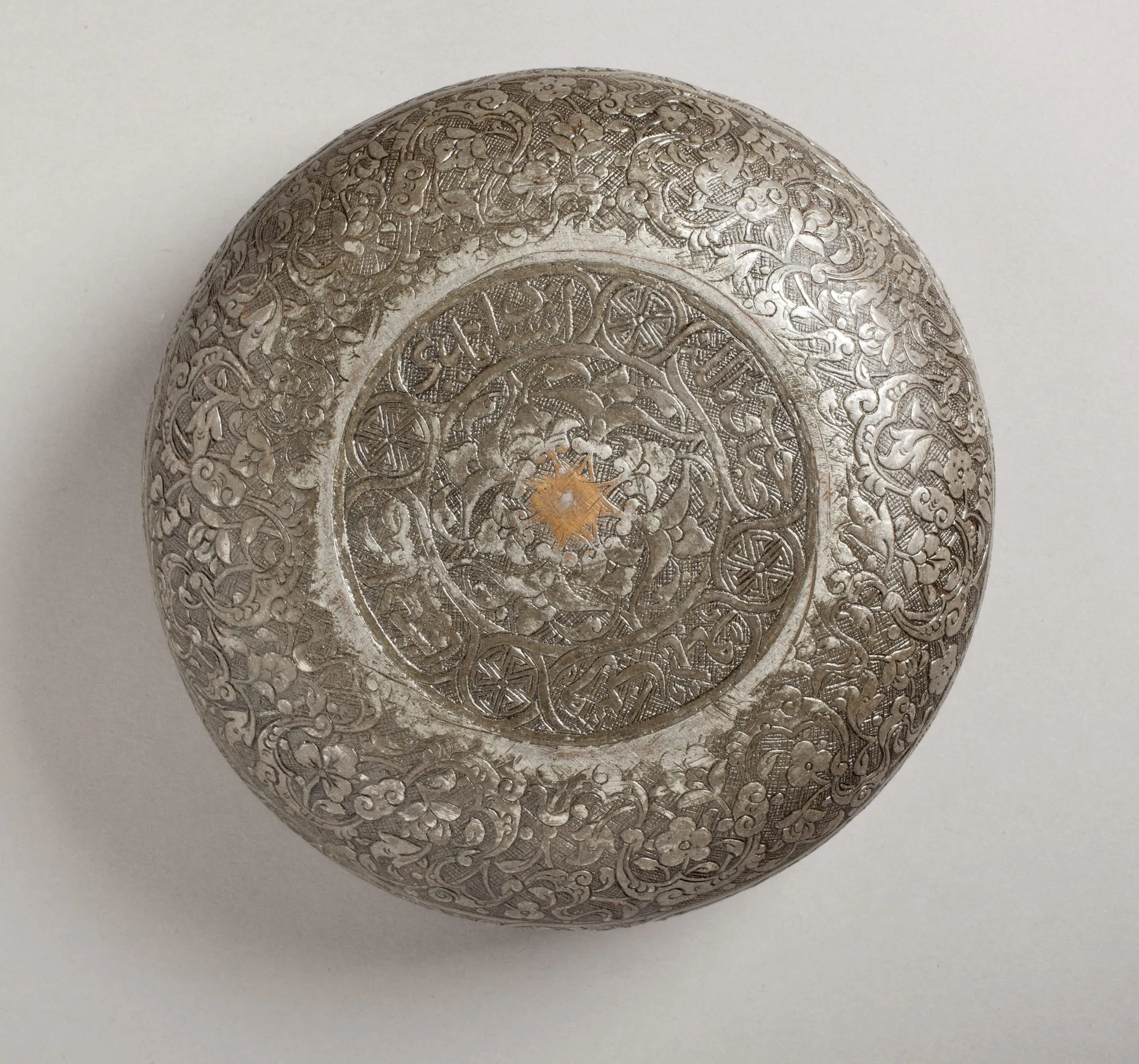
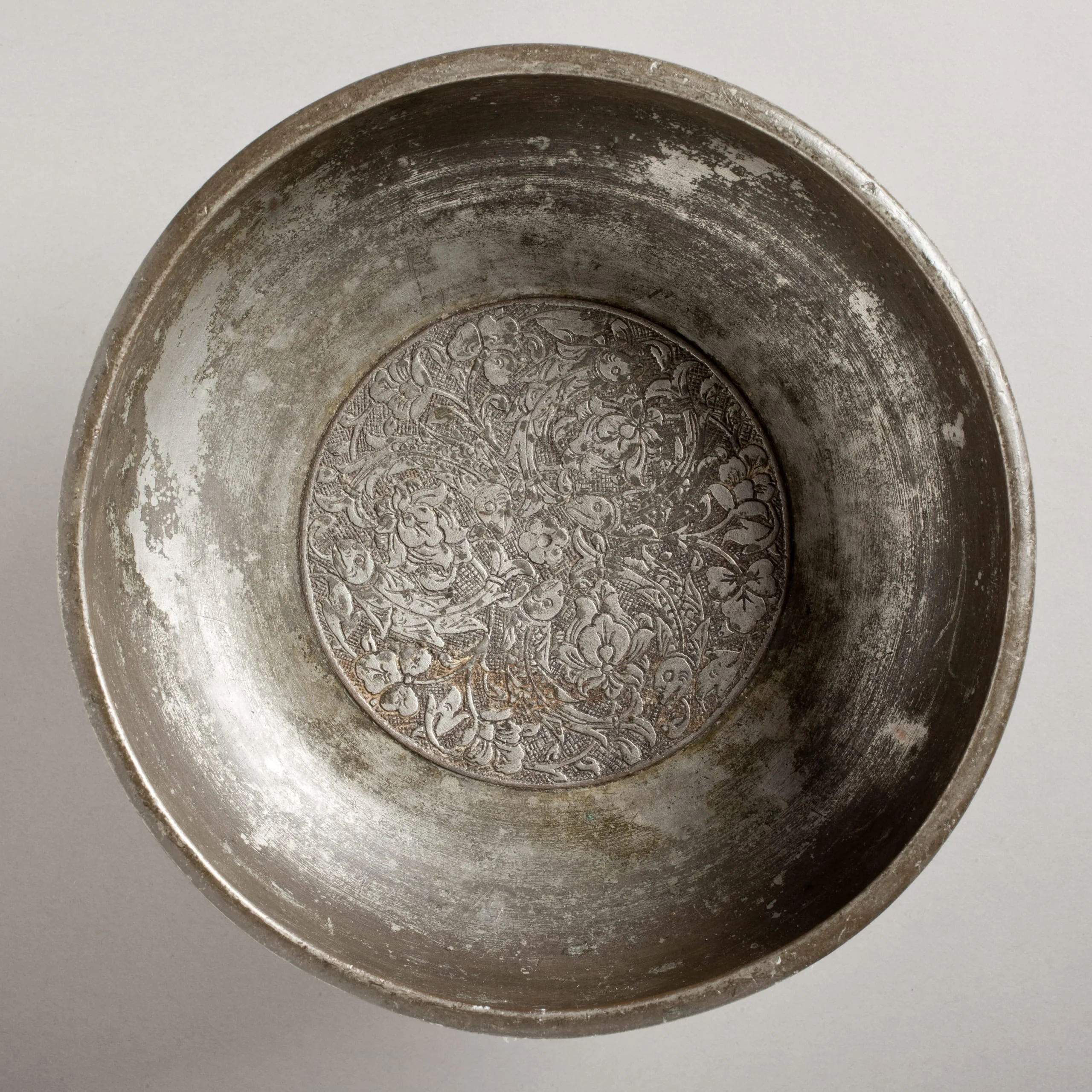
This petite shallow bowl belongs to a group of similarly decorated deluxe tinned copper wares that were likely made in Herat, the capital of the Timurid dynasty and a renowned center for Persian art and culture. These bowls, cups and plates can be generally associated with the serving and drinking of wine. Because tin is highly resistant to organic acids, the interior surfaces of receptacles for food and beverages were frequently tinned to protect both vessel and owner. Beginning in the Timurid period, the exteriors of vessels (and other objects such as candlesticks) were often tinned as well clearly for decorative purposes and perhaps to emulate silver. Along with inscriptions, the program of design of this group comprises primarily a chinoiserie decorative vocabulary of boldly conceived large-scale blossoms and leaves, combined with more traditional foliate scrolls, and geometricizing designs such as an interlocking Y-pattern, as here. The poetic text inscribed in a band below the rim of this bowl contains three couplets abridged from a ghazal (ode) by the renowned Persian poet Hafiz (d. 1390), which is particularly suitable for such a wine vessel. In four cartouches on the underside of the bowl, which would be visible when it was raised to the lips, is a dedicatory inscription to its owner Master (ustad) Yari the coppersmith (saffar).
- Selected Bibliography
- Arts of the Islamic World: including Fine Carpets and Textiles. Sale cat. [Sotheby’s]. London, October 7, 2009, p. 78, fig. 113
Komaroff, Linda. The Golden Disk of Heaven: Metalwork of Timurid Iran. Costa Mesa, California: Mazda, 1992.
- Martin, F.R. Ältere Kupferarbeiten aus dem Orient. Stockholm: Chelius, 1902.