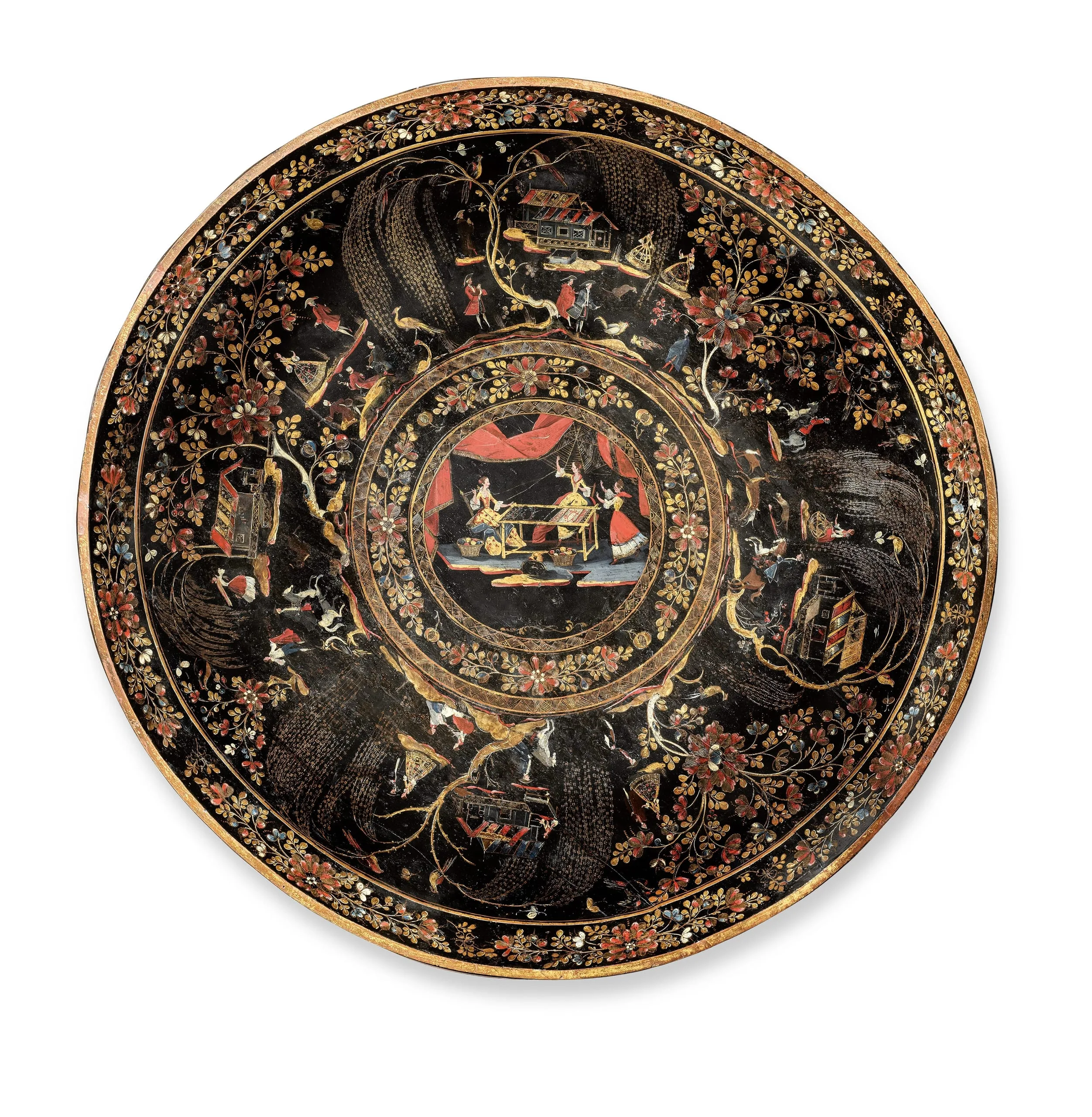
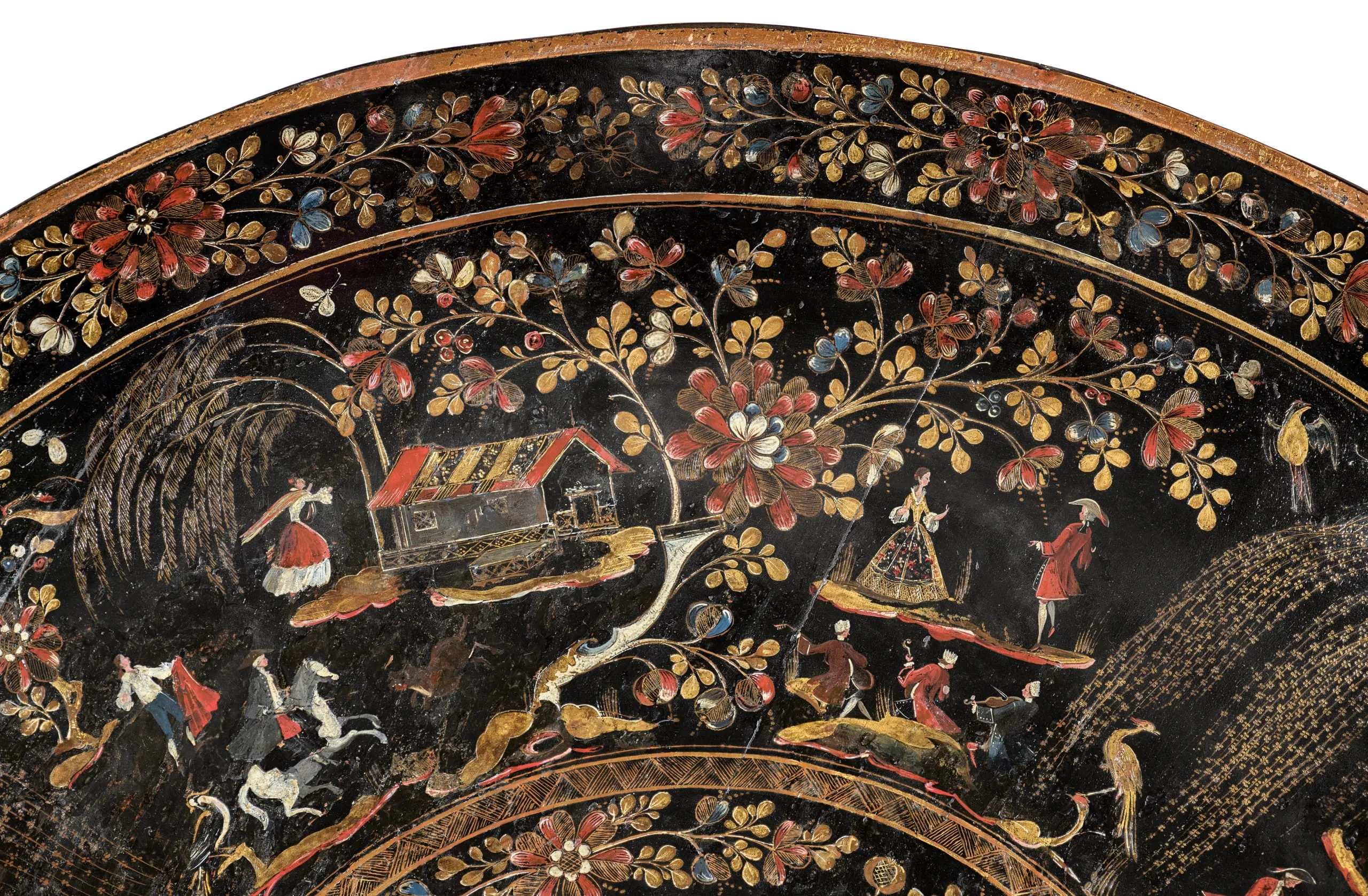
The weaver Arachne, an ill-fated character in ancient Greek mythology, sits at her loom at the center of this large batea (tray). Interspersed among dramatic weeping willows, flowering trees, cranes, and Asian-style houses are several regional costumbrista (daily life) scenes—hunting, song and dance, cockfighting, the dispensing of pulque (the intoxicating Mexican drink extracted from the maguey cactus), bullfighting, and courtship. Attributed to the Indigenous artist José Manuel de la Cerda, the tray integrates diverse materials and visual languages and exemplifies the creative reinvention of lacquered luxury goods in New Spain. Large trays such as this one were inherently versatile and could be adapted to various uses. De la Cerda made more than a dozen of them for the marquesa of Cruillas, the wife of Viceroy Joaquín de Montserrat (r. 1760–66), to bring back with her to Spain.
In the region of Michoacán, in west-central Mexico, inlaid lacquered objects belonged to an ancient and refined tradition. After the Spaniards arrived in the 1500s, Indigenous artists adapted the technique to new types of artifacts. The inflow of Asian objects and the European craze for lacquer (chinoiserie and japanning) inspired local artists to create their own versions, garnering fervent admiration. The town of Pátzcuaro was an acclaimed production center for fine lacquerware.
Ilona Katzew
2024