- Title
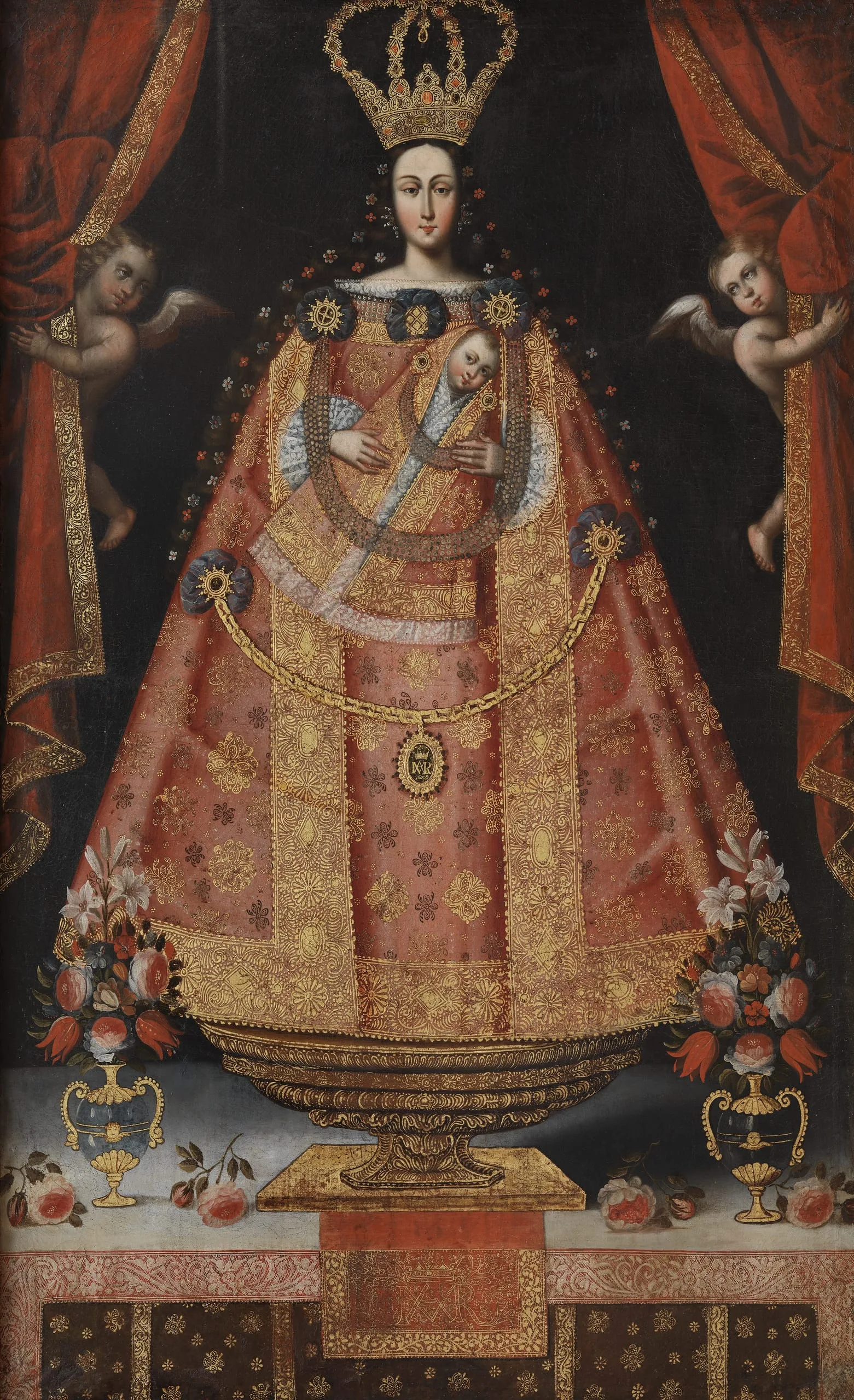
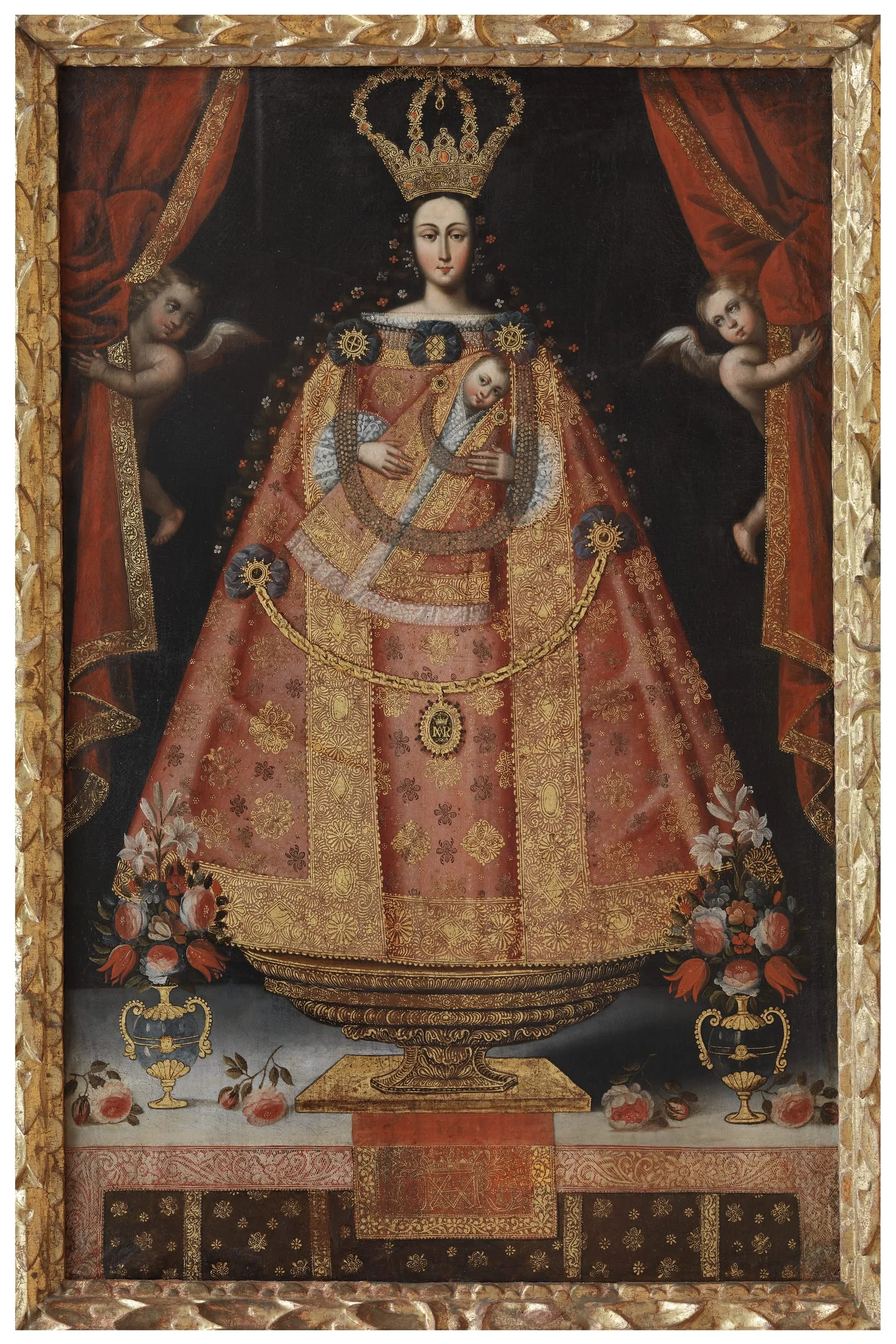
- Virgin of Bethlehem (Virgen de Belén)
- Date Made
- circa 1700-1720
- Medium
- Oil on canvas
- Dimensions
- Unframed: 64 3/8 × 41 1/8 in. (163.5 × 104.5 cm); framed: 71 × 47 1/4 × 3 1/2 in. (180.34 × 120.02 × 8.89 cm)
- Accession Number
- M.2009.158
- Curatorial Notes
This work depicts the Virgin Mary holding the Christ Child as two cherubs pull the curtains open to display the holy image. It is an example of a statue painting—a representation of a religious sculpture on a church altar. The original statue, which still exists, is designed to be dressed and bejeweled and is known as an imagen vestidera. The use of brocateado (gold applications), a popular technique among Cuzco artists, enhances the painting’s sense of preciousness, while the depiction of various textiles—local and foreign—demonstrates the long-standing Andean interest in woven materials. Painted copies of miraculous images were believed to share the divine power of the original statue.
According to legend, King Charles V (r. 1516–56) sent the original effigy to Peru. It was discovered by a group of fishermen in a wood box floating in a lake near the town of San Miguel. Upon opening the container, they found a beautifully carved image of the Virgin Mary along with a note stating that she was a gift to the city of Cuzco. News of the miracle spread quickly as various churches vied to claim the statue for their sanctuary. It was granted to the Church of the Reyes Magos, which thereafter changed its name to Our Lady of Belén (the name inscribed on the note with which the image was found). According to legend, the Virgin soon began to perform all sorts of miracles, becoming one of the most revered sculptures of Cuzco and a star of the famous Corpus Christi procession.
Ilona Katzew
2024
- Provenance
US Ambassador to Peru; Abell Auction Company, Commerce, California, mid-1990s; Eunice Erb Goodan and Douglas Goodan, Pasadena, California, mid-1990s; LACMA, 2009.
- Selected Bibliography
- Katzew, Ilona, ed. Archive of the World: Art and Imagination in Spanish America, 1500–1800: Highlights from LACMA’s Collection. Exh. Cat. Los Angeles: Los Angeles County Museum of Art; New York: DelMonico Books/D.A.P., 2022.
- Selected Exhibition History
- Contested Visions in the Spanish Colonial World. November 6, 2011 - January 29, 2012
- Archive of the World: Art and Imagination in Spanish America, 1500–1800. June 12, 2022 - October 30, 2022
- Archive of the World: Art and Imagination in Spanish America, 1500–1800. October 20, 2023 - January 28, 2024
- Archive of the World: Art and Imagination in Spanish America, 1500–1800. June 22, 2024 - September 08, 2024