LACMA

ShopMembershipMyLACMATickets
LACMA
Los Angeles County Museum of Art
5905 Wilshire Blvd.
Los Angeles, CA 90036
info@lacma.org
(323) 857-6000
Sign up to receive emails
Subscribe
© Museum Associates 2025

Museum Hours

Monday

11 am–6 pm

Tuesday

11 am–6 pm

Wednesday

Closed

Thursday

11 am–6 pm

Friday

11 am–8 pm

Saturday

10 am–7 pm

Sunday

10 am–7 pm


  • About LACMA
  • Jobs
  • Building LACMA
  • Host An Event
  • Unframed
  • Press
  • FAQs
  • Log in to MyLACMA
  • Privacy Policy
© Museum Associates 2025
Collections

Unknown
Table16th-17th century

On view:
Geffen Galleries, Pan-Asian Buddhist Art
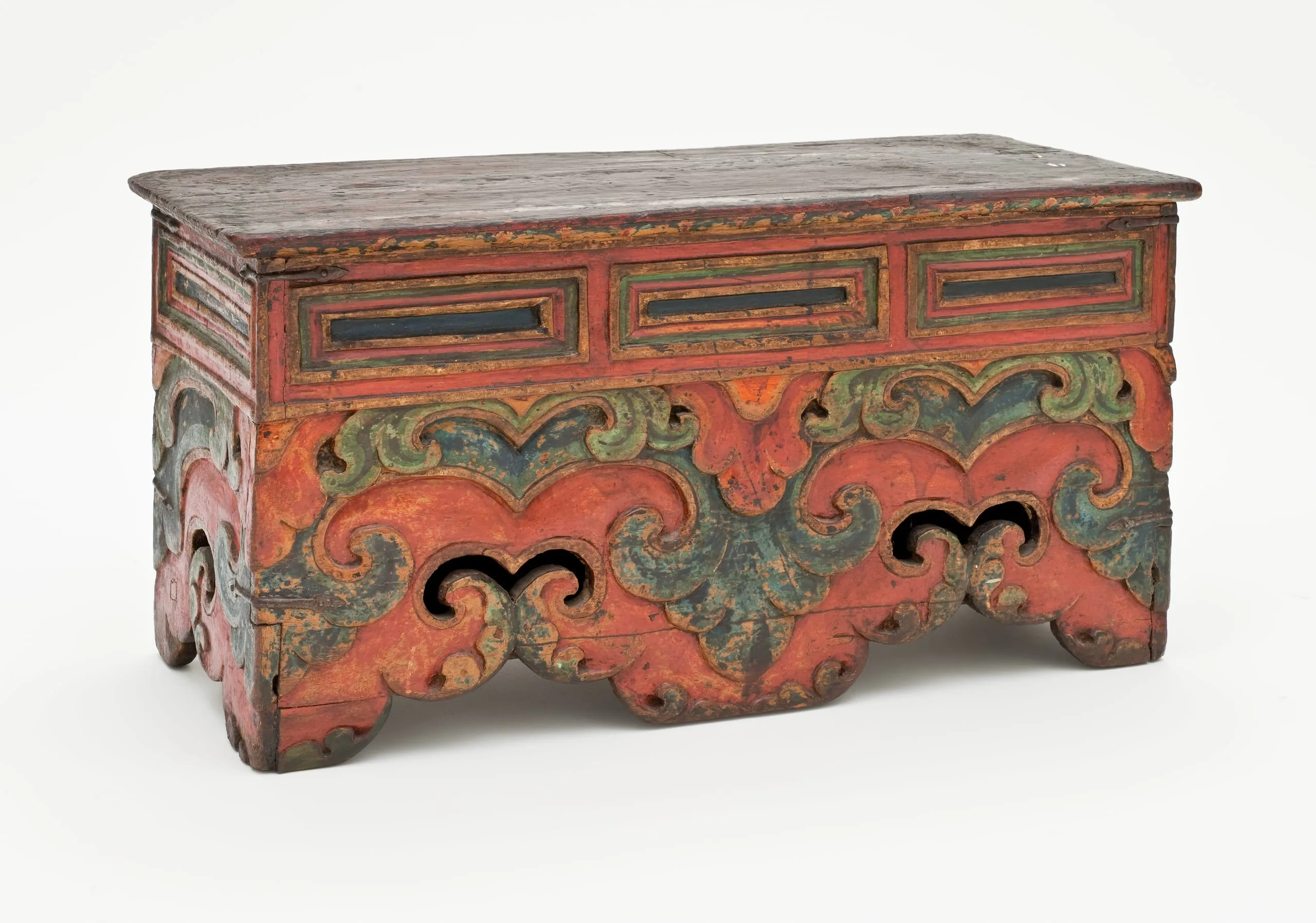
Painted wooden chest with flat lid and three recessed front panels above deeply carved polychrome scrollwork in coral red, slate blue, and sage green, with significant paint wear
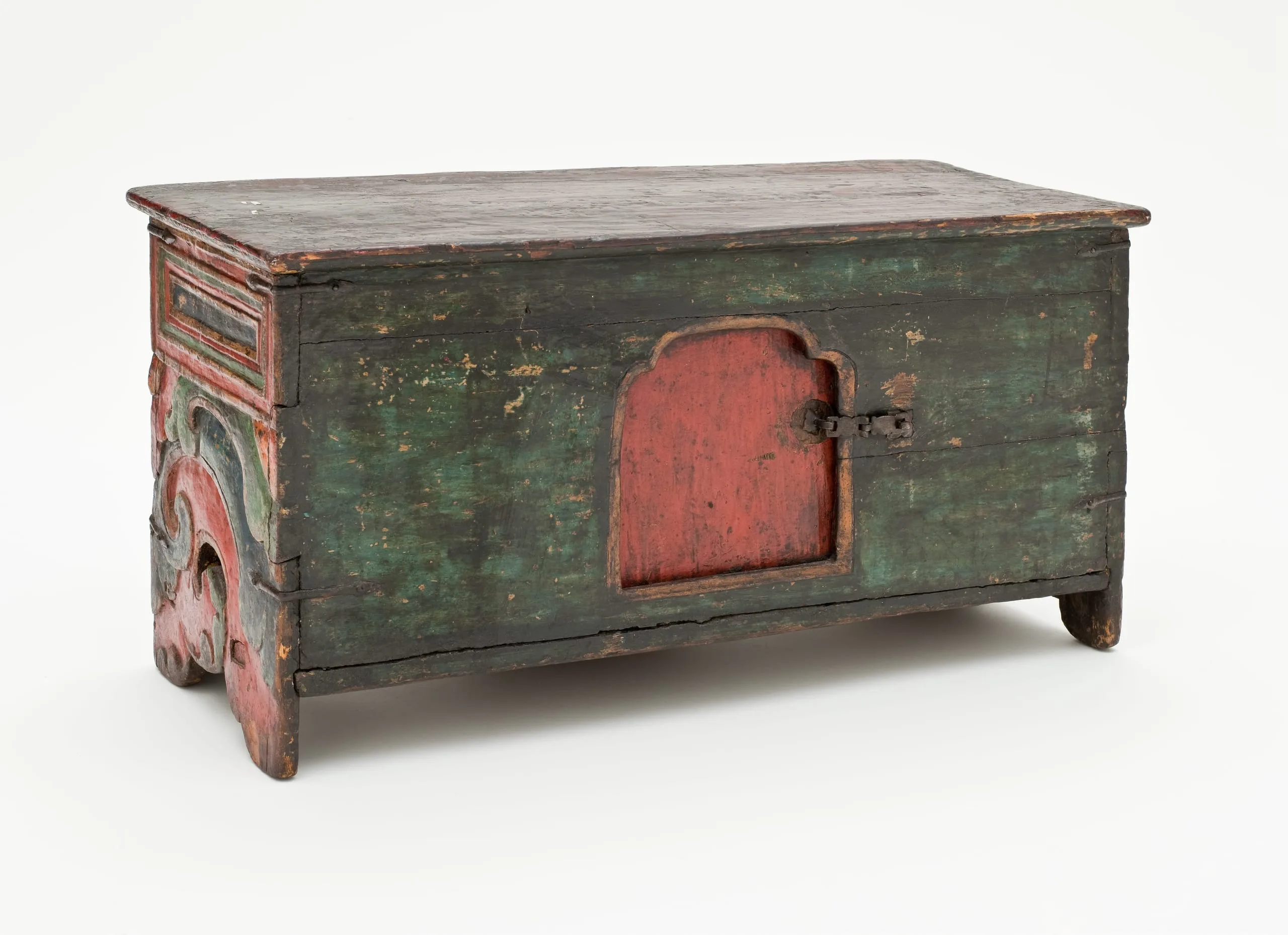
Painted wooden chest with heavily worn green surface, featuring a red arched panel on the front with iron hardware, carved and painted decorative motifs in red and blue on the side, and small bracket feet.
Artist or Maker
Unknown
Title
Table
Place Made
Tibet
Date Made
16th-17th century
Medium
Wood with mineral pigments; metal fittings
Dimensions
16 x 31 x 13 in. (40.64 x 78.74 x 33.02 cm)
Credit Line
Gift of Ruth Hayward, Ph.D. and Robert Hayward, M.D., in honor of Tibetan Buddhism, Tibetan people, art and culture, through the 2010 Collectors Committee
Accession Number
M.2010.78.6
Classification
Furnishings
Collecting Area
South and Southeast Asian Art
Curatorial Notes

This brilliantly painted small table takes its principal design conception and decoration program from the ancient Chinese decorative and symbolic motif of Auspicious Clouds (xiangyun) that was featured in Chinese painting, textiles, furniture, and architecture as early as the Shang Dynasty (1600-1046 BCE). In Chinese culture, clouds (especially five-colored clouds) are believed to be an auspicious harbinger and symbolic of Heaven, happiness, and prosperity. In Buddhism, clouds can symbolize the transitory nature of existence, much like the ephemeral nature of clouds.

A large cloud-form apron extends around the lower front and sides of the table, and functions as its legs. Pendant foliage branches in the center spread across the upper edge and down as corner wraps. The upper third of the table is a multicolored series of rectangles within rectangles. The now-unadorned topboard has a rounded edge embellished with painted scrolling foliage. The plain back is painted green and has a red sliding compartment door with a lobed opening and locking hasp.

See David Kamansky, ed., Wooden Wonders: Tibetan Furniture in Secular and Religious Life (Pasadena: Pacific Asia Museum and Chicago: Serindia Publications, 2004), pp. 198-199, no. 22.