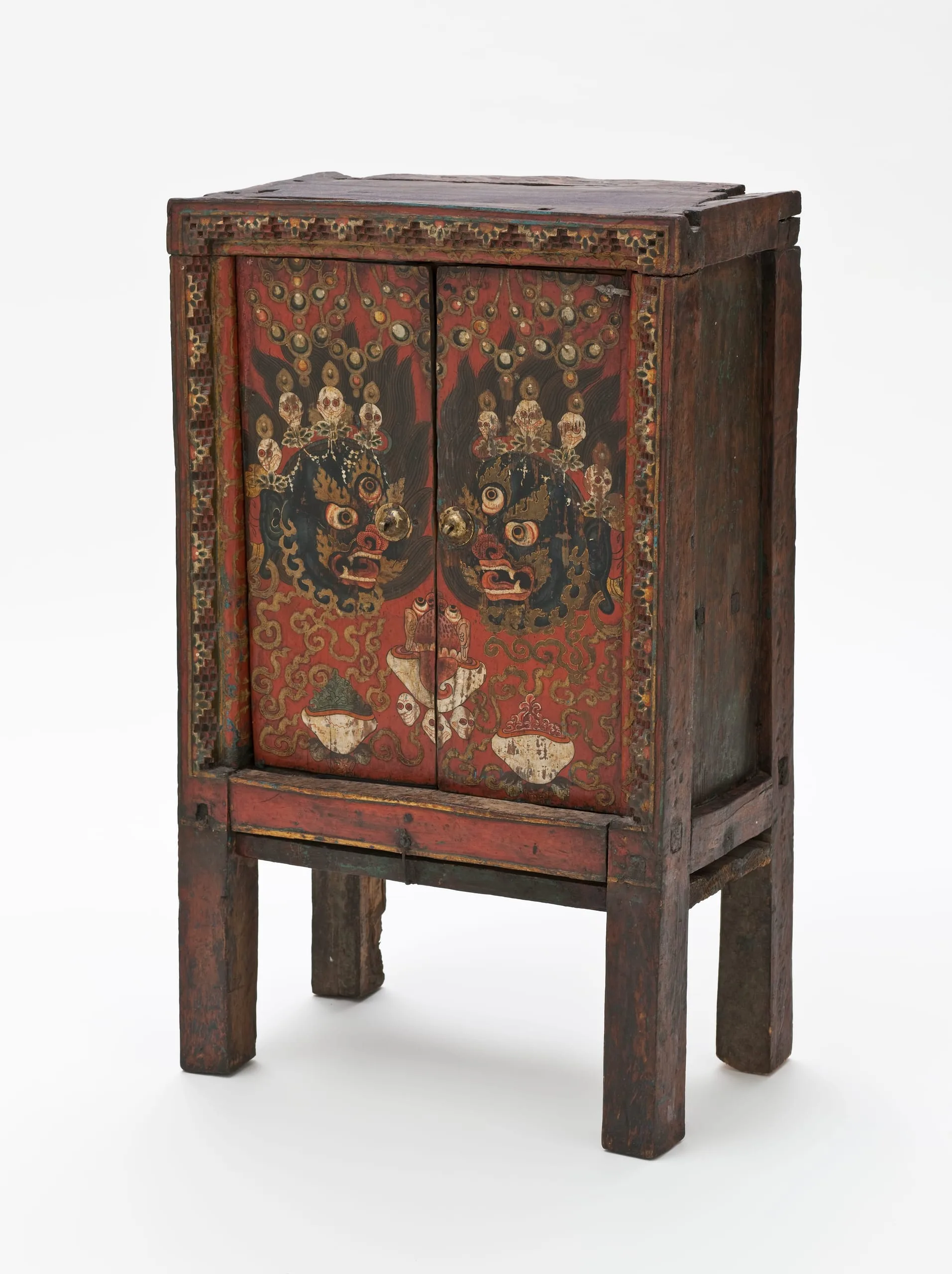
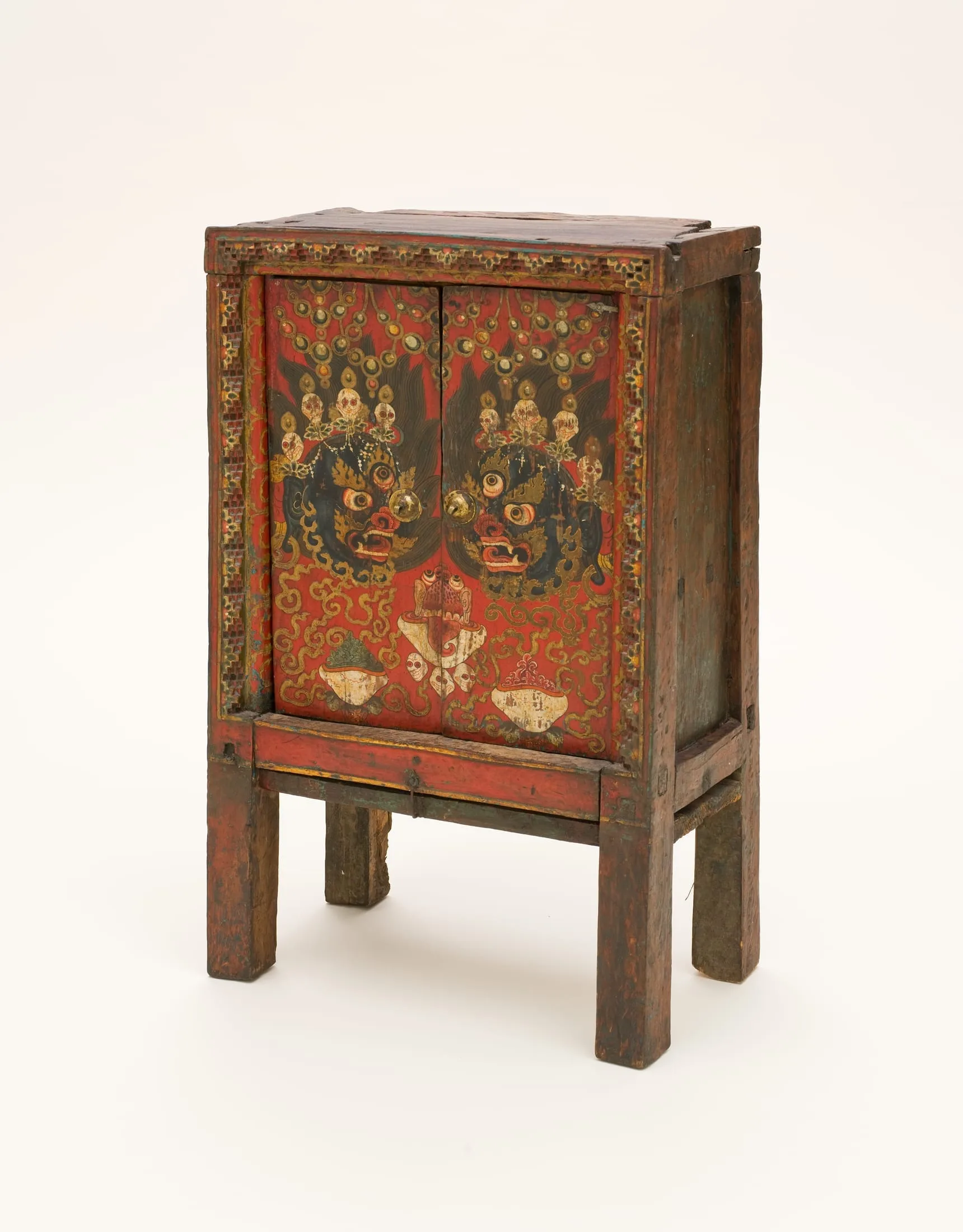
This offering cabinet (torgam) would have been used in the Protectors’ Chapel (gonkang) of a Tibetan monastery to protect and conceal consecrated cakes (torma) made of butter and roasted barley flour. They were offered as propitiation to the Buddhist protective deities (Sanskrit: dharmapala; Tibetan: ch’os-skyon), who are believed to defend Buddhism and its teachings and institutions, as well as to destroy the hindrances of its followers. Monks make offerings to the dharmapalas for their aid in overcoming negative forces that prevent enlightenment. Lay Buddhists also worship them to obtain earthly blessings, such as the attainment of wealth or longevity. The decoration of the monastic offering cabinets was associated with wrathful deities, and many were painted with Tantric imagery. The leader of the dharmapala is Mahakala (Sanskrit: Great Time/Death), who is known in Tibetan as nag po chen po (Great Black One). He can be depicted with either black or blue skin color. Mahakala’s frightening face and spiritual anger are thought to overcome obstacles and enemies of Buddhism.
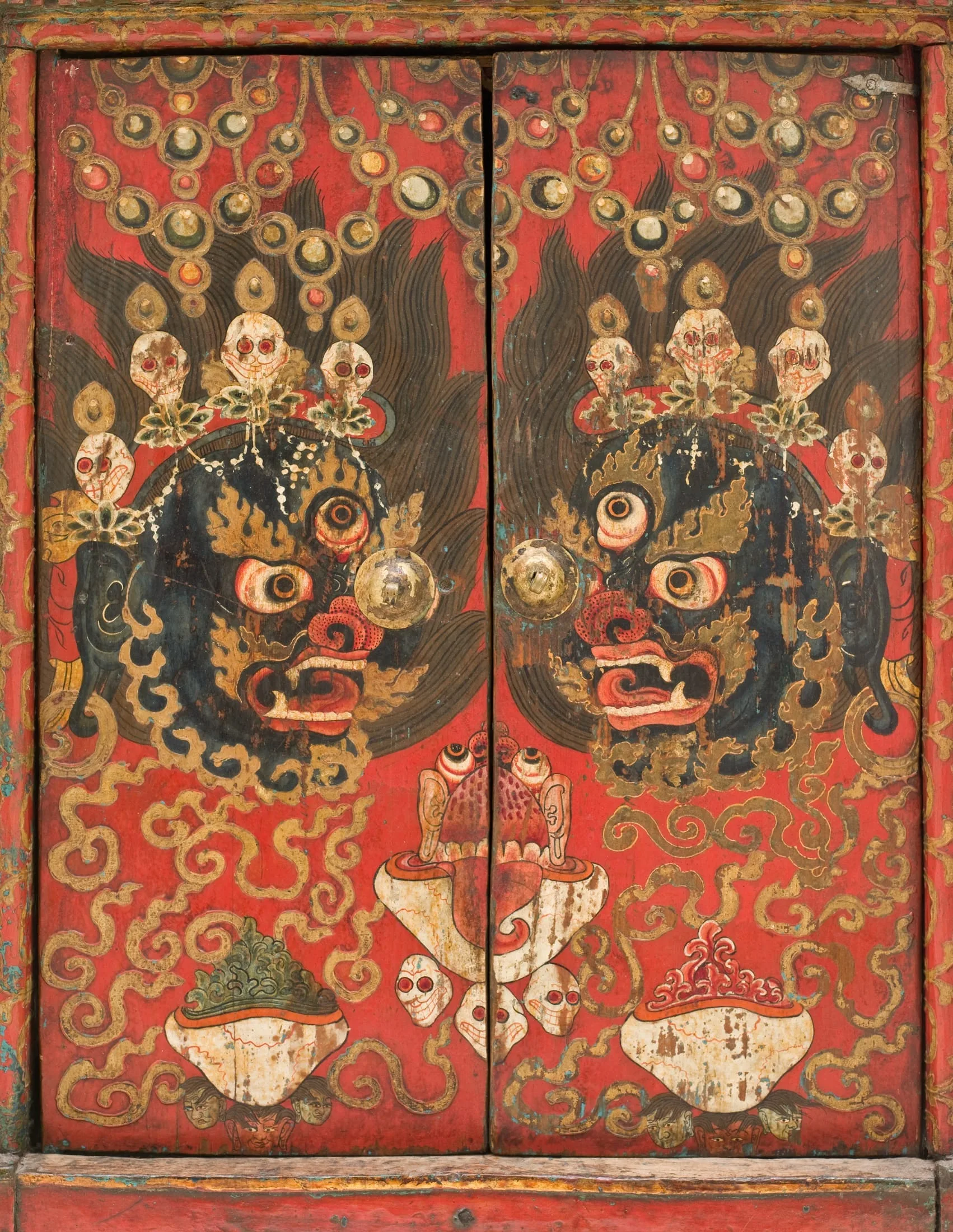
The front of the cabinet is adorned with two mirror-image floating fierce faces of Blue Mahakala. He has a crown of skulls, snarling mouth, and three bulging eyes enabling him to see the past, present, and future. Beneath him are three skull cup offerings filled with human substances. The central skull cup contains eyes, ears, tongue, heart, and other organs. The top is embellished with a jewelry swag and the bottom with scrolling flames or foliage in gold. The doors are set within an architectural border pattern of mini cubes (chötseg). Additional architectural details are painted in the interior. See also M.2005.94.1 and M.2006.62.2.
See David Kamansky, ed., Wooden Wonders: Tibetan Furniture in Secular and Religious Life (Pasadena: Pacific Asia Museum and Chicago: Serindia Publications, 2004), pp. 310-311, no. 129.