LACMA

ShopMembershipMyLACMATickets
LACMA
Los Angeles County Museum of Art
5905 Wilshire Blvd.
Los Angeles, CA 90036
info@lacma.org
(323) 857-6000
Sign up to receive emails
Subscribe
© Museum Associates 2025

Museum Hours

Monday

11 am–6 pm

Tuesday

11 am–6 pm

Wednesday

Closed

Thursday

11 am–6 pm

Friday

11 am–8 pm

Saturday

10 am–7 pm

Sunday

10 am–7 pm


  • About LACMA
  • Jobs
  • Building LACMA
  • Host An Event
  • Unframed
  • Press
  • FAQs
  • Log in to MyLACMA
  • Privacy Policy
© Museum Associates 2025
Collections

Unknown
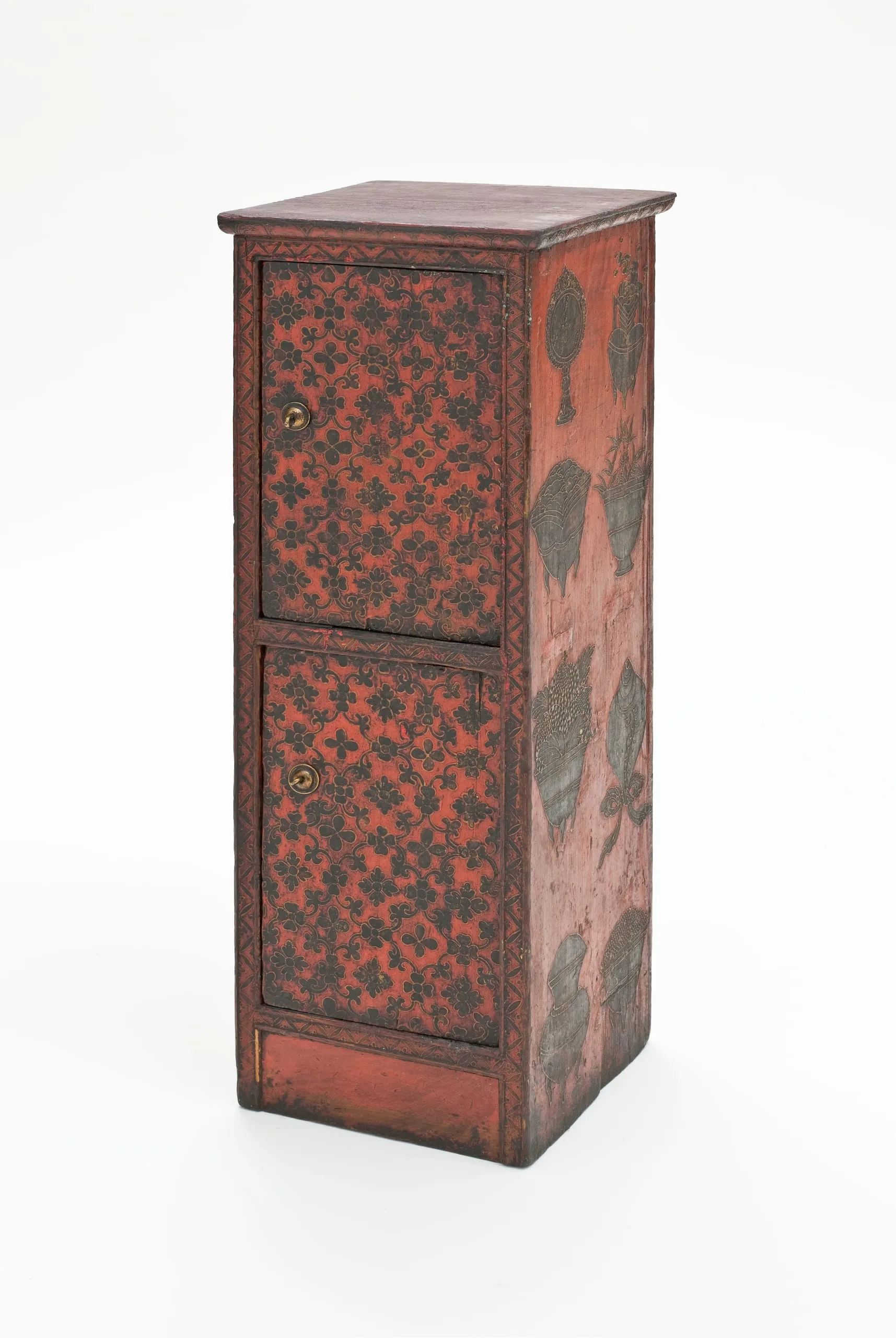
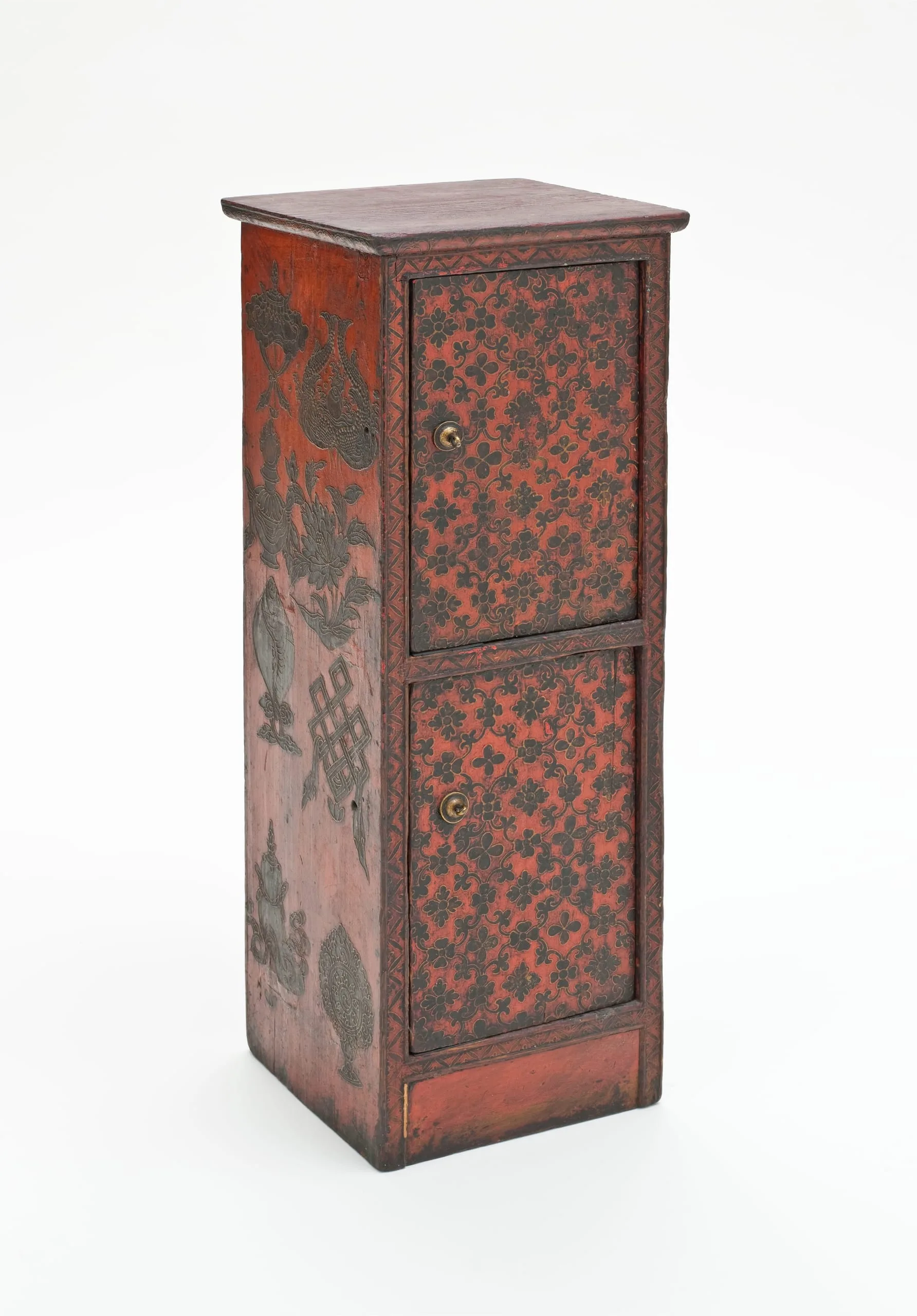
Butter Lamp Stand and Cabinetlate 17th-early 18th century

Not on view
Tall narrow lacquered cabinet with brick-red ground and black allover floral pattern on two doors, with figural motifs on the worn side panel
Tall narrow wooden cabinet with red ground, two doors fitted with small brass knobs, decorated with dense dark painted floral lattice on door panels and auspicious motifs on the side including an endless knot and ceremonial vessels.
Artist or Maker
Unknown
Title
Butter Lamp Stand and Cabinet
Place Made
Tibet
Date Made
late 17th-early 18th century
Medium
Wood with mineral pigments and gesso; brass fittings
Dimensions
33 x 11 1/2 x 11 1/2 in. (83.82 x 29.21 x 29.21 cm)
Credit Line
Gift of the 2010 Collectors Committee
Accession Number
M.2010.82.3
Classification
Furnishings
Collecting Area
South and Southeast Asian Art
Curatorial Notes

This elegant stand was used as a pedestal for a ritual butter lamp (see M.78.23a and M.78.23b). Butter lamps are quintessential accoutrements of Tibetan altars and domestic shrines. They are made in the form of a chalice used as elite Western secular goblets and as consecrated drinking vessels in Christian liturgical services. The chalice form was likely adopted from Central Asian Christian communities in the 7th-8th centuries. Yak butter is traditionally burned in Tibetan butter lamps during their ritual usage.

The two large compartments in the cabinet open with hinged doors on the front, which are decorated with a floral trellis pattern and framed with a diaper pattern. They would have been used for storage, perhaps the butter lamp when it was not in active ceremonial use. The sides of the stand are adorned with propitious motifs. On one side are the Eight Auspicious Symbols: lotus, endless knot, golden fishes, parasol, victory banner, golden treasure vase, white conch shell, and wheel of the law. On the other side are the Eight Auspicious Substances: mirror, precious medicine, yoghurt, durva grass, bilva fruit, right-spiraling white conch, vermilion powder, and mustard seed. The top is unadorned. See Robert Beer, The Encyclopedia of Tibetan Symbols and Motifs (Boston: Shambala Publications, 1999), pp. 171-193.