The elaborate imagery used to embellish Tibetan furniture not only parallels that of Tibetan painted religious scrolls (thangkas) and manuscripts, iconic sculpture, and ritual objects, but also presents an expanded repertoire of themes and stylistic treatments that are crucial for understanding the totality and range of dramatic expression in Tibetan art. Tigers, as well as dragons, snow lions, and mythical creatures, are often represented in the formal religious painting and sculpture used in the Tibetan Buddhist canonical tradition. In those tradition-bound works, however, animals and the auspicious symbols are typically shown as small subsidiary elements of a larger composition. In contrast, the Tibetan furniture designers were much freer to express their creativity than they were when making canonical sculpture and painting. Accordingly, they would often enlarge and enliven the animals or symbols as the primary subject of the decoration. Thus, the powerful imagery and elegant sense of design used to decorate Tibetan furniture is not only indicative of its superb aesthetic merit, but it also has strong art historical significance.
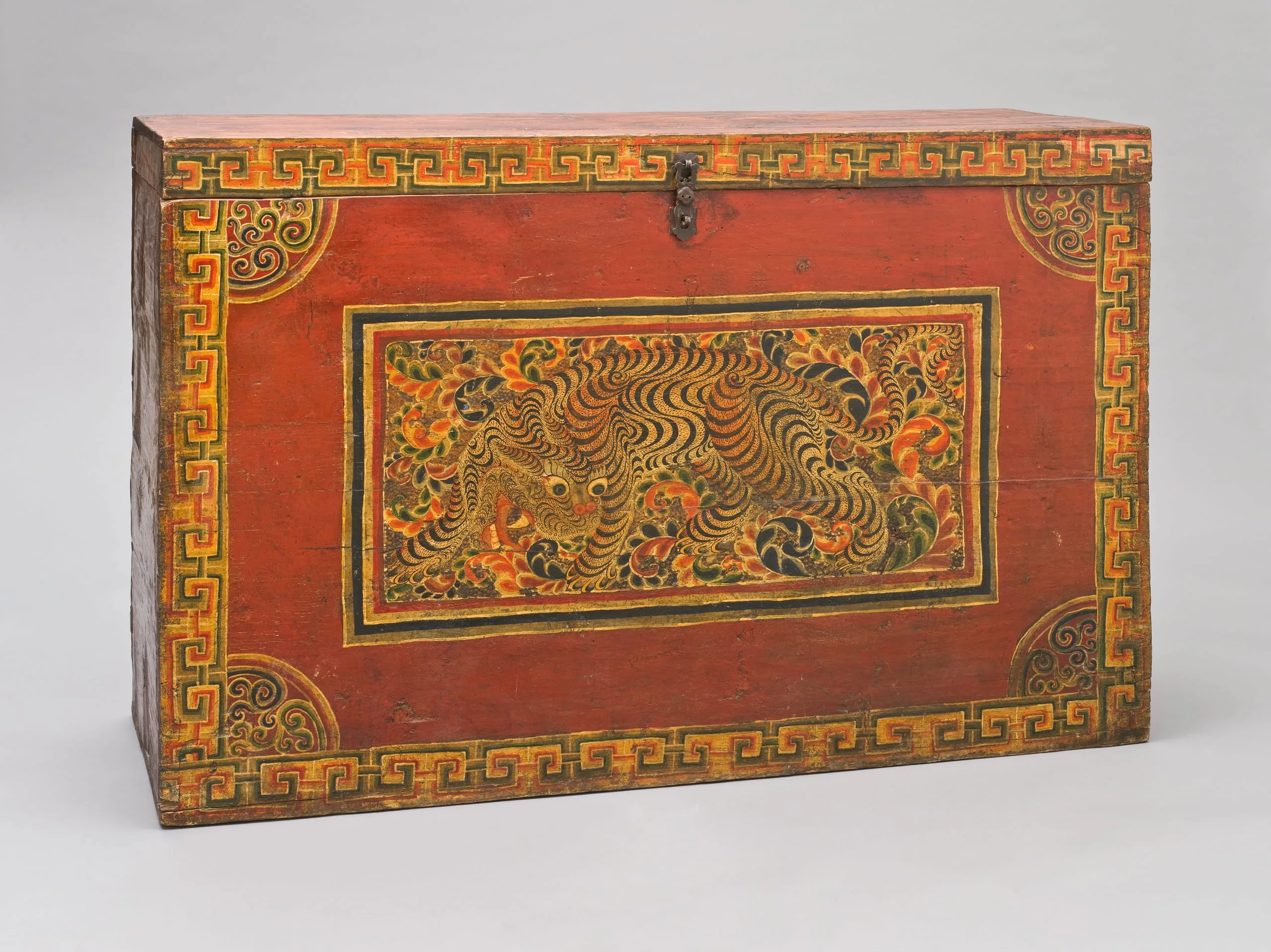
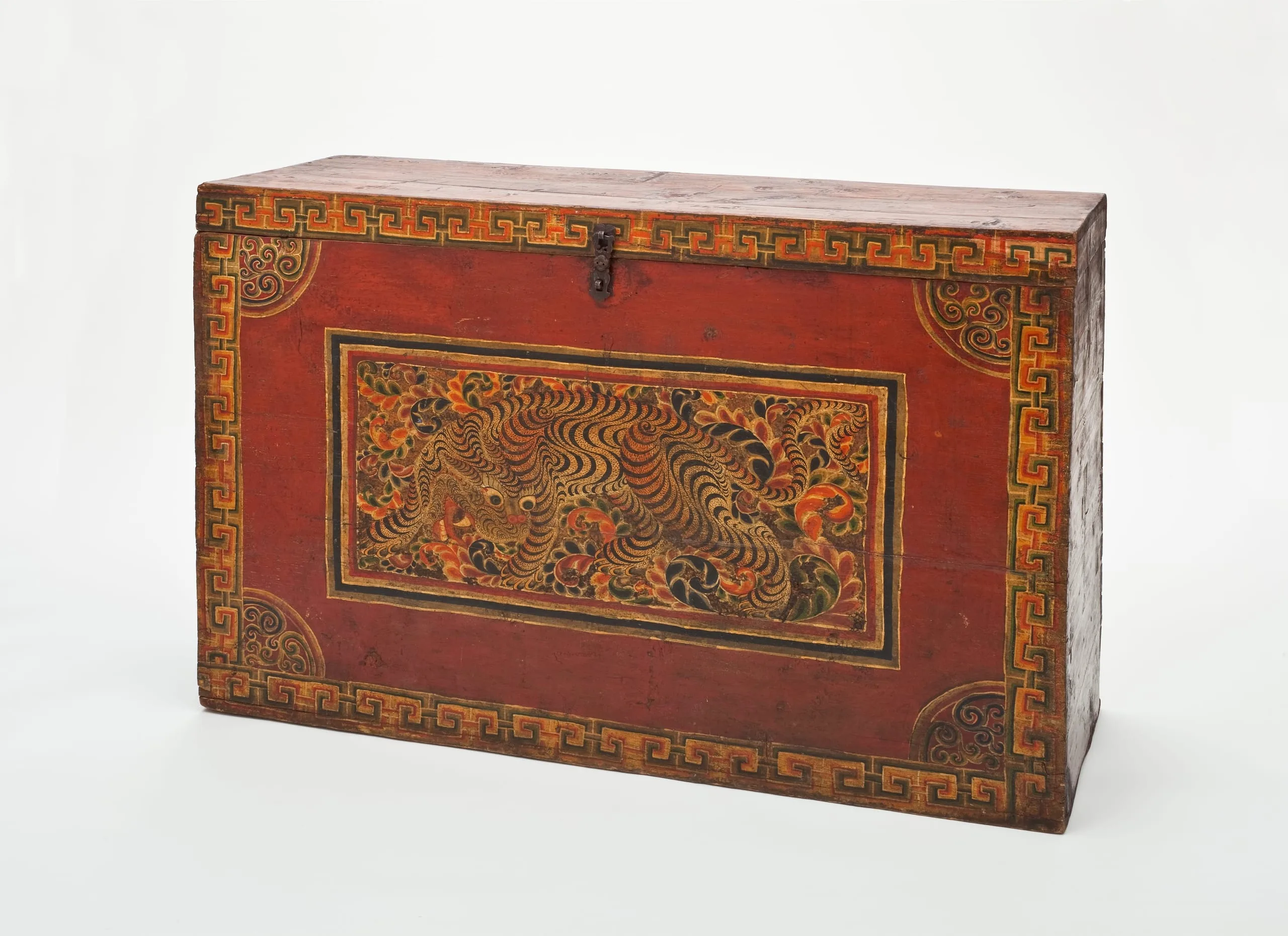
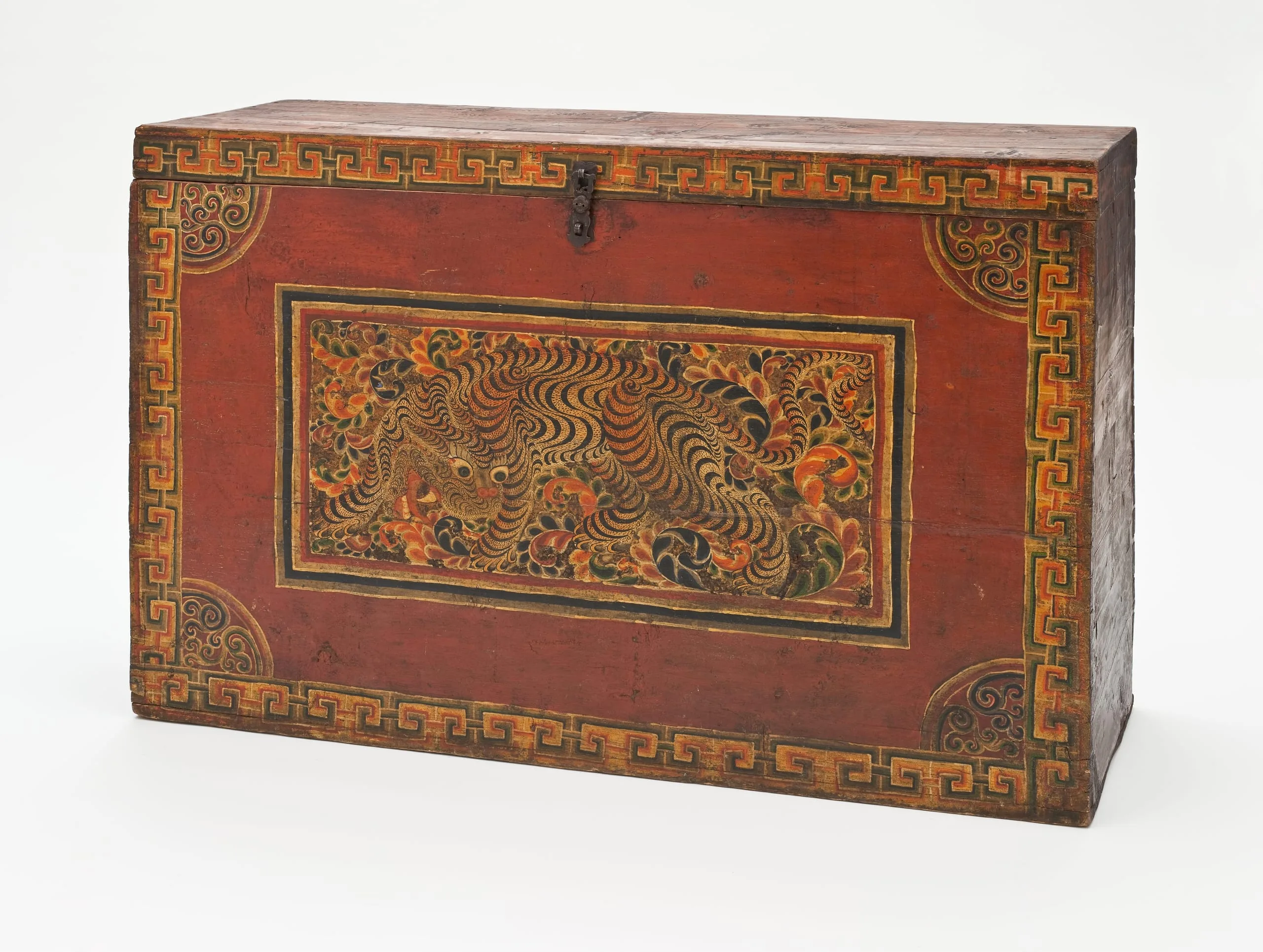
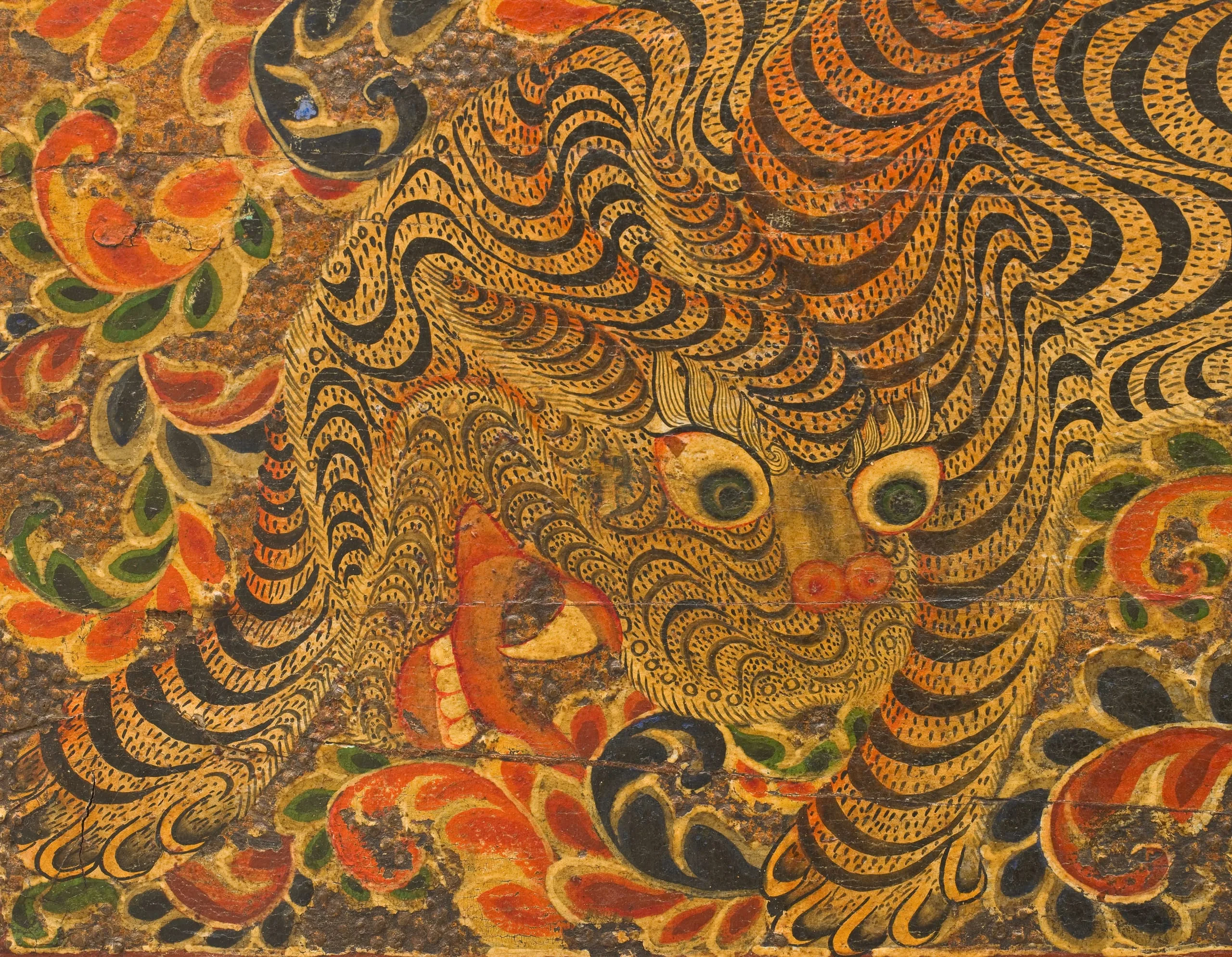
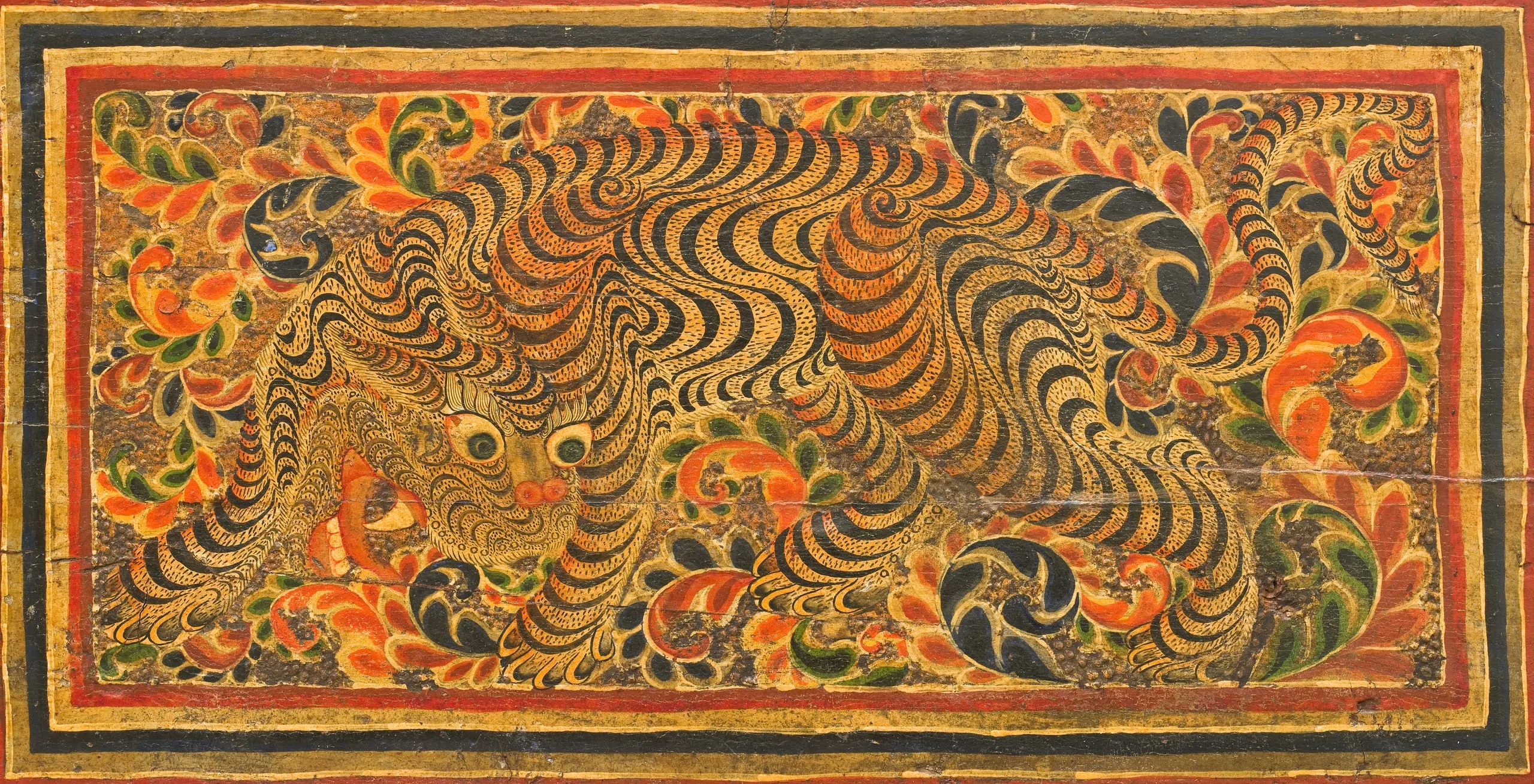
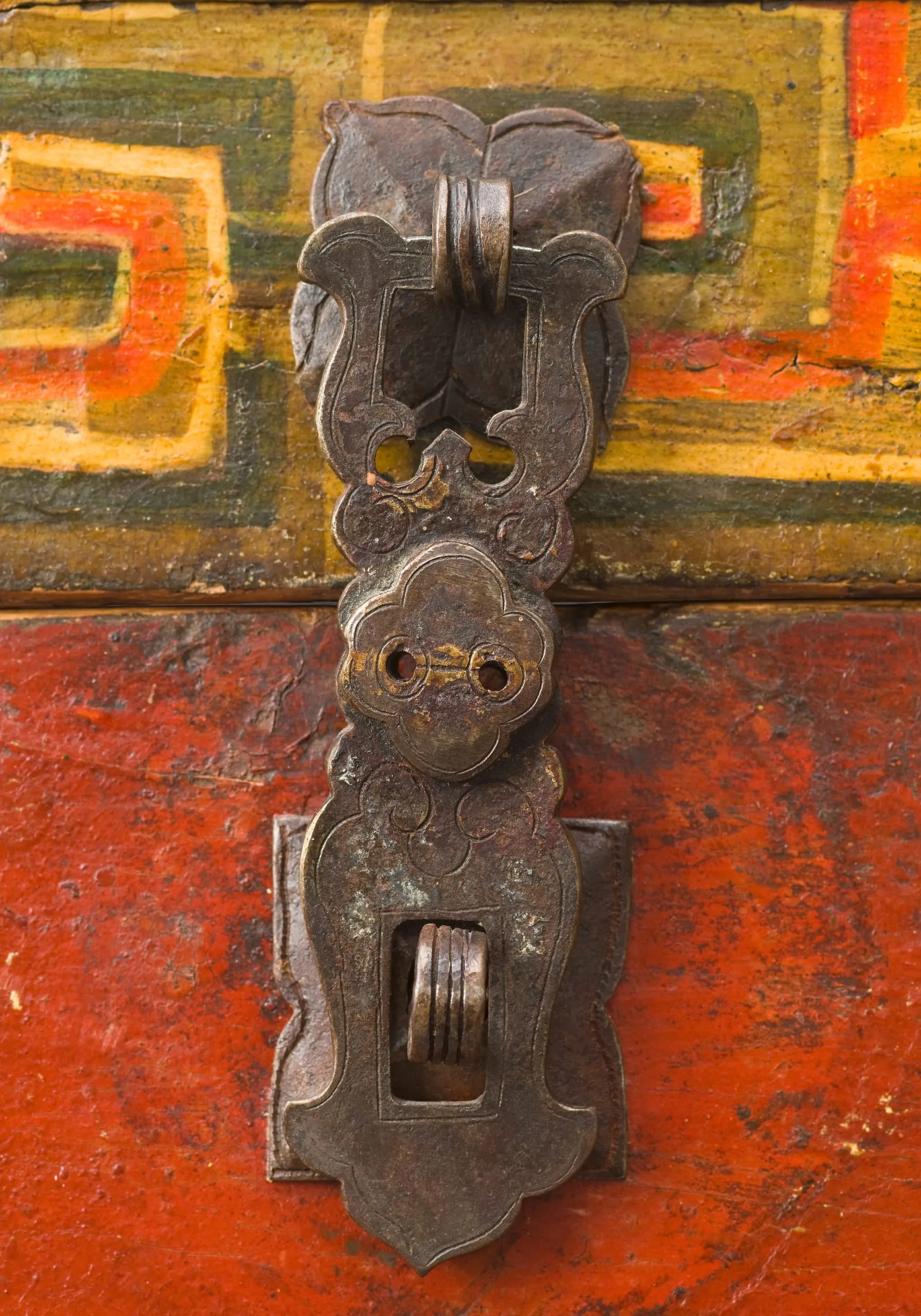
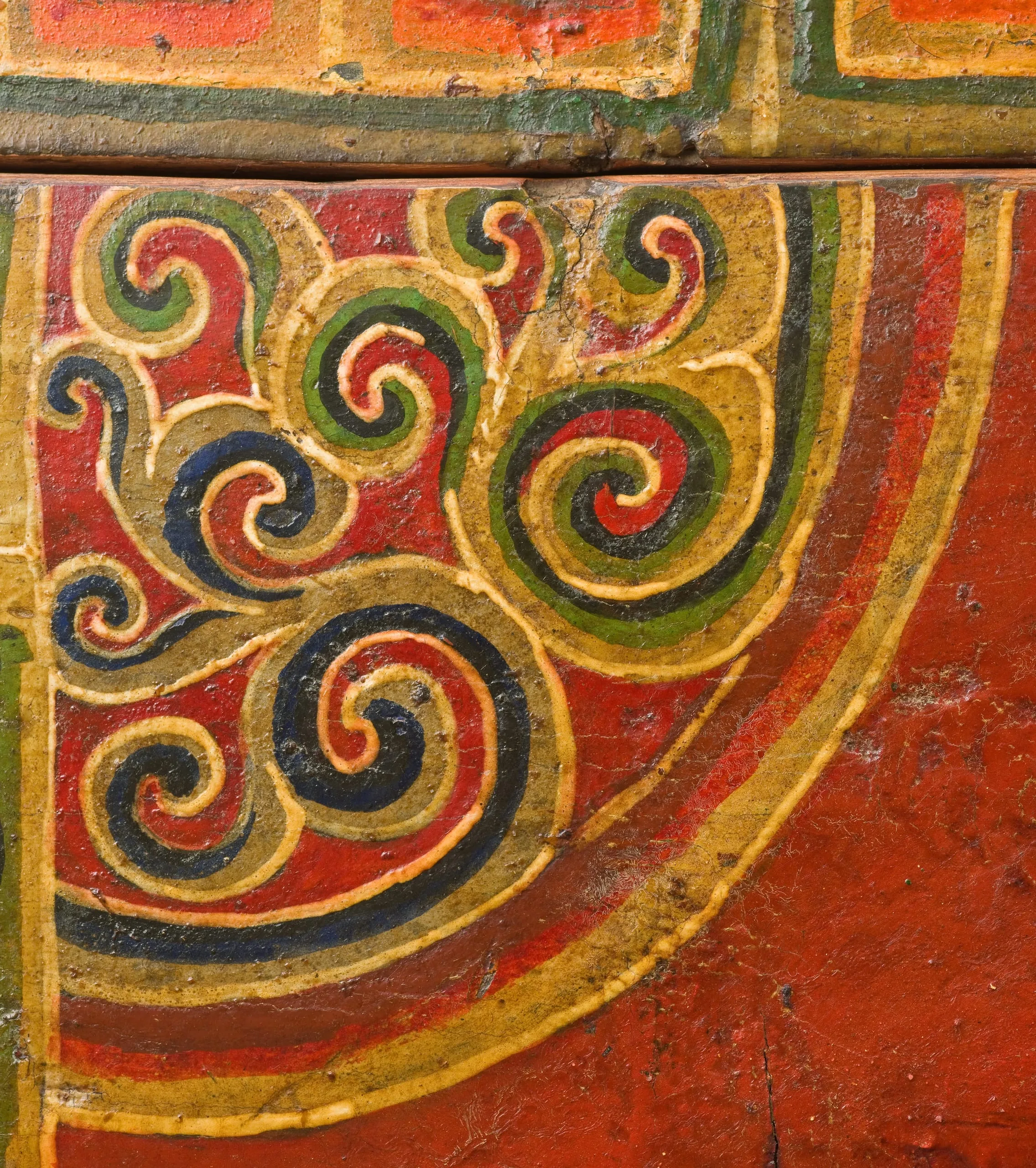
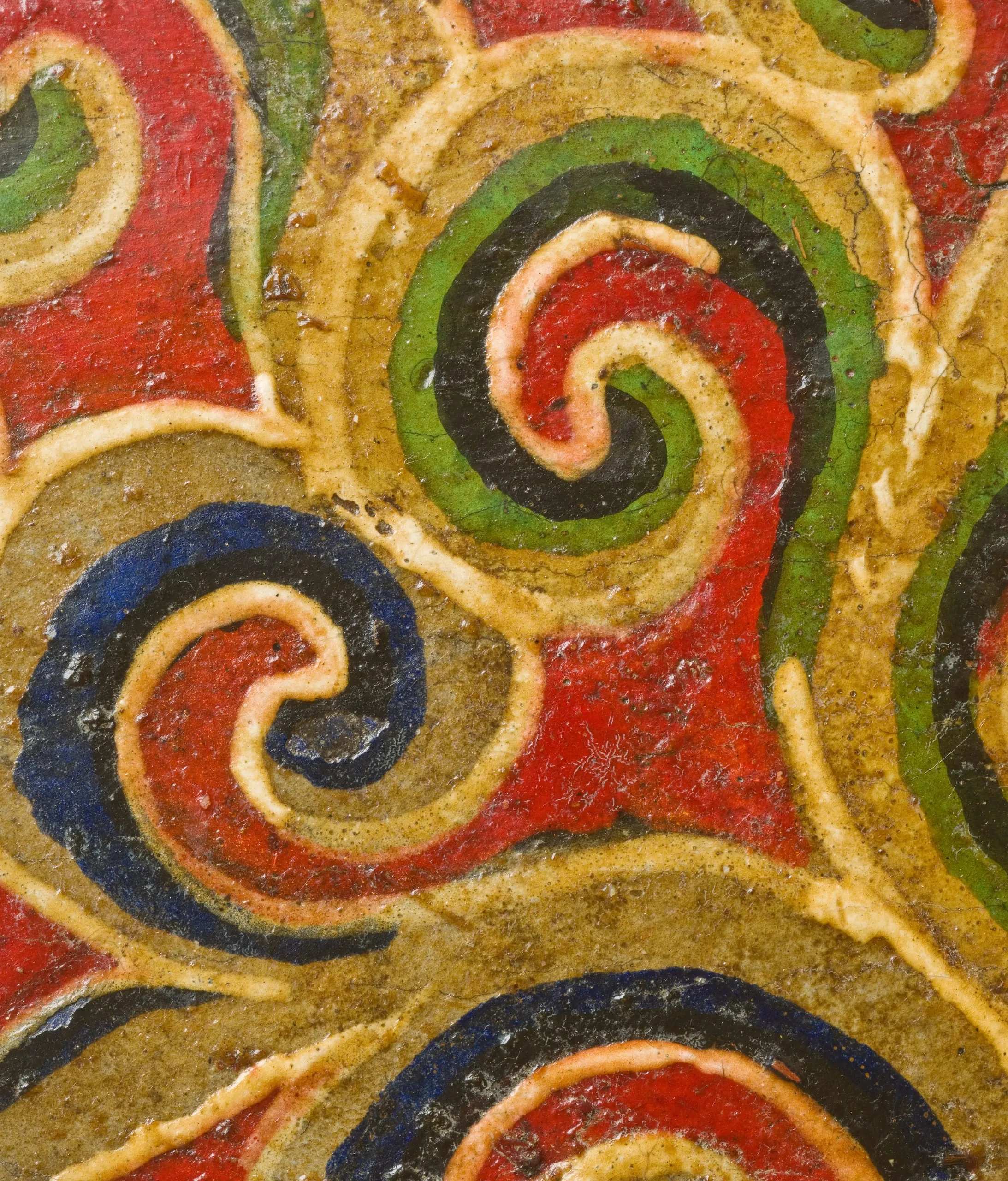
This can readily be demonstrated by this large painted Trunk with Tiger, which is attributed to the Kham region of eastern Tibet in the 19th or early 20th century. Surrounded by an outer border of stylized Greek key motifs with foliate corner designs, the center panel depicts a snarling tiger, alert and poised, in a field of vibrant flowers. The tiger’s bold stripes form a rhythmic pattern that enlivens him with a dynamic vitality and sense of movement, perfectly suited to express his wild nature and widely believed mystical power. This powerful tiger is indisputably one of the great animals in Asian art!
See David Kamansky, ed., Wooden Wonders: Tibetan Furniture in Secular and Religious Life (Pasadena: Pacific Asia Museum and Chicago: Serindia Publications, 2004), p. 274, no. 96.