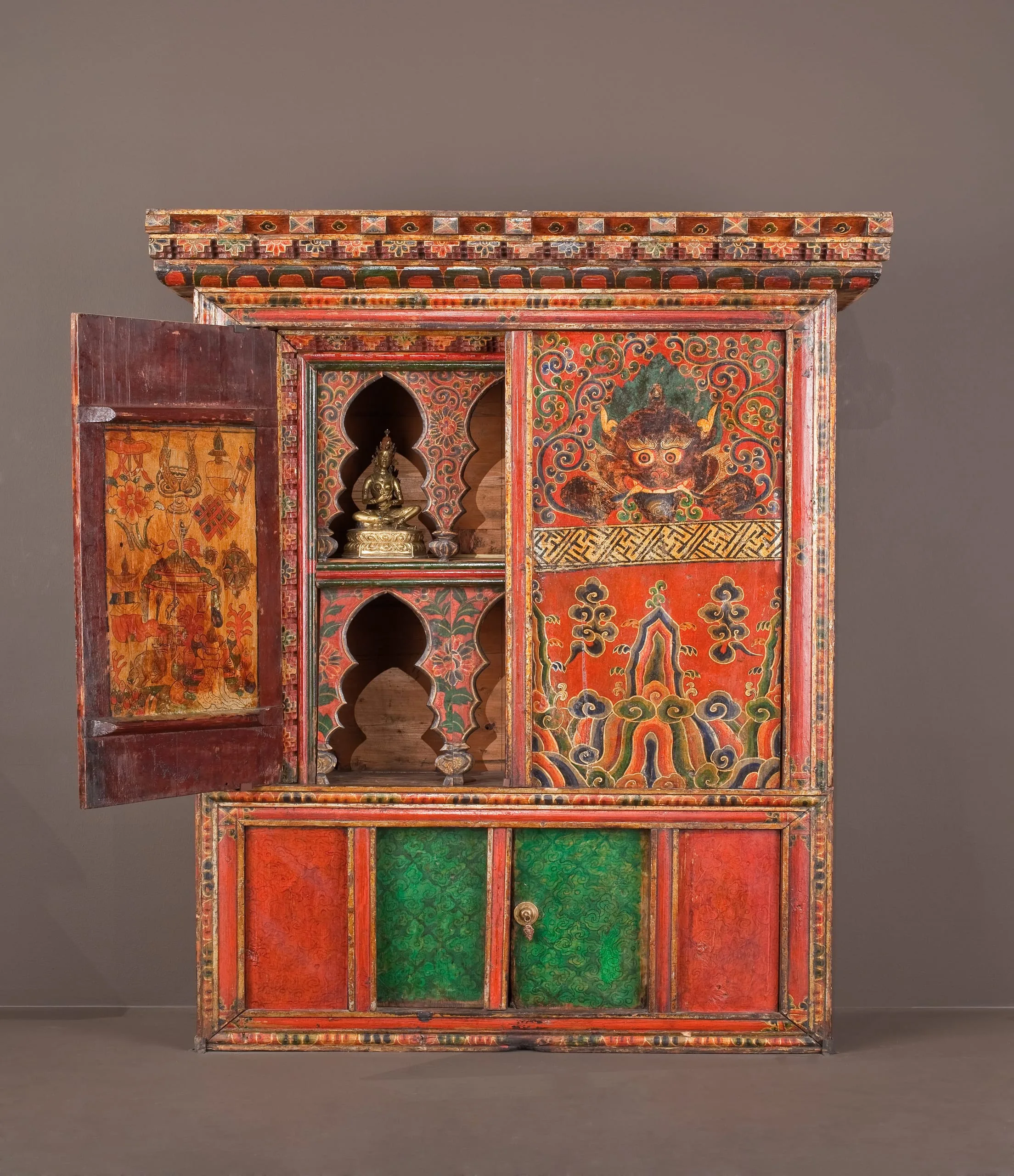
Tibetan cabinets, typically furnished with doors in the front, were used on temple altars to store religious icons. They were also found in the private chapels of wealthy households. From the late 18th century onward, decorative cabinets were also used to store mundane items in monasteries secular houses.
Altar cabinets from the Kham region of eastern Tibet, such as this exceptional example attributed to the 19th–20th century, frequently have internal shelves with ornamental arches in the front that form alcoves for displaying icons. They also have ornate doors for protection that are adorned with various apotropaic motifs. Substantial altar cabinets often have an elaborate lentil called a crown that is usually embellished with geometric designs. This altar cabinet has six interior display niches on top in a storage compartment on the bottom. The exterior of the main cabinet doors is adorned with mythical creatures (zipaks), similar to the Indian "Face of Glory" (kirttimukha), in a field of scrolling foliage on the upper half. The lower half is ornamented with mountains rising out of the ocean and stylized clouds reminiscent of designs found on Qing Dynasty (1644-1911) robe borders. The interior of the main doors are graced with depictions of ritual offerings and auspicious symbols.
See David Kamansky, ed., Wooden Wonders: Tibetan Furniture in Secular and Religious Life (Pasadena: Pacific Asia Museum and Chicago: Serindia Publications, 2004), p. 283, no. 103.