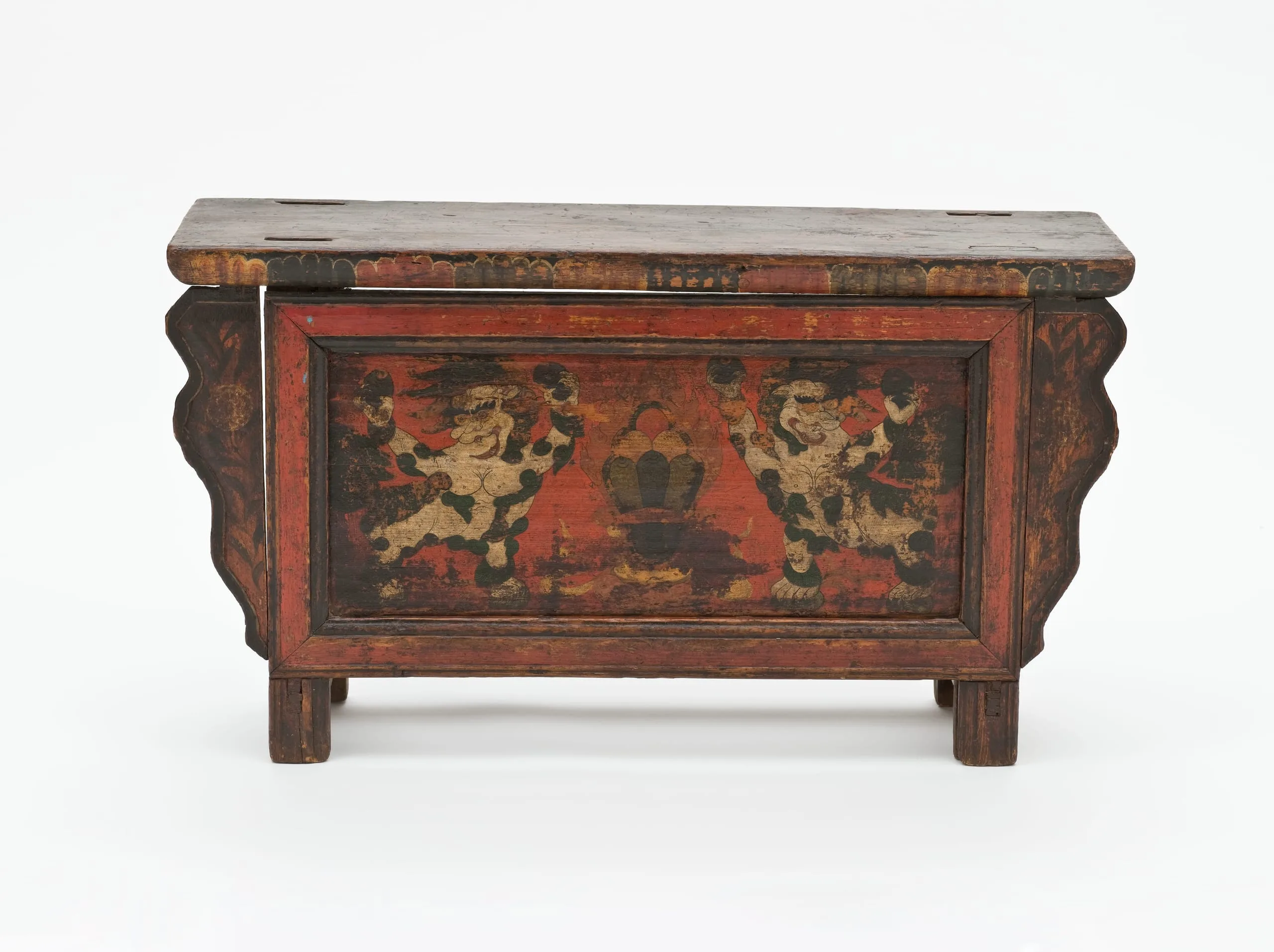
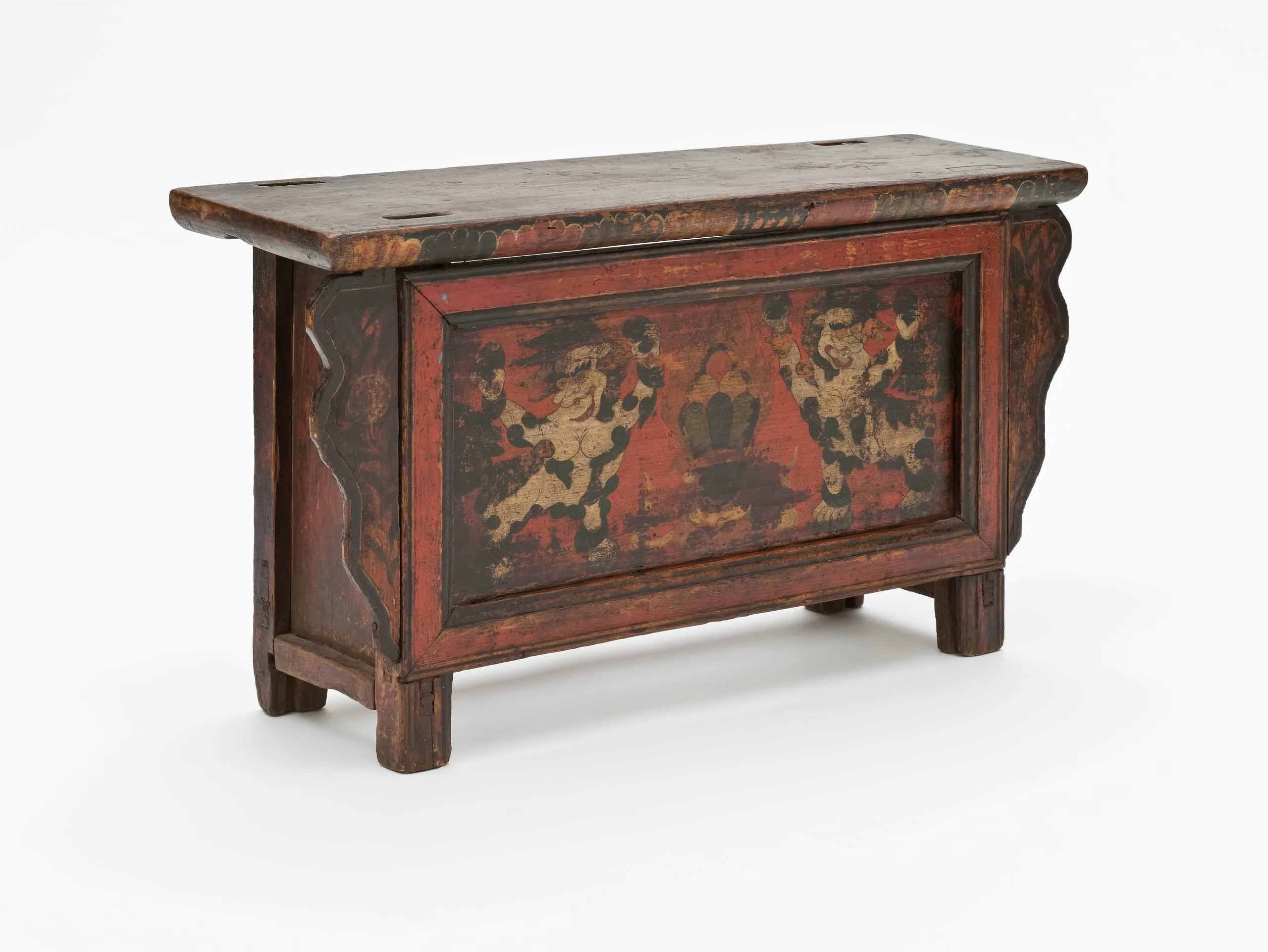
Tables were a quintessential accoutrement in Tibetan monasteries, temples, and shrines in many private homes. They facilitated religious ceremonies by displaying and storing various ritual objects, musical instruments, and offerings, and by supporting sacred texts to be read. See Tony Anninos, "Tibetan Tables: The Evolution of Style and Function," in David Kamansky, ed., Wooden Wonders: Tibetan Furniture in Secular and Religious Life (Pasadena: Pacific Asia Museum and Chicago: Serindia Publications, 2004), pp. 95-105.
This table is adorned on the front with painted decorations of a pair of animated standing snow lions holding precious jewels and flanking a stand with flaming wish-fulfilling gems. The front edge of the topboard has lotus petals in alternating red and green paint with gold outlines. Attached to the front legs are flanged panels derived from Chinese furniture traditions. See Kamansky, ed., p. 225, no. 49. See also AC1992.75.1 and M.2010.83.2.