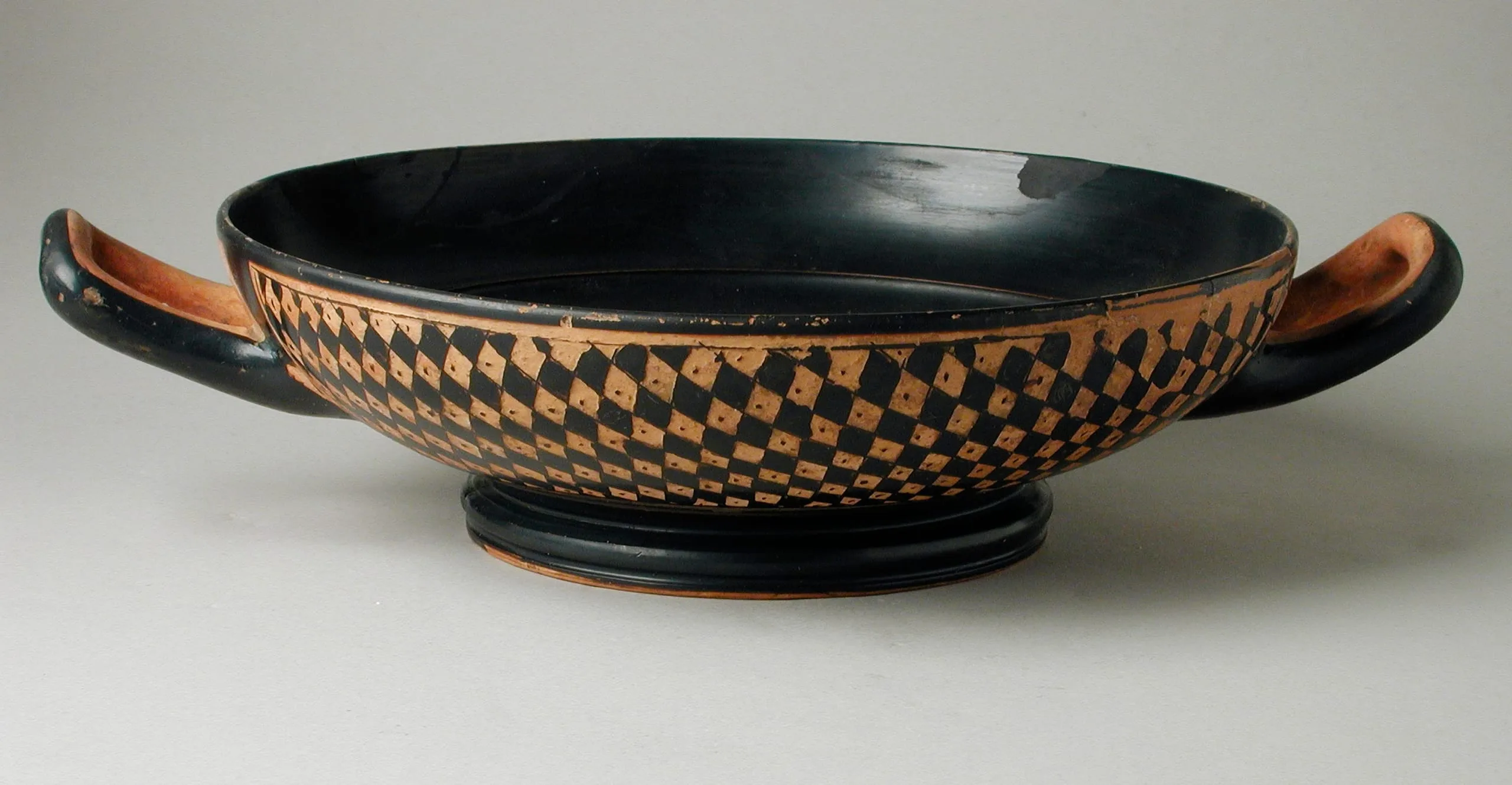
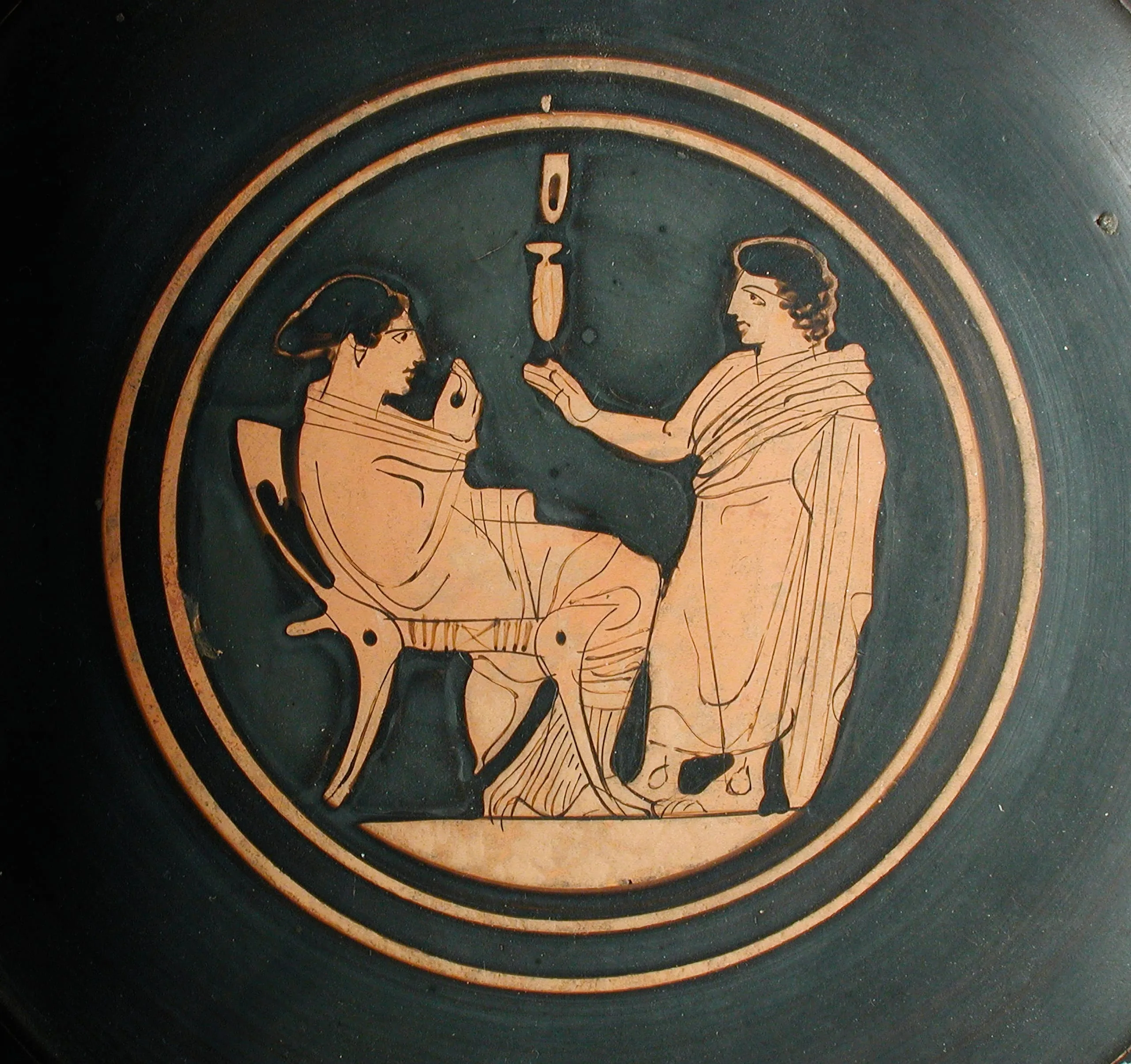
This stemless cup (kylix) is painted in the red-figure style, where slip (liquified clay) that turned black during firing was applied to the background and outlines of figures, while the figures themselves were left in the natural red-orange color of the clay (reserve). The vessel features an eye-catching geometric pattern on its exterior, made up of alternating black and reserved clay lozenges with black dots in each reserved diamond. The glossy black slip was applied to the two handles, and a right-facing goat, painted with the slip, stands underneath each handle. On the interior of the cup, a tondo contains a seated woman and a standing male youth. The woman wears a himation (mantle) and chiton (long tunic) and sits on a klismos (chair) with her right hand raised, while the boy wears a himation and extends his right arm toward the woman. An alabastron (container for oil or perfume) hangs from a wrist strap on the wall, revealing that the scene takes place indoors.
This ceramic cup was intended for drinking wine at a symposium, a highly structured social gathering for aristocratic men that featured drinking, philosophical discussions, music, and entertainment. Like in Plato’s Symposium, men would recline on couches and discuss specific topics, while others played instruments or recited poetry. The symposium was also a place for party games and gossip, and these activities were accompanied by professional musicians, dancers, and courtesans.