- Title
- Situla Inscribed for Sheshonq
- Date Made
- 26th Dynasty, reigns of Apries and Amasis (589–526 BCE)
- Medium
- Bronze
- Dimensions
- Handle height: 5 5/8 in. (14.3 cm)
Diameter (Diameter): 3 11/16 in. (9.37 cm)
12 × 5 5/16 × 3 11/16 in. (30.48 × 13.49 × 9.37 cm)
- Accession Number
- 50.37.16.1
- Curatorial Notes
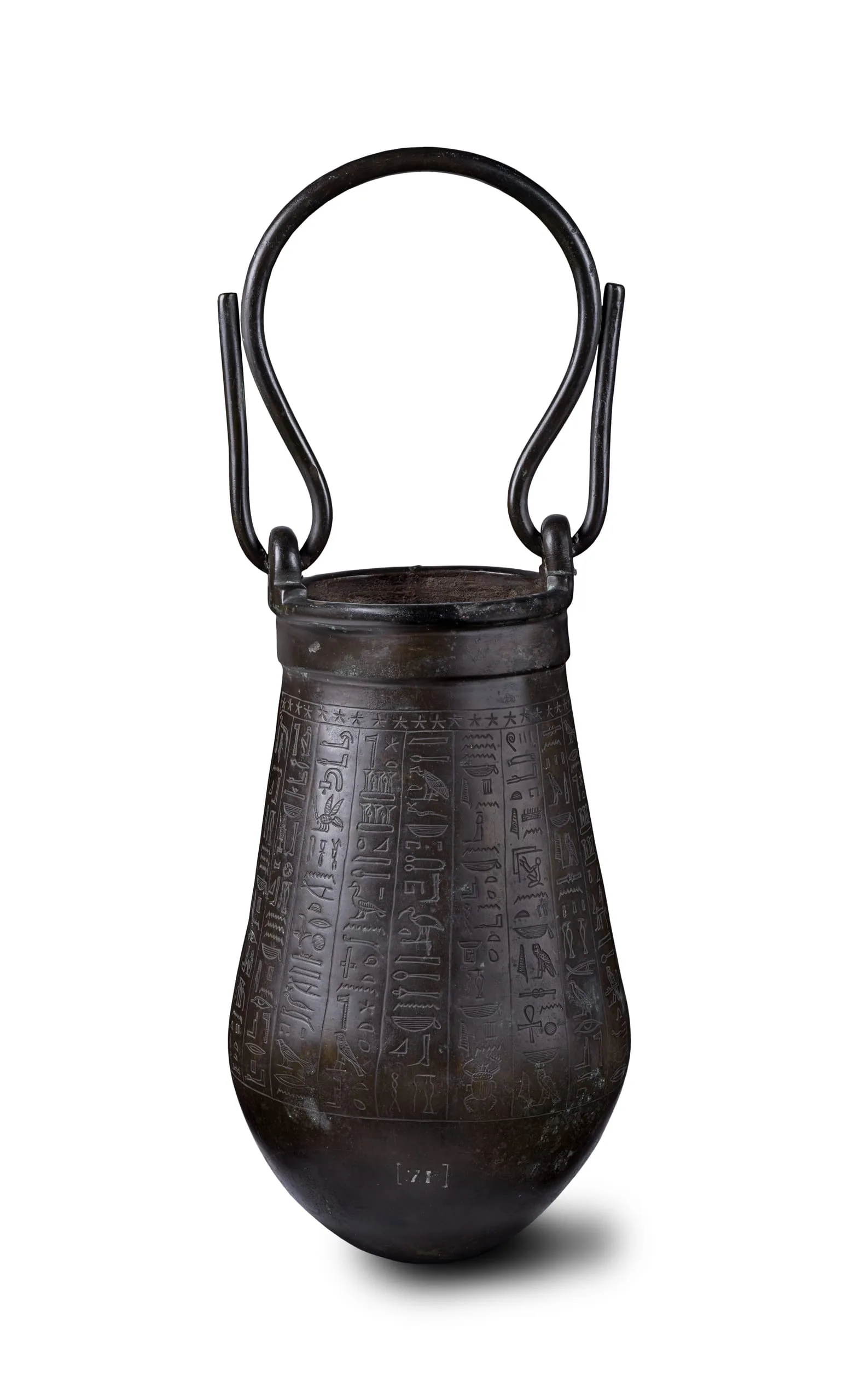
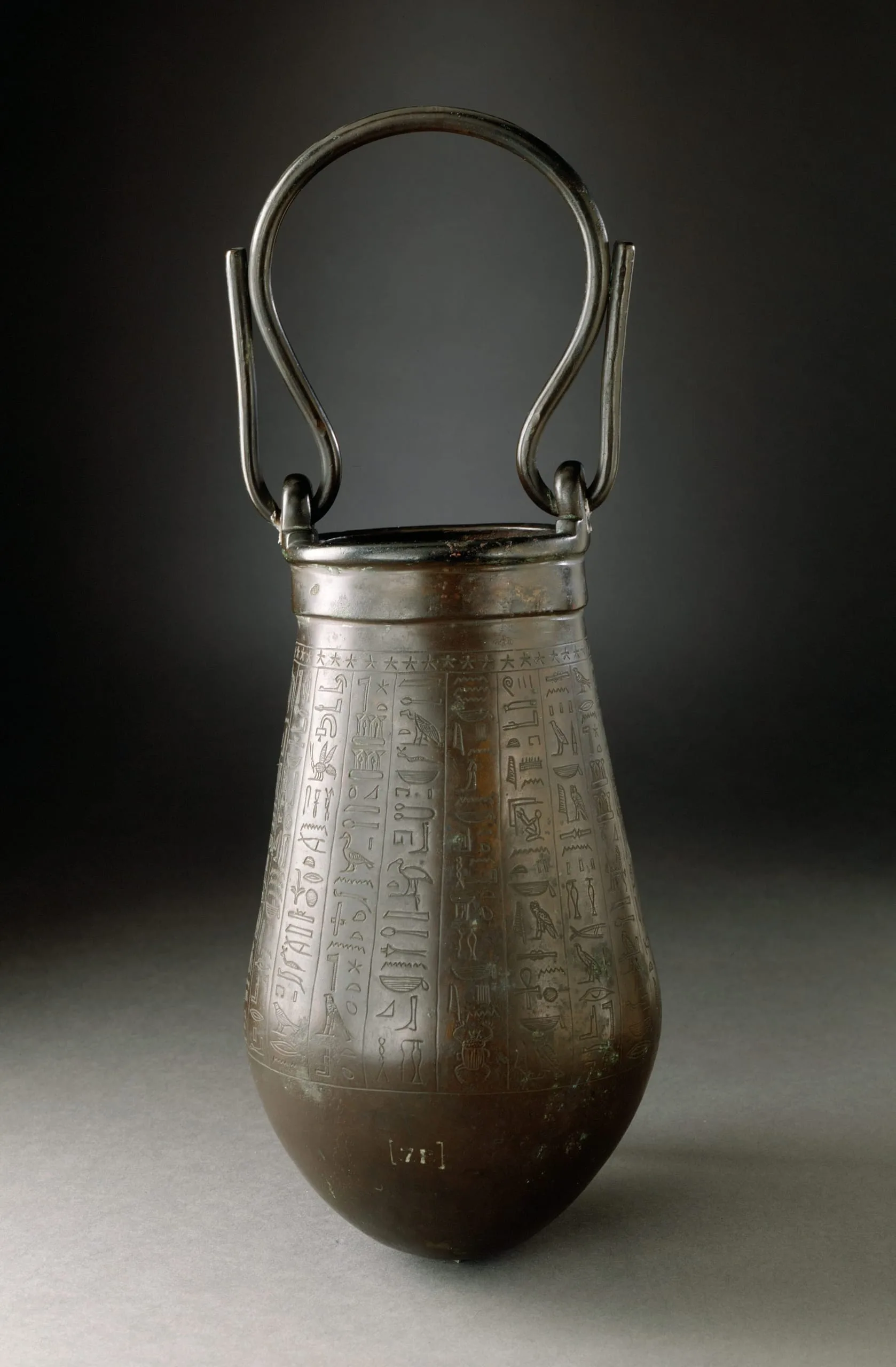
Egyptian situlae were a type of vessel used for pouring offerings of milk or water during formal temple ceremonies. This example is notable for its connection to a very high ranking official of the 26th Dynasty, Sheshonq, known for his sizable tomb in the Asasif region of Thebes and for his connection to the God’s Wife, Nitocris. At this time, the God’s Wives, also known as Divine Adoratresses, were a succession of women, often daughters of the king, appointed to rule with great authority over the religious hierarchy of Upper Egypt.
The round-bottomed bronze vessel bears ten vertical rows of hieroglyphic inscriptions, including the titles and genealogy of Sheshonq, as well as references to offerings to Isis and Nephthys. While other examples of bronze situlae from this period bear more elaborate offering scenes, the row of stars along the top of this vessel are a consistent common element, perhaps symbolic of guidance and protection for Sheshonq in his afterlife.