- Title
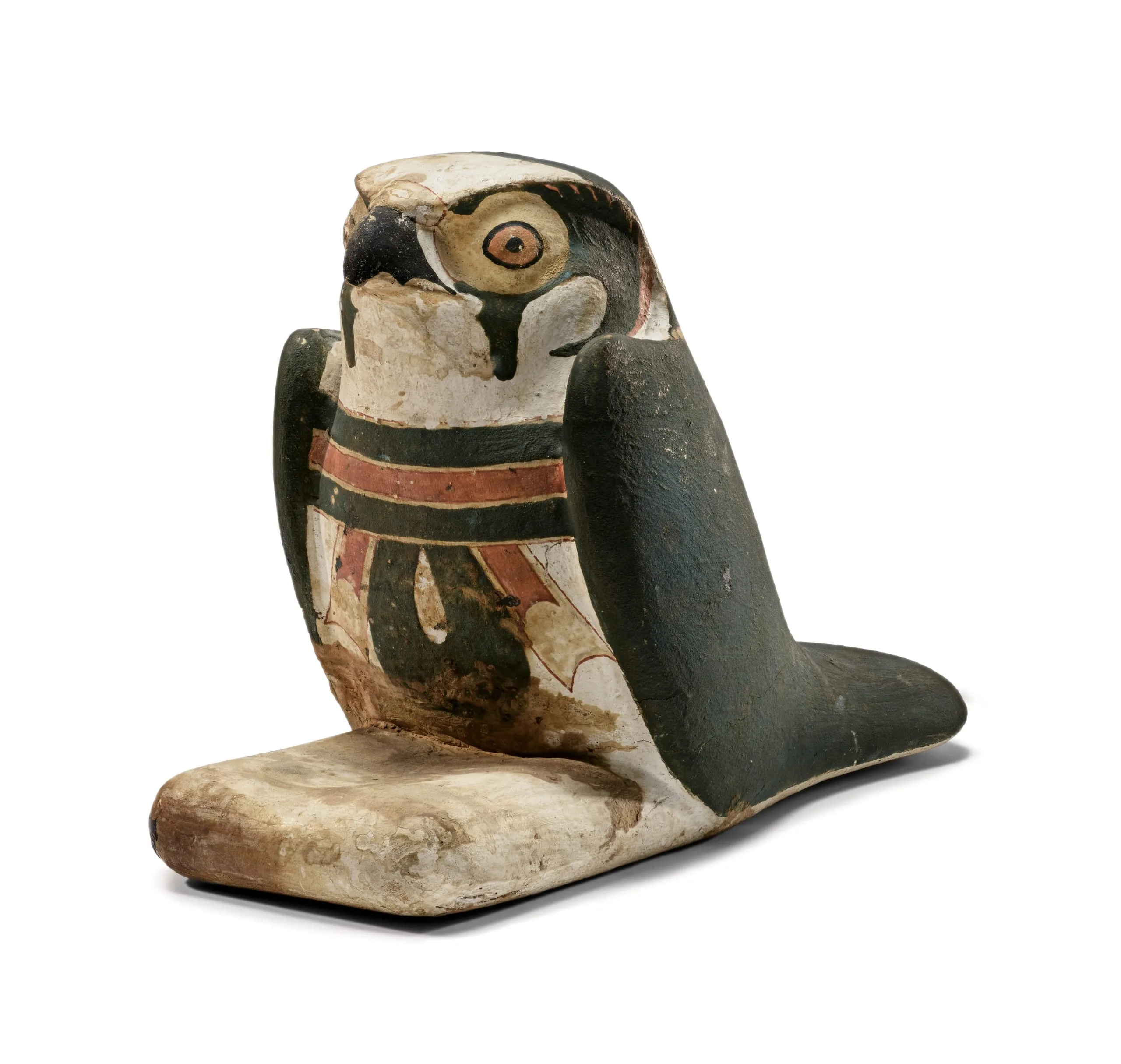
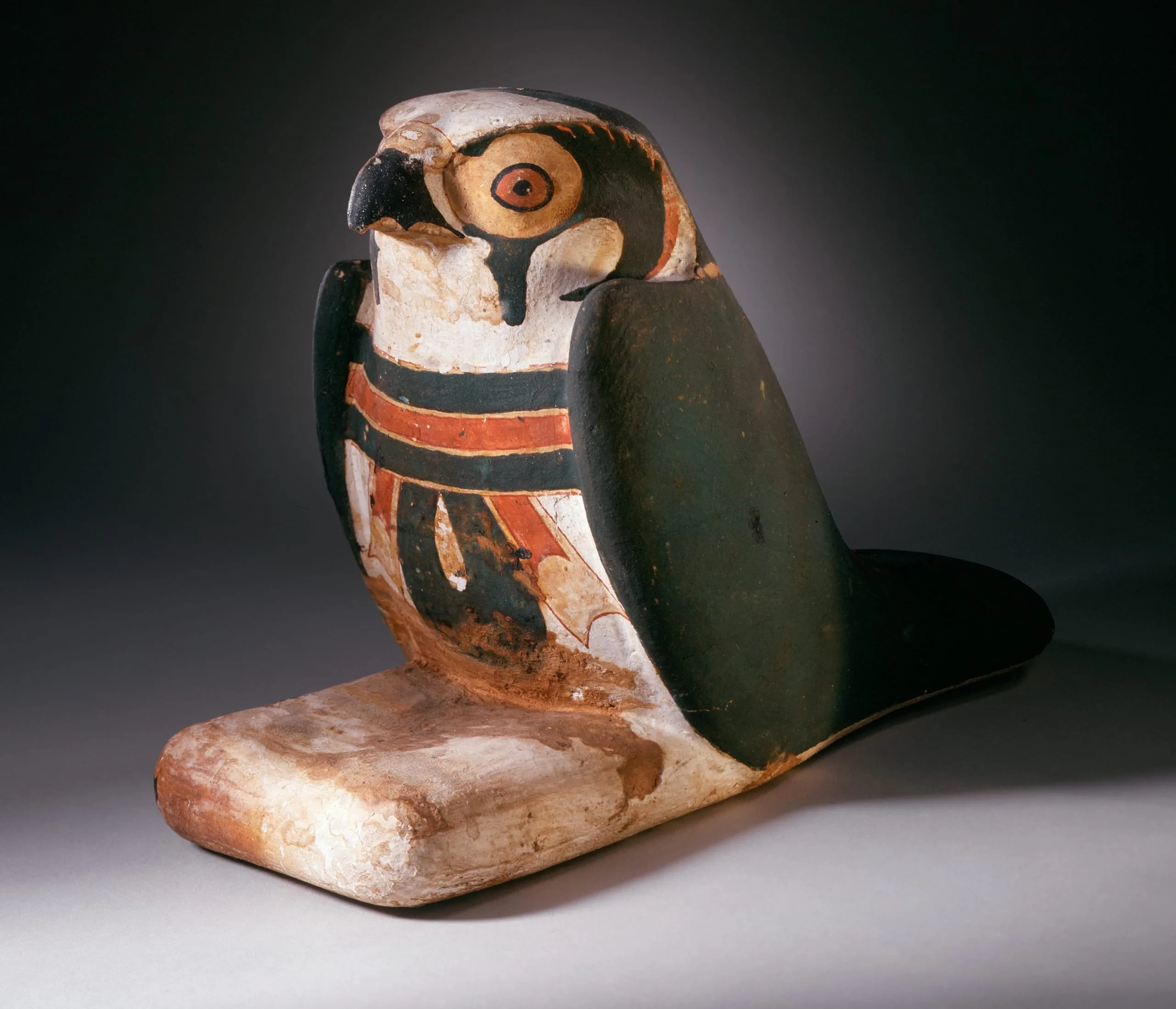
- Mummiform Falcon with Inscribed Menat
- Date Made
- Third Intermediate Period (1076-655 BCE)
- Medium
- Wood, gesso, and pigments
- Dimensions
- 8 7/8 × 4 1/2 × 12 in. (22.54 × 11.43 × 30.48 cm)
- Accession Number
- 50.4.19
- Curatorial Notes
This mummiform falcon represents Sokar, a funerary god associated with Osiris and the guardian of the necropolis serving the major city of Memphis. Wood falcons of this type were sometimes attached by pegs to the top of a canopic chest containing the organs of the deceased or a naos shrine. A painted counterpoise to the broad collar necklace painted on the falcon’s chest runs down the back of the bird and bears a partially legible inscription, “Lady of the House, the Daughter of a Prophet,” but the name of the specific individual is unreadable.
Provenance: Possible collection Robert (Roman Orbeliani) Rustafjaell (1859-1943) b. Saint Petersburg, Russia, d. New York); sold at auction Parke-Bernet Galleries -Inc, New York, December 13, 1949, cat 196, p. 31 illus.; Gift of William Randolph Hearst to LACMA, 1949.