LACMA

ShopMembershipMyLACMATickets
LACMA
Los Angeles County Museum of Art
5905 Wilshire Blvd.
Los Angeles, CA 90036
info@lacma.org
(323) 857-6000
Sign up to receive emails
Subscribe
© Museum Associates 2025

Museum Hours

Monday

11 am–6 pm

Tuesday

11 am–6 pm

Wednesday

Closed

Thursday

11 am–6 pm

Friday

11 am–8 pm

Saturday

10 am–7 pm

Sunday

10 am–7 pm


  • About LACMA
  • Jobs
  • Building LACMA
  • Host An Event
  • Unframed
  • Press
  • FAQs
  • Log in to MyLACMA
  • Privacy Policy
© Museum Associates 2025
Collections

Unknown
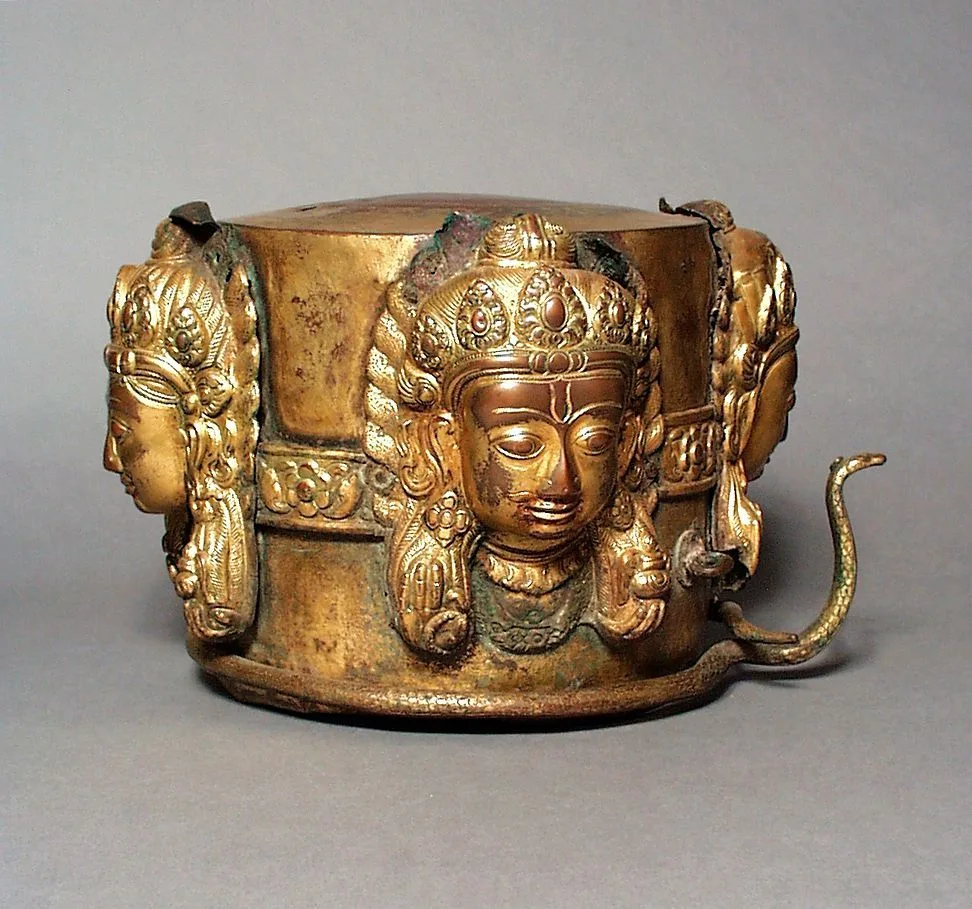
Shivalinga Cover with Four Faces13th century

Not on view
Small gilded bronze cylindrical vessel with a sculpted deity face in relief on the front, flanked by animal heads, with a serpent spout and ornate surface decoration
Artist or Maker
Unknown
Title
Shivalinga Cover with Four Faces
Place Made
Nepal
Date Made
13th century
Medium
Gilt repoussé brass
Dimensions
unspecified (unspecified): 9 1/4 x 13 1/2 in. (23.5 x 34.29 cm) unspecified1 (unspecified): 9 1/4 x 13 1/2 in. (23.5 x 34.29 cm)
Credit Line
Gift of Eivor and Dr. Alston Callahan, Birmingham, Alabama
Accession Number
M.82.166a-b
Classification
Sculpture
Collecting Area
South and Southeast Asian Art
Curatorial Notes

Since around the beginning of the Common Era, the Shivalinga (literally, the "sign" of Shiva) has been the quintessential symbol and artistic form used to represent the major Hindu god Shiva. In its core conception imagined as an aniconic column, the Shivalinga symbolizes the deity’s transcendental nature and primordial potency. As iconic imagery became increasingly prevalent in South Asian art, the Shivalinga was anthropomorphized by the addition of Shiva’s head emerging from the stone column in order to provide worshippers with a physical form that was considered more accessible than the abstract expression of his imperceptible reality. Multiple heads of Shiva were subsequently added to represent different philosophical aspects of the god. Alternatively, as is the case here, a metal cover with various faces of Shiva would have covered a plain stone shaft. To seek blessings from Shiva, devotees worship lingas with ritual offerings of flowers, food, and incense. The deity’s large eyes and welcoming gaze are thought to help worshippers establish a personal spiritual bond, thus strengthening the power of their offering.

This four-faced Nepalese linga cover, attributed to the 13th century, is distinctive for its heads being fashioned separately as repoussé busts rather than the heads being integrally cast, as in M.85.279.5. It is also unusual for having a projecting serpent encircling the base and a decorative floral band around his midsection.
Selected Bibliography
  • Pal, Pratapaditya. Art of Nepal. Los Angeles: Los Angeles County Museum of Art; University of California Press, 1985.
  • Reedy, Chandra L. Himalayan Bronzes: Technology, Style and Choices. Newark: University of Delaware Press, 1997.
  • Phil Freshman. Los Angeles County Museum of Art Report, July 1, 1981-June 30, 1983. Los Angeles: Los Angeles County Museum of Art, 1984.