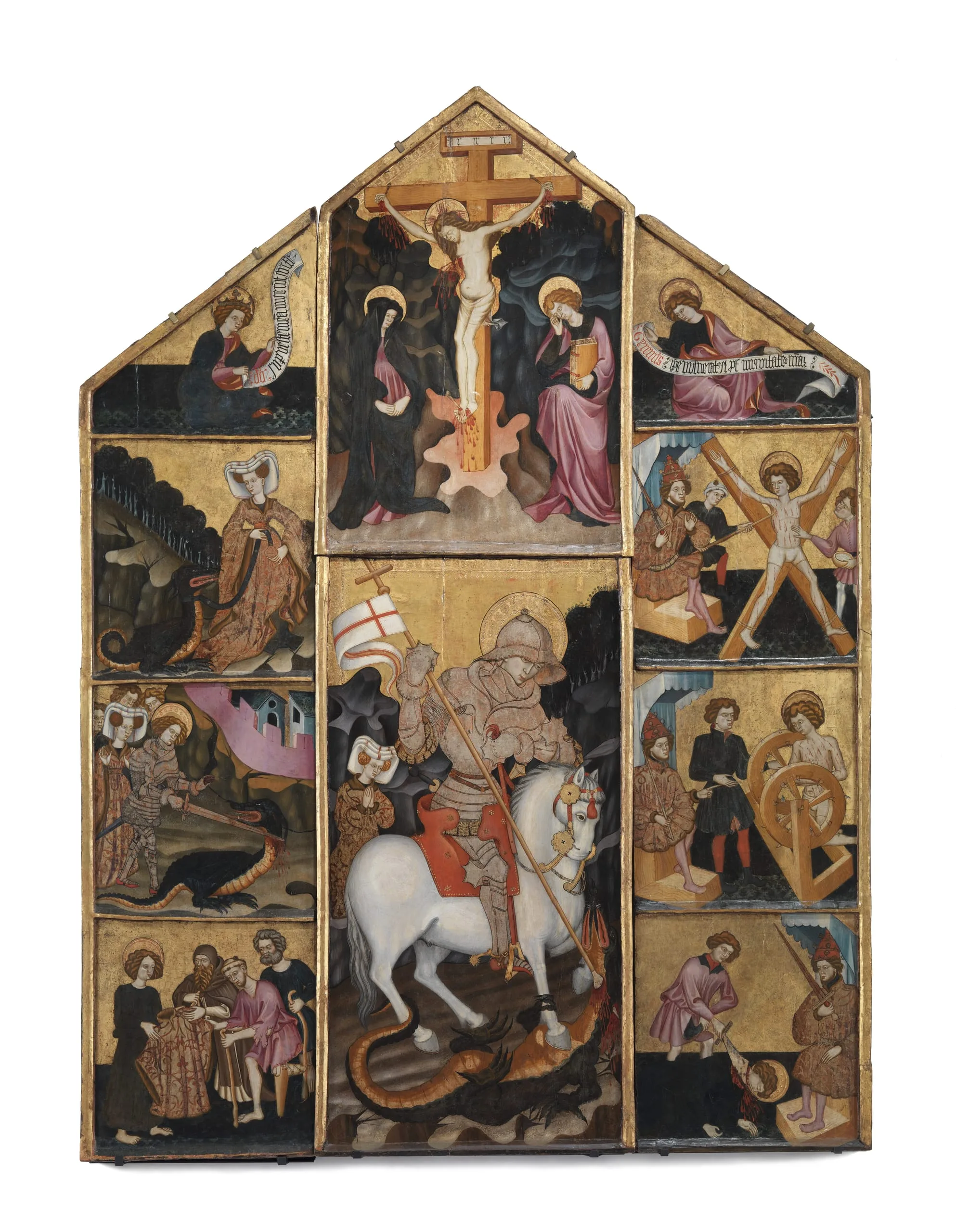
This triptych retablo (altarpiece) features seven scenes from the life of Saint George. A knightly saint whose popularity soared in western Europe during the medieval and Renaissance periods, George was a paragon of chivalric virtue. Legend has it that a dragon was tormenting Silene (in what is now Libya), and only daily human sacrifices would pacify the creature. Forced to continuously make this terrible decision, the town drew lots. One fateful day, the local princess was selected to go to the dragon’s swamp. Fortunately, George happened upon the scene, subdued the dragon, and brought the beast and princess back to the city. In exchange for the citizens’ mass conversion to Christianity, he slew the dragon. Both the large center panel and the left side depict different moments in this narrative, while the right panels show George’s torture and martyrdom. Topping these scenes of bravery, humility, and sacrifice is an image of the Crucifixion—a reminder to devotees that the saint’s piety served a greater cause.
The retablo’s style of painting suggests that it was created in the Huesca and Zaragoza areas of Aragon, Spain. Spanish medieval artists drew upon the illuminating properties of both silver and gold to bring their paintings to life and to demarcate sacred subject matter. Traditionally a layer of bole was added to a panel’s gessoed surface, and space was reserved for the painted figures, before gold or silver leaf was adhered and burnished; other shimmering effects could be created by suspending metallic powder in a binder and water, which was used as a painting pigment. Regulations and surviving contracts reveal that high-quality gold coins or ingots were used to create the gold and silver sheets, the metals themselves sourced both in Spain and through European trade. Technical study of the triptych’s surface attests to this range of materials: gold gilding for the frame, halos, and central panel’s background; colradura (yellow-glazed silver) for the side panels; and silver for the armor and weaponry.
2024