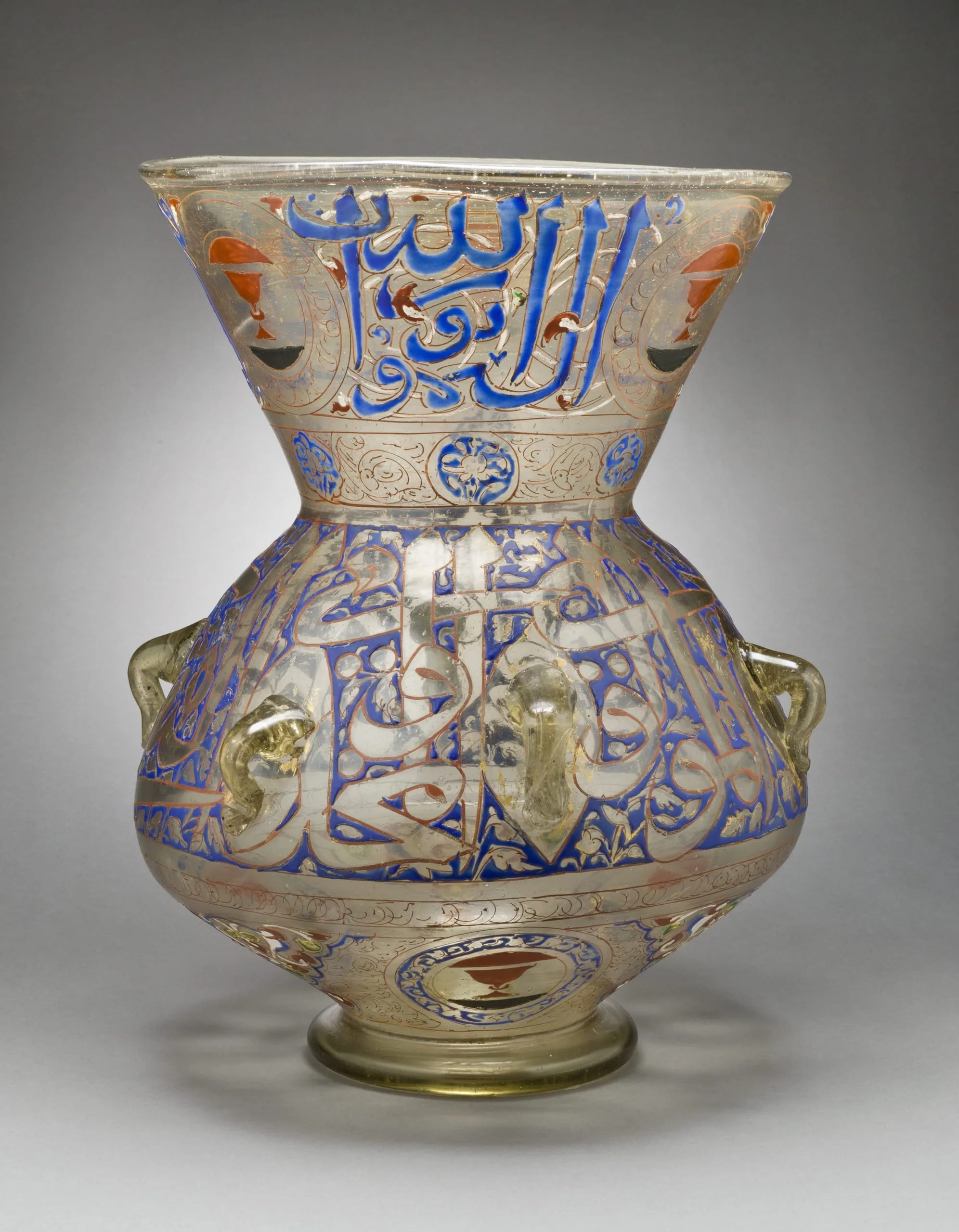
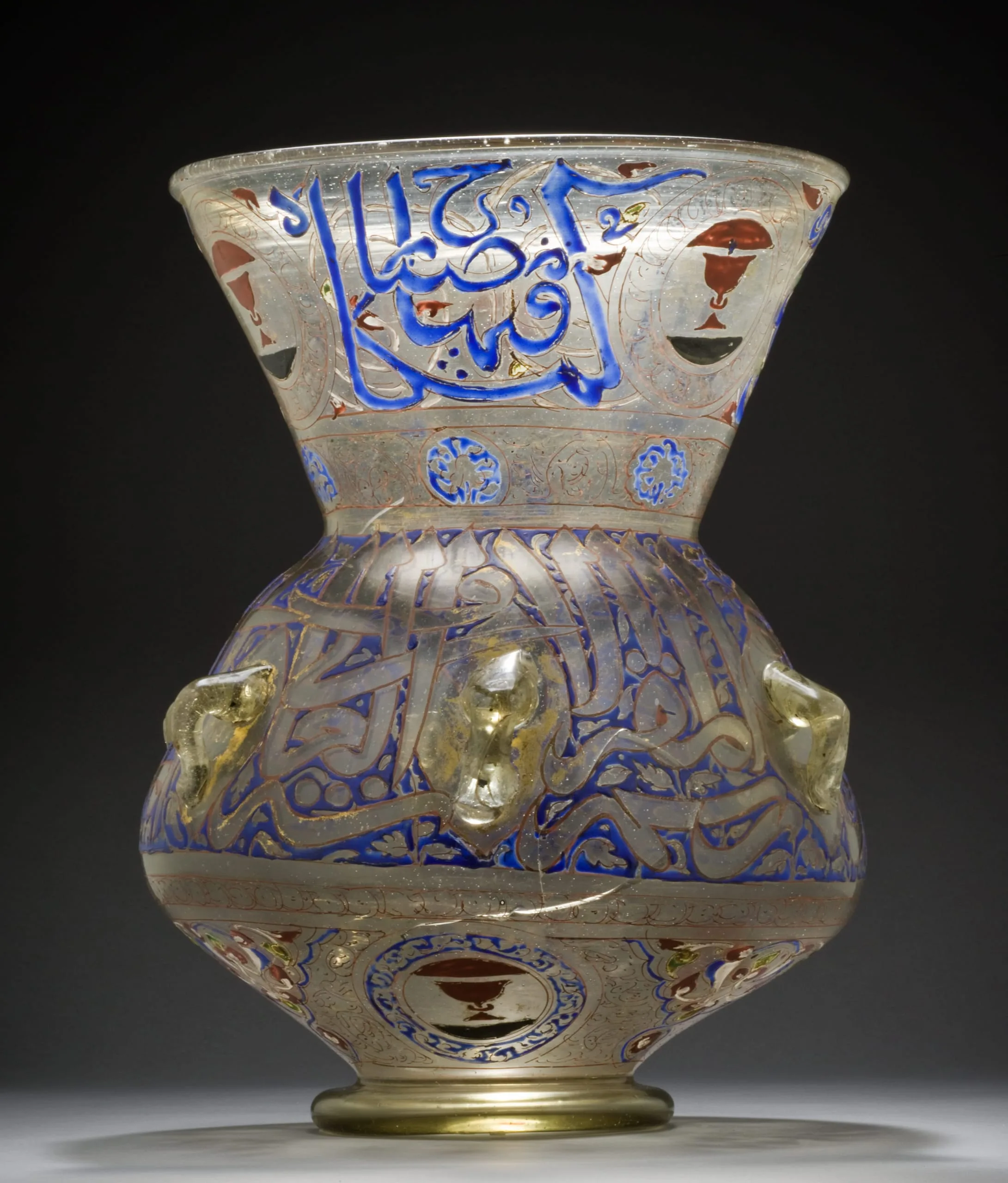
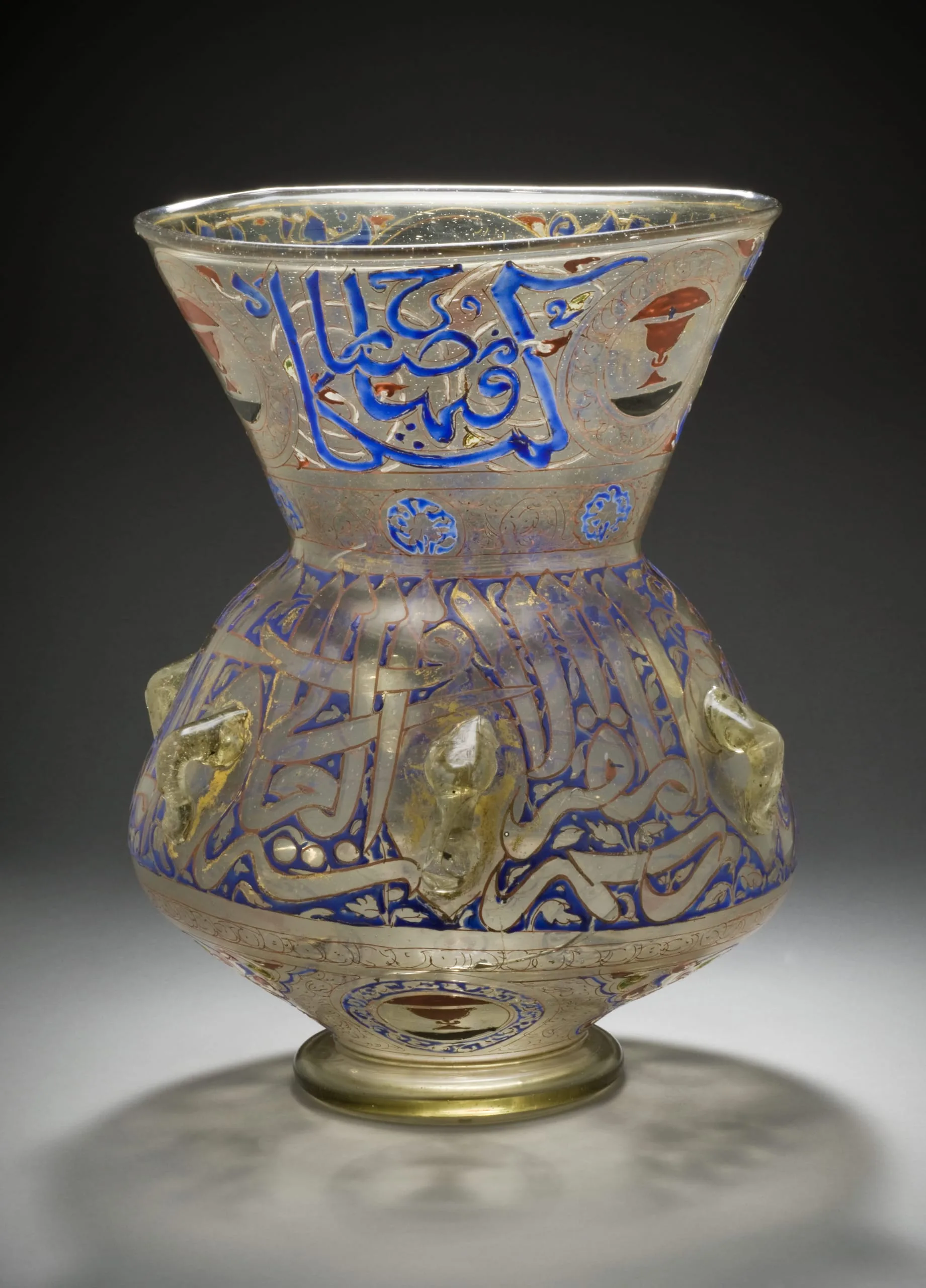
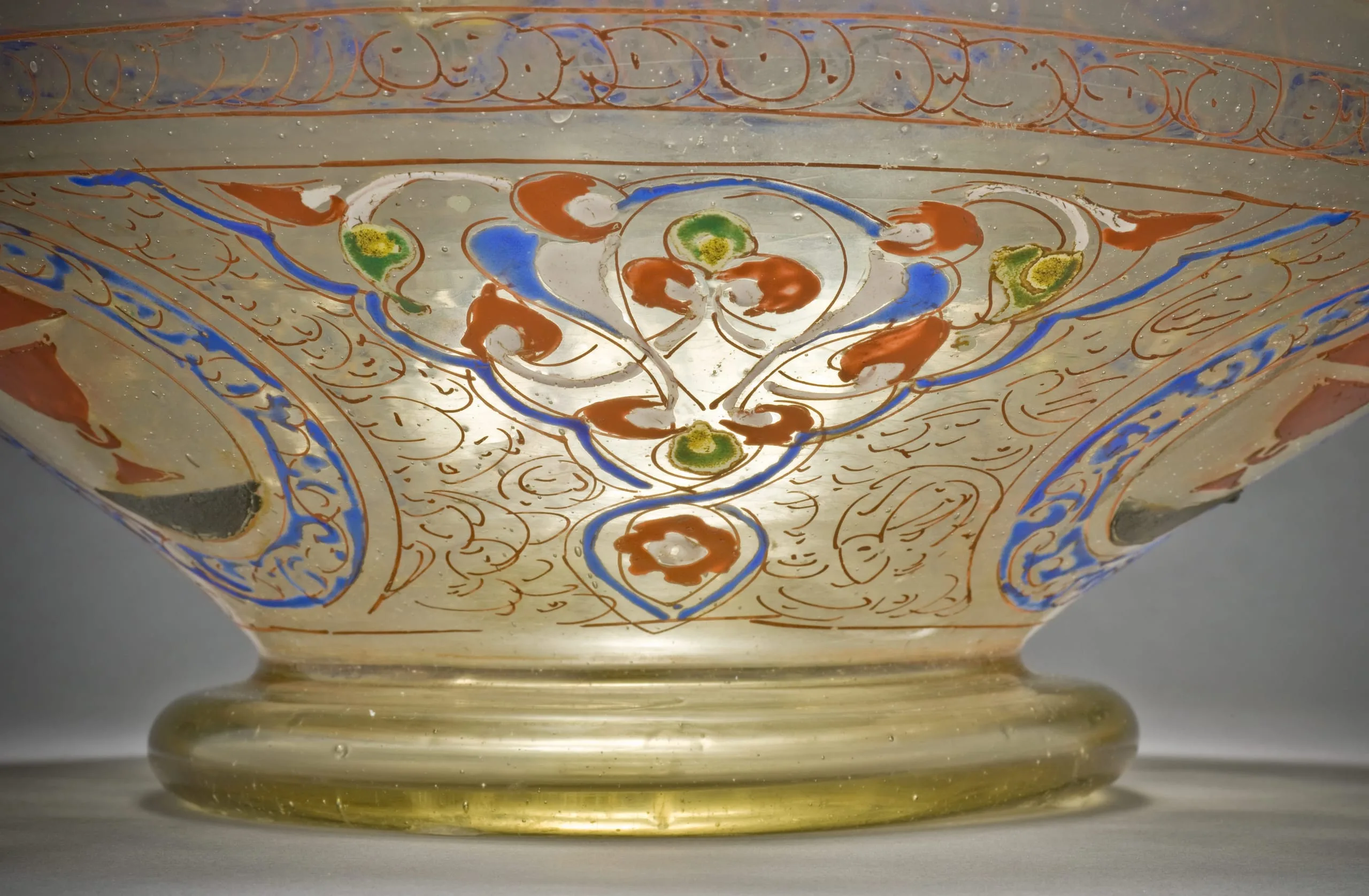
In Muslim cultures, words are used not only to communicate but to decorate. Because it is through writing that the Qur’an is transmitted, scripts in the Arabic alphabet were devised and perfected to be worthy of divine revelation. On this account, calligraphy became the most important art form regardless of the text. This concern with beautiful writing extended beyond the page to inscriptions on buildings as well as objects of all sorts, including metalwork, coins, ceramics, stone, wood, textiles, and glass, as here.
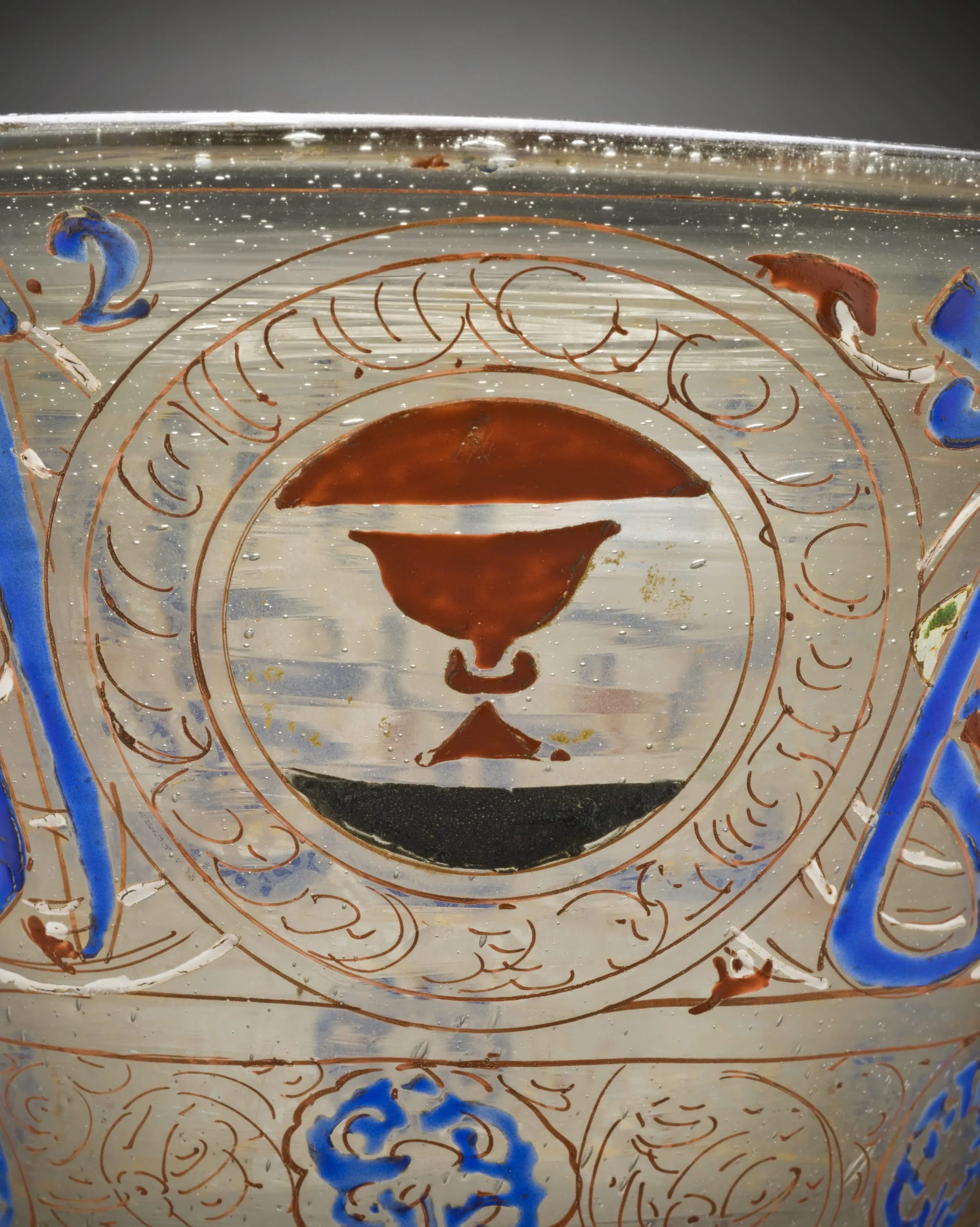
Spectacular glass lamps such as this one were produced as multiples for the many great monuments erected in fourteenth-century Cairo under the patronage of the Mamluk dynasty (1250−1517). The Arabic text on the lower section indicates that it was made on the order of Amir Shaykhu, probably for his mosque and khanqah complex (1349−55), which still survives. As is typical, it is inscribed on the neck with the beginning of a well-known verse of the Qur’an, the Ayat Al-Nur (Verse of the Light; 24:35), words that serve as a reminder or cue to the sentences that follow. Since these lamps were suspended from the ceiling, their inscriptions probably were not easily legible, nor was their intrinsic meaning fully activated except on those special occasions, as during the month of Ramadan, when they were lit and could be viewed from below or from a distance through the windows of the building.
Enameled and gilded glass is one of the most dazzling and coveted forms of Islamic art. Its production is tied to a specific place and time—Syria and Egypt in the thirteenth and fourteenth centuries. In this sophisticated decorative process, enamels (powdered and colored opaque glass) and gold are applied to the glass surface and fixed during a single firing in the kiln. Enameled glass was much admired beyond the eastern Mediterranean, and its center of production shifted to Venice in the late fifteenth century (see 84.2.1). A taste for collecting Islamic enameled glass in Europe in the second half of the nineteenth century led to its imitation down to the shapes and including pseudo Arabic inscriptions (see M.2005.124.1-2).