LACMA

ShopMembershipMyLACMATickets
LACMA
Los Angeles County Museum of Art
5905 Wilshire Blvd.
Los Angeles, CA 90036
info@lacma.org
(323) 857-6000
Sign up to receive emails
Subscribe
© Museum Associates 2025

Museum Hours

Monday

11 am–6 pm

Tuesday

11 am–6 pm

Wednesday

Closed

Thursday

11 am–6 pm

Friday

11 am–8 pm

Saturday

10 am–7 pm

Sunday

10 am–7 pm


  • About LACMA
  • Jobs
  • Building LACMA
  • Host An Event
  • Unframed
  • Press
  • FAQs
  • Log in to MyLACMA
  • Privacy Policy
© Museum Associates 2025
Collections

Unknown
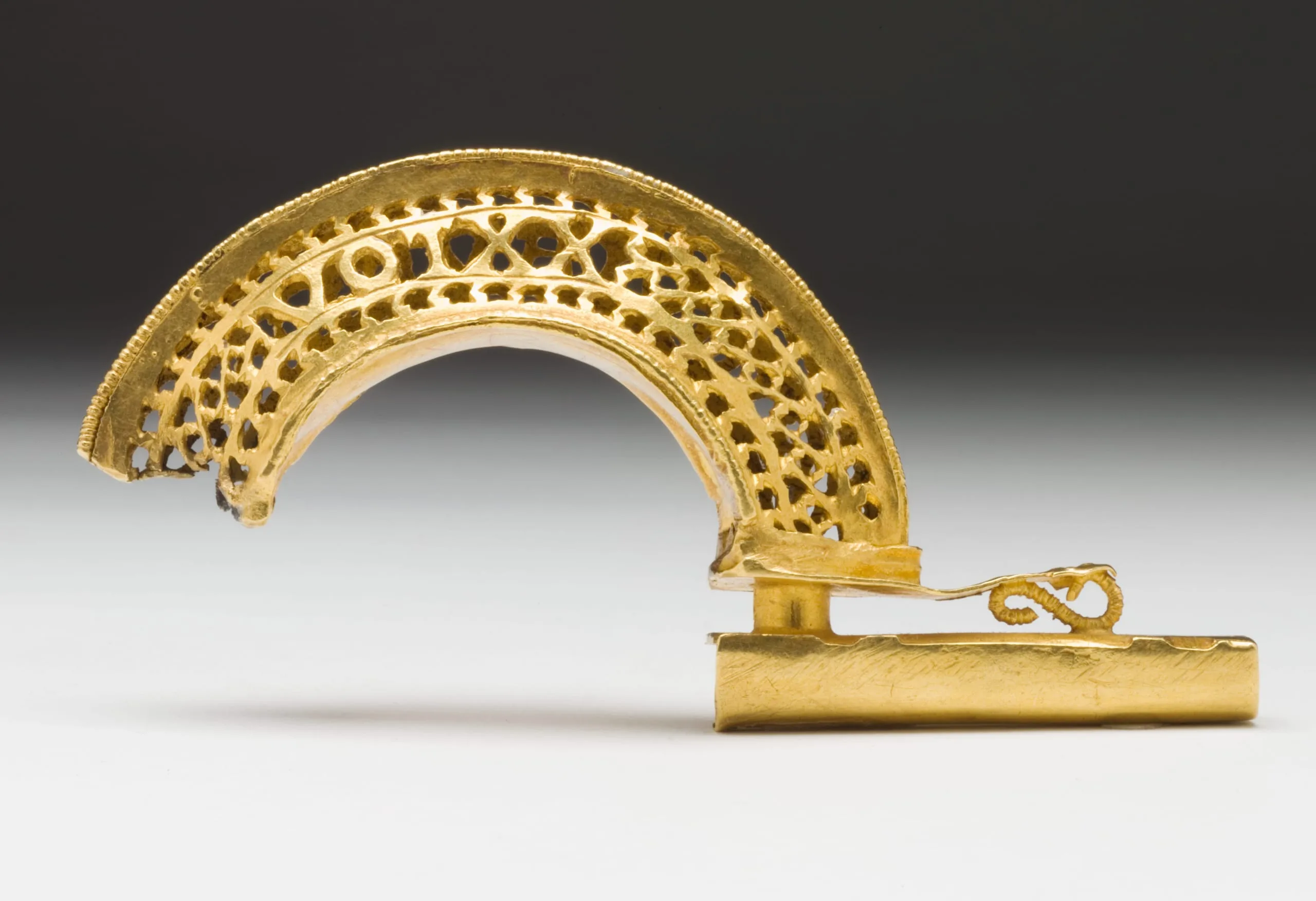
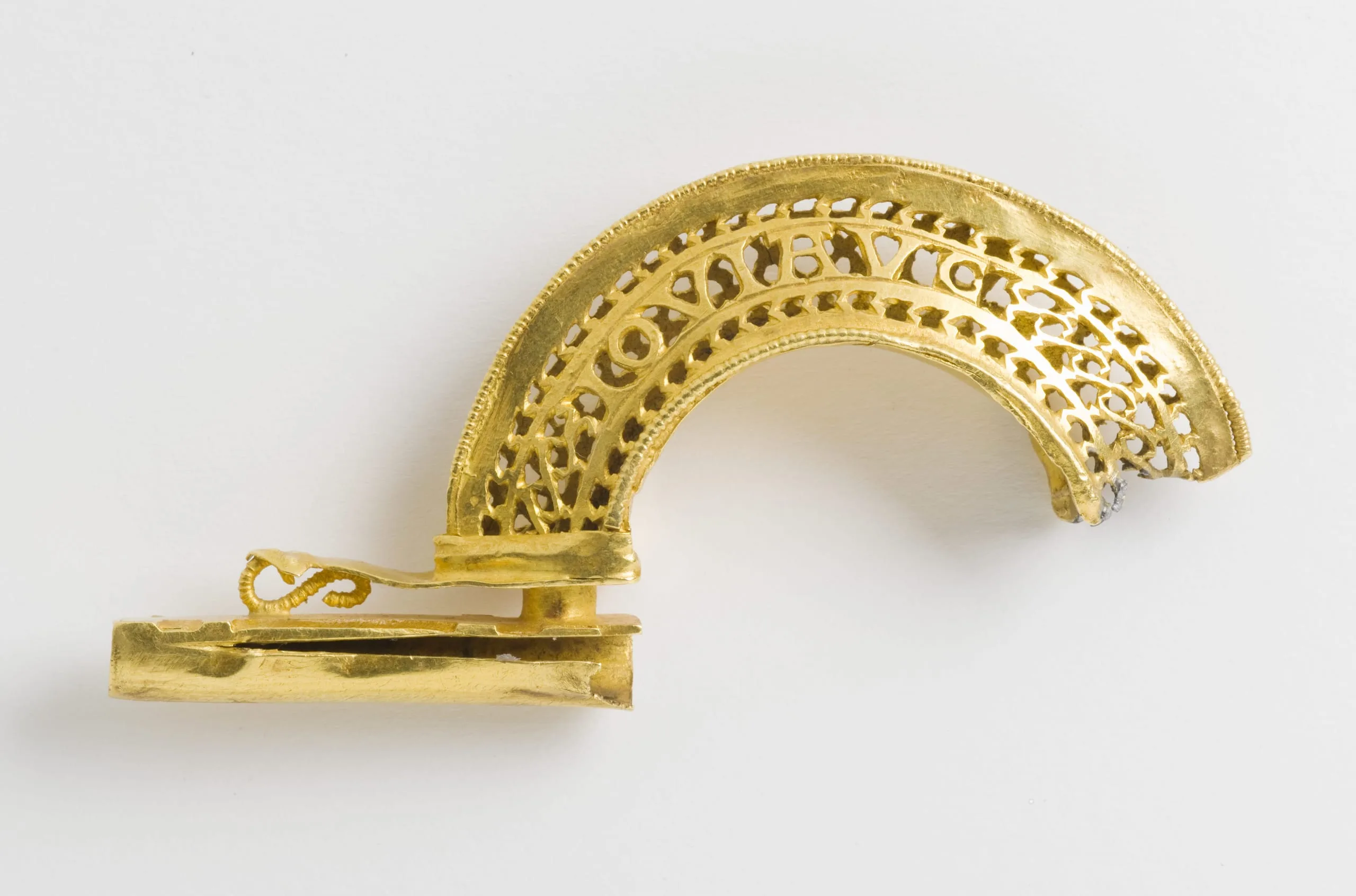
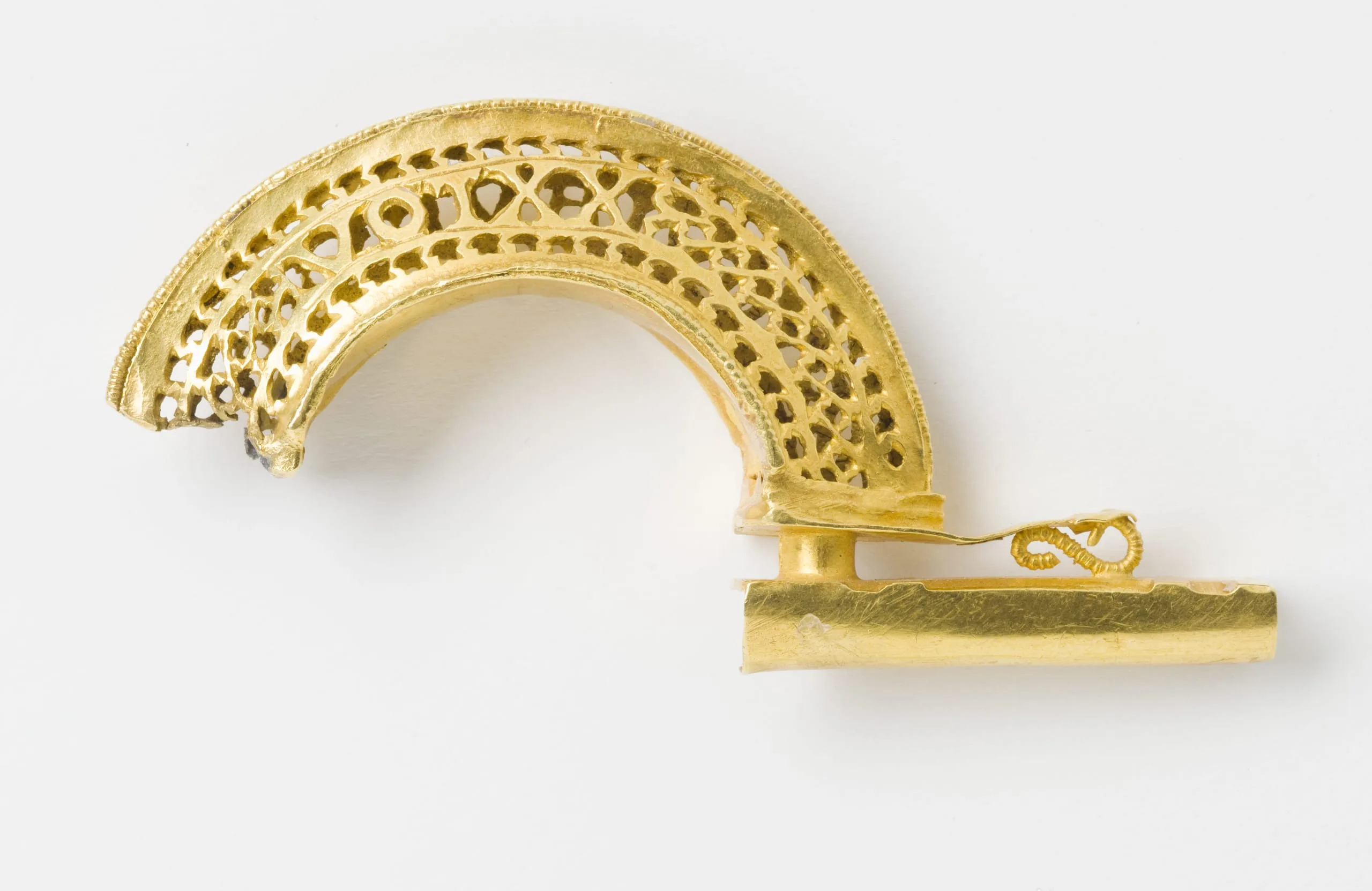
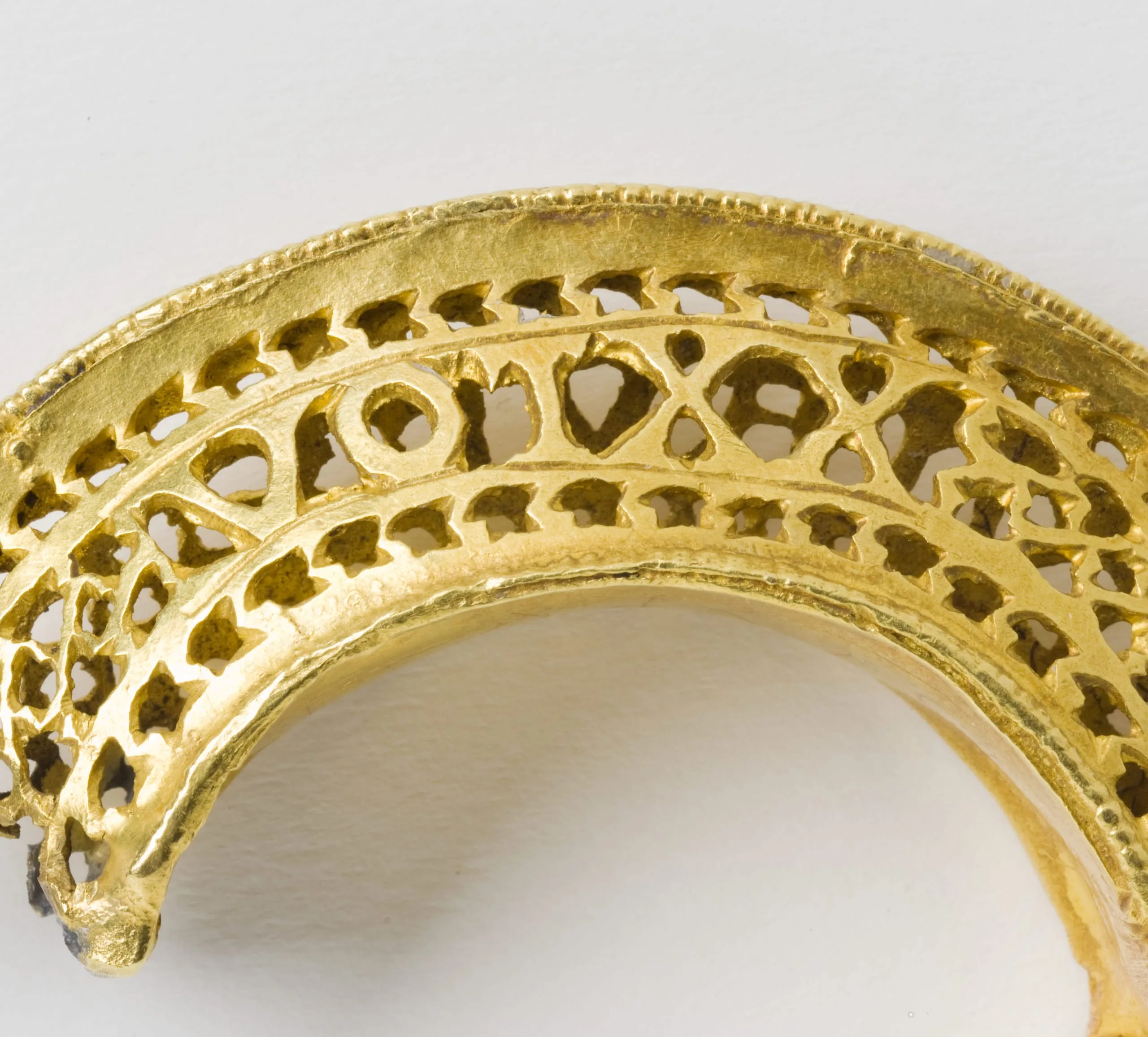
The Erickstanebrae Fibulacirca 303

Not on view
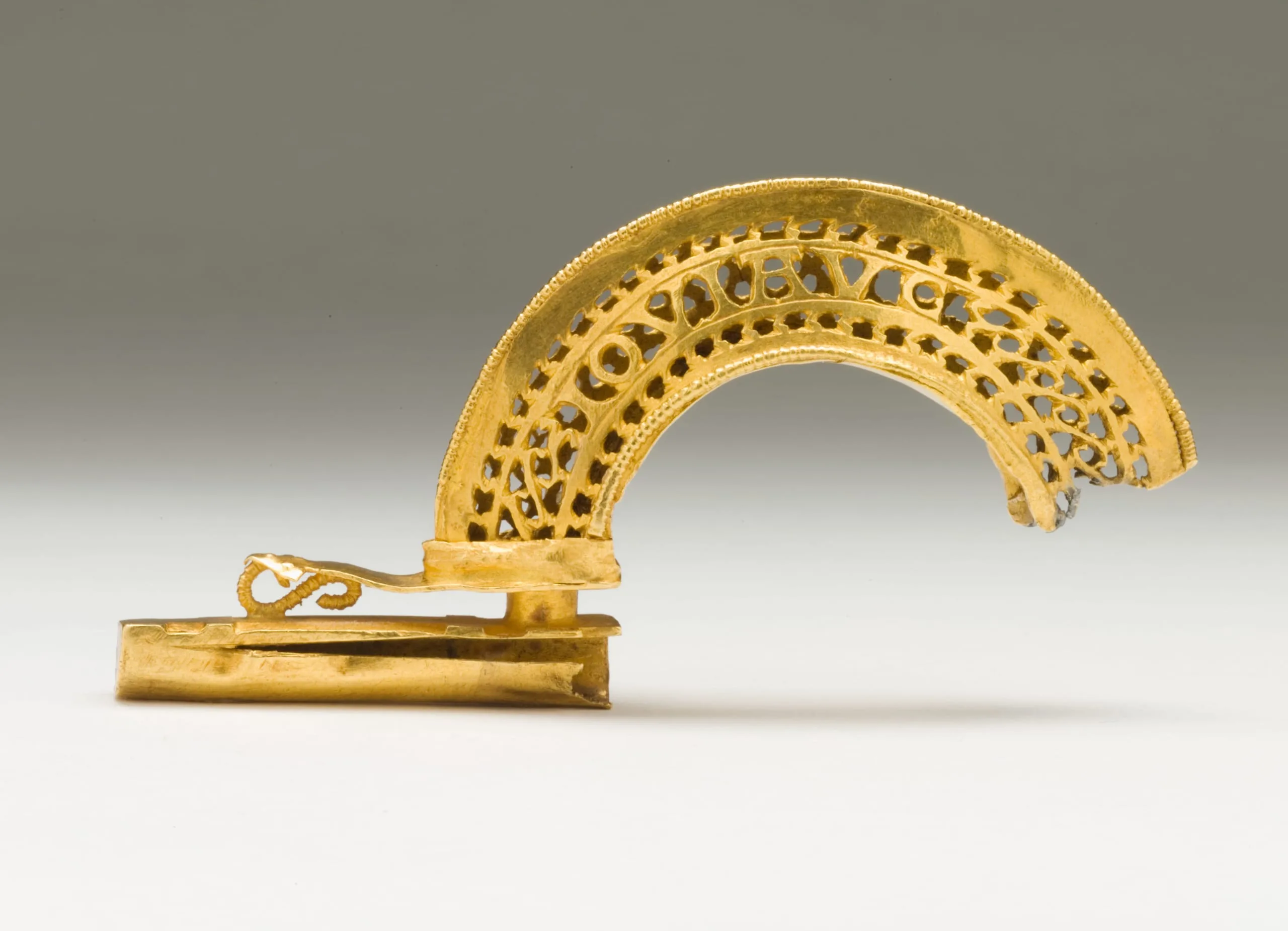
Small gold openwork crescent arch with pierced circle-and-cross pattern and twisted wire borders, mounted on a flat rectangular bar with a coiled serpent element
Gold hair ornament with arched crescent form, featuring openwork filigree decoration in repeating scroll and geometric patterns, beaded wire borders, and a flat clasp attachment at the base.
Gold ornament with a curved, crescent-shaped upper section featuring openwork lattice and geometric pierced patterns, attached to a horizontal cylindrical bar with a small wire loop fastening.
Gold crescent-shaped ornament with openwork filigree decoration, featuring rows of pierced geometric and circular patterns along the curved band, millegrain border along upper edge.
Gold circular armband or bracelet with openwork lattice pattern of arches and geometric cutouts, bordered by beaded edges on both rims.
Gold ornament with a curved, arching openwork band decorated with rows of pierced geometric and circular patterns, granulated edges, and a flat rectangular base with a small scrollwork attachment.
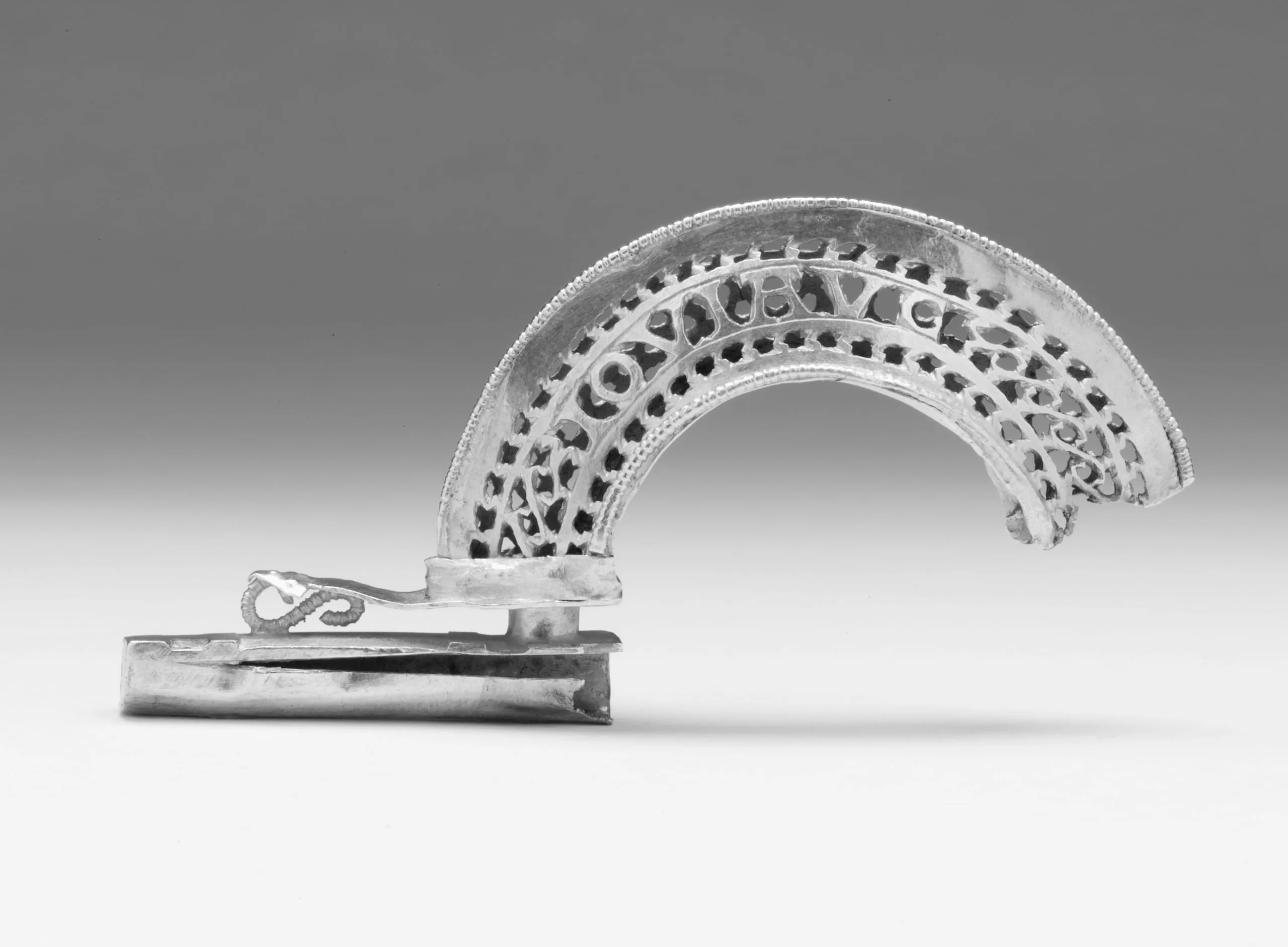
Silver metalwork object with a curved, arch-shaped upper section featuring openwork pierced scrolling foliate decoration and beaded edges, mounted on a flat rectangular base with a small scroll detail at the attachment point.
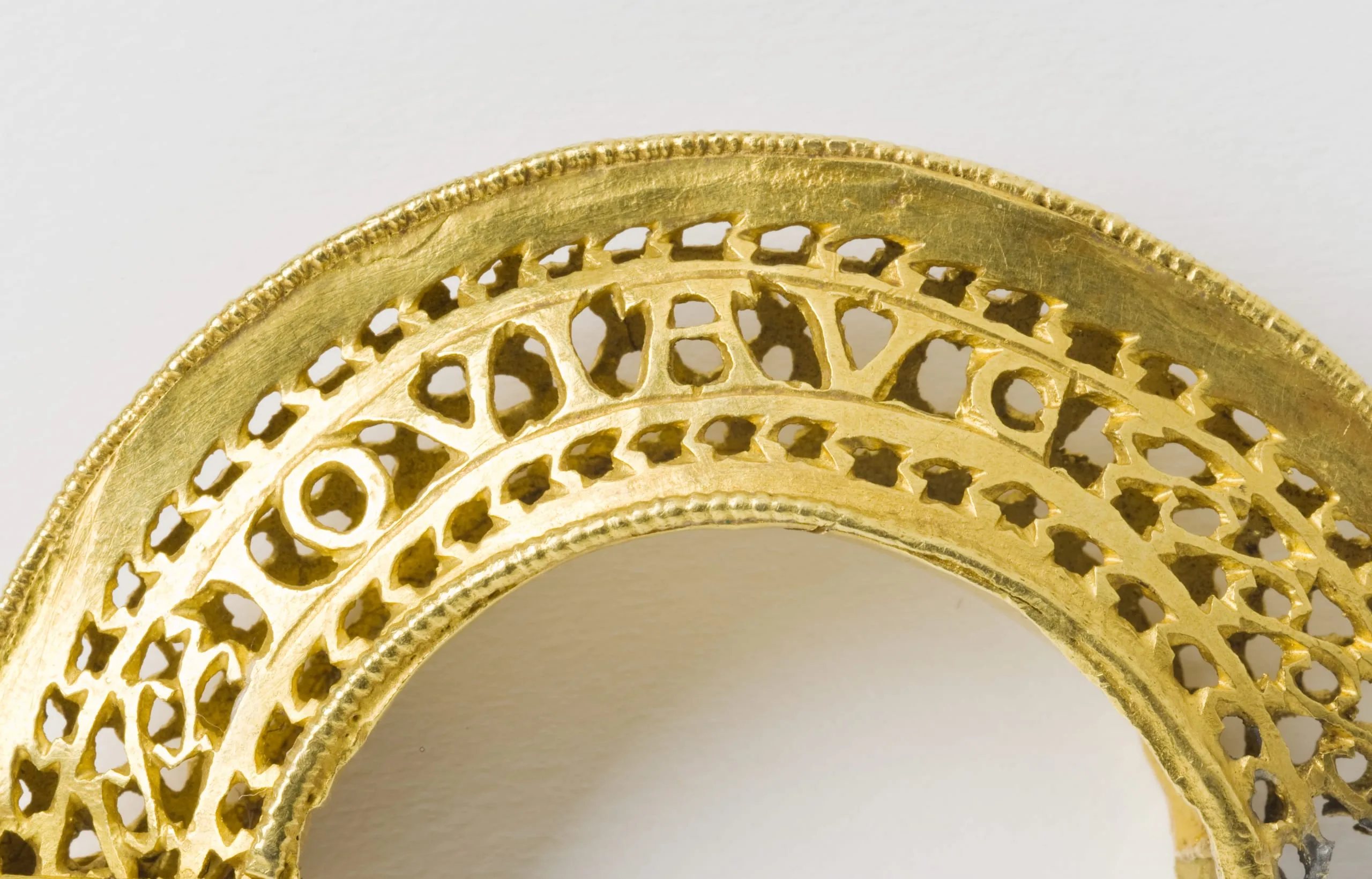
Close-up of the inner shank of a gold ring, showing a lightly scratched inscription in Latin script on the polished curved surface.
Artist or Maker
Unknown
Title
The Erickstanebrae Fibula
Culture
Roman
Place Made
Unknown
Date Made
circa 303
Medium
Gold
Dimensions
3 3/4 in. across (the bow alone 2 5/8 in. ).
Credit Line
William Randolph Hearst Collection
Accession Number
50.22.14
Classification
Jewelry and Adornments
Collecting Area
European Painting and Sculpture: Greek and Roman
Curatorial Notes
Alongside sculpture and vases, Hearst's gift of Greek, Roman and Etruscan artifacts also included ancient jewelery. The most remarkable piece is this gold fibula, found in 1787 at Erickstanebrae, near Moffat, in Dumfriesshire, Scotland. Fibulae were used like clothes-pins, as fasteners for the heavy cloaks worn by Roman soldiers. This precious and artfully worked example would no doubt have been worn proudly and prominently; from written and archaeological evidence, it appears that gold and silver fibulae were worn by military or civil officers. The damage to the hinge suggests that it may have been torn off violently.
The fibula is decorated with three tiers of openwork, and is one of a number of gold fibulae to carry imperial inscriptions. In the middle of one side is written IOVI AUG, probably a reference to Diocletian, who placed his dynasty under the protection of Jove. He had been made Emperor in 284 A.D., following a successful career in the Roman army. Two years later, he established the 'dyarchy', dividing the empire and ruling the east himself, and appointing Maximian in charge of the west. This arrangement was later developed into the 'tetrachy', whereby each Emperor shared power with his future successor. Diocletian retired in 305 A.D, and died in 316 A.D. The inscription on the other side, VOTXX ('votis xx'), supports the association with Diocletian, since it most likely refers to the vicennalia, the twentieth anniversary of his reign. There is also an inscription, 'Porto' or 'Forto', scratched on the inner surface of the bow, probably by the fibula's owner.
It is fascinating to speculate how the fibula would have reached Scotland. Constantius Chlorus led an expedition into Caledonia (modern-day Scotland) in 306 A.D., and it has been suggested that the fibula was sent to him or an important companion, and subsequently lost.
Selected Bibliography
  • Muchnic, Suzanne. LACMA So Far: Portrait of a Museum in the Making. San Marino, California: Huntington Library, Art Collections, and Botanical Gardens, 2015.