LACMA

ShopMembershipMyLACMATickets
LACMA
Los Angeles County Museum of Art
5905 Wilshire Blvd.
Los Angeles, CA 90036
info@lacma.org
(323) 857-6000
Sign up to receive emails
Subscribe
© Museum Associates 2025

Museum Hours

Monday

11 am–6 pm

Tuesday

11 am–6 pm

Wednesday

Closed

Thursday

11 am–6 pm

Friday

11 am–8 pm

Saturday

10 am–7 pm

Sunday

10 am–7 pm


  • About LACMA
  • Jobs
  • Building LACMA
  • Host An Event
  • Unframed
  • Press
  • FAQs
  • Log in to MyLACMA
  • Privacy Policy
© Museum Associates 2025
Collections

Deepdene Painter (attributed to the)
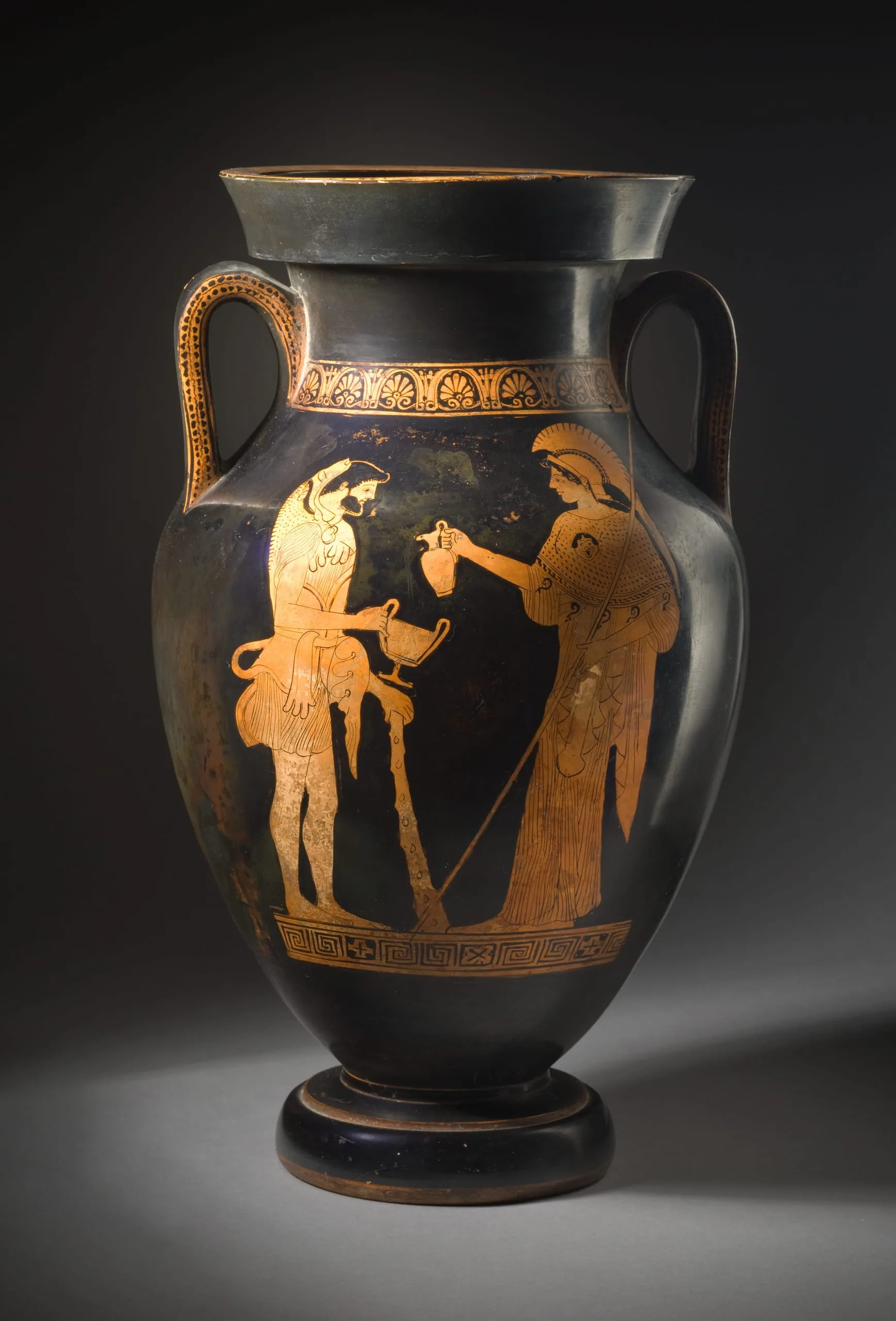
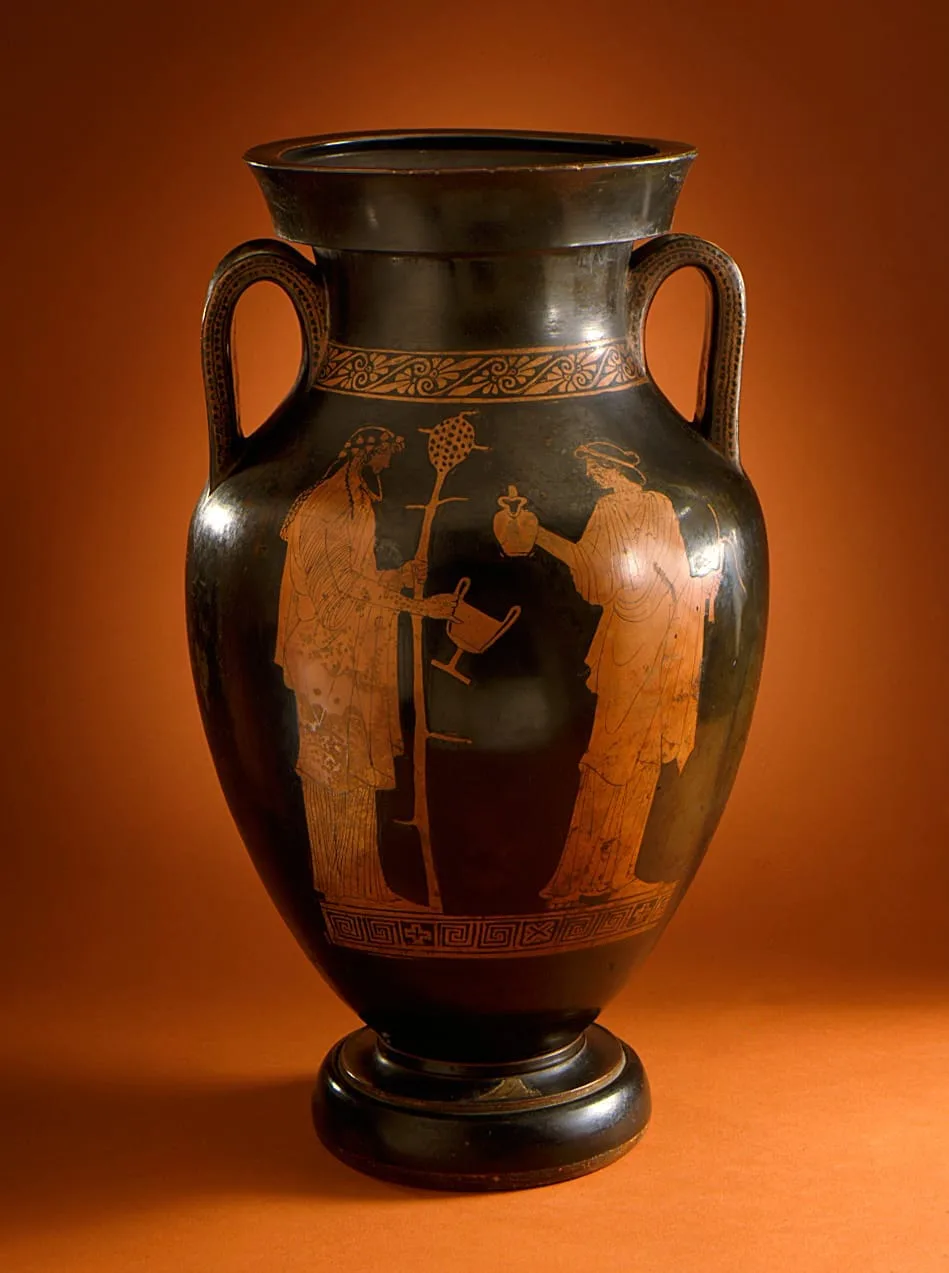
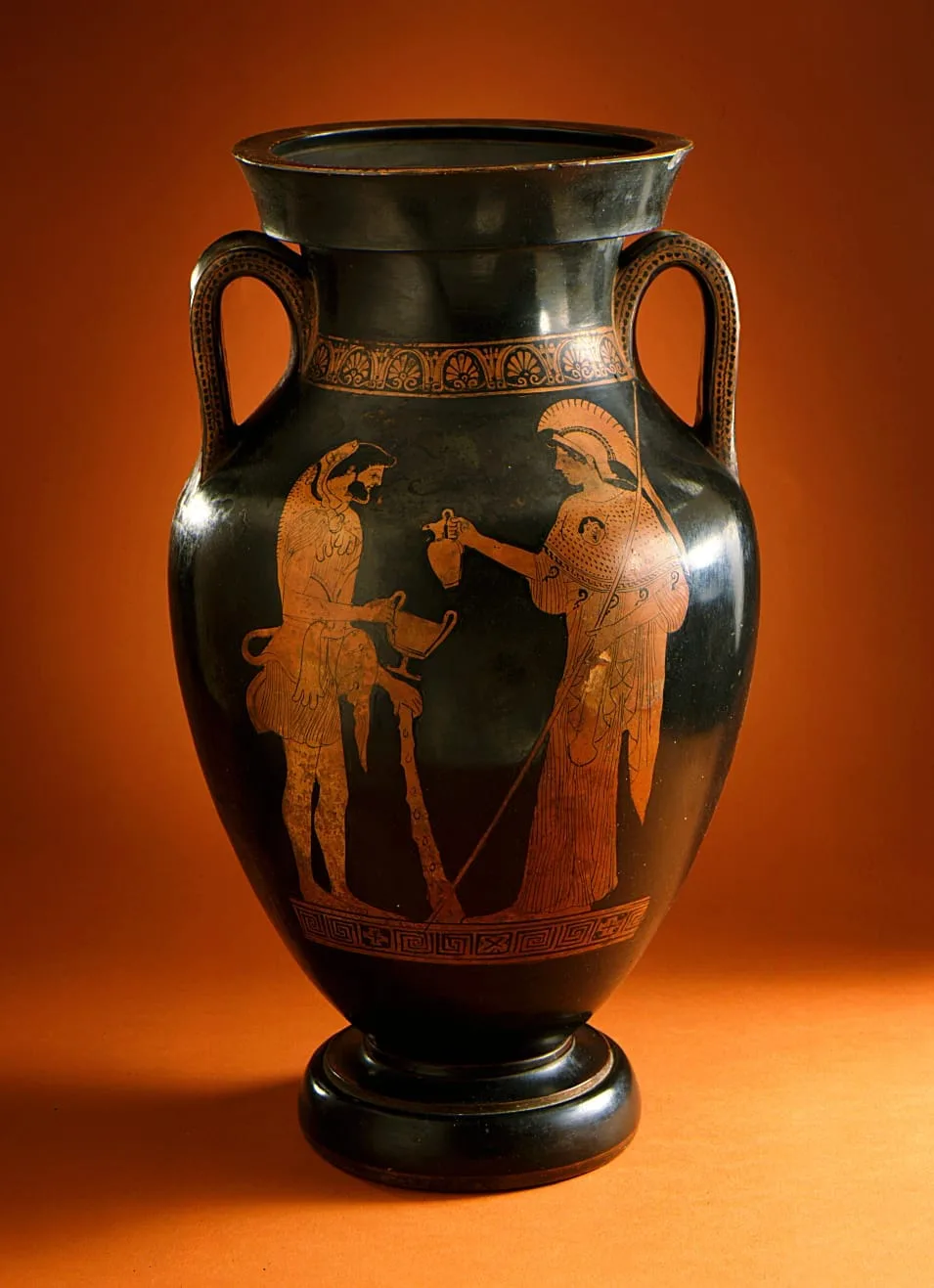
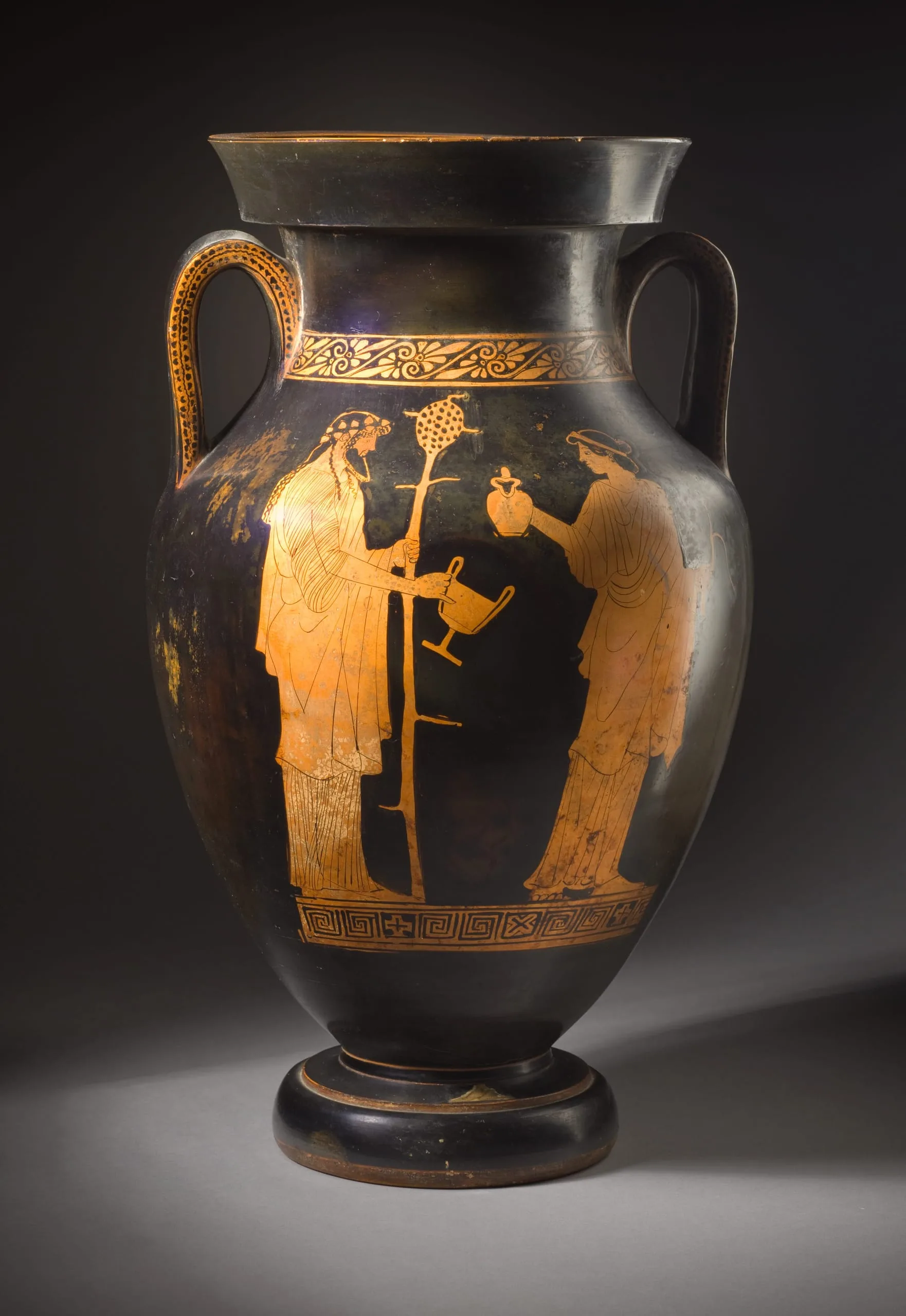
Amphora with Athena Pouring Wine for Herakles, and a Woman Pouring Wine for Dionysoscirca 470-460 B.C.

Not on view
Ancient Greek red-figure ceramic amphora with black glaze, depicting two figures in terracotta orange exchanging a vessel, with palmette and meander border bands
Red-figure ceramic amphora with black glaze, two handles, and a pedestal base. Two draped figures face each other; one holds a thyrsus and kantharos, the other extends a small vessel. Greek key border at base, scrolling ornament at shoulder.
Red-figure ceramic amphora with two handles, black gloss ground. Two figures face each other: a winged male figure and an armored female figure holding a small vessel and spear. Decorative borders of palmette and meander patterns at shoulder and foot.
Red-figure ceramic amphora with black glaze, depicting two draped figures facing each other; one holds a tall staff with a flower, the other extends a small vessel. Bordered by a scroll frieze above and a meander pattern below.
Artist or Maker
Deepdene Painter (attributed to the)
Greece, Attica, active circa 475-450 B.C.
Title
Amphora with Athena Pouring Wine for Herakles, and a Woman Pouring Wine for Dionysos
Place Made
Greece, Attica
Date Made
circa 470-460 B.C.
Medium
Red-figure ceramic with a trace of added red
Dimensions
Height: 18 1/2 in. (47 cm); Diameter: 10 5/8 in. (27 cm)
Credit Line
William Randolph Hearst Collection
Accession Number
50.8.21
Classification
Furnishings
Collecting Area
European Painting and Sculpture: Greek and Roman
Curatorial Notes
The red-figure technique, invented in Athens in the last quarter of the sixth century B.C., is essentially the reverse of black-figure. Rather than painting the figures and ornament onto the plain surface of the vase, their forms are outlined and reserved, and the background is painted black. Additional details - musculature, drapery folds - are then added to the reserved figures. Although the process of firing the painted pot is unchanged, the result is radically different, and Athenian red-figure pottery dominates the market in the fifth and fourth centuries B.C
The vase is decorated with two scenes of divine repose and interaction. On one side, Athena pours wine for Herakles. She holds out a wine jar (oinochoe) and Herakles, wearing his lionskin, holds his kantharos ready. More usually seen wielding his club, here he rests on it. After his death, Herakles joined the gods on Olympus, and there are many vases that depict his introduction to his divine companions. The composition on this amphora appears to be a version of such apotheosis scenes, with Athena welcoming her protégé after the successful accomplishment of his labors. On the other side is another pair. Dionysos, the god of wine, stands upright, wreathed and holding a thrysos, a fennel -stalk topped with ivy-leaves. He holds out his kantharos to receive the wine from his female companion.
Although a number of vases bear the signatures of their painters or potters, by far the majority are unsigned. In his life-long study and attribution of vases, Sir John Beazley (1885 - 1970) had recourse to "nicknames" for the many anonymous vase-painters that he identified, sometimes relating to their pictorial quirks ("Elbows-Out", "The Affecter"), sometimes to a particular scene ("The Swing Painter"), but very often to the location of one example. That is the case with this vase, attributed to the Deepdene Painter. It is his 'name-vase', so called after the location in which Beazley encountered it - Deepdene, the country home of the collector, Thomas Hope (1769-1831). LACMA owns another twenty vases from Hope's renowned collection, purchased by William Randolph Hearst in 1946.
Selected Bibliography
  • Clement, Paul A. "Geryon and Others in Los Angeles." Hesperia: The Journal of the American School of Classical Studies at Athens 24, no.1 (1955): 1-24.
  • Hope, Francis, and E.M.W. Tillyard. The Hope Vases: a Catalogue and a Discussion of the Hope Collection of Greek Vases. Cambridge: University Press, 1923.
  • Reinach, Salomon. Répertoire des Vases Peints Grecs et Étrusques. Paris: E. Leroux, 1922.