LACMA

ShopMembershipMyLACMATickets
LACMA
Los Angeles County Museum of Art
5905 Wilshire Blvd.
Los Angeles, CA 90036
info@lacma.org
(323) 857-6000
Sign up to receive emails
Subscribe
© Museum Associates 2026
  • About LACMA
  • Jobs
  • Building LACMA
  • Host An Event
  • Unframed
  • Press
  • FAQs
  • Log in to MyLACMA
  • Privacy Policy
© Museum Associates 2026
Collections

Unknown
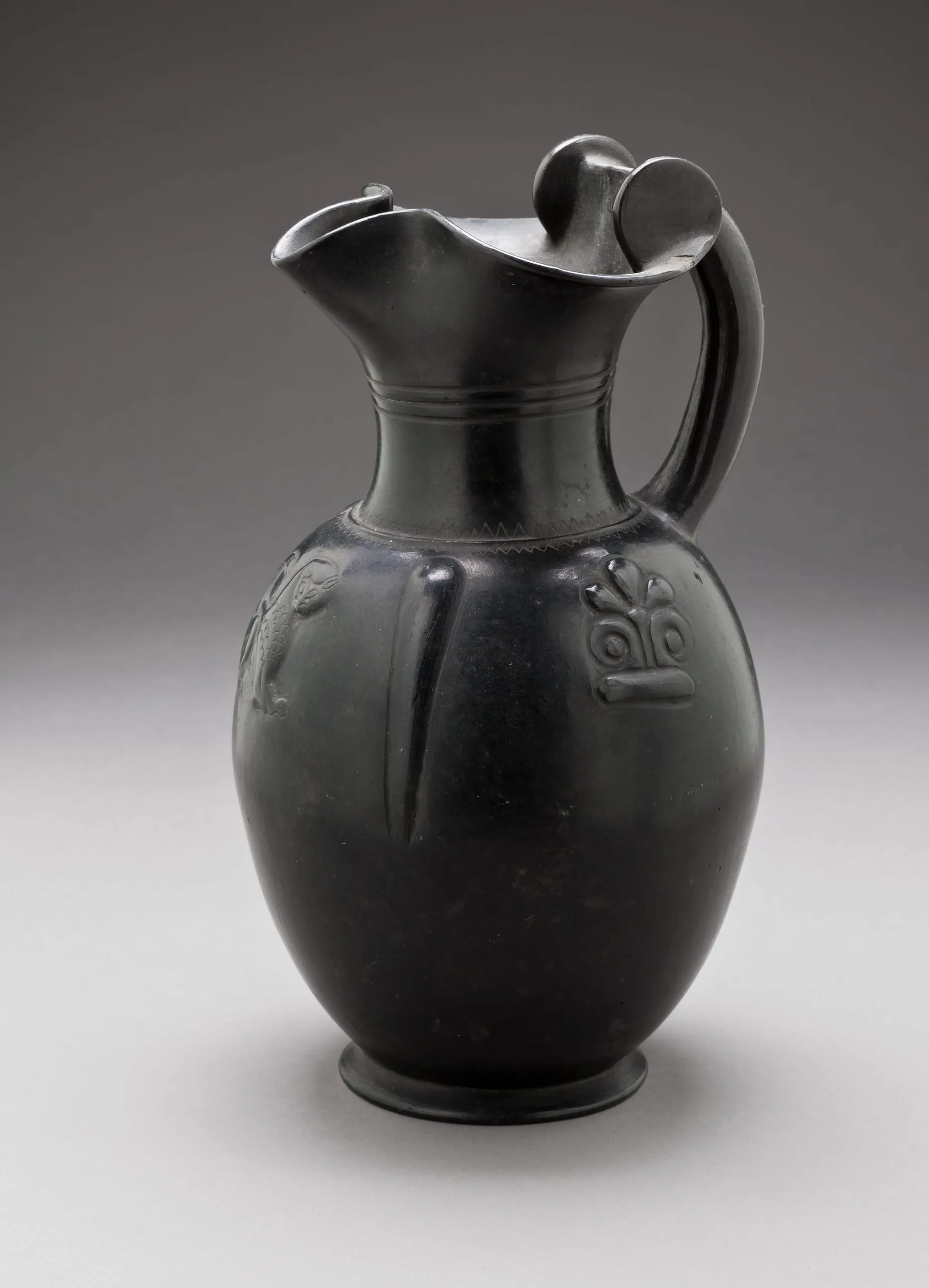
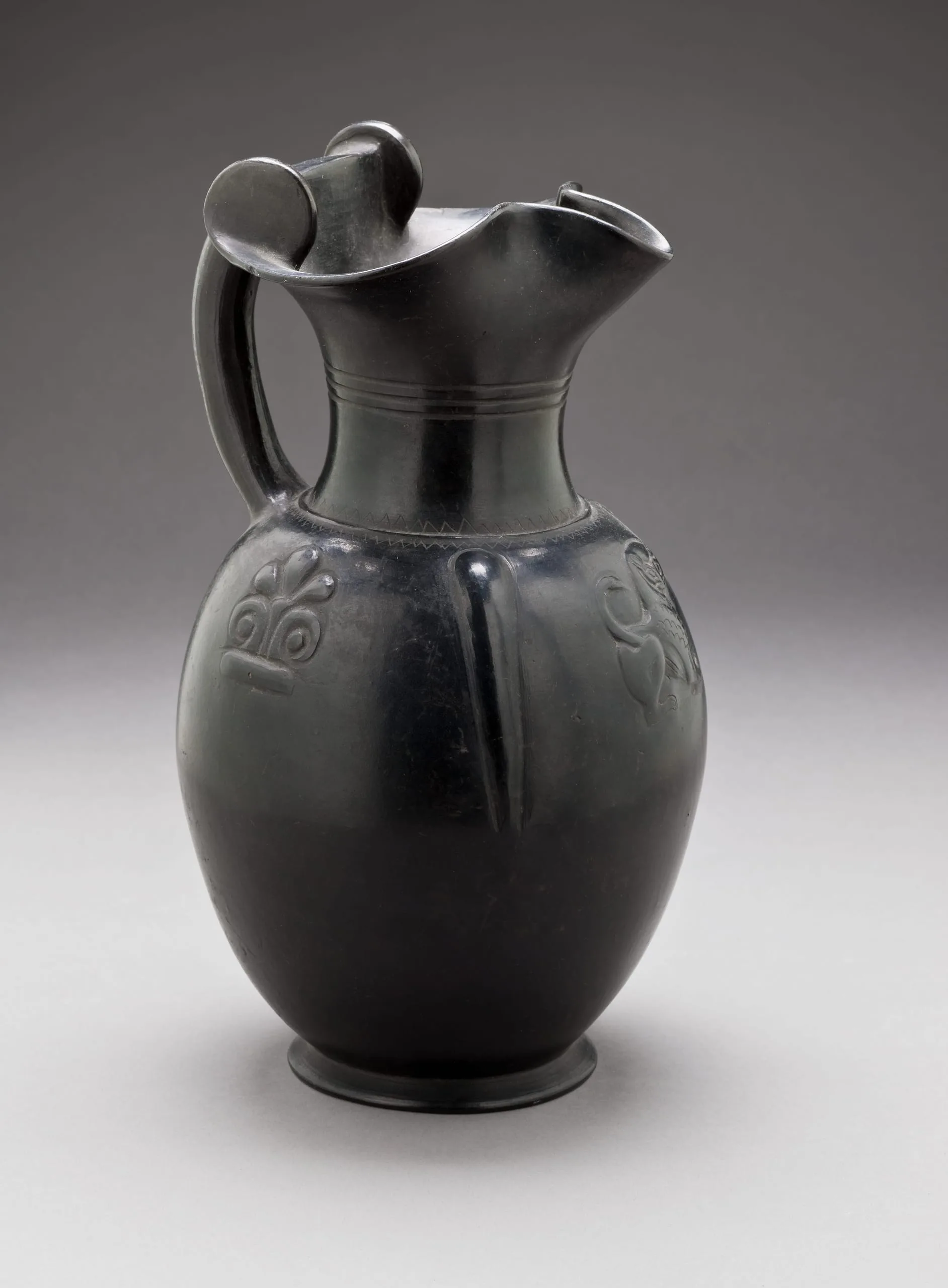
Bucchero Oinochoe with Feline and Palmettes6th century. B.C.

On view:
Geffen Galleries, floor 1
Black ceramic ewer with ovoid body, trefoil spout, strap handle, and low-relief molded leaf and insect-like motifs on the shoulder
Black-glazed ceramic oinochoe with trefoil mouth, loop handle with disc attachment, rounded body with incised floral and scroll motifs, and a small low foot.

Unknown, Bucchero Oinochoe with Feline and Palmettes, 6th century. B.C., Los Angeles County Museum of Art, William Randolph Hearst Collection, photo © Museum Associates/LACMA

Artist or Maker
Unknown
Title
Bucchero Oinochoe with Feline and Palmettes
Culture
Etruscan
Place Made
Italy
Date Made
6th century. B.C.
Medium
Ceramic
Dimensions
Height: 11 in. (27.94 cm)
Credit Line
William Randolph Hearst Collection
Accession Number
50.8.8
Classification
Furnishings
Collecting Area
European Painting and Sculpture: Greek and Roman
Curatorial Notes

The glossy surface of this oinochoe (pitcher) highlights its incised and stamped decorations and emphasizes the object’s many curves. Light reflects off the trefoil-shaped mouth and bowed handle, topped by two unadorned rotelles (disks). Three bands are incised into the neck, along with a zigzag on either side of the junction between the neck and the body. A feline, depicted frontally and semi-recumbent, with its tail swirling upward at its hind leg, is stamped into the vessel’s body under the mouth. A palmette is stamped on either side of the feline, separated by a vertical ridge that tapers downward.

Produced by the pre-Roman Etruscan population in central Italy (Etruria), bucchero ceramics are characterized by their glossy black surface. In contrast to black-figure pottery produced in the Greek world at the same time, the color and texture of the surface was not achieved through the application of slip (liquified clay). Bucchero ceramics are burnished (polished) while leather-hard, then reduction fired, meaning that the vent-holes in the kiln were closed, thus reducing the supply of oxygen required to fire the kiln. Inside the kiln, the now oxygen-deprived flames drew oxygen molecules from iron oxides in the clay, changing the color of the fabric from matte red-orange to shiny black.
Selected Bibliography
  • Clement, Paul A. "Geryon and Others in Los Angeles." Hesperia: The Journal of the American School of Classical Studies at Athens 24, no.1 (1955): 1-24.